We quit our jobs.
There were six of us — Shiv Nadar, Arjun Malhotra, Yogesh Vaidya, Subhash Arora, D.S. Puri and me.
It was 1976. Startups were not really a thing in India. Venture capital did not exist. Banks were not exactly lining up to lend money to six young men with an idea and no collateral.
And computers? Most people had barely heard of them.
But we believed the microprocessor was going to change the world.
So we took the plunge.
Between the six of us, we managed to put together ₹1.87 lakh. We borrowed, pooled our savings and, in one case, even sold a car.
Our first office was a small barsati in Golf Links, Delhi.
We called ourselves Microcomp. We wanted to build an Indian computer.
There was just one problem.
We didn’t have a manufacturing licence.
That eventually led us to UP Electronics Corporation. They had the licence. We had the technology. And that partnership gave birth to Hindustan Computers Limited — HCL.
But perhaps the most audacious part of the story was what happened next.
We started selling a computer that was still being designed.
We had a brochure and a mock-up of the machine. That was it.
Our sales teams went across India, knocking on doors and convincing businesses to buy into a technology they had never used before.
The first orders came from IIT Kharagpur and IIT Madras.
Then came the harder part — convincing businesses.
In Coimbatore, we were up against DCM DP, a much bigger and more established name. I still remember sitting in the reception area of Premier Mills while the DCM team made its pitch.
We went in second.
And we won.
That one order gave us five more. Then ten.
That was HCL in those early years: not having the biggest balance sheet, the biggest brand or the easiest path — but finding a way.
We were restless.
We looked for gaps. We hired people who had what we called a “cowboy” spirit. We believed that technology had to be made useful and accessible, not intimidating.
And we kept moving.
From building India’s early indigenous computers to taking our business to Singapore when HCL was just four years old. From a small room in Delhi to a global technology company.
When I look back at 50 years, I think about six people sitting together in 1976, wondering if this crazy idea could actually work.
I think about a barsati.
A brochure for a computer that did not yet exist.
And the courage to knock on the next door.
That, to me, is the real HCL story.
50 years later, the technology has changed beyond anything we could have imagined.
But the spirit remains the same:
Dream big. Take the risk. And above all, Just Aspire.
Happy 50th, HCL.
What a journey it has been.
#AjaiChowdhry #JustAspire #HCL #50yearsofHCL #Nostalgic #Founders
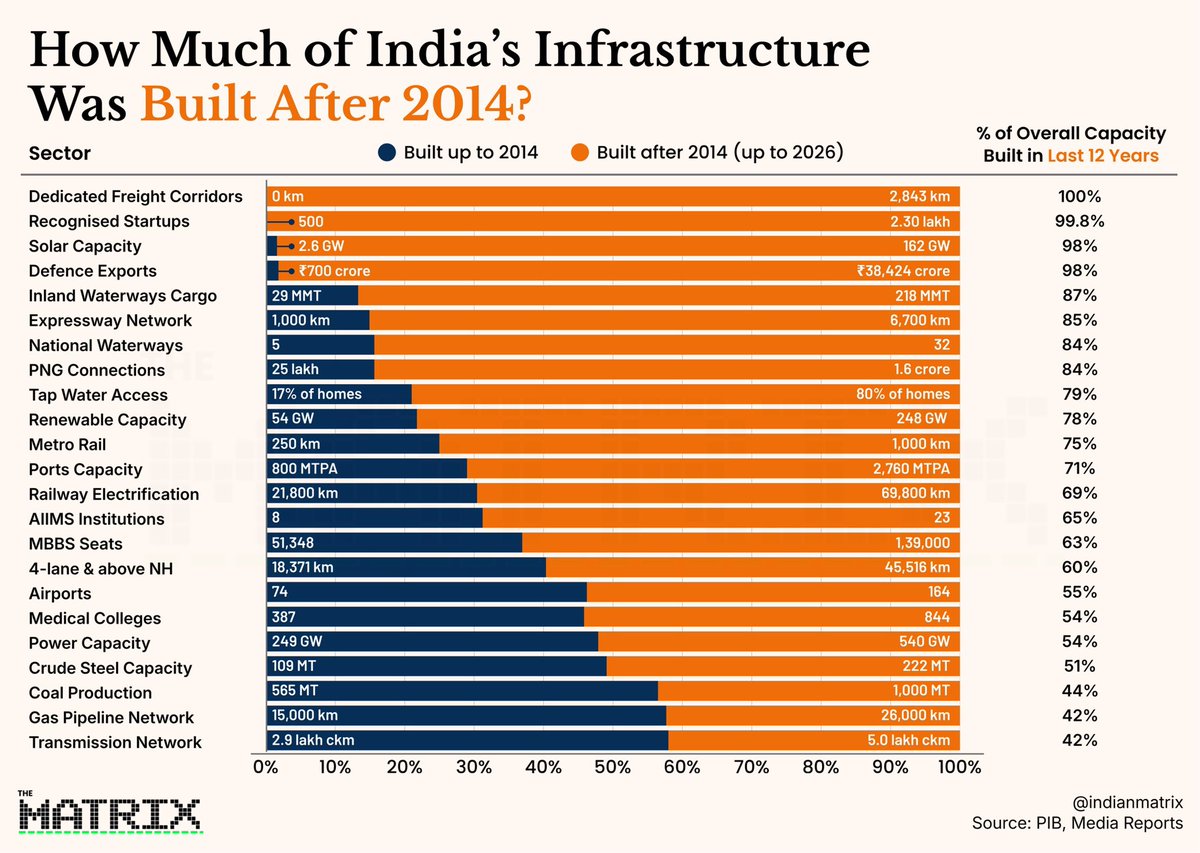
How much of India's infrastructure was built after 2014?
• 100% of Dedicated Freight Corridors
• 98% of Solar Capacity
• 85% of the Expressway Network
• 79% of Tap Water Access
• 75% of Metro Rail
• 71% of Port Capacity
• 69% of Railway Electrification
• 60% of 4-Lane National Highways
Infrastructure is built over decades.
But some decades build more than others.
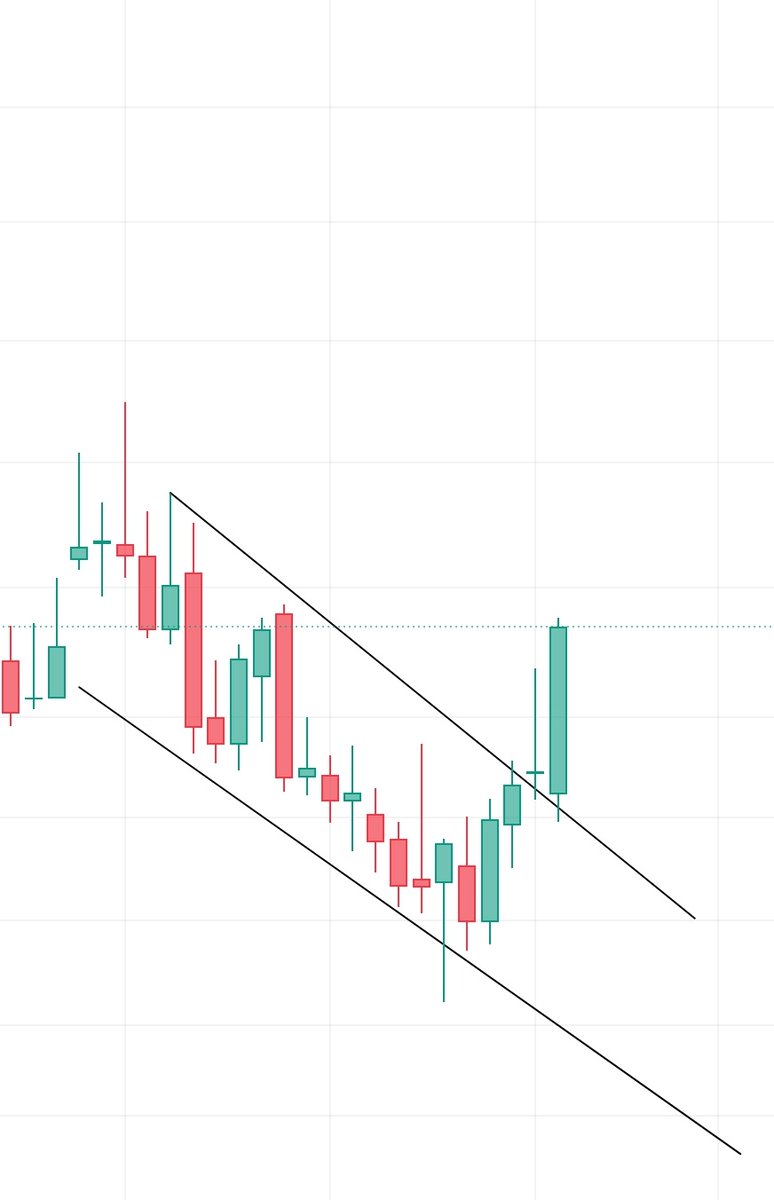
A stock options trade setup is forming for the July expiry.
I will share the complete trade idea and details shortly.
Stay tuned!🔔
Like ♥️ retweet 🚀
#Nifty
Wrote an obit on S Janaki, and while doing so, I was constantly sucked into newer rabbit holes of songs, some not heard, some forgotten, some picked from the recess of my memory
https://t.co/M7TLcEFUpj
They knew it that's why carved.
India faced a lot of invasion but doesn't lose its identity bc of this habit of our ancestors carving every knowledge of our culture, advanced science & all in temples. Indian ancient engineering was beyond nowadays..
Kannada has almost no business podcast culture. No one was telling entrepreneur stories in our own language.
So we built it anyway with @mundhebanni
10 months. 25 episodes. 28 guests.
3M+ views. 450K+ hours watched. 50K+ subscribers.
All in Kannada - an earnest effort of purposeful storytelling.
25 trailers below - one for every guest who said yes.
Which guest's story hit you the hardest? Reply below 👇
In farming, the biggest cost is fertilizer and pesticides. Farmers do the work, but the suppliers capture the margin.
In housing, buyers make a long-time commitment. Banks and lenders collect interest for decades.
In SaaS, software companies build the product. Cloud providers charge rent on compute and storage.
Now AI is heading the same way.
Data centers and GPU infrastructure are positioning themselves as the "pipe" for intelligence.
Value is created at the edge. Profit is captured in the middle.
This Toll Collector Layer is everywhere.
In insurance, the car (or house) is built once. Insurance gets paid every year.
In payments, commerce happens everywhere. Visa and Mastercard take a cut of every swipe.
In marketplaces, sellers do the work. Amazon takes fees on every sale.
In mobility, drivers do the driving. Uber takes a percentage of every ride.
In advertising, brands spend billions.
Ad exchanges take a slice of every impression.
In ticketing, artists fill stadiums. Platforms collect fees per ticket.
In pharmacy, drug makers make the drugs. PBMs sit in the middle and capture the spread.
Once we see the middle layer, we can’t unsee the gap between where value is created and where profits are captured.