Today, I’m releasing never before seen intelligence revealing new evidence of past US government funding for more than 120 biolabs in over 30 countries, including Ukraine.
In support of President Trump‘s Executive Order to end federal funding of dangerous gain of function research around the world, and increase transparency and accountability, ODNI will continue working with partners across the Administration to identify where these labs are, what pathogens they contain, and what “research” is being conducted.
https://t.co/pLMD0krc69
After I questioned Secretary Rubio on Code Pink and their ties to the CCP, their organization followed me out, berated me, and then their head person here in DC smacked me.
I will be filing charges.
🚨Stephen Miller drops a hammer on woke indoctrination in America's schools!
"Children will be taught to love America. and men will not be allowed in women's spaces"
NO MORE TAXPAYER DOLLARS FOR COMMUNIST CHAOS🇺🇸
Do you support protecting our kids and women's spaces like this?
A new Church-style Committee investigation is definitely warranted into the @CIA’s and other agencies’ continued suppression of UAP data. It’s time for the blowtorch.
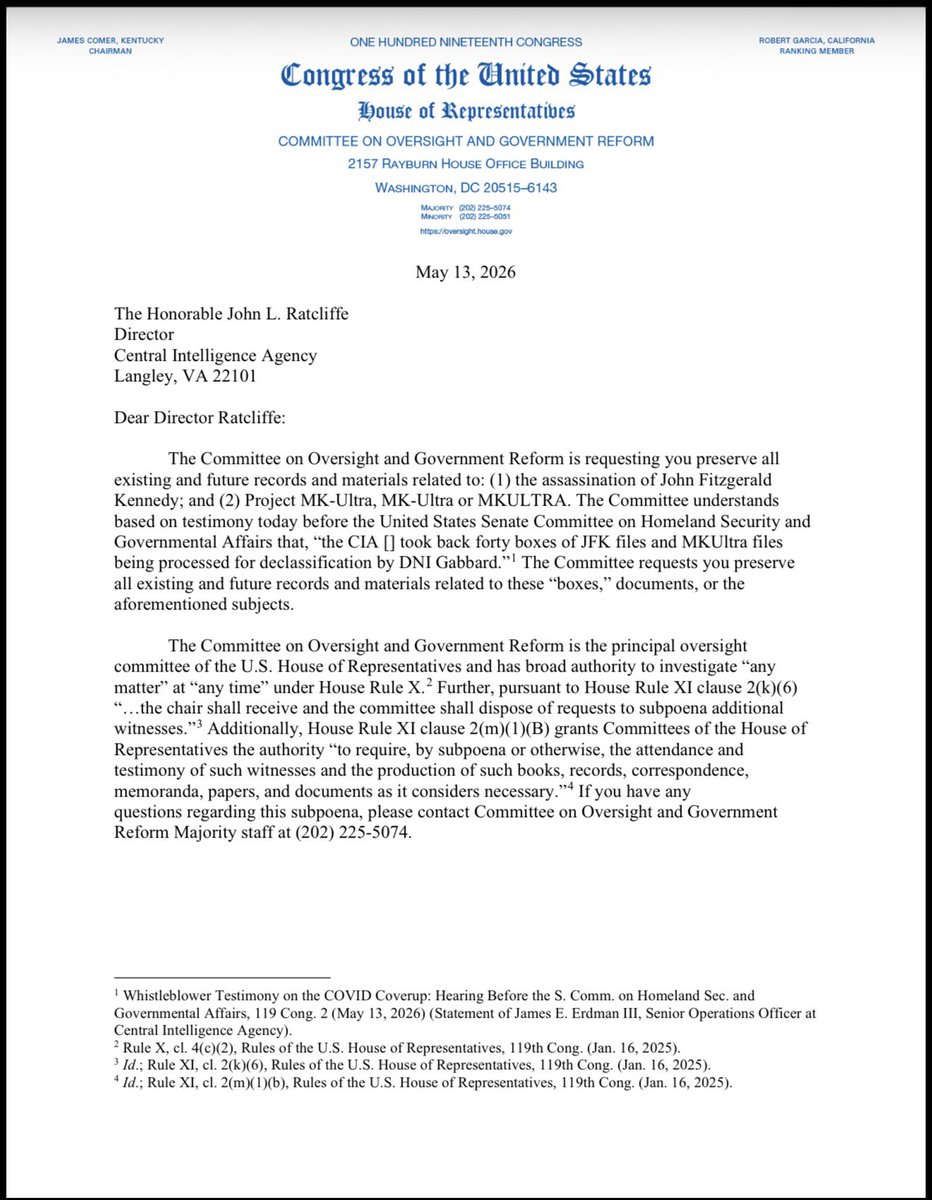
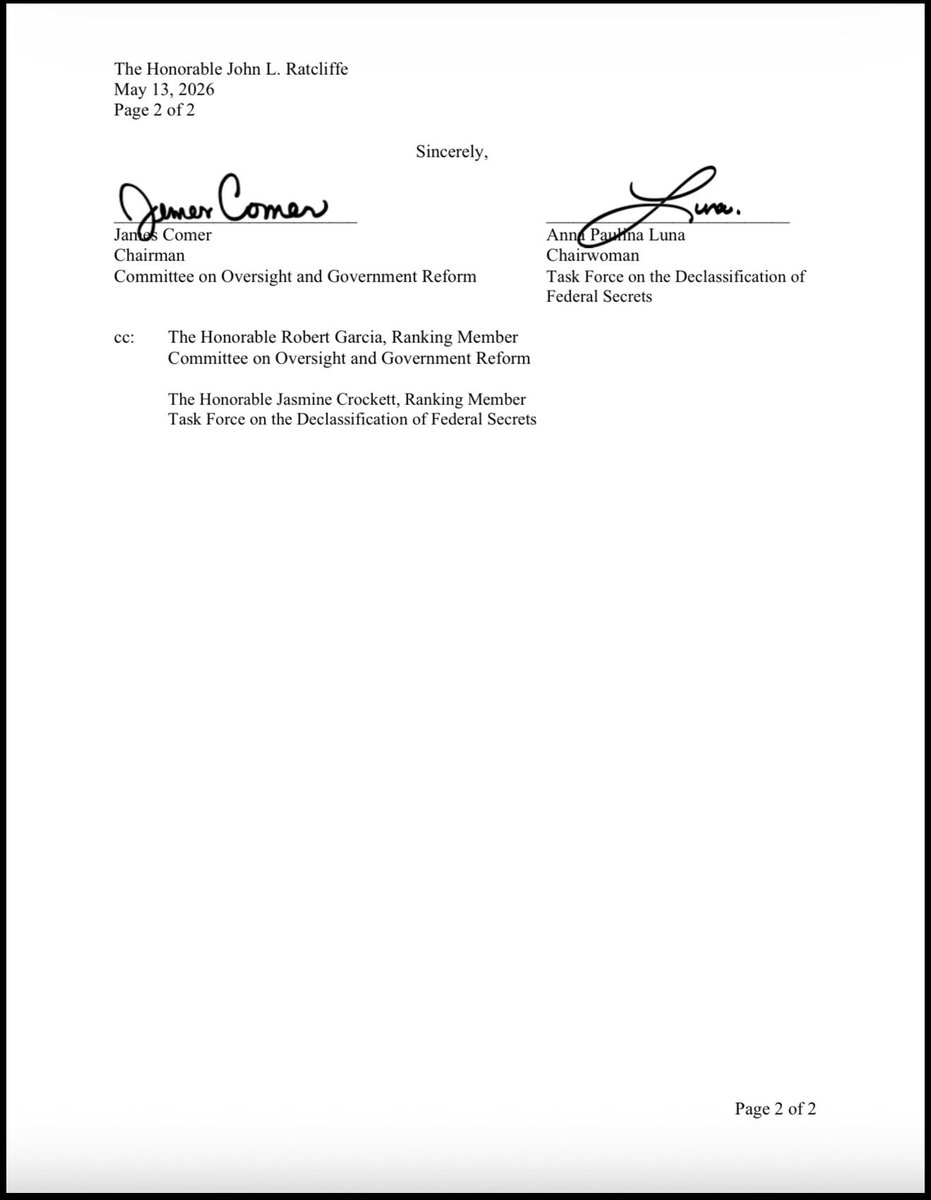
Given the nature of docs in question, we are sending a preservation notice. Docs need to be returned to ODNI given that ODNI was given direction and authority by the President to declass RFK, MLK, & JFK. Regarding MKULTRA, these were documents specifically requested by my Task Force and currently being used for our investigation.
I still can’t get over this — a factory that runs in total darkness, without a single human on the floor. 😳
Xiaomi just unveiled a fully autonomous smart factory that produces one smartphone every second, completely powered and managed by AI.
The innovation?
A self-operating production line where AI systems control, optimize, and even repair machinery — with humans only needed for maintenance. The factory never stops, never sleeps, and never turns the lights on.
What’s new:
This isn’t automation as we know it.. it’s autonomy. Machines that don’t just follow instructions, but learn, adapt, and self-correct in real time.
Why it matters:
This could redefine manufacturing, shifting from human-managed production to intelligent systems that design, optimize, and execute everything on their own.
→ Near-zero-error output
→ Local factories competing with offshore costs
→ Self-adjusting systems that reconfigure overnight
→ Sustainable, low-waste operations
To me, this isn’t just about efficiency, it’s about transformation.
We’ve entered an age where factories think, learn, and build independently.
How do we make sure humans evolve fast enough to keep a meaningful role in this new world?
#AI #Automation #Innovation #Technology #Manufacturing #FutureOfWork #Robotics #Industry40
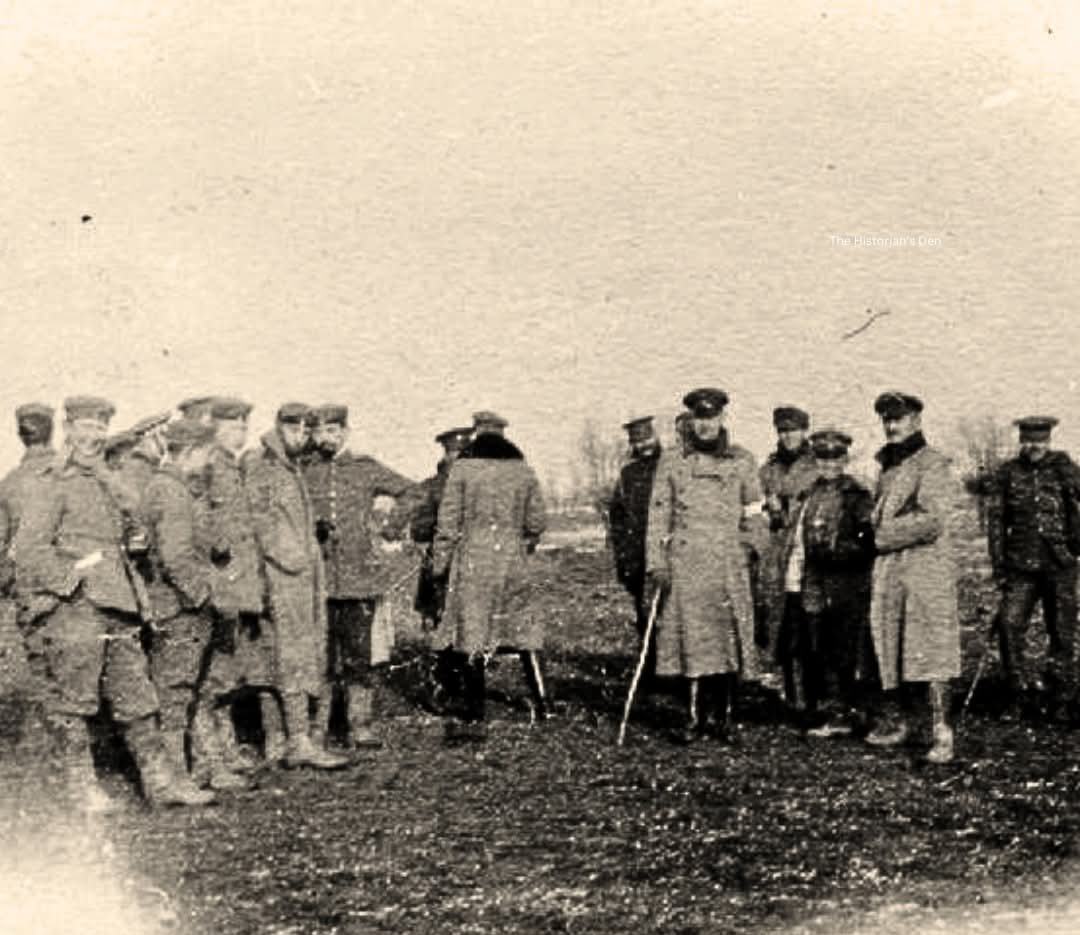
Christmas is not Christmas without remembering the one moment in World War I when humanity briefly overpowered the war itself.
The 1914 Christmas Truce has become a kind of seasonal legend, heartwarming in its tenderness, heartbreaking in its impossibility, a reminder that even in the darkest chapters of history, people still reached for light. Along the frozen trenches of the Western Front, where mud, fear, and artillery defined daily life, something extraordinary happened: soldiers who had been shooting at each other hours earlier began singing the same carols into the night.
What followed feels almost impossible today. German and British troops slowly emerged from their trenches, hands raised, voices trembling with equal parts caution and hope. They met in the middle of No Man’s Land , the very ground meant to kill them, to exchange cigarettes, chocolate, buttons, and stories of home. Some kicked around a football. Others helped bury each other’s dead. For a few precious hours, the war paused not because commanders ordered it, but because ordinary men chose to see each other as human again.
But the beauty of that moment only deepens its tragedy. High‑ranking generals were furious when they learned what had happened. They ordered artillery strikes to break up any lingering peace and threatened court‑martial for anyone who attempted such a truce again. By Christmas 1915, the front was too bitter, too mechanized, too scarred for anything similar to happen. The brief miracle of 1914 remained a one‑time defiance, a fragile rebellion against the machinery of war.
And yet the story endures, retold every December not because it changed the course of the conflict, but because it revealed something essential about the people trapped inside it. The Christmas Truce is a reminder that even in a world built on orders, fear, and survival, individuals can still choose compassion. It is a story that refuses to fade, because it speaks to a longing that transcends time: the hope that peace, however fleeting, is always possible.
#archaeohistories
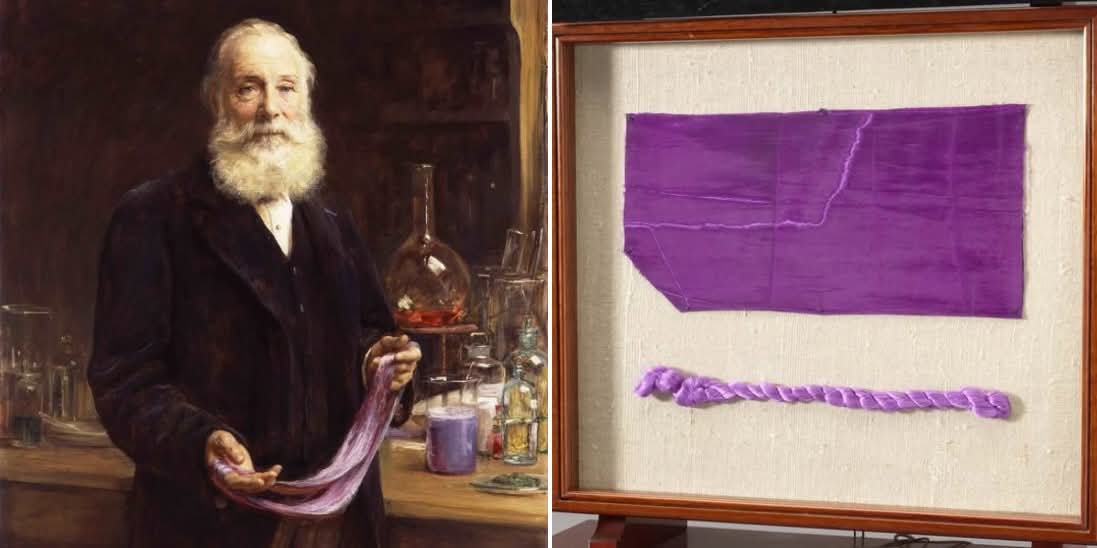
In 1856, eighteen-year-old chemist William Henry Perkin was working in his laboratory, trying to discover a way to synthesize quinine. After one of his experiments failed to produce anything but a useless reddish-brown sludge, he proceeded to clean his beaker with alcohol and when he did something amazing happened. When the alcohol combined with the sludge in turned into a vibrantly beautiful purple liquid. Perkin had accidentally discovered the world’s first synthetic dye. He named it mauveine.
At that time most colorful dyes were very expensive to produce and only the wealthy could afford the benefit of them. Dark blue, for example, was made from indigo, a subtropical plant that was one of the leading cash crops in slave-based economy of the American Deep South. At that time indigo was by weight more valuable than gold. Purple, so rare and valuable that it had always been considered the color of royalty, was laboriously produced from the excretions of certain kinds of mollusks. By comparison, the dye Perkin had discovered could be produced from coal tar, abundantly and cheaply available in industrial Britain. And whereas natural dyes tended to quickly fade, Perkin’s synthetic creations held their color.
After his serendipitous discovery, Perkin and two colleagues continued their dye research in secret, until Perkin was ready to register a patent and launch a dye-making business. Hoop skirts having come into style, more cloth than ever was required for women’s dresses, and fashionable colors were in great demand. Perkin’s discovery was well-timed. Within a few years Queen Victoria herself was wearing mauveine-dyed dresses, once outrageously expensive colors were now affordable by nearly all people, and Perkin was a wealthy man. He was only 18 years old when he registered his patent.
During his career Perkin invented synthetic dyes in numerous other colors. By the time of his death in 1907 at age 69, Perkin was an accomplished and highly esteemed scientist. The Perkin Medal, the highest honor in the U.S. chemical industry, is awarded each year to the chemist who has made the greatest contribution to the practical application of chemistry.
📷 : the portrait is by Sir Arthur Stockdale Cope (1906) and hangs in the National Portrait Gallery in London. The other photo is of cloth dyed with Perkin’s original “mauveine.”
#archaeohistories
🚨 BREAKING: In an incredible development, Tom Homan confirms over 62,000 THOUSAND children have been found that were brought across the border under Biden.
KEEP PUSHING 🙏 https://t.co/vqkVHwCFnY
“Some of these children were in s*x trafficking when we found them. Some were in forced labor...I can't even discuss some of the mistreatment.”
Thousands to go.
"Fire in the Sky" Star Travis Walton Extended Interview
The Hannibal TV UFO Facebook Page: https://t.co/5UNCrGpeca
Subscribe: https://t.co/g12w5ThHac
Twitter @TheHannibalTV & @devonHannibal