In other words: The turnout gap between those who are pro-socially motivated and those who are more self-interested widens as the number of eligible voters increases (and the chance of casting the decisive vote shrinks). [7/7]
My first publication! 🥳
It's published in @JPubEcon (w/ Benny Geys & @RuneJSorensen) and tackles a classic question:
Why do people vote in large elections, when the probability of casting a pivotal vote is virtually zero? 🗳️
https://t.co/isRFfCqNmW
[1/7]
📊 FINDINGS:
1) For non-donors, we see a clear drop in turnout the larger municipality they move to ✅
2) The turnout of pro-social individuals (donors) is far less affected by the size of their municipality 📉 [6/7]
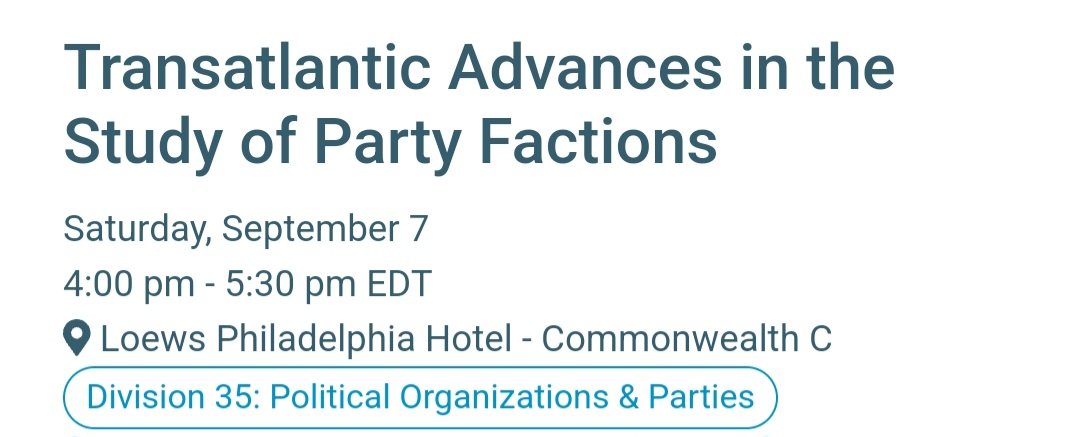
Looking forward to a great panel at 4 today on party factions from both sides of the Atlantic, featuring presentations by @bangumbling, @ProfHansNoel, @cowburn86, @smotus, and myself with characteristically inciteful comments from @zacdgreene and @blumrm.
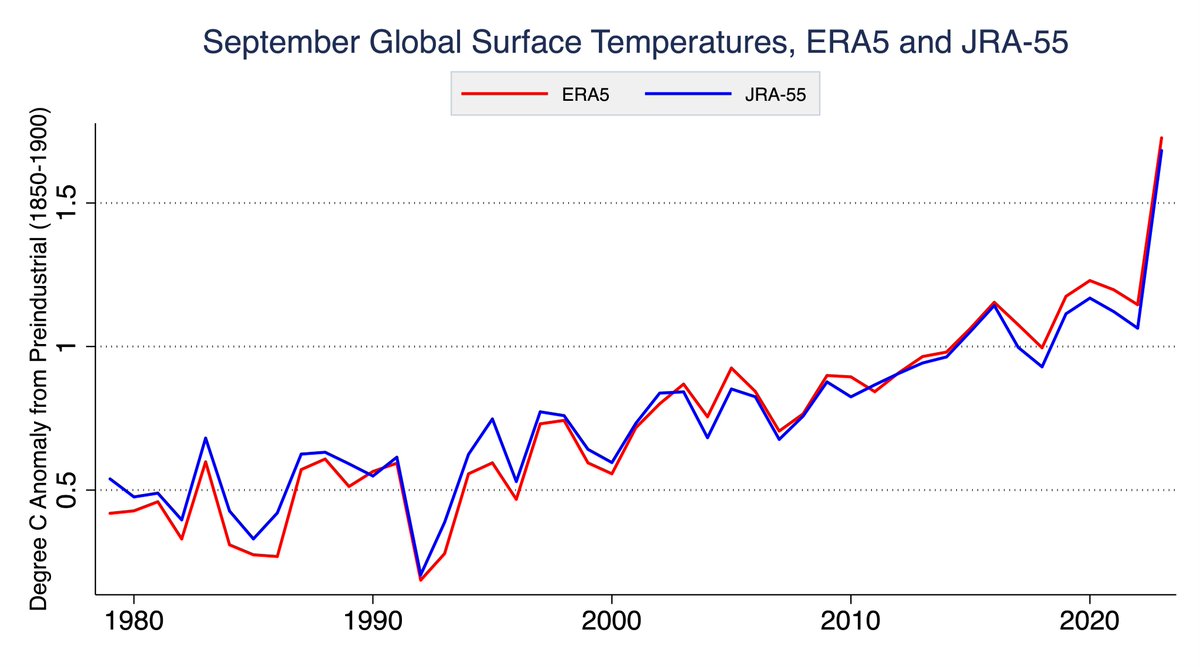
Both JRA-55 and ERA5 global temperature reanalysis datasets are now in for the month of September, and both show us smashing the prior record for the month by around 0.5C:
EU vedtar nå historisk klimatoll som første område i verden. Nå kan europeisk industri betale for sine klimagassutslipp uten å bli utkonkurrert av utenlandsk industri som ikke betaler klimaavgifter i hjemlandet. Utlendingene må nå betale klimatoll når de eksporterer til EU.






![bangumbling's tweet photo. My first publication! 🥳
It's published in @JPubEcon (w/ Benny Geys & @RuneJSorensen) and tackles a classic question:
Why do people vote in large elections, when the probability of casting a pivotal vote is virtually zero? 🗳️
https://t.co/isRFfCqNmW
[1/7] https://t.co/2AaqL2wEkD](https://pbs.twimg.com/media/G5jEkq8WAAAKoDe.png)
![bangumbling's tweet photo. 📊 FINDINGS:
1) For non-donors, we see a clear drop in turnout the larger municipality they move to ✅
2) The turnout of pro-social individuals (donors) is far less affected by the size of their municipality 📉 [6/7] https://t.co/caPCuMO2D7](https://pbs.twimg.com/media/G5jE4fvW8AAPip2.png)