The Commanding Heights makes two calls on bonds:
1. The 40-year bond bull market is over.
2. The Fed will cap yields anyway.
Both can only be true one way: financial repression.
We checked both the calls against the data. https://t.co/7AxyzFBsjC
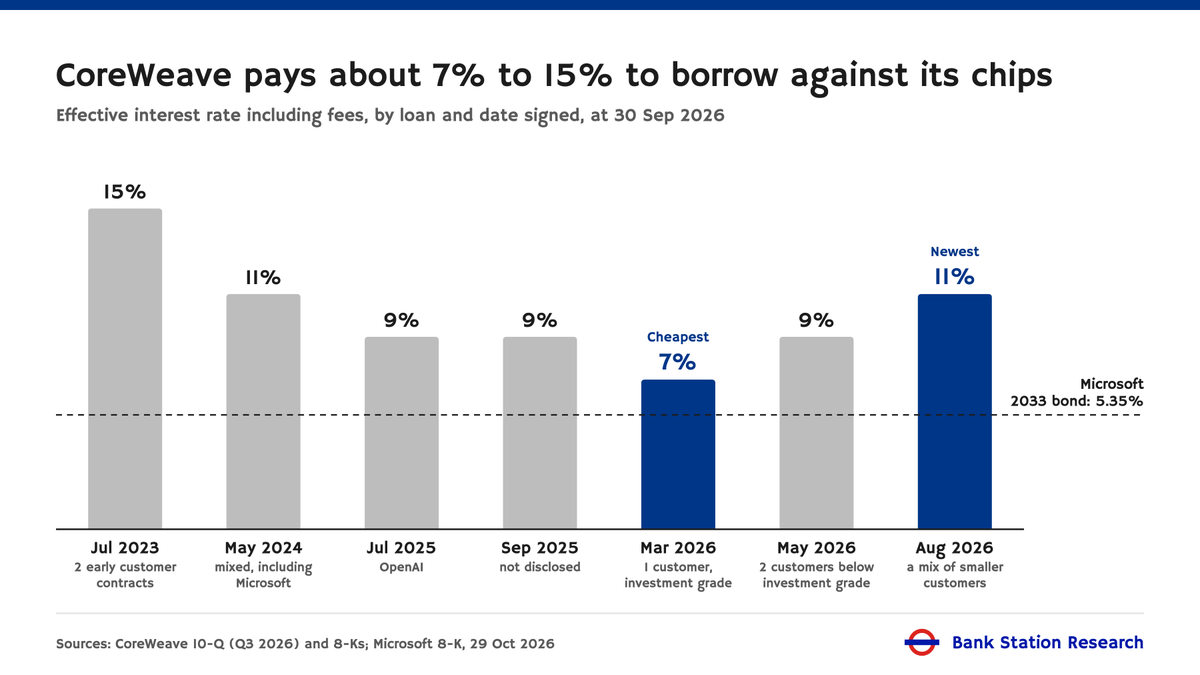
@CoreWeave pays up to 15% a year to borrow against its chips. Microsoft borrows at 5.35%.
$CRWV is a neocloud. It buys $NVDA chips, installs them in leased data centres and rents the computing power to AI labs and big tech companies on contracts lasting several years.
It pays for the chips by borrowing against them. Each loan sits in a separate subsidiary that owns the servers, and the lenders have first claim on everything in that subsidiary. The newer loans start repaying soon after the money is drawn.
Most of the rent comes from a few customers. In the third quarter, two customers provided 30% and 24% of CoreWeave’s revenue.
The filing doesn’t name them, but its largest disclosed contracts are with @Microsoft, @OpenAI and @Meta. Lenders also have to judge what the chips will be worth in a few years, when newer models are out.
Lenders charge for both risks. CoreWeave’s chip-backed loans carry effective interest rates, including fees, of about 7% to 15%, according to its latest quarterly filing.
The cheapest, at about 7%, is backed by contracts with one investment-grade customer. The newest, at about 11%, is backed by a mix of smaller customers. Microsoft’s bond due in 2033 pays 5.35%.
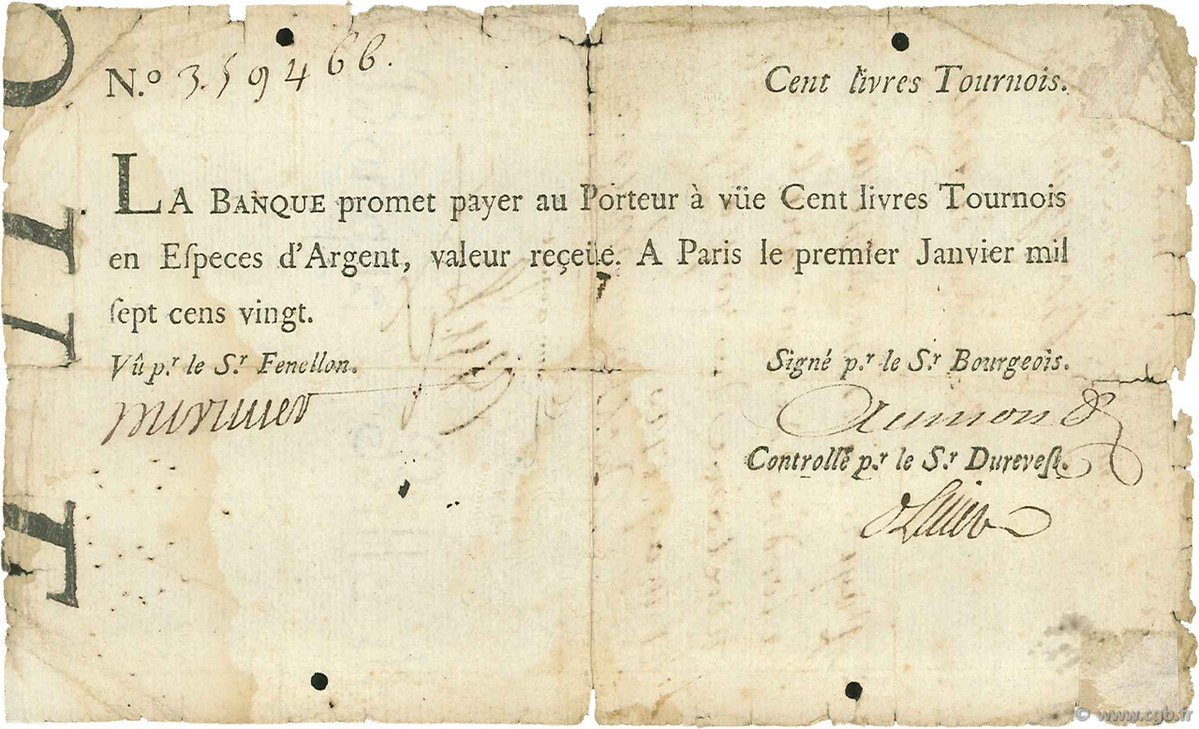
In 1720, a convicted killer ran France’s finances. His scheme looks familiar to anyone following AI chip deals.
John Law killed a man in a duel in London in 1694 and escaped from prison before he could be hanged. In 1716, he persuaded France to let him open a bank that printed paper money. He also ran a trading company with a monopoly on France’s American colonies.
The company took over the national debt in exchange for its shares. The bank printed notes, and investors used the notes to buy more shares. The shares went from 500 livres to about 10,000.
In 1720, people tried to swap their notes and shares for gold. There was not enough gold. The shares collapsed, and Law fled France in December.
The bank created the money, and the money bought the company’s shares. Both sides of the trade came from the same place.
Today, AMD has given OpenAI warrants for up to 160m AMD shares, which vest as OpenAI buys AMD chips.
Law’s system worked for as long as nobody asked for gold.
Microsoft’s $25bn of bonds included one due in 2033 that pays 5.35%, about half a percentage point more than US Treasuries. Lenders are charging Microsoft barely more than the US government, which makes borrowing cheap.