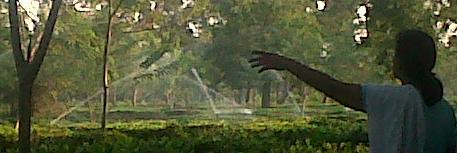
Barpathar Tea Estate established by Sri Balabuxji Sutodiya in the year 1924 nurtures its Chinese,Cambodian n Assam varieties of plants
Tea Matrix Timestamped🤫
Guru Purnima ⭐ To the entire universe, the infinite, the absolute intelligence our sincere gratitude for the love and knowledge shared with us through all of eternity. We honor your omnipresence within and around us ⭐️ nurturing us through your presence as our parents ♥️ ♥️
⚡ Nikola Tesla was right. The universe isn’t solid — it vibrates.
Quantum physics now shows reality is built not from matter, but from vibration and waves.
Nikola Tesla once said, “If you want to find the secrets of the universe, think in terms of energy, frequency and vibration.”
Far from a metaphor, his insight aligns strikingly with what modern physics has revealed. At the quantum level, reality isn’t made of solid particles but of vibrating energy fields.
Every particle—from electrons to protons—has its own frequency, and these wave patterns determine everything from chemical bonds to the colors we see. Light, heat, and sound are all forms of energy defined by vibration and frequency.
Even spacetime itself isn’t still. In 2015, scientists confirmed that black holes can create ripples—gravitational waves—that travel across the cosmos, carrying energy through the very fabric of the universe. Tesla may not have had the equations, but his intuition was remarkably prescient: everything, from atoms to galaxies, moves in patterns of vibration and resonance.
@AshwiniVaishnaw Access to advanced components, fabrication and characterisation facilities, precision instrumentation, and interdisciplinary expertise would enable vital experimentation and prototyping, significantly accelerating the path from fundamental physics to a working device, Sir.
Telepathy just went from sci-fi to Wi-Fi.
In a historic first, two volunteers using non-invasive brain-computer interfaces played 20 Questions without speaking or typing a single word. They simply thought the answers to each other across 50 miles. We're officially entering the era of the Hive Mind.
Source: MIT Technology Review / MindLink
The most important person in AI just resurfaced. And NVIDIA wrote him a $5 billion check.
Ilya Sutskever built the research behind GPT. Co-founded OpenAI. Was Chief Scientist for nearly a decade. If you use any AI model today, his fingerprints are on the foundations.
Then he tried to fire Sam Altman, the whole world watched, and Ilya vanished. Two years of silence.
During that silence he started Safe Superintelligence. No app. No API. No customers. One mission: build safe superintelligence. Nothing else. Raised $3 billion while barely saying a word publicly.
Today NVIDIA put $5 billion into SSI and gave them access to their next-gen Vera Rubin chips. 10x more compute overnight.
Jensen doesn't write checks like that on faith. He asked to see the research first. SSI opened the door. Jensen looked. And bet five billion.
Nobody outside knows exactly what Ilya is building. But the few times he's spoken publicly, he's been remarkably specific about what's wrong with current AI and what he thinks is missing.
His argument: every model today learns during training and then freezes. Like a student who studies for years, takes the exam, and never learns anything new again. Brilliant on the test. Strangely fragile in real life.
Ilya doesn't want smarter models. He wants models that keep learning from experience after you deploy them.
His description of the goal: "I produce a superintelligent 15-year-old. They don't know very much at all. Very eager. You go and be a programmer, you go and be a doctor, go and learn."
Not an AI that already knows everything. An AI that can learn anything.
He also talked about something that I haven't stopped thinking about. He said humans have an internal compass — emotions, intuition, gut feel — that tells you something is going wrong long before you reach the end. You don't finish a 10,000-step project and then realize it was broken. You feel it midway.
He said AI needs the same mechanism. Some kind of internal judgment that runs while the model is working. And then said there's a "missing machine learning principle" he can't discuss publicly.
Everyone else is racing to make models bigger. More data. More tokens. More compute.
Ilya is trying to solve something different. How to make them actually learn.
The man who sees more AI research than anyone alive just bet $5 billion that Ilya found it.
Nötron yıldızlarında atom yok. Proton ve elektron birleşip nötrona dönüşmüş. Geriye kalan tek şey nötron denizinin kendisi. Ve o nötronlar birbirinin üzerine binmeyi reddediyor çünkü aynı kuantum durumunda iki parçacık var olamaz. Pauli dışılama ilkesi. Yani yıldızı ayakta tutan şey bir kuvvet değil, bir yasak. Var olamazsın diyen bir kuantum emri.
Fakat her yasak gibi bunun da bir sınırı var. Tolman-Oppenheimer-Volkoff limiti aşıldığı an nötronlar da boyun eğer. Çökme başlar. Ve ortaya çıkan şey bildiğimiz hiçbir fiziğin tarif edemeyeceği bir nokta. Karadeliğin merkezi. Tekillik. Fizik yasalarının kendi kendini imha ettiği yer.
Şimdi dur bir saniye.
Senin de bir TOV limitin var. Sistem olarak taşıyabileceğin bir maksimum kütle var. Üzerindeki baskı, baskı, baskı birikir ve bir gün son kuantum direnç noktan da çöker. O an iki seçenek var. Ya tamamen kaybolursun ya da yoğunlaşırsın. Dönüşürsün. Eskisi olmaktan çıkarsın.
Direnç her zaman hayatta kalmanın garantisi değil. Bazen çöküş, yeni bir şeye geçişin ta kendisi.
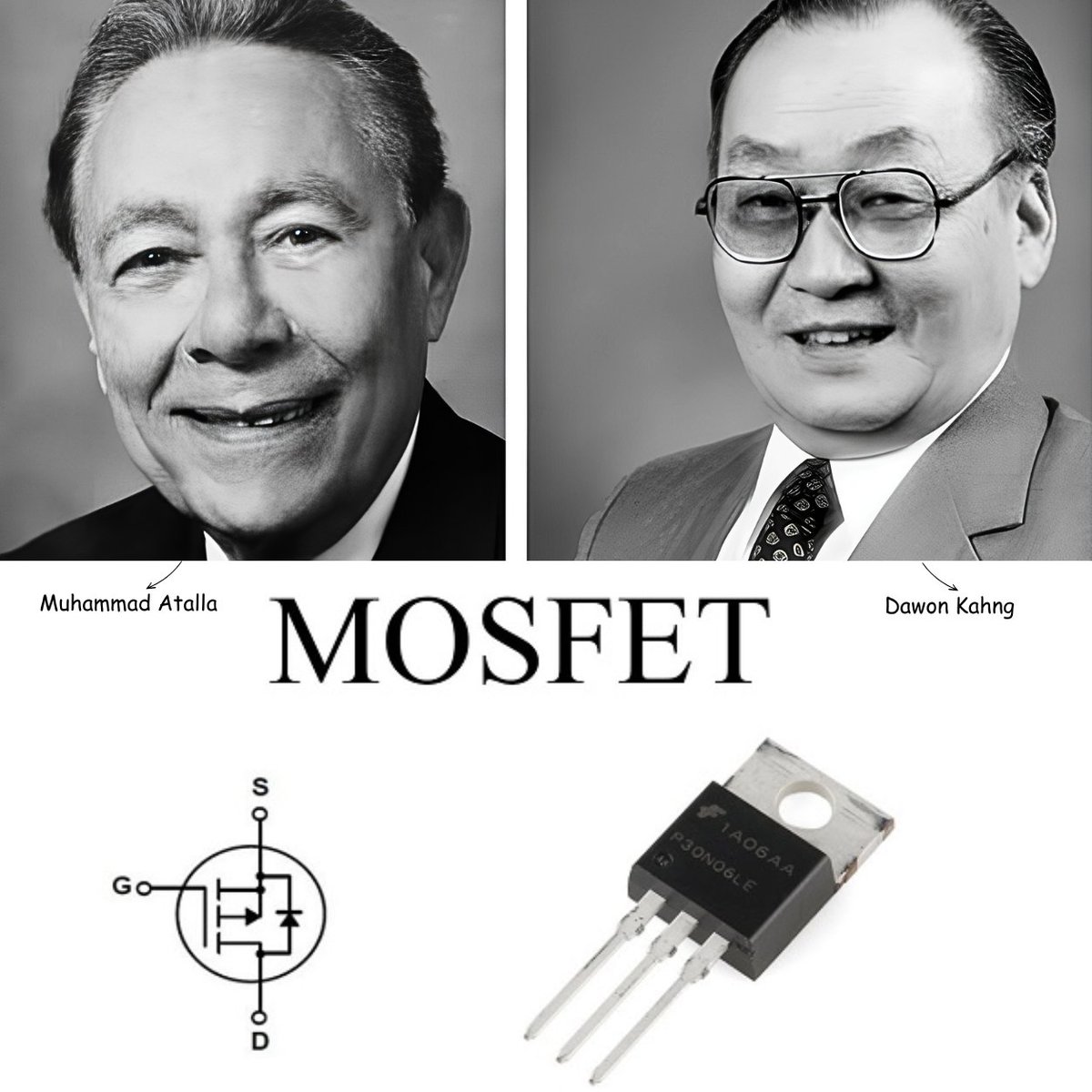
The most manufactured device in human history was not invented by Edison, Tesla, or Steve Jobs. It came from Mohamed Atalla and Dawon Kahng, two scientists whose own employer failed to see what they had created.
Atalla was born in Port Said, Egypt.
He moved to the United States, earned his PhD, and joined Bell Labs in 1949.
At the time, scientists were trying to make smaller and more reliable electronic switches from silicon.
But they kept running into the same problem.
The surface of silicon trapped electrical charges. This made it difficult to control the electricity flowing through it.
Atalla spent years studying that surface.
He eventually discovered that growing a thin layer of silicon dioxide over silicon could protect it and allow electricity to be controlled properly.
It sounded like a small improvement.
It became the foundation of modern electronics.
In 1959, a young Korean scientist named Dawon Kahng joined Bell Labs after completing his doctorate at Ohio State University.
Atalla asked him to use this new method to build a type of transistor scientists had imagined for decades but had never managed to make work.
Kahng succeeded.
The device had three simple layers: metal, oxide, and silicon.
That is where its name came from.
The metal-oxide-semiconductor field-effect transistor.
Or MOSFET.
Think of it as a microscopic switch.
It can turn electricity on and off. Put enough of these switches together, and they can store information, perform calculations, display images, run software, and process almost everything a computer does.
Atalla and Kahng had found a way to make these switches small, cheap, and easy to place together on a chip.
They showed their invention to Bell Labs.
The company saw a slow device that solved no urgent problem in its telephone network. It decided not to pursue it.
Kahng tried to explain what they were missing.
In a 1961 memo, he pointed out that the device was easy to manufacture and could be packed into integrated circuits.
Bell Labs still placed it on the shelf.
Researchers at RCA and Fairchild Semiconductor understood its potential and continued developing it.
By 1964, the first commercial MOS devices had arrived.
Then the entire industry began to change.
MOSFETs required less power and took up less space than the transistors used before them. Manufacturers could place thousands on one chip, then millions, and eventually billions.
They entered calculators, memory chips, personal computers, digital cameras, phones, cars, satellites, medical equipment, and almost every other electronic machine.
Modern AI chips contain billions of them.
Every time you unlock your phone, start your car, open a website, send a message, or ask an AI a question, huge numbers of MOSFETs switch on and off to make it happen.
By 2018, the Computer History Museum estimated that humanity had manufactured 13 sextillion MOS transistors.
That is 13 followed by 21 zeros.
No other human-made device has been copied more often.
Atalla and Kahng never became household names.
Their invention became so common that it disappeared inside everything.
The next time your phone turns on or an AI answers you in seconds, remember the two scientists who made it possible.
Mohamed Atalla and Dawon Kahng.
Open-weight models are essential to a healthy AI ecosystem. Together with others across our industry, we are outlining a path for open-weight models to strengthen American competitiveness and expand economic opportunity, while protecting national security. https://t.co/Tr0sAzAxTD
Bridging the divide 🌉
Two interacting galaxies known as ESO 77-44 are connected by a bridge of stars and gas.
This cosmic dance unfolds about 550 million light-years away from Earth: https://t.co/GiEk0VJSFK