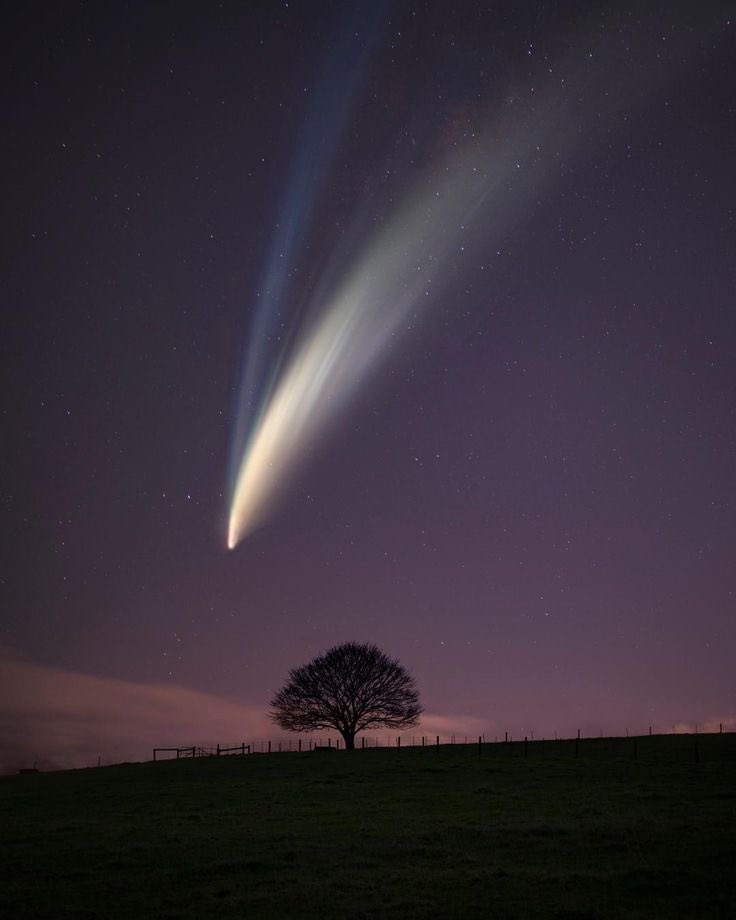
Here we observe Comet C/2025 R3 PANSTARRS from STEREO-A's HI2 camera. The plasma tail on this comet is stretching out well beyond the orbit of Earth and i'd estimate we're <24 hours away from it sweeping past Earth.
data portal: https://t.co/98CM5Wu8Km
🚨: Thousands of asteroids threaten Earth and there is no way to stop them, NASA warns
Currently, the planet is vulnerable to around 25,000 asteroids with at least 140 meters in diameter, capable of wiping out entire cities.
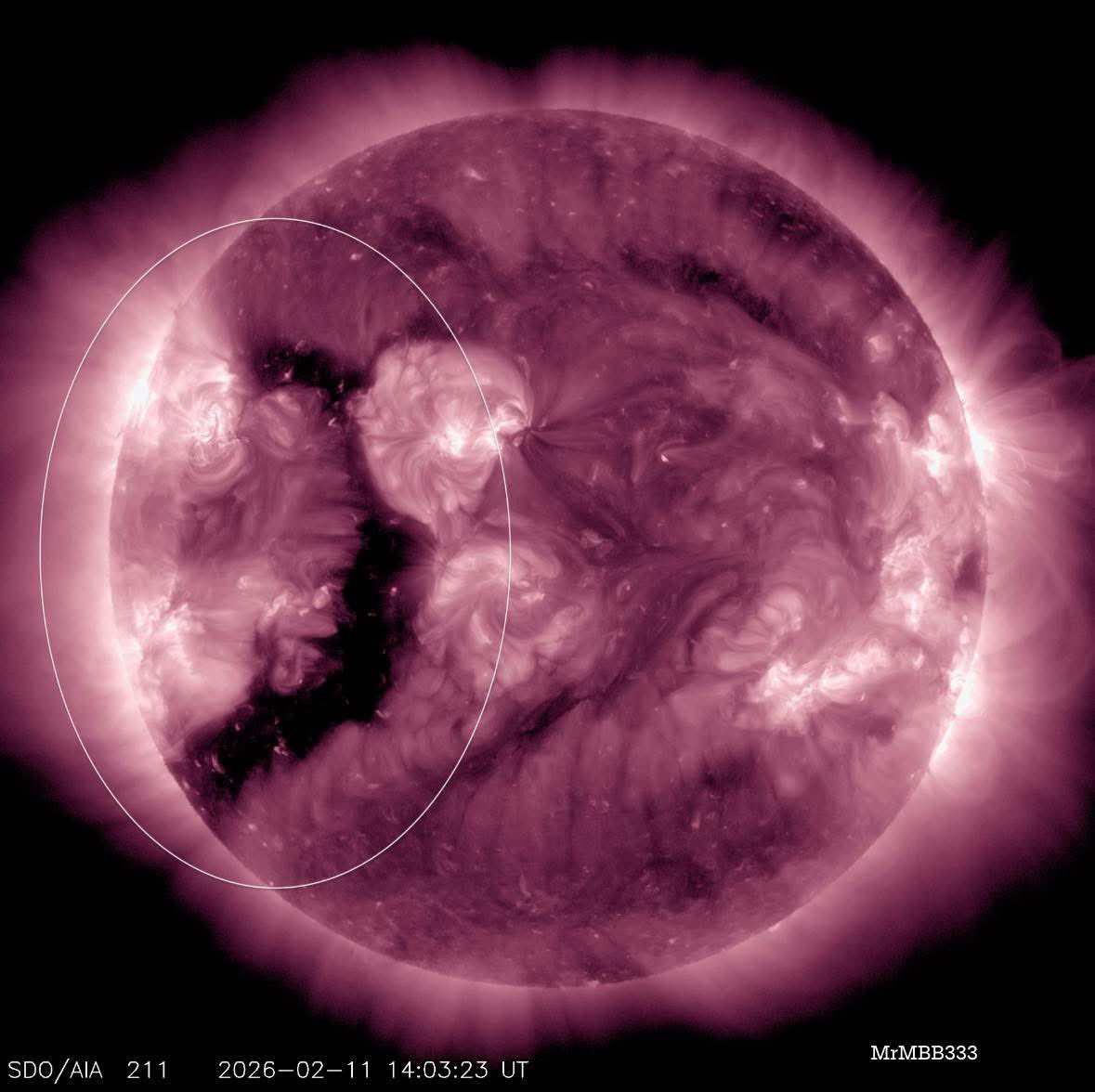
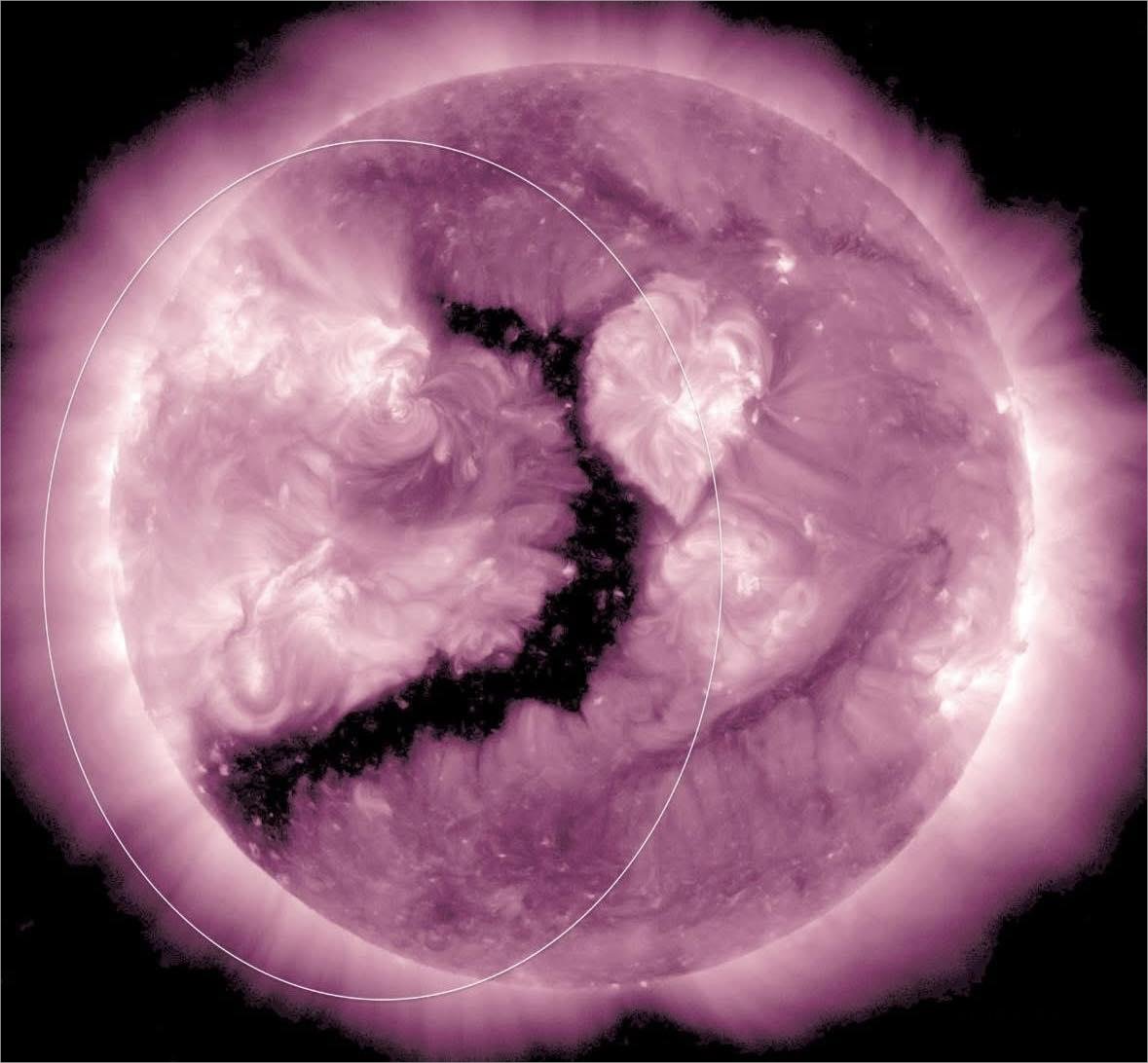
THE SUN OPENED — 400,000 MILES ACROSS
In 48 hours, this Earth-facing equatorial coronal hole expanded across both hemispheres of the Sun — now spanning nearly 400,000 miles.
This isn’t a surface scar. It’s a magnetic opening where high-speed solar wind escapes into space.
As solar rotation continues, that stream becomes Earth-directed. When fast wind arrives, geomagnetic conditions respond.
Monitoring closely.
#SolarWatch #SpaceWeather #MrMBB333
A massive coronal hole has opened up on the Sun—a vast, dark patch where the solar magnetic field opens outward like a gateway, letting loose a torrent of high-speed charged particles into space.These eerie dark regions aren't actually holes or cooler in the dramatic sense; they're simply zones of thinner, less dense plasma that emit far less light in extreme ultraviolet and X-ray views, making them stand out starkly against the Sun's blazing corona. Right now, in mid-February 2026—deep in the active aftermath of solar maximum—the Sun remains lively, with recent reports of waning influences from a negative-polarity coronal hole driving mildly disturbed geomagnetic conditions (Kp up to 4 in recent days).As this fast solar wind races toward us at speeds often exceeding 600–700 km/s, it can slam into Earth's magnetosphere like a steady cosmic wind rather than a sudden blast. The result? A boost to auroral displays, turning the northern and southern lights into vivid, dancing spectacles visible farther from the poles than usual—potentially treatable skies in mid-latitudes if conditions align.
Unlike explosive solar flares or coronal mass ejections (CMEs) that deliver sudden punches, coronal holes unleash a persistent, high-velocity stream—no fireworks, just relentless outflow. Because the Sun rotates roughly every 27 days, the same hole can swing Earthward again and again, delivering recurring gusts that keep space weather forecasters on alert.While most impacts remain mild—brighter auroras, minor radio static, slight GPS wobbles, or satellite drag—stronger streams can spark geomagnetic disturbances that challenge power grids, communications, and orbiting tech. Scientists at NASA, NOAA, and solar observatories track these features obsessively, using satellites like SDO to map their evolution and predict when the next fast wind might https://t.co/OWcAVo4HWT our tech-dependent world, understanding these "quiet" solar powerhouses isn't just astronomy—it's essential defense for satellites, navigation, and the infrastructure that keeps modern life humming.(Sources: NASA Solar Dynamics Observatory imagery and updates; NOAA Space Weather Prediction Center reports and forecasts; coronal hole tracking; recent EarthSky and community space weather discussions, February 2026.)
A newly discovered comet is so enormous that it could become visible in broad daylight as early as April 2026.
The object, designated C/2026 A1 (MAPS), was spotted on January 13, 2026, by a team of amateur astronomers scanning the skies from Chile’s Atacama Desert. It belongs to the famous Kreutz sungrazer family—fragments of a gigantic “mega-comet” that broke apart many centuries ago.
What sets MAPS apart is its exceptional size and the unprecedented distance at which it was first detected. While thousands of smaller Kreutz fragments have been observed disintegrating near the Sun, this one appears to be a particularly massive, sturdy piece of ancient ice, giving it a much better chance of surviving its close encounter.
In early April 2026, the comet will make an extraordinarily close pass, skimming just 120,000 kilometers (about 75,000 miles) above the Sun’s surface—closer than the orbit of Mercury. The extreme heat and powerful gravitational forces will push the comet to its limits, likely vaporizing huge amounts of ice and dust and creating a dramatically bright tail and coma.
If it survives the passage intact—or even if it shatters spectacularly on the way out—it has the potential to briefly become one of the brightest objects in the sky, rivaling or even exceeding the brilliance of Venus. For observers in the Southern Hemisphere especially, the comet could be visible to the naked eye in full daylight for a short time.
NASA’s Solar and Heliospheric Observatory (SOHO) spacecraft, which constantly monitors the Sun’s vicinity, is expected to capture stunning real-time images of the event, offering scientists an unprecedented opportunity to study how these ancient sungrazers behave, fragment, and ultimately meet their fate so close to our star.
[Minor Planet Center. (2026). MPEC 2026-A1: Discovery of Comet C/2026 A1 (MAPS). International Astronomical Union]
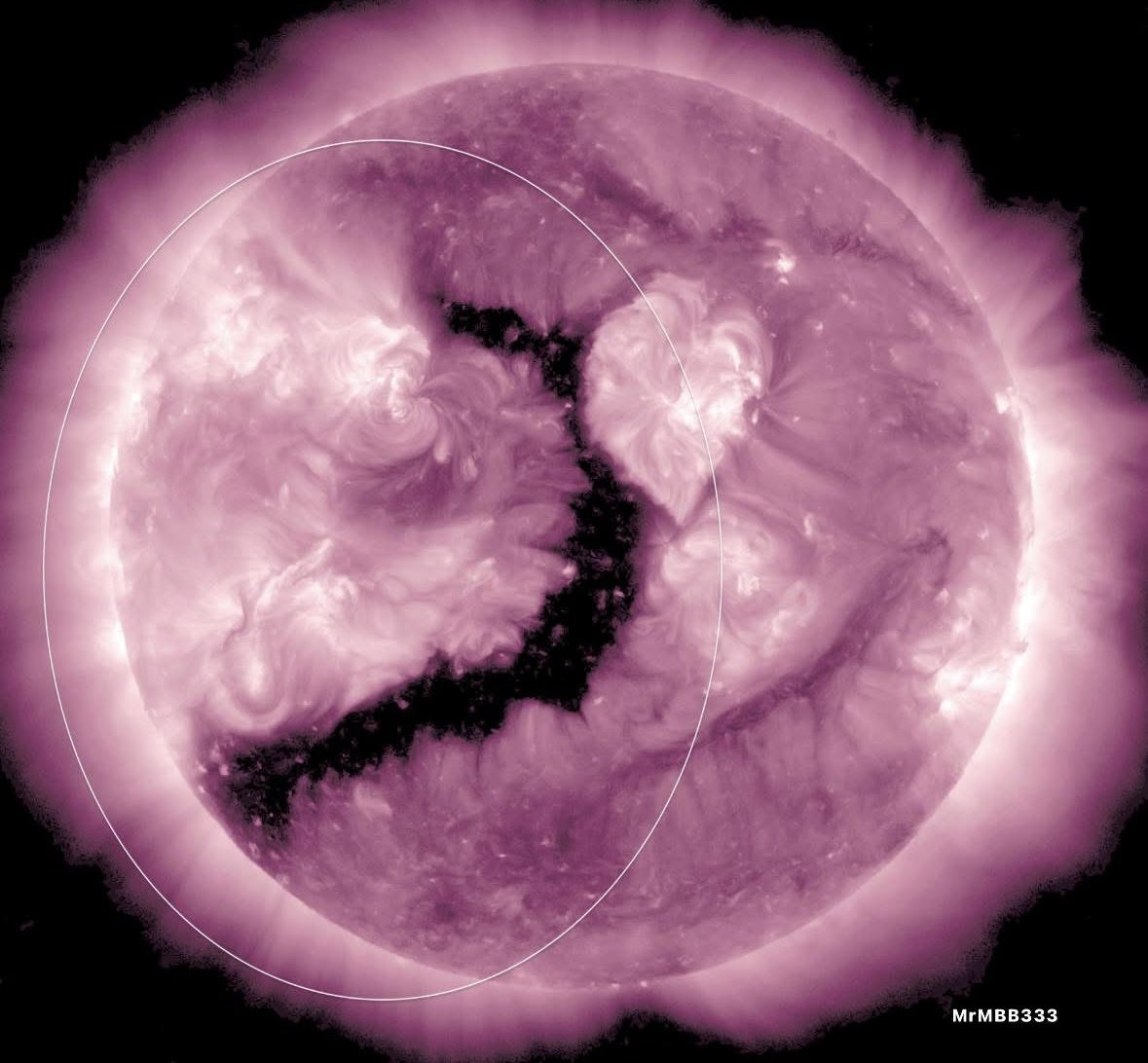
CORONAL HOLE EXPANDS — DARKER AND DEEPER IN 24 HOURS
This opening didn’t just hold — it grew.
Over the past day the coronal hole widened, darkened, and became more vertically elongated, signaling further magnetic opening.
Coronal holes are escape channels for high-speed solar wind.
This one sits near the solar equator.
When they deepen like this, elevated solar wind often follows.
Position matters — and this one is rotating toward Earth.
Watching closely.
#SolarWatch #SpaceWeather #MrMBB333
🚨 MASSIVE ASTEROID ALERT 🚨
😱 5 ASTEROIDS TO STRIKE EARTH ON JANUARY 4!
⚠️On January 4, something unusual appeared on NASA’s tracking systems. Not one. Not two. But five separate space objects entered Earth’s monitored region of space — all on the same day.
🛰️ WHAT WAS DETECTED
NASA’s Near-Earth Object monitoring network identified five asteroids moving at extreme speeds, each following its own calculated path around our planet. • Classified as Near-Earth Asteroids (NEAs) • Traveling at tens of thousands of km/h • Detected days in advance • Tracked continuously as they approached and passed. Their distances varied, but all were close enough to activate automatic observation protocols.
🔭 WHY THIS STOOD OUT
Asteroids pass Earth often — but multiple objects on the same date always draw attention. Every trajectory was recalculated. Every data point rechecked. Ground-based telescopes and automated systems stayed locked in. No public countdown. No dramatic warning. Just silent monitoring.
🌑 WHAT THE SYSTEMS SAW
• Stable orbits • No sudden course changes • No fragmentation • No interaction with Earth’s atmosphere. One by one, the objects passed Earth’s vicinity and moved back into deep space.
🌍 THE RESULT
No impact. No damage. No visible sign in the sky. To most people, January 4 felt completely normal. But above our heads, space traffic moved quietly — and was watched closely.
🛰️ THE BIGGER PICTURE
Earth travels through a solar system filled with ancient debris left over from planet formation. Most objects remain distant. Some pass close. A few demand attention. This was one of those moments. The universe didn’t slow down. Earth didn’t notice. NASA kept watching.
🌌 Five asteroids came and went. The planet remained untouched. And space moved on.
#Asteroids #NASA #SpaceUpdate #NearEarthObjects #CosmicWatch #Astronomy #Universe
COMET #24P/Schaumasse already well located in Coma Berenices this morning. Its false nucleus getting close to +9 magnitude and exhibiting an amazing green coma. @TheSkylive
Observing charts to find it right now:
https://t.co/aVCudl6Ylt
More images coming🤩
#MontsenyObservatory
🚨 3I/ATLAS Is Shedding a Strange Kind of Dust — And No One Knows Why
Something strange is happening around the interstellar object 3I/ATLAS, and the dust it sheds may be the biggest clue yet.
Based on recent calculations, the long anti-tail seen behind 3I/ATLAS cannot be made of tiny dust grains. If the particles were too small, they wouldn’t survive the journey. If they were too big, they couldn’t be pushed fast enough by escaping gas. The math points to a surprising sweet spot: dust grains about 10 microns wide — much larger than typical space dust.
Here’s where it gets even more interesting. The faint glow around 3I/ATLAS is as bright as sunlight reflecting off a giant mirror 10 kilometers wide. To create that glow, space must be filled with about 1,000,000,000,000,000,000 dust particles. Together, they weigh roughly 10 million kilograms. And all of that dust had to be released in just one month.
That means 3I/ATLAS is shedding dust at about 3 kilograms every second. Compared to its gas loss, that’s less than 1% — a ratio eerily similar to the dust-to-gas mix in our Milky Way. But there’s a twist: dust this large usually forms not in open space, but inside cold, dense molecular clouds, where stars are born.
So this raises a chilling question:
Did 3I/ATLAS come from a molecular cloud — carrying ancient, oversized dust from a stellar nursery far beyond our solar system?
This is just one of several anomalies surrounding 3I/ATLAS. Each new observation answers one question and opens three more.
One thing is clear — no one is certain what 3I/ATLAS really is.
#3IATLAS #3Iatlascomet #interstellarobject
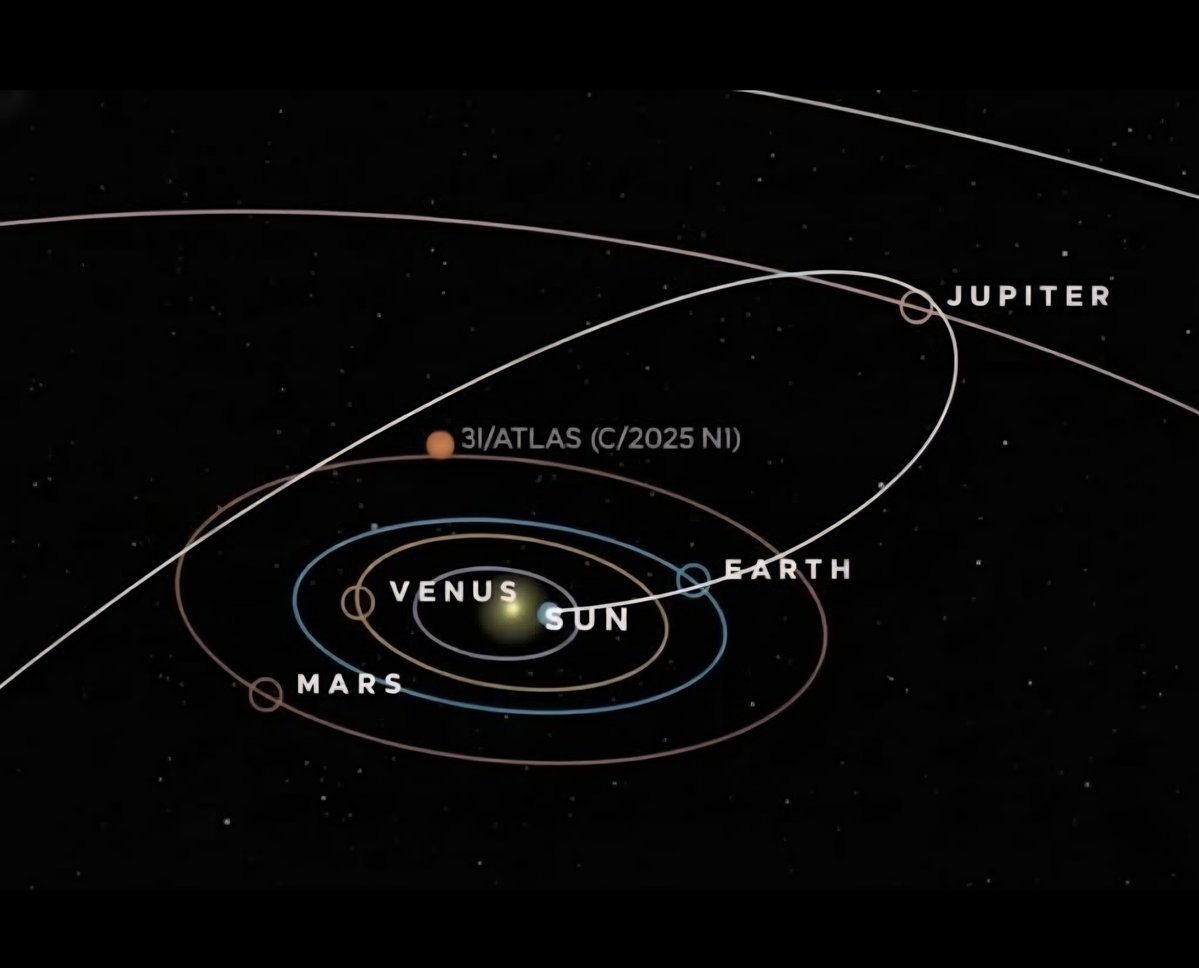
🚨 3I/ATLAS Might Be Heading Back Toward Earth?
Latest calculations suggest it might be swinging around Jupiter before potentially heading back toward Earth.
🔭 While this idea is still speculative, based on limited observations, it has already caught the attention of scientists around the world. Its path is unpredictable, and its trajectory could shift at any moment. Its behavior remains unusual, with subtle changes in its tail and speed that don’t fully match what we expect from ordinary comets or asteroids.
Could these shifts be caused by hidden forces, or is it just a natural wanderer following a strange path? Every new observation raises more questions than answers.
For now, 3I/Atlas drifts silently through the solar system, leaving us staring at the skies, unsure of what surprises this interstellar traveler might reveal next. 👀
#3IATLAS #3Iatlascomet #interstellarobject
🚨 Farewell to 3IATLAS: The Visitor That Defied Expectations
On December 19, 2025, 3IATLAS reached its closest approach to Earth within the solar system, marking a rare and closely watched cosmic event
After months of intense observation, the interstellar object is now drifting away yet the questions it raised remain unresolved
Data analyzed by Harvard astrophysicists, including Avi Loeb’s team reveal a combination of characteristics that defy conventional explanations for known celestial bodies









![Rainmaker1973's tweet photo. A newly discovered comet is so enormous that it could become visible in broad daylight as early as April 2026.
The object, designated C/2026 A1 (MAPS), was spotted on January 13, 2026, by a team of amateur astronomers scanning the skies from Chile’s Atacama Desert. It belongs to the famous Kreutz sungrazer family—fragments of a gigantic “mega-comet” that broke apart many centuries ago.
What sets MAPS apart is its exceptional size and the unprecedented distance at which it was first detected. While thousands of smaller Kreutz fragments have been observed disintegrating near the Sun, this one appears to be a particularly massive, sturdy piece of ancient ice, giving it a much better chance of surviving its close encounter.
In early April 2026, the comet will make an extraordinarily close pass, skimming just 120,000 kilometers (about 75,000 miles) above the Sun’s surface—closer than the orbit of Mercury. The extreme heat and powerful gravitational forces will push the comet to its limits, likely vaporizing huge amounts of ice and dust and creating a dramatically bright tail and coma.
If it survives the passage intact—or even if it shatters spectacularly on the way out—it has the potential to briefly become one of the brightest objects in the sky, rivaling or even exceeding the brilliance of Venus. For observers in the Southern Hemisphere especially, the comet could be visible to the naked eye in full daylight for a short time.
NASA’s Solar and Heliospheric Observatory (SOHO) spacecraft, which constantly monitors the Sun’s vicinity, is expected to capture stunning real-time images of the event, offering scientists an unprecedented opportunity to study how these ancient sungrazers behave, fragment, and ultimately meet their fate so close to our star.
[Minor Planet Center. (2026). MPEC 2026-A1: Discovery of Comet C/2026 A1 (MAPS). International Astronomical Union]](https://pbs.twimg.com/media/HA5QFFybkAE2A_G.jpg)