The Barrett's Pathology Working Group -International harmonisation of Barrett's pathology guidelines - Clinical and basic science updates (no endorsements).
Free Barrett’s histology e-learning module!
Sharpen your diagnostic skills and test your eye on challenging cases.
Highly recommended 👇
https://t.co/sMF634U2gk
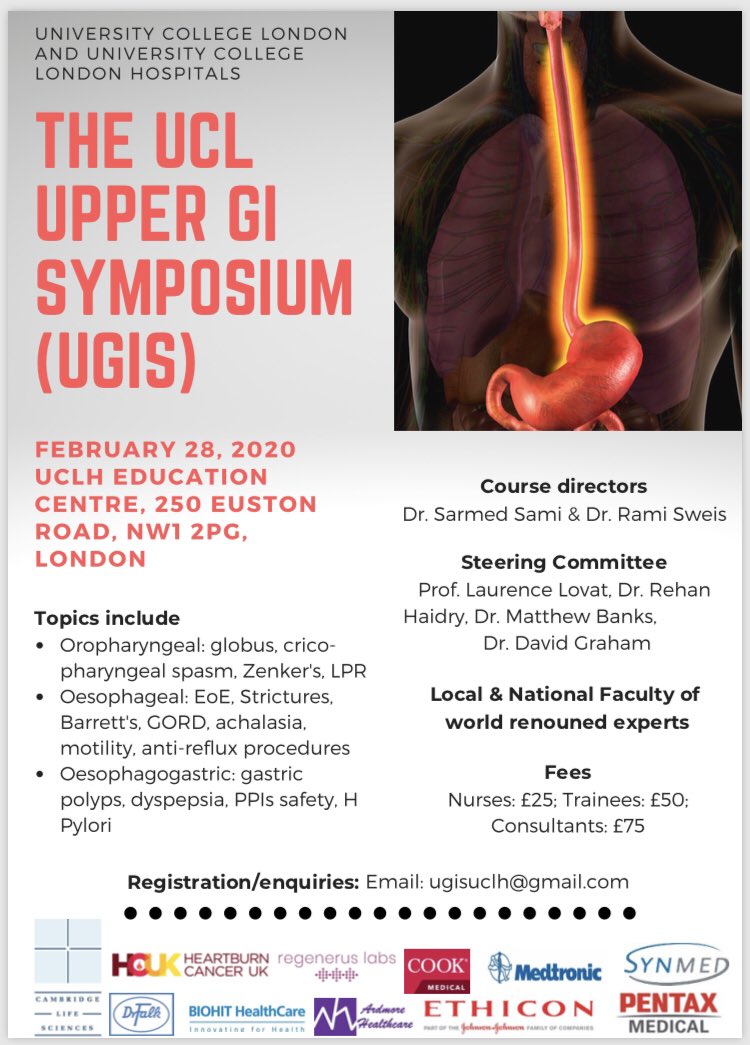
To my Endoscopy friends and colleagues. I welcome you to save the date for a new course being run at UCLH focused on managing patients with Upper GI conditions and diseases. Please contact me via [email protected] to register your interest
@sarmedsami@barrettspath@GENIE_UCL
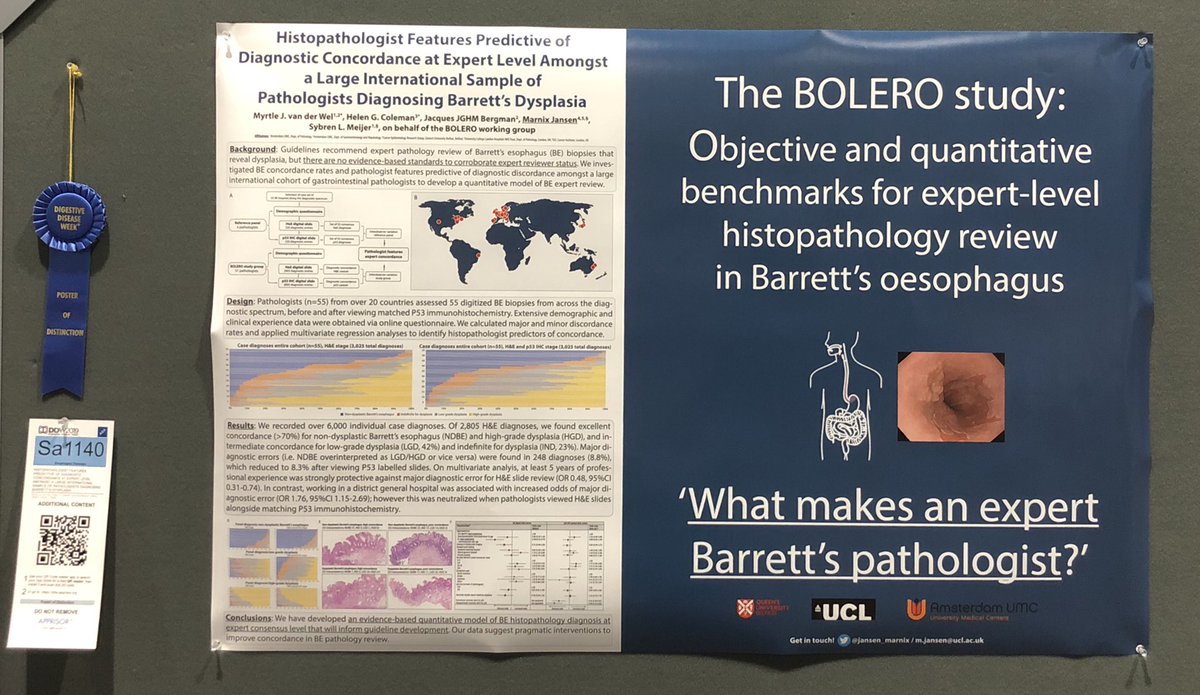
We present our next paper ‘Histopathologist Features Predictive of Concordance at Expert Level Amongst a Large Sample of Pathologists Diagnosing Barrett’s Dysplasia’ with @MedRxiv
That’s quite a mouthful so this is a short explainer
Thread 1/8
https://t.co/QPYp8jj3UB
@HelenColemanQUB Interesting! I was just talking to @DuncanBrumby about applicable human-computer interaction scenarios and what we could look at with larger datasets. I ❤️ this idea!!!
Demonstration of FNA and FNB of a pancreatic cystic neoplasm. Samples undergo immunohistochemical stains for MUC and sent for DNA mutational analysis (KRAS and GNAS) #pds2019@WCM_GI@PDSInnovations@drsethinyc@ReemSharaiha @Medical_Olympus
Round of applause for Ann, a patient in the audience today, who wants to understand why she got her cancer and how she can contribute to the research (including an offer of 10mL of her blood!) Thank you, Ann- the patient voice is so critical for everything we do -AW #oesophagus19
Instrument tracking techniques during image guided robotic surgery - it's not fantasy - @DanStoyanov says that these developments are becoming commercially viable - and the future workflows will show AI generated reports of what's happening in the theatre - AW #oesophagus19
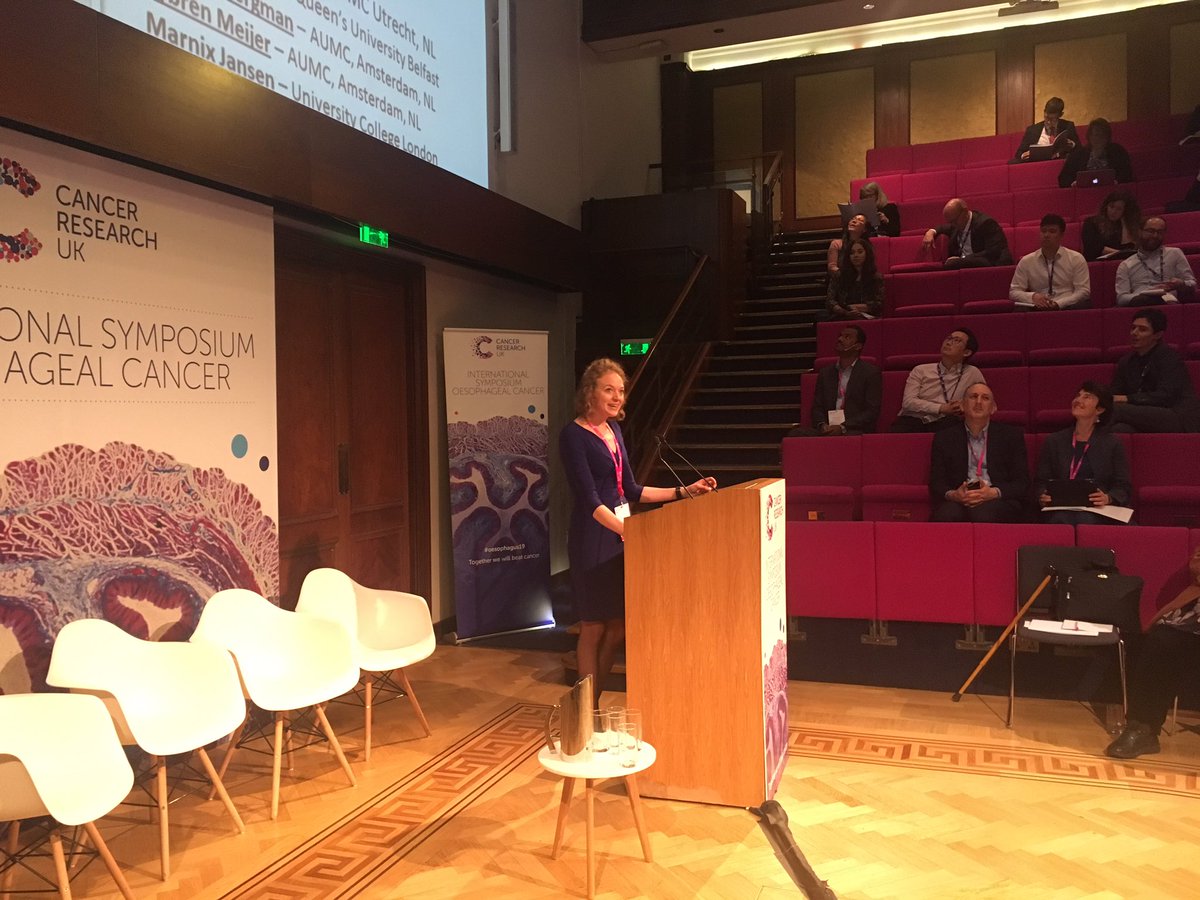
Lightning talk from Myrtle van der Wel as she explains what makes an expert Barrett’s pathologist - moving from qualitative evidence to quantitative benchmarks #oesophagus19 - AKB
So mutational signatures homogenous despite intratumour heterogeneity, and persist despite clonal dynamics in oesophageal adenocarcinoma organoids. Can also be linked to specific disease risk factors. Fascinating talk from @mariasecrier#oesophagus19