@jiangxingfan fair, the cap only limits the damage. the real fix is an idempotency key on the first attempt, so the retry just looks up its status instead of paying again
Cashfree just shipped a wallet in India that lets AI agents pay your bills. Per task you set a budget, how many payments, and how long consent lasts.
The payment count is the underrated part. An agent retrying after a timeout is the classic double pay, and a count cap bounds it however dumb the retry is.
@eugeneyan The row order one is a classic data pipeline bug. Same rows reversed took nRMSE from 0 to 1.40 on an identical answer, the grader needed set semantics, not positions.
@MarcJBrooker Databases split those a long time ago: the lock gives you isolation, the undo log gives you atomicity. A poison flag is a "something is torn" bit with no undo log behind it.
@JeremyCMorgan the bit i'd underline: he cites samokhvalov generating uuidv7 on clients with 60s clock skew, index ended up 69% full with 45% of leaves out of order. so generate it in postgres
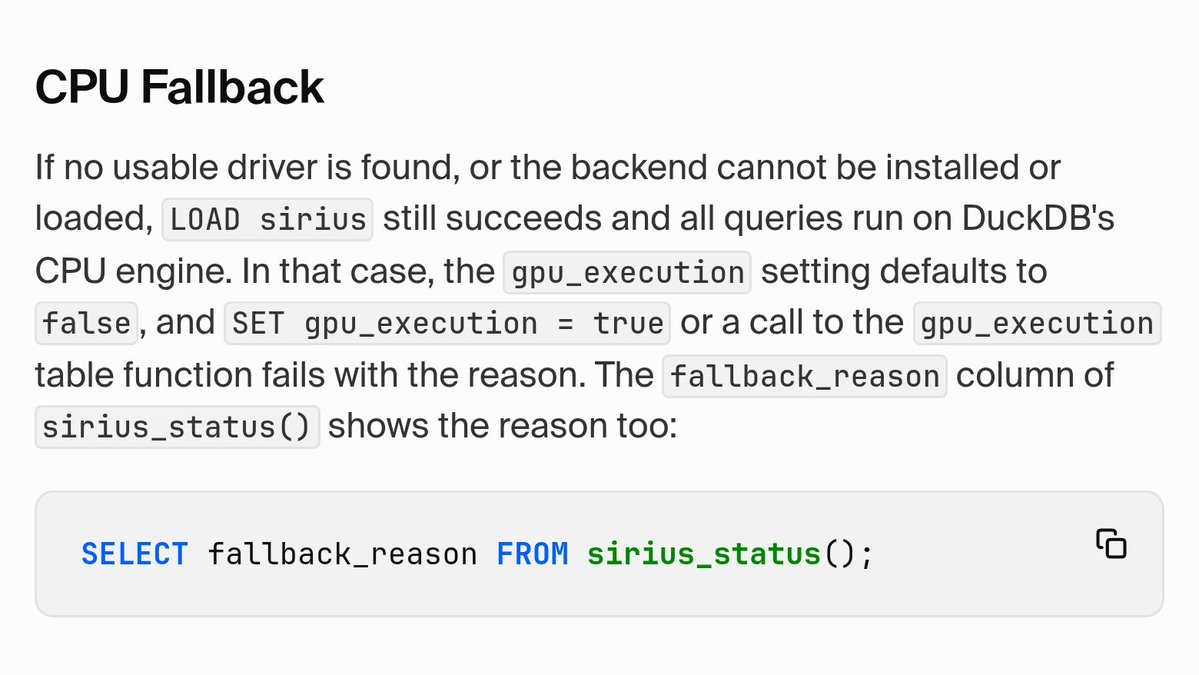
duckdb's new gpu extension: LOAD sirius succeeds even with no usable nvidia driver, and every query just runs on cpu
SET gpu_execution = true before loading and it fails instead. FROM sirius_status() tells you why
@criccomini The 8-connection row is the sneaky one: group commit folds concurrent commits into one WAL PUT, so plain S3 beats RDS Postgres 145 vs 47 commits/s. Curious how the multi-process writer seam plays out though.
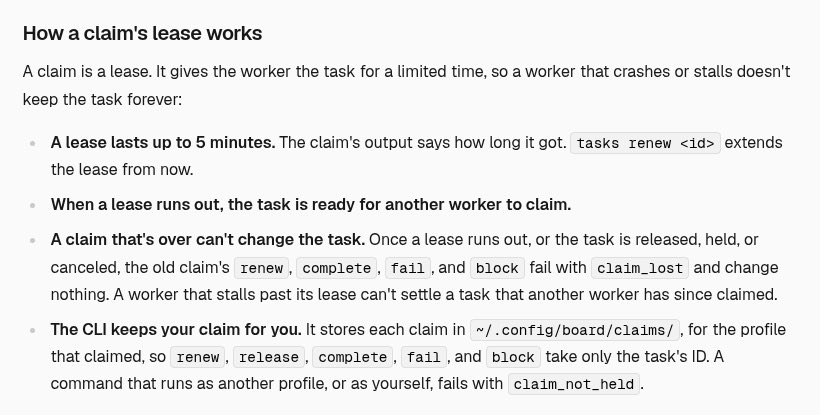
vercel board hands agents tasks on leases of up to 5 min. if one stalls past its lease, its complete fails with claim_lost and changes nothing
that protects the board. a commit or api call it made before stalling still happened
@0xdoppo right, that's why their docs send latest-state reads to postgres. they also just announced WalShadow, ~200ms commit-to-visible in their benchmark, private preview on managed postgres
clickhouse's $1.5B+ aws deal puts agent state and memory in ClickHouse Managed Postgres, not in clickhouse
analytics gets it over built-in cdc, 60s sync interval by default. their docs say reads that need the latest state should go to postgres
@saisrirampur the part i like is no logical slot on the source. and since blocks can land out of order, every row carries _lsn so clickhouse keeps the latest version per key
@penberg cedar is the public example of this: lean model as the spec, rust code diffed against it with random inputs. per their FSE paper, the proofs caught 4 bugs and the testing 21 more
@JeremyCMorgan the part i'd steal first is the commit gate. off, observe, enforce, and every commit gets stamped with how it was verified, "none" included so you can query for it
@nikitabase nice detail in the docs: reset from parent rolls your buckets back with the db, but instant restore only rolls back postgres and leaves the files alone
@dbreunig claude code's docs say it plainly: "Claude stops when the work looks done." a Stop hook that exits 2 sends it back to work when your check fails
duckdb 2.0.1 rolled back a 2.0.0 change: if several source rows match one target row, MERGE applies all of them again and the final value can be non-deterministic
the PR says it trades correctness for performance, real fix planned for 2.1
merging cdc batches into duckdb? dedupe to one row per key first