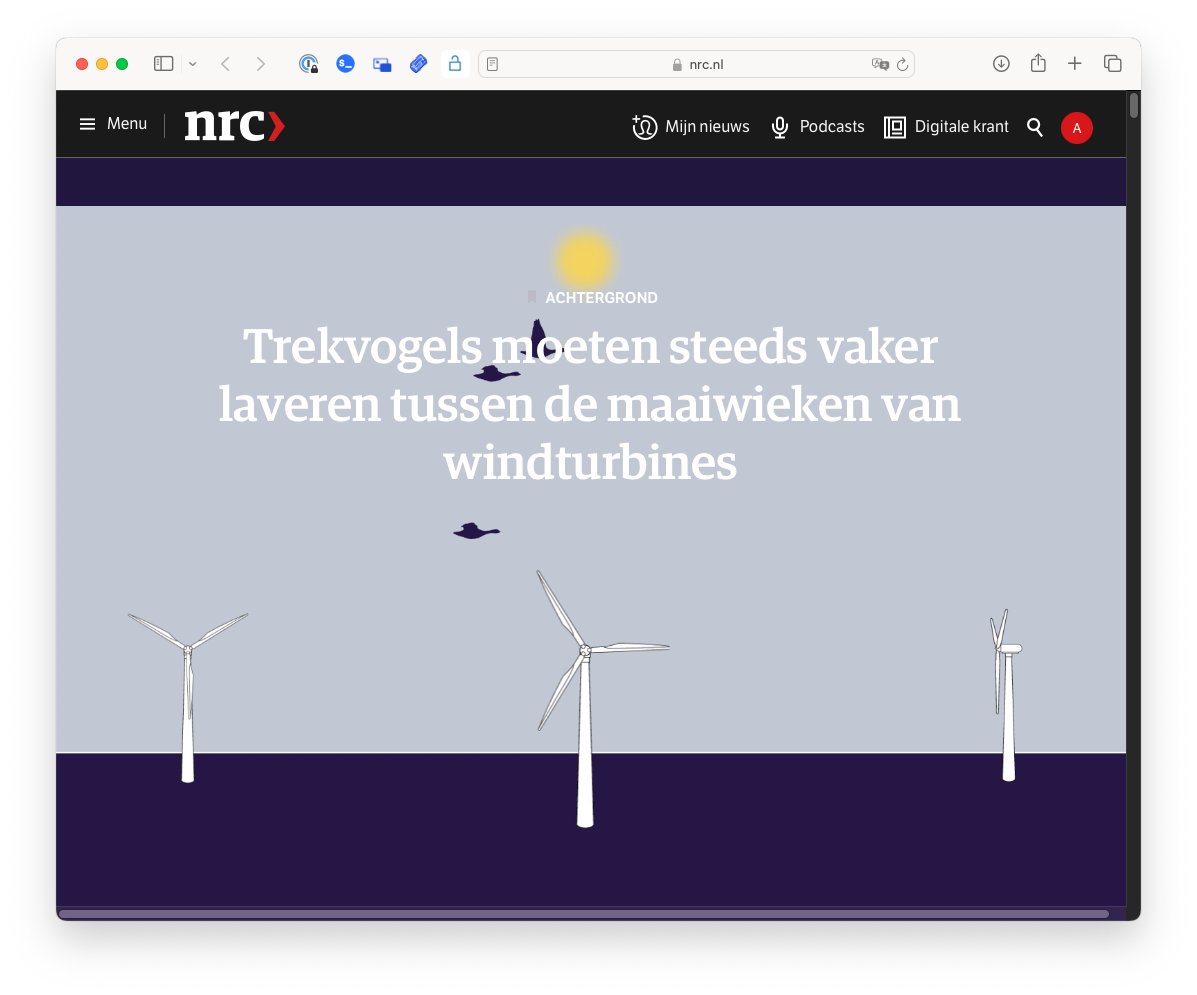
It's a special day when the newspaper you grew up with translates your latest research into a beautiful interactive. “Trekvogels moeten steeds vaker laveren tussen de maaiwieken van windturbines” in @nrc https://t.co/blAnsSZOc0 @IBED_UvA@UvA_Amsterdam
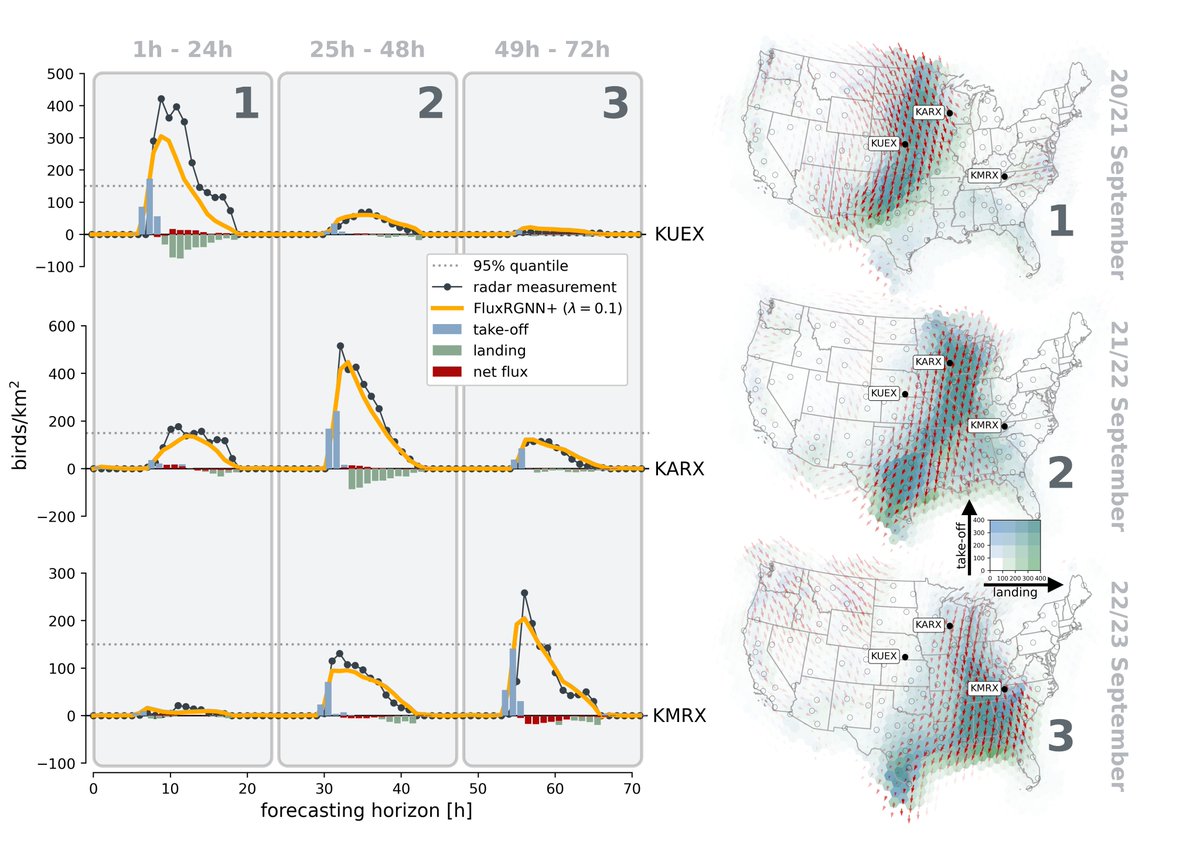
Had a great time presenting our latest paper on hybrid modeling of broad-front bird migration at the @AI_for_Science workshop at #ICML24
We can now make detailed and interpretable forecasts of departure, flight, and landing at the continental scale!
📰➡️ https://t.co/iF7t0rHv1V
Need to analyze animal tracking data in R? Just out, our (@AnneKScharf & @safilabmpi ) paper in @MethodsEcolEvol describing the R package move2 (https://t.co/CNiy6jqXsG) for analyzing movement data, including reading data directly from @MovebankTeam. https://t.co/wYGgmLznAw
📢Nieuw rapport & open dataset: Vogeltrek in kaart gebracht met weer- & vogelradars📡🐦⬛🐦
In opdracht van @AmsterdamNL, @GemDiemen en @ProvincieNH hebben we @IBED_UvA@UvA_Amsterdam vogeltrek in Noord-Holland onderzocht, om te kunnen helpen bij vraagstukken rondom windenergie.
Delving into the applied side of our #NorthSea nocturnal #bird migration forecasts, I write about the model development and on-demand #offshore#wind turbine curtailment protocol in my latest blog post for The Applied Ecologist. #BirdMigration#Conservation
In our latest paper, @bart_kra, Willem Bouten, @BaranesJudy, & I describe the forecast model used for the "international first" curtailment of #OffshoreWind turbines and advocate for dynamic #aeroconservation. 🌍 Read more: https://t.co/gKtstz4n1p
🐦🧨Tot een afstand van 10 kilometer hebben #vogels last van het massaal afsteken van #vuurwerk zoals tijdens #oudennieuw.
Nieuwe studie legt effect op vogels in heel NL bloot @IBED_UvA@Sovon@barthoekstra ⬇️ https://t.co/yNtYg4pYLN
Excited to announce that our paper "Learning to predict spatiotemporal movement dynamics from weather radar networks" is available @MethodsEcolEvol! We use #DeepLearning to generate comprehensive bird migration forecasts. #AI4science#radar#aeroecology
https://t.co/YaJIzcms3X
Our paper to better forecast bird migration extracted from weathers as part of our warning system for the Air Force, @Kon_Luchtmacht, @IBED_UvA, @globam_net, @KNMI
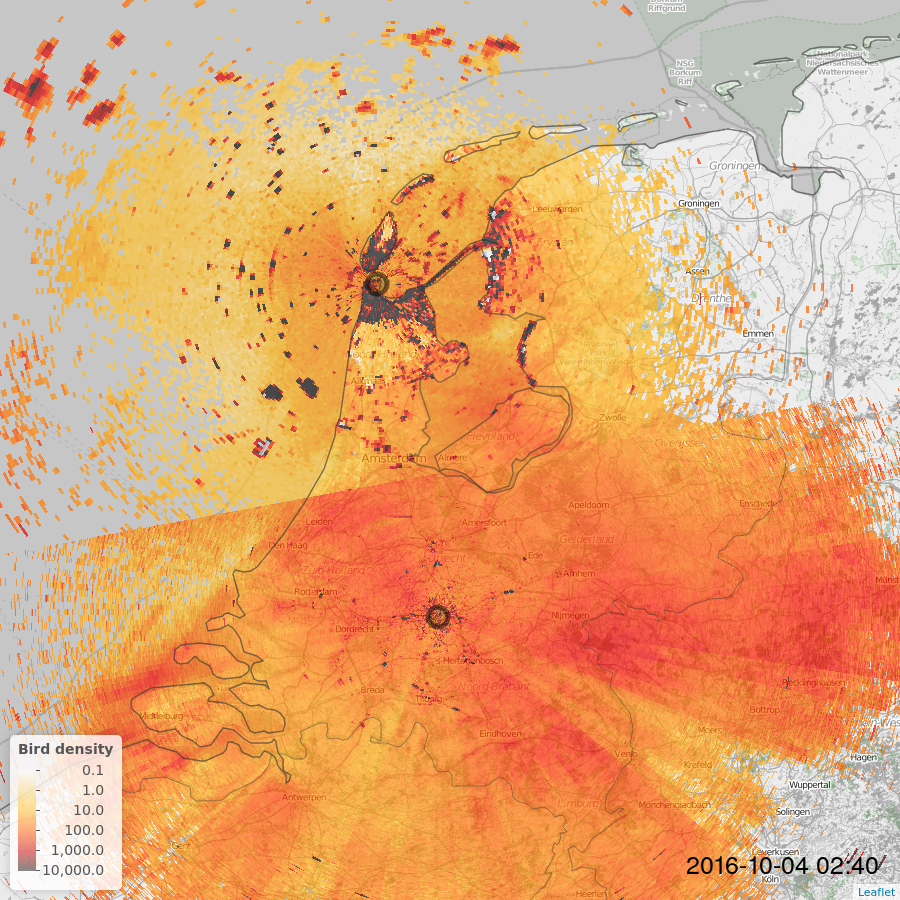
1/6 #BOUsci21#SESH3 Weather radars are used to monitor the nocturnal migration of birds across continents. We use the data to develop predictive models for bird migration to reduce the risk of bird-strikes (bird-aircraft collisions).
5/6 #BOUsci21#SESH3 Using a spatially explicit approach we want to investigate how habitat features influence bird movement. Here the abundance of birds increases when rain (black) ceases and wind directions changes https://t.co/3lKZZOicuH.