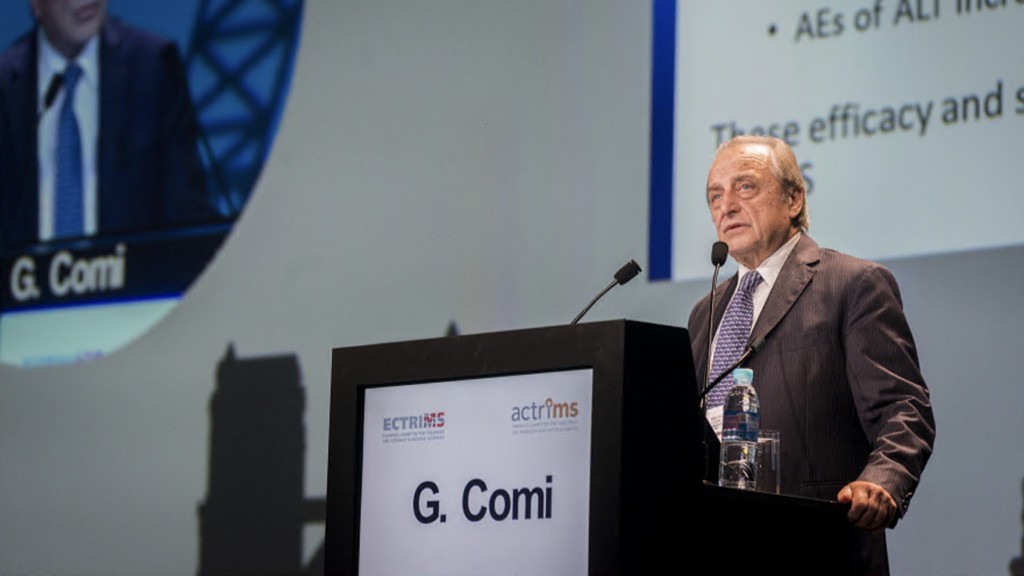
What a big legacy, what a great researcher, what a great teacher, what a great visionary, what a great man… a true example and inspiration. We will miss you dearly. RIP 😔
Professor Giancarlo Comi stressed the importance of listening to individuals with MS, pointing out that their experiences are a crucial tool in assessing disease progression. Read ECTRIMS’ tribute to his extraordinary legacy 👉 https://t.co/WSd8fKWvuS
#MSResearch#Neurology
Ook voor #ectrims2024 Dag 3 overloop en verduidelijk ik kort de belangrijkste topics (met een mooie afsluiter) in een korte video.
https://t.co/vVwH4FI8Fb
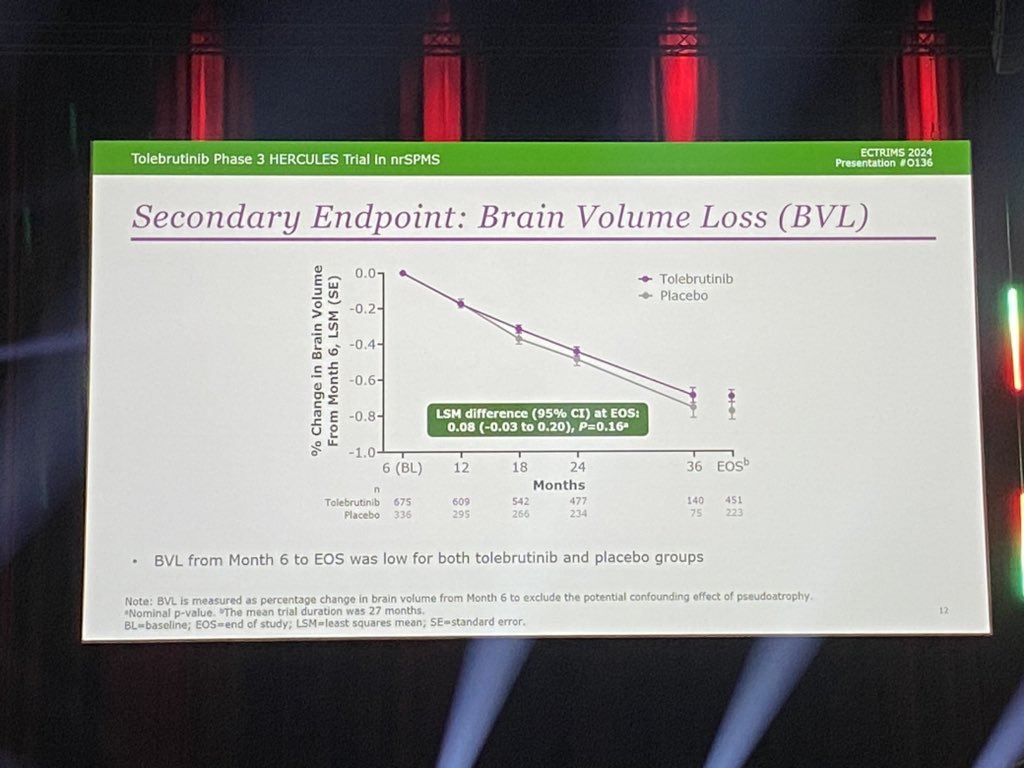
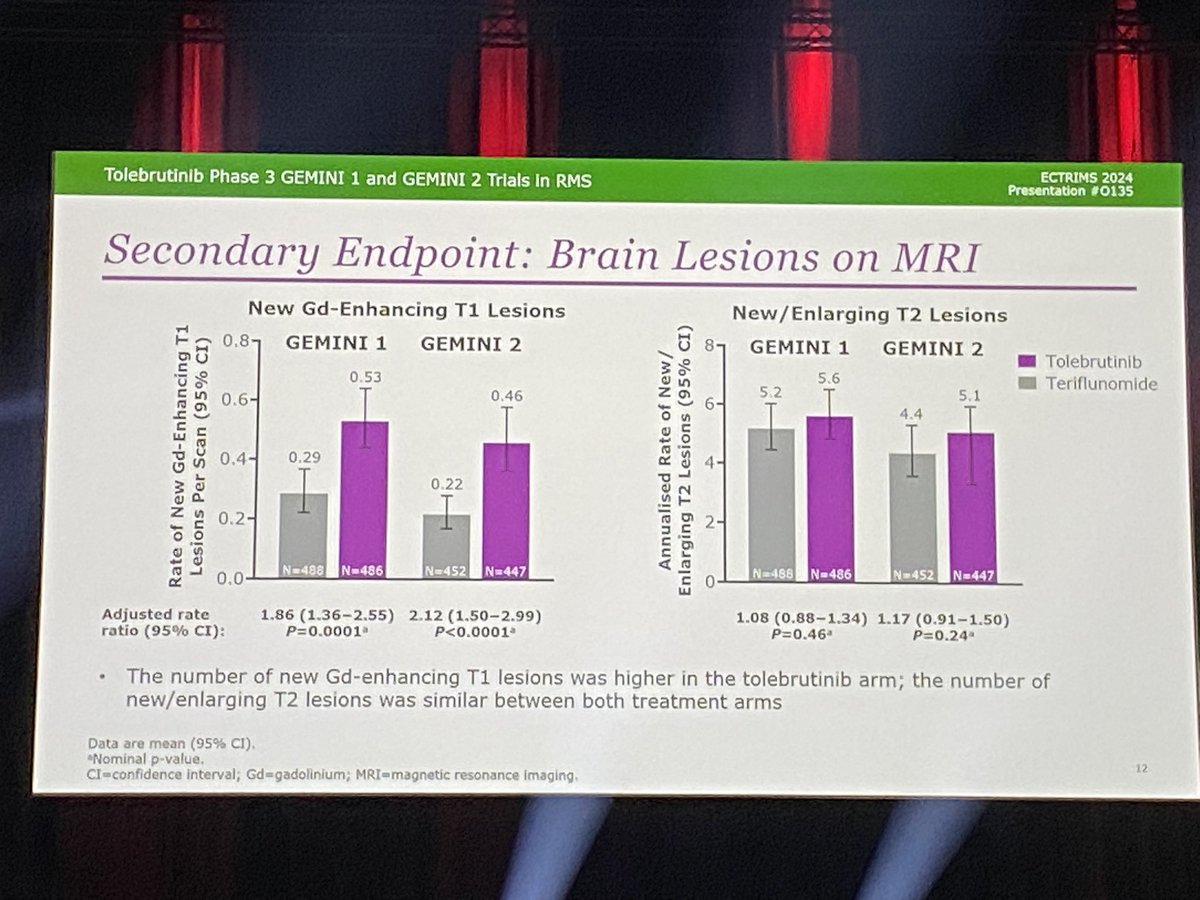
Low anti-inflammatory effect of tolebrutinib but clear effect on disease progression… but many analysis are pending: why no effect on brain atrophy/why is the effect Gd+ lesions low/…
Hopefully deep dive in the data will learn us more! 🤞🏻…let’s get on this 💪🏻
Fox Rob (US): tolebrutinib vs placebo in nrSPMS (HERCULES trial)
- 6m CDP: 31% decreases risk on tolebr
- 3m CDP: 24% “
- 6m CDI: increased chance on tolebr
- brain atrophy: no difference 🤔
Hopes are up for a change for persons with SPMS 🤞🏻👏🏻💪🏻
#ECTRIMS2024
Jiwon Oh (US): tolebrutinib vs teriflunimode in RRMS (GEMINI trials).
- ARR : no difference!
- 6m CDW: 29% reduction on tolebr
- 3m CDW: 27% reduction on tolebr
- New Gd+ lesions are higher on tolebrutinib!
- T2 lesions: no difference
- good safety profile
#ECTRIMS2024
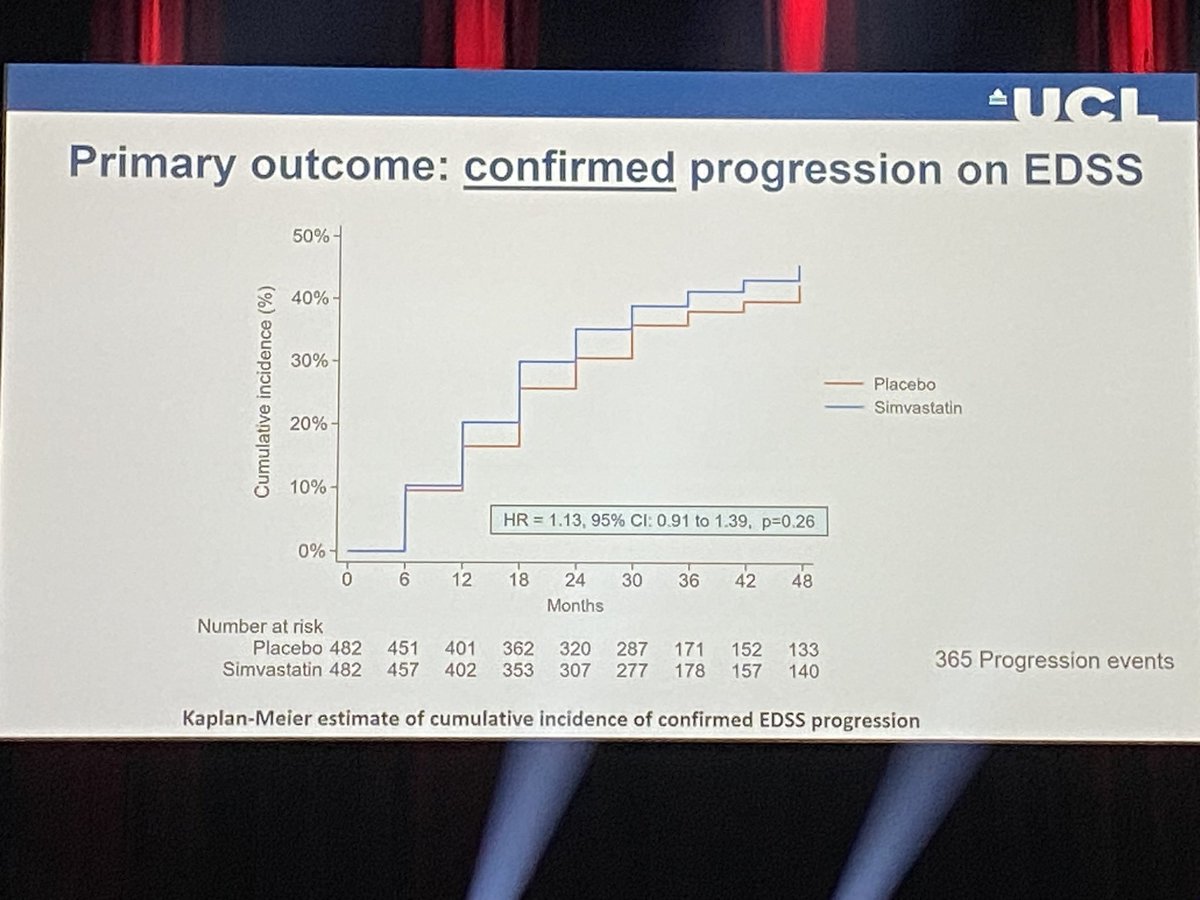
Chataway (UK): MS-stat2 study on simvastatin 80mg vs placebo in SPMS.
Large phase 3 trial, unfortunately no significant effect on confirmed progression 🤷🏻♂️
#ECTRIMS2024
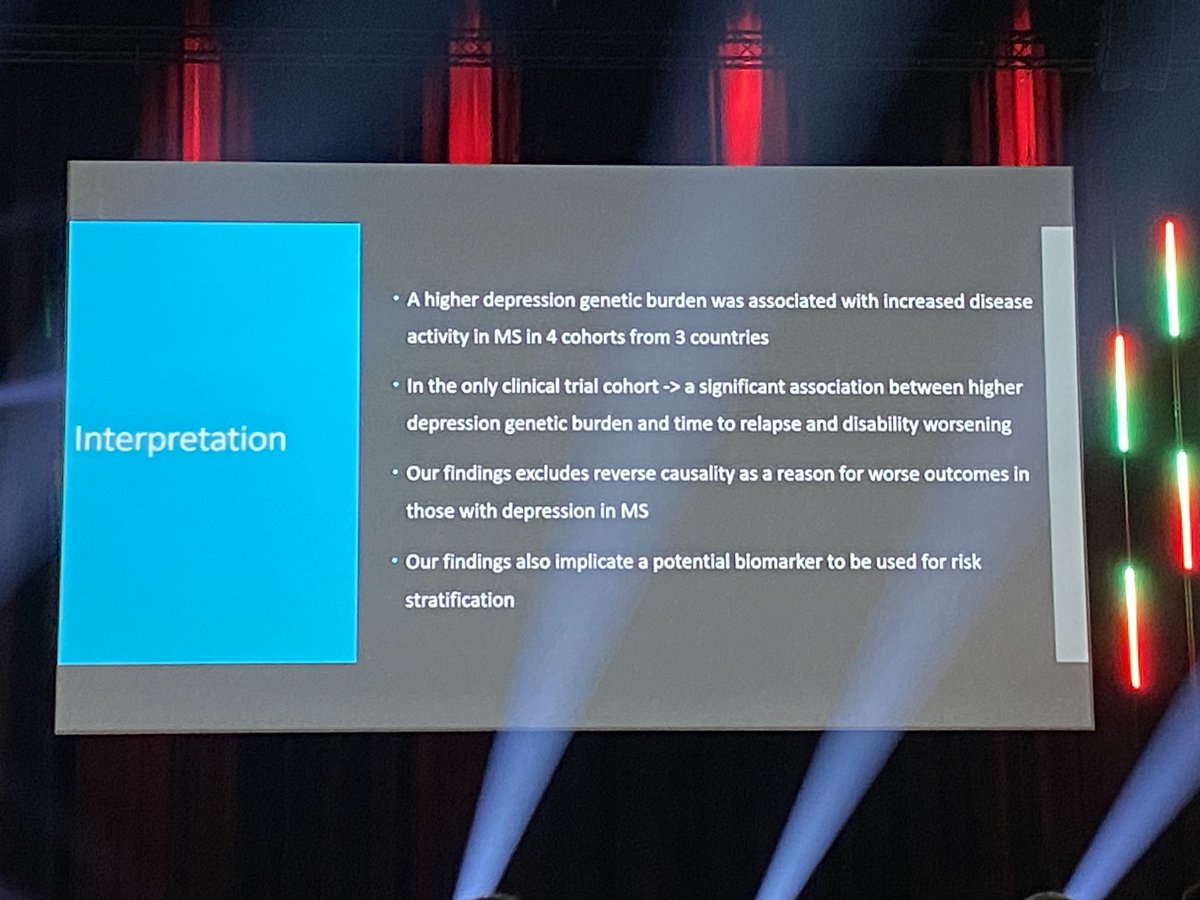
Kowalec (US) effect of genetic predisposition for depression on disease activity in #MS.
Higher risk of relapse and EDSS progression in persons with higher predisposition for depression!
Importance of comorbidity on MS disease course!
#ECTRIMS2024
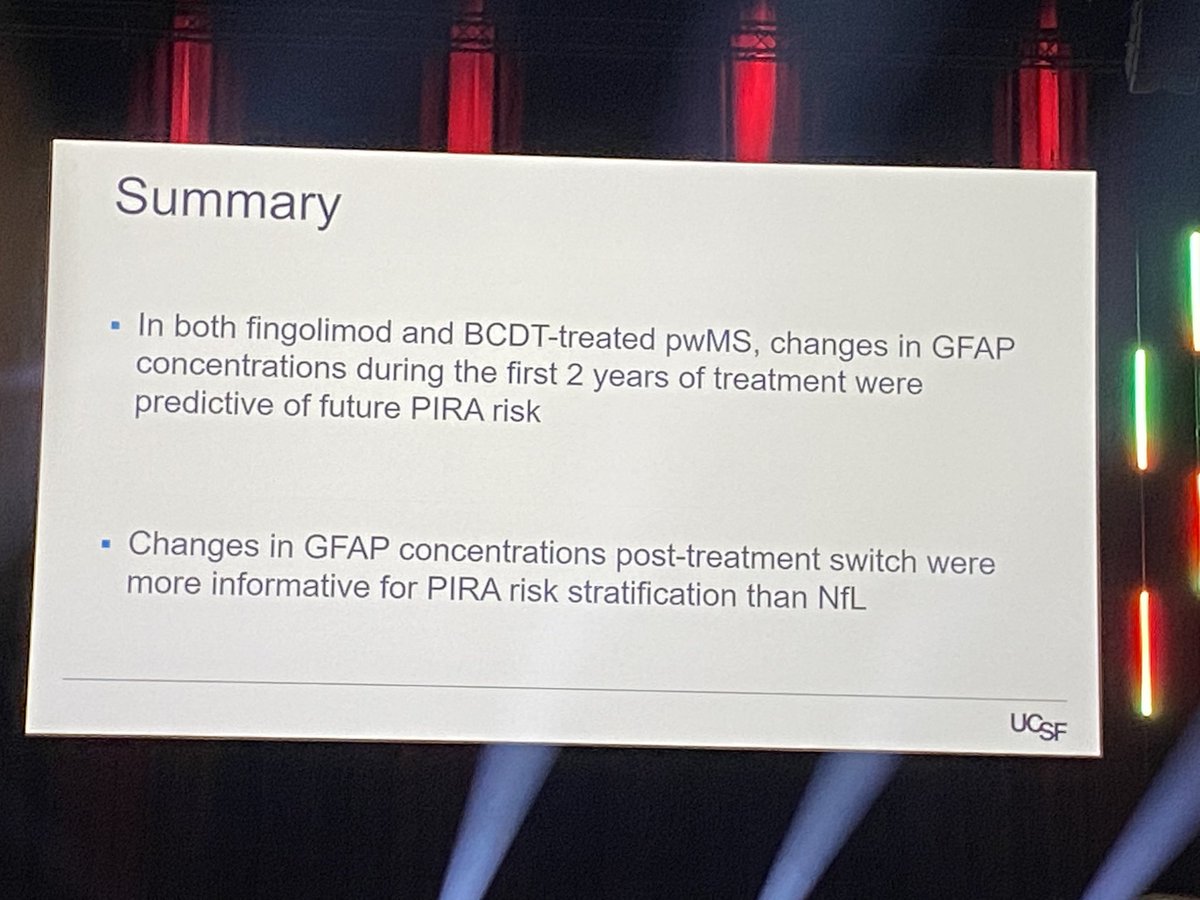
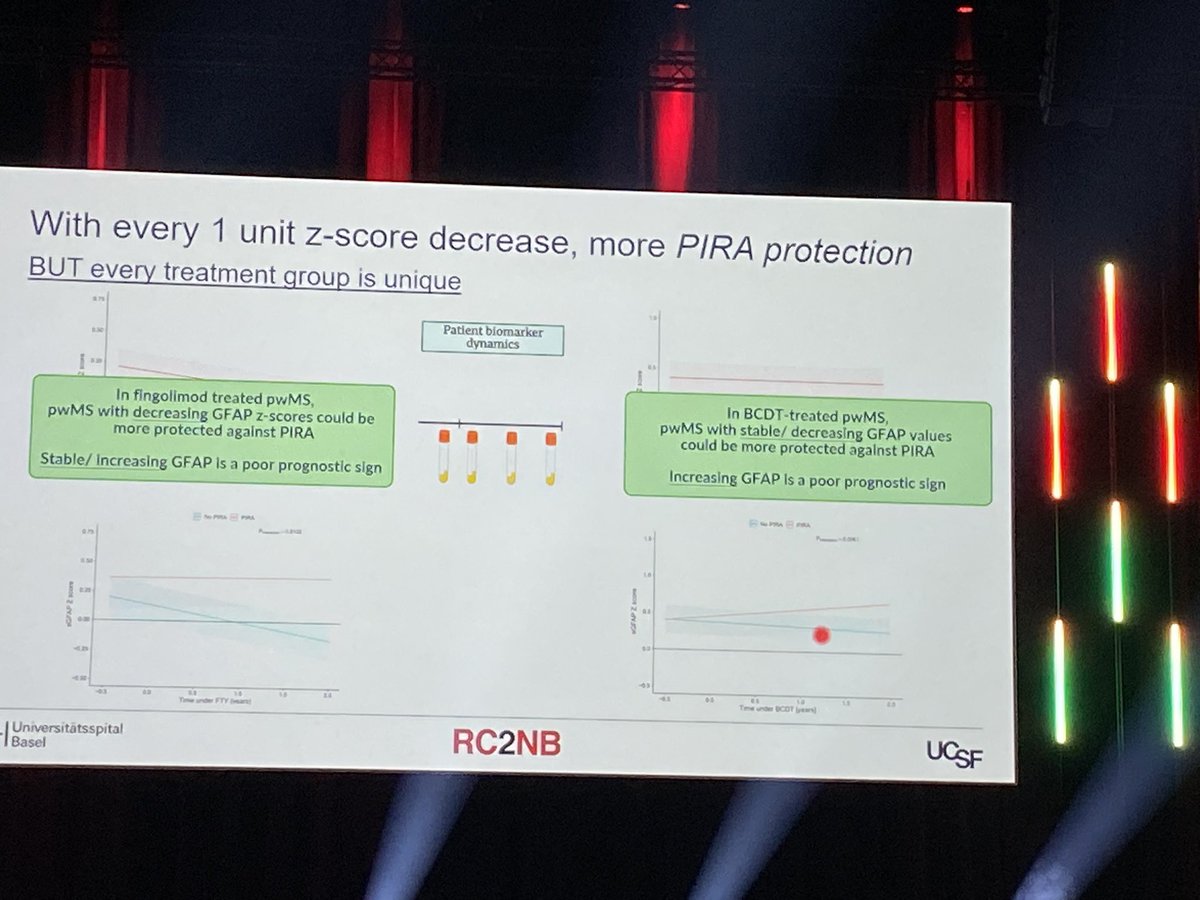
Abdelhak: effect of fingolimod and anti-CD20 treatment on sGFAP (z-scores) evolution & subsequent effect on PIRA in RRMS pts.
Lowering Z-GFAP in first two years of treatment decreases PIRA risk in subsequent years by 44 (aCD20)-55%(fingo) sNFL does not add effect
#ECTRIMS2024
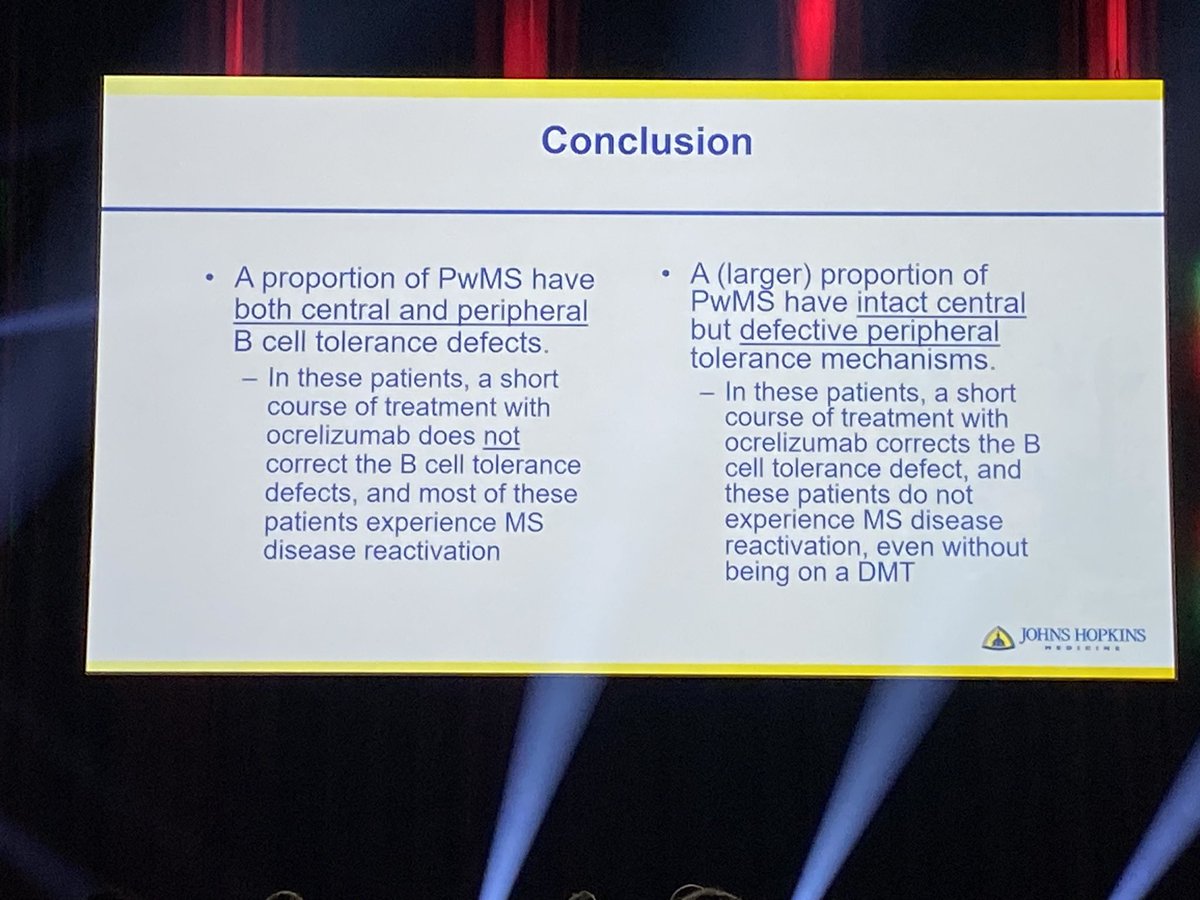
1. Unfortunately ‘measuring’ B cell tolerance defects is cumbersome and not readily available for the clinic 🤷🏻♂️
2. Extending the interval of course has also other goals: decreasing infections risk (and treatment costs) f.e.
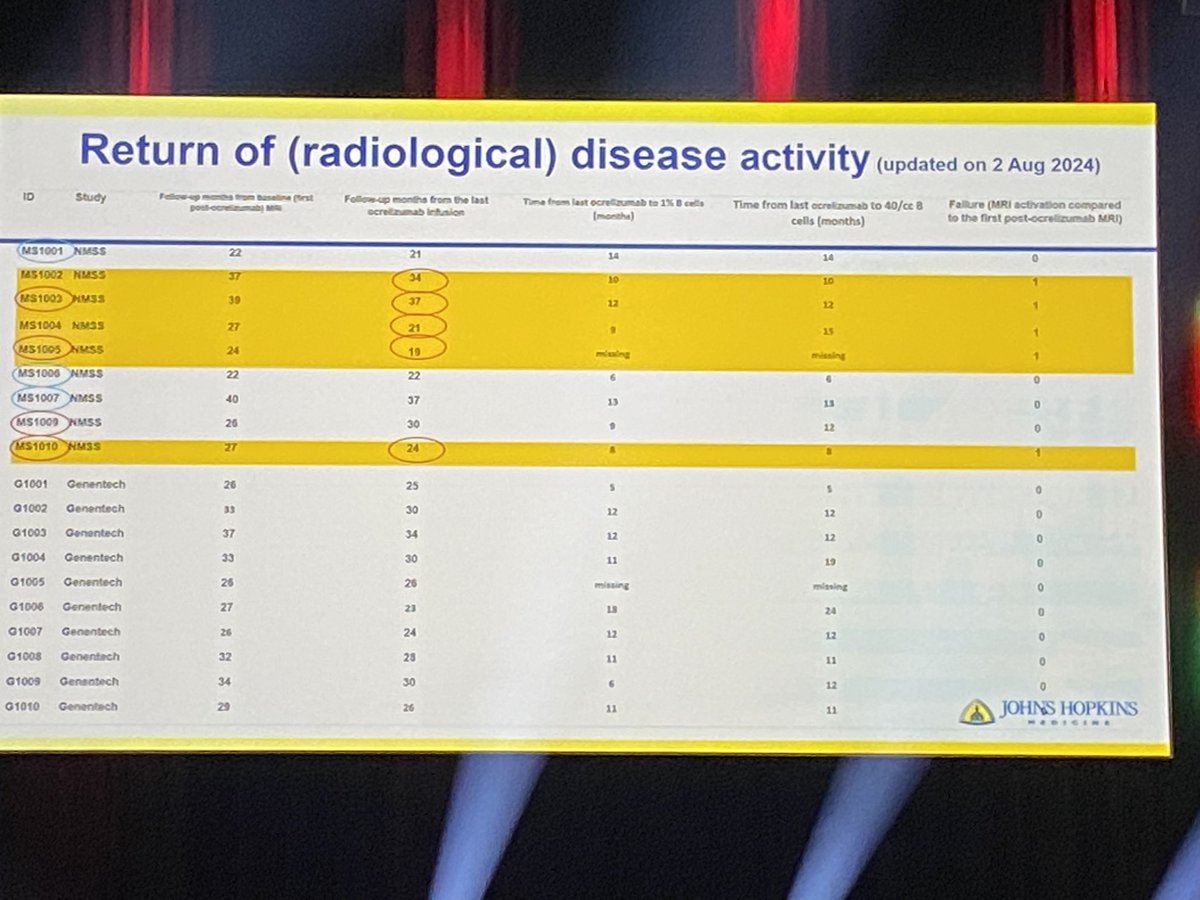
Nourbakhsh (US): prospective study on anti-CD20 ‘induction’ in RRMS:
6 months treatment only.
19 pts study…but nice results. Risk of reoccurrence of disease is higher in patients with central tolerance defect @baseline! B-cell return ‘as such’ is not predictive.
#ECTRIMS2024
1. Per patient, the interval seems to be quite stable (f.e. 10months every time before repopulation in same patient)
2. Cutoff used for repopulation was 10cells/ml (0,01/mcl) abs count!
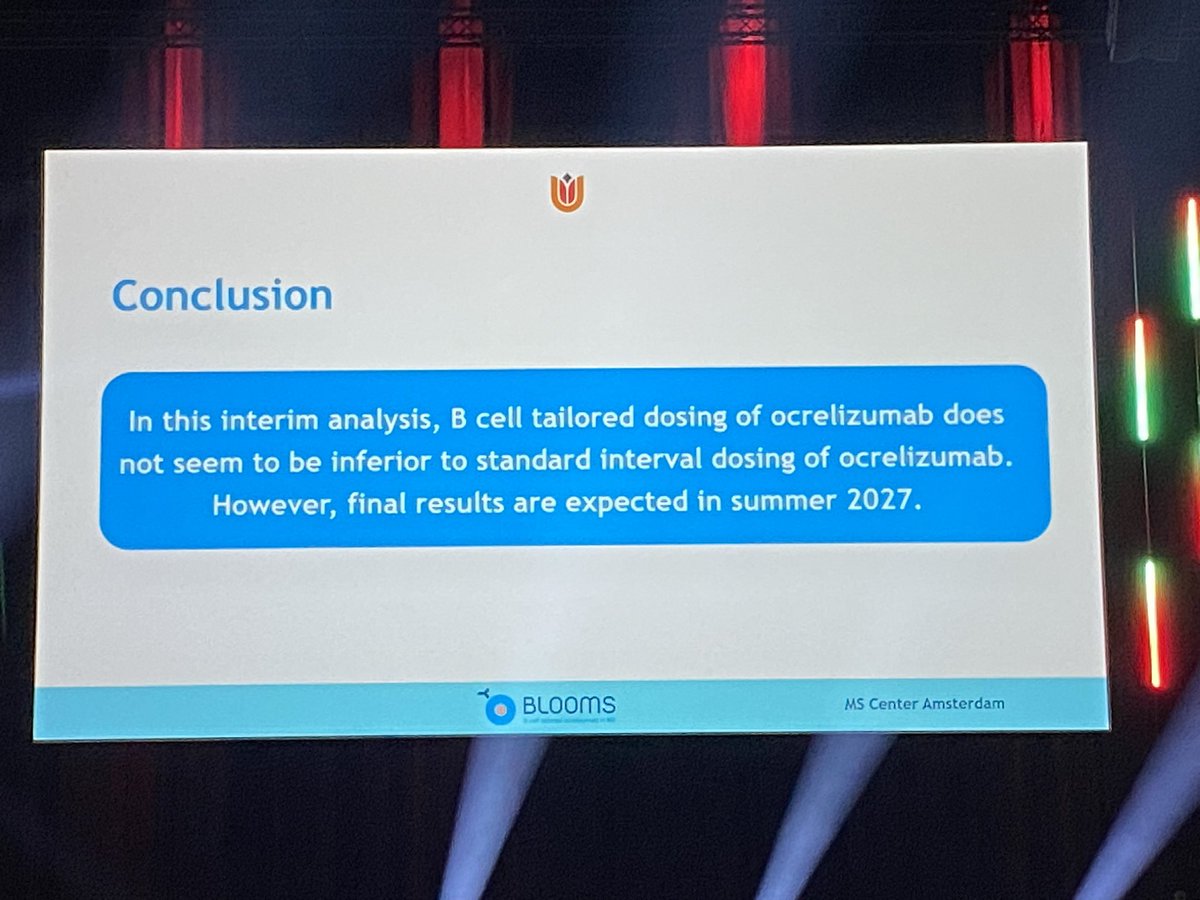
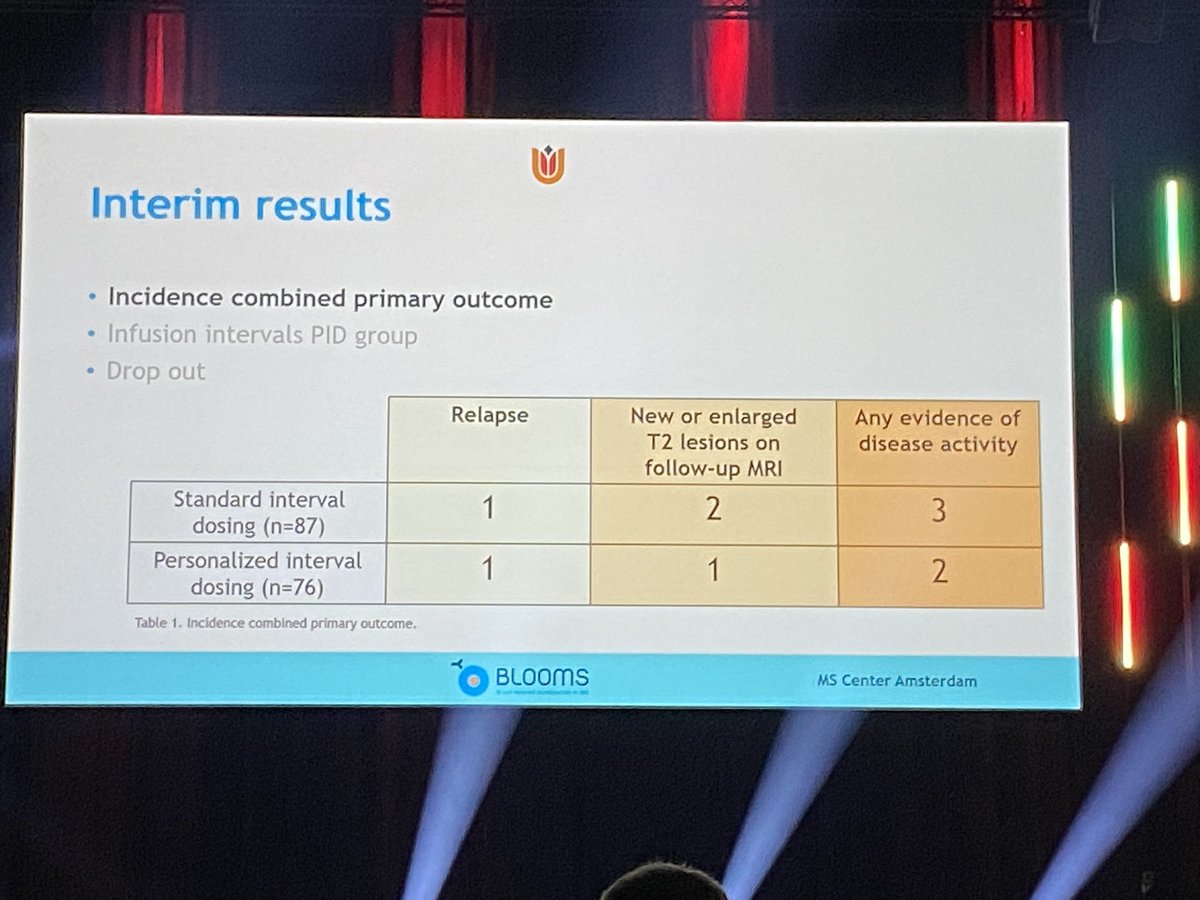
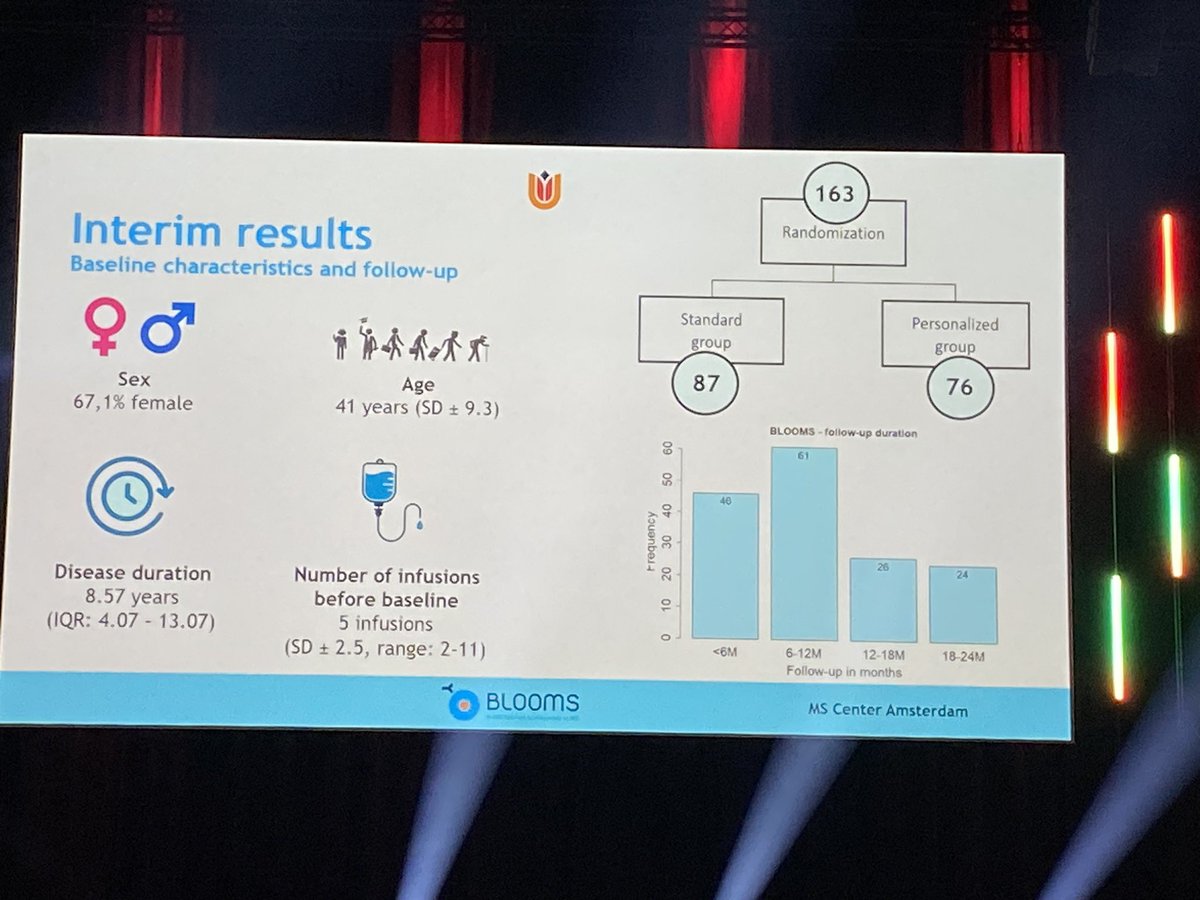
Hogenboom (NL): first results of BLOOMS trial: standard vs extended interval dosing of ocrelizumab based on B-cell counts. No difference in efficacy (Relapses and MRI lesions)!
(Long term results to follow)
Big difference in intervals are seen (see slide)
#ECTRIMS2024
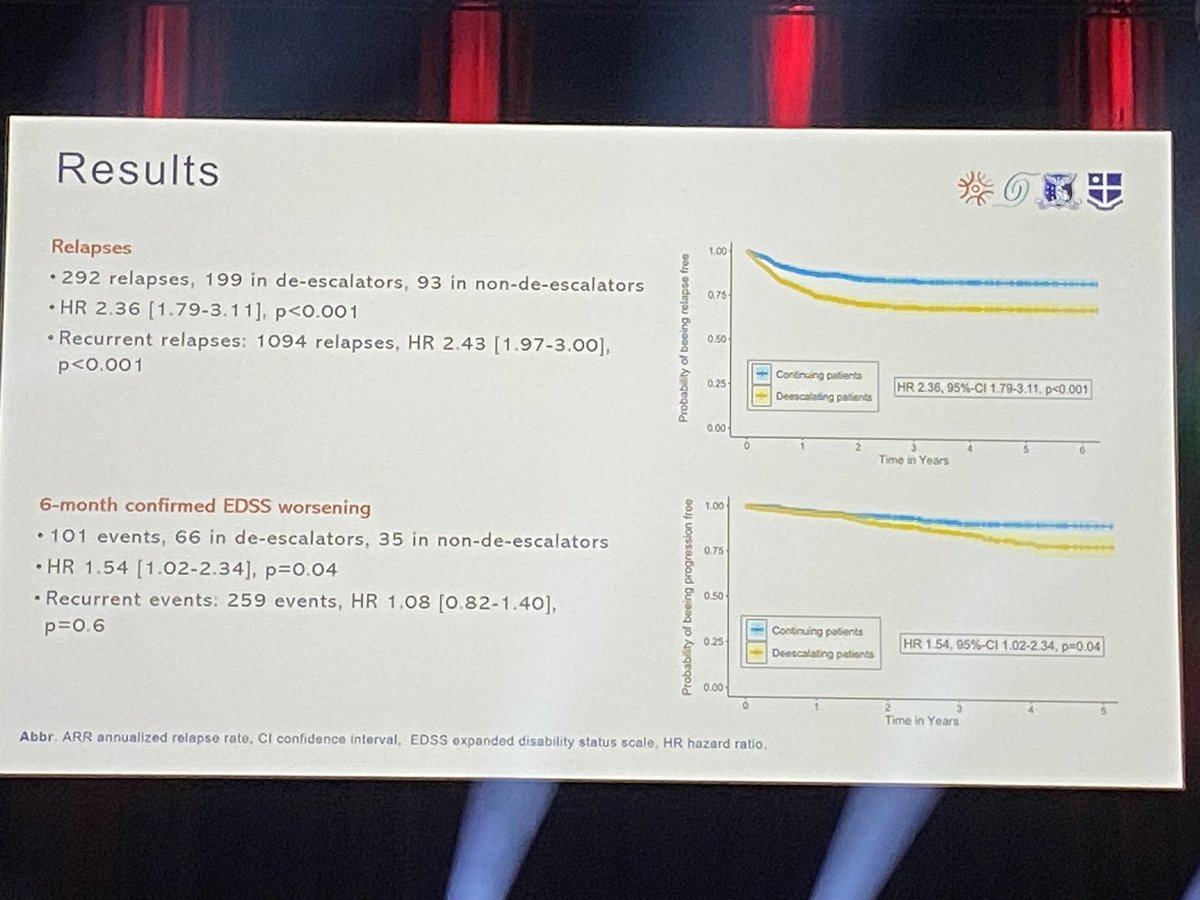
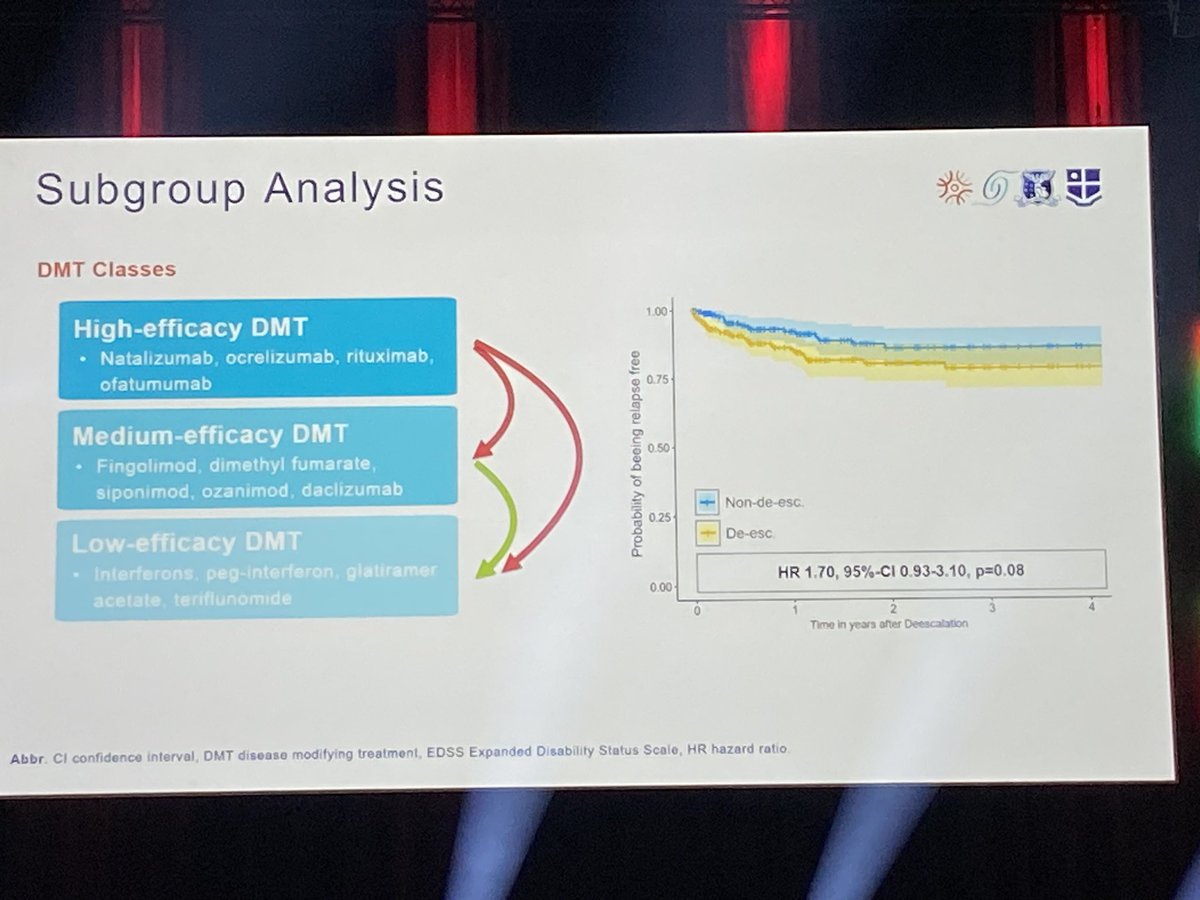
Müller Jannis: MSBase register study in de-escalation of treatment in #MS.
Increased risk of relapse reoccurring remains 2.3x higher.
No real cutoff for age, EDDS, disease duration or time from last relapse was found.
Note: Most were on natalizumab in this study!
#ECTRIMS2024
Bruijstens (NL): de-escalation (=reducing, not stopping) treatment in NMOSD/MOGAD.
Relapse risk decreases in MOGAD over time, but not in NMOSD (AQP4+). No real good option in the latter: relapse risk remains 9-38% (after stopping R/ 82%!!)
No good data on MOGAD.
#ECTRIMS2024