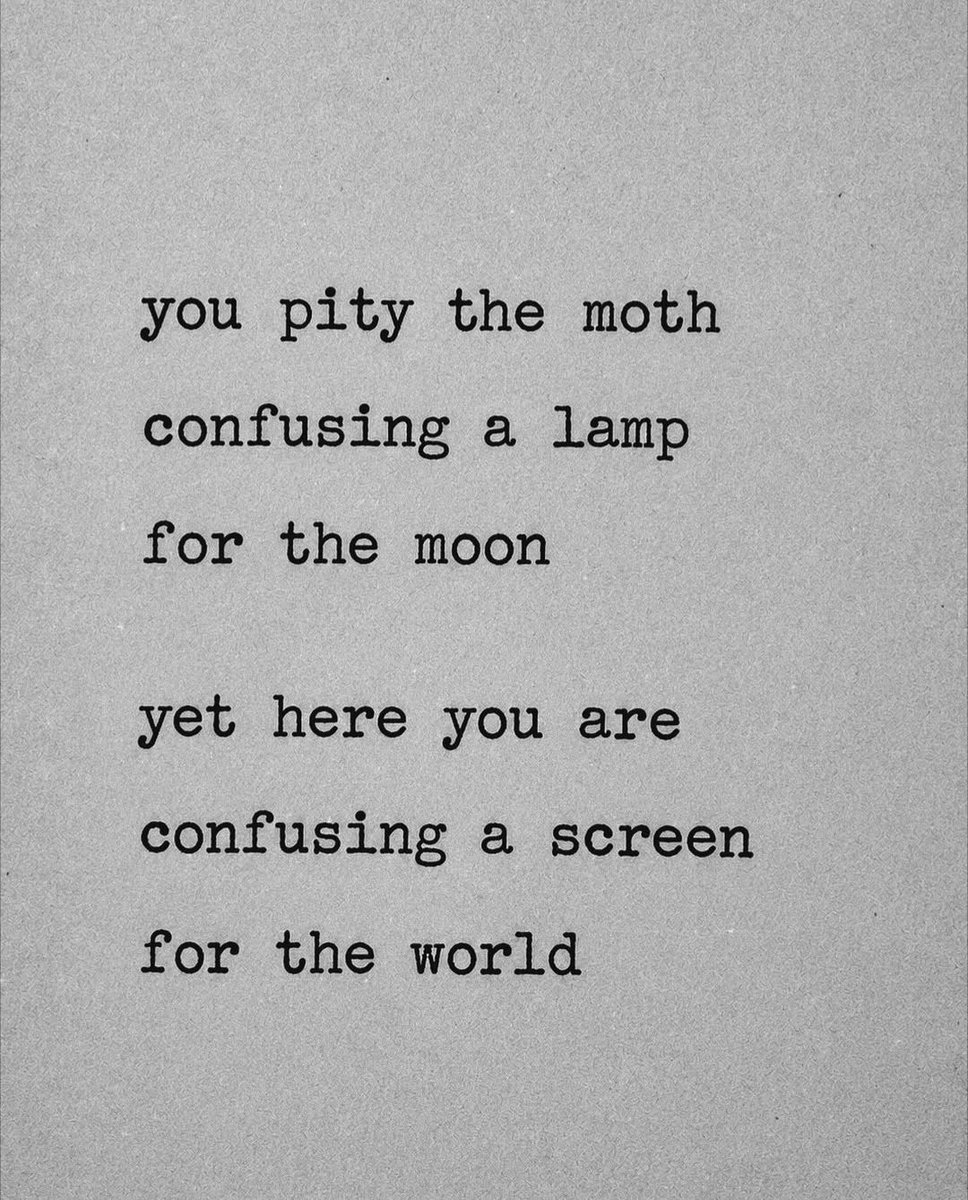
Are we actually living through the most chaotic era in human history, or are we just the first generation with social media forced to watch every tragedy on earth unfold in real time, and the world has always been this dark, we were just never close enough to see it?
At some point, someone has to respond to this garbage, so allow me @priyankac19 and excuse my French, but what the fuck @ReallySwara ?
Jauhar was not a TED Talk about chastity. It was not a family honour killing. It was not a rape survivor being told to die. It was women looking at a breached fort and an incoming force whose habit, on the record, was to convert the women of a defeated court into harem stock. Kamala Devi of Gujarat did not “move on.” She was taken. Deval Devi was taken later and passed through that court like loot with a pulse. That is the second room in the house you keep deleting so your question can sound holy.
“Does a rape survivor not deserve to live after rape?”
Yes. In 2026. With a phone, a statute, a court, a hospital, a city to run to. Congratulations on discovering the Indian Constitution.
Now explain what that sentence has to do with women who had already lost the state. There was no FIR against Khalji. There was no Delhi to escape to. There was no climax dance where the vice-chancellor gets shamed and the credits roll. The state was the rapist. You are comparing a woman who can still leave the room to women whose room was the last room.
You shouted “chii” at a pregnant belly and decided the film was saying a girl child should not be born because a Muslim king might rape her. That is not analysis. That is you stuffing your column into someone else’s uterus. The shot is a woman who knows the child will not be born into a family. It will be born into inventory. You turned a funeral into a communal talking point and called the funeral the problem.
Then you asked what we are choosing to glorify.
Fine. Let’s use your scale.
You spent a career demanding that cinema stare at female sexuality without flinching. In Veere Di Wedding the country was asked to sit through you with a vibrator while your on-screen husband walked in. You defended it. You said it should shock people into laughter, not disgust. You said women are more than their private parts, in the same breath as the scene that made your private parts the poster. When you put sex on screen, it is agency. When Rajput women refuse to hand their sex to the men who just killed their city, you felt “reduced to a vagina.” That letter was not a theory of personhood. It was a tantrum about which vagina the camera is allowed to serve.
You keep saying the film tells survivors they are cowards for living. No. You are telling dead women they are cowards for refusing a harem. That is the inversion. A survivor who lives today is not a coward. A woman who walked into fire rather than become a concubine of the man who sacked her fort was not a coward either. Both things can be true because they are not the same event. You flattened them on purpose. A flattened event is easier to moralise. It is also a lie.
Nobody is asking modern India to revive jauhar. The film carried a disclaimer. History is allowed to be shown as history. What you want is a rule that the only permitted female death on screen is the kind that flatters your politics, and the only permitted female sex is the kind that flatters your brand.
So here is the actual simple question, since you asked for one:
When the choices are ash or a lifetime as sexual property of the men who just finished the massacre, and some women choose ash; who is the barbarian? The women in the fire, or the commentator in Delhi calling them a bad message for rape statistics?
You don’t get to loot their context, rename their refusal “chastity culture,” and then pose as the only adult in the room who cares whether survivors live. Survivors should live. The women in that scene were trying not to become the next consignment. If that distinction is too fine for you, the problem is not Padmaavat. The problem is that you need history to be a poster.
JUST IN: Thai police launch crackdown on sex workers in Pattaya ahead of the arrival of 5,000 U.S. sailors from the USS Abraham Lincoln, after nearly 280 days at sea.
MTech from IIT Kanpur.
MBA from Wharton.
Former 1994-batch IAS officer.
Worked in the Prime Minister’s Office
Then leadership roles at GE and Siemens before entering politics.
Today he simultaneously handles Railways, Electronics & IT, and Information & Broadcasting.
And during his ministerial tenure, he has been sitting in the middle of some of India’s most complicated transitions:
-5G rollout.
-Semiconductor manufacturing.
-Kavach and railway modernisation.
-Electronics manufacturing.
-India’s AI push.
You can agree or disagree with governments and policies.
But I genuinely like seeing a minister who seems to understand the technology he is talking about , and can then make a regular person understand it too.
This is spot on! Whether it is the US or China https://t.co/mbZDNecPqA, their success in frontier tech has been powered by large investment in fundamental R&D first - typically conducted at universities and research institutions.
If India is to enable its best talent to succeed similarly, large scale reforms in how universities and research institutions are built and managed are urgently required.
The Modi govt should aggressively push for urban reform (at least in BJP ruled states).
Even a few Potemkin villages would really help set the tone.
Police reforms (in states ruled by the BJP) would be another big win.
We have a lot of the basics right, but without fixing the police and urban governance, we will forever remain pseudo post colonial society.
This is crazy. @sanjeevsanyal has been a pioneer in many a venture in India but I had no idea he'll become the first to shut up this far Left, Bengali regionalist, 100% Anti-Free Speech Reddit thread and force them to admit facts. This must be his biggest achievement 🎃
#WATCH | Kolkata | West Bengal Governor RN Ravi says, "... Post-independence rulers made concerted efforts to ensure we forgot our history, leading us to accept the history narrated by the British as the absolute truth. During that era, when there was a concerted attempt to transform our culture and values, an attempt that appeared likely to succeed, it seems they did indeed succeed, given the deep-seated mental slavery that persists within us to this day. During that era, our great figures, saints, and noble souls made numerous such efforts... India is not merely a political state; India is a nation, and that nation stands upon the foundation of Sanatan Dharma..."