What Perplexity is building with its Personal Computer feels much bigger than a better chatbot or a smarter search box. It feels like the early version of something I’ve been waiting for:
an AI that doesn’t just respond but stays, works, remembers context, and actually helps you operate. Call it multiAgentic
That is the shift.
Most of us still use AI in bursts.
Open app. Ask question. Get answer. Close app. Repeat.
But real productivity does not happen in bursts.
Real work is messy, continuous, layered, and spread across emails, files, meetings, notes, browser tabs, half-finished thoughts, and things you were supposed to do three days ago.
That’s why this idea is so interesting.
Perplexity’s Personal Computer is not exciting because it is “AI.”
It is exciting because it points to a future where AI becomes persistent infrastructure for an individual.
A machine that stays on.
A system that keeps context alive.
An interface that can keep working on your behalf.
That’s a very different product philosophy.
And honestly, this is where I think the real winners in AI will emerge not from building faster tools, but from building deeper continuity.
Here’s how I think people should understand it:
This is not “ask me anything” AI.
This is more like:
•keep my work environment alive
•understand what I am trying to get done
•reduce my decision fatigue
•handle repetitive cognitive load
•and let me intervene only when needed
That is founder-grade leverage.
Because once AI starts helping you with continuity, not just queries, it stops being a novelty and starts becoming an unfair advantage.
Where I see the real use cases :
If I were using this seriously, these are the kinds of workflows I’d want it to own:
1. Founder dashboard mode
Review my emails, meetings, priorities and open loops every morning, then give me a clean operator brief:
what matters, what is blocked, what can be delegated, what needs my call.
2. Creator engine mode
Take my scattered thoughts, voice notes, saved links, screenshots and half-written captions and turn them into structured content ideas for LinkedIn, Instagram, scripts and newsletters. (Imagine this in Apple’s ecosystem where all your notes and ideas are shared)
3. Research assistant mode
Track a sector, company, competitor or trend over time and only surface what is actually important . not noise, just signal.
4. Execution mode
Help move projects forward when I’m not actively sitting at my desk , organizing, preparing, sorting, drafting, connecting dots.
5. Personal operating system mode
Travel plans, bills, renewals, reminders, documents, schedules all the invisible clutter that eats mental bandwidth (even buying vouchers every month from your credit card portal)
That is the part people should focus on.
Not the gimmick.
Not the launch hype.
Not the “wow AI can do this too” moment.
The real story is this:
We are entering the era of AI that can sit beside your workflow, not outside it.
What creators and founders need to learn now
The next skill is not just prompting.
It is ORCHESTRATING .
Because the value of persistent AI is not in one smart answer.
The value is in building a machine around you that keeps making your life more organized, more intelligent, and more leveraged.
That’s why I think this category is worth watching very closely.
Not because it is perfect today.
But because it hints at where personal computing itself may be going next.
From software you open,
to systems that stay with you.
From AI as a feature,
to AI as an operating layer.
And once that clicks, you stop asking,
“what can this tool do?”
You start asking,
“what parts of my life and work should never require my full attention again?”
THAT’S THE RIGHT QUESTION
@AskPerplexity@perplexity_ai@AravSrinivas
Announcing Personal Computer.
Personal Computer is an always on, local merge with Perplexity Computer that works for you 24/7.
It's personal, secure, and works across your files, apps, and sessions through a continuously running Mac mini.
ELON MUSK ON HATERS." If evil people hate you, you are probably on the right track. Not all opposition is a red flag. Some of it is a green one". #ElonMusk#Leadership
@zebpaysupport please upgrade my kyc verification to level 3, my current kyc is level 2. I am not able to do crypto withdrawals at this low limit. @zebpay
@zebpay@zebpaysupport please upgrade my kyc verification to level 3 kyc as I am not not able to withdraw crypto. I already have level 2 kyc verification.
🚨 Most people know Thomas Edison.
Almost nobody knows Gurtej Singh Sandhu.
And that’s the problem.
Edison had 1,093 U.S. patents.
Gurtej Singh Sandhu has crossed 1,400+ U.S. patents and over 2,200 patents worldwide.
One of the most prolific inventors in modern history.
Yet no school textbook made him a household name.
No movie made him a legend.
No viral quote page turned him into a poster boy of innovation.
But every day, billions of people use the world he helped build.
Your smartphone.
Your laptop.
Your cloud storage.
Your gaming console.
Your AI tools.
Your data centres.
Your digital life.
A part of that memory infrastructure exists because of the quiet work of this man.
Born in London to Indian Sikh parents, Gurtej moved to Amritsar when he was just three.
His father was a chemistry professor.
He grew up as the kind of kid who didn’t just ask “how does this work?
He asked deeper questions.
Why does the universe work this way?
What is matter?
What is meaning?
What can science unlock?
From Amritsar to Guru Nanak Dev University.
From IIT Delhi to a PhD in Physics at the University of North Carolina.
Then in 1990, he joined Micron Technology in Idaho.
And stayed.
Not for headlines.
Not for celebrity.
But to solve some of the hardest problems in semiconductor memory.
His work in advanced chip materials, titanium nitride deposition, atomic layer deposition, DRAM and NAND scaling helped memory chips become smaller, faster, denser and more reliable. MEMORY CHIPS .
So Basically ,
While the world celebrated the people building apps. Gurtej Sandhu was helping build the invisible foundation those apps run on.
This is the kind of innovation we don’t talk about enough.
Not the loud kind. The patient kind. The lab kind.
The kind where one breakthrough becomes a process.
One process becomes a chip.
One chip becomes a billion devices.
And one quiet scientist changes how humanity stores information. That is real impact.
For every student sitting in a small town.
For every engineer who feels unseen.
For every immigrant trying to build in a new country.
For every curious mind who thinks their questions are too strange.
Remember Gurtej Singh Sandhu.
The future is not always built by the loudest person in the room.
it is built by the quietest one.
The one still asking better questions.
🔥 Drop a “Gurtej” if this story deserves to be known more widely.
#GurtejSandhu #Semiconductors #Innovation #IndianOrigin #STEM #Micron #Technology #HiddenGenius #Engineering #Inventors
SpaceX is actively hiring world-class engineers/physicists for SpaceXAI, even if you have zero prior experience in AI. Smart humans figure it out fast.
Please send an email with ~3 bullet points demonstrating evidence of exceptional ability to [email protected].
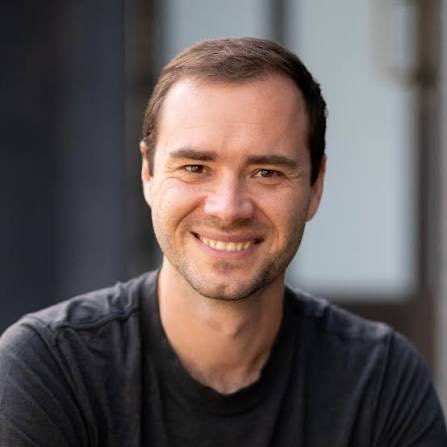
Global Update : Andrej Karpathy just joined Anthropic.
The Code Alchemist Who Rewired AI
Most engineers write code. Andrej Karpathy rewired how humanity interacts with intelligence.
If you’ve tracked the AI revolution, you haven’t just seen his name. you’re living in a world he helped architect.
His journey reads like a definitive timeline of modern computing:
- The Stanford Foundation: He didn't just study computer vision, his CS231n course defined it for a generation of developers worldwide.
- The OpenAI Genesis: As a founding scientist, he helped build the sandbox where the early breakthroughs of the LLM era were born.
- The Tesla Autopilot: He led the AI team that taught millions of cars to "see" and navigate the physical world in real-time.
- The Karpathy Superpower: While others hide behind dense math, Andrej creates clarity. He can deconstruct a trillion-parameter model with the elegance of a master teacher and the raw execution of a hacker who builds a GPT from scratch over a weekend just to show it can be done.
In a tech world crowded with noise and hype, he remains the ultimate practitioner of first-principles thinking.
Some build products. Some build industries. Andrej Karpathy quietly prototypes the future.
If you want to see how simply this genius explains AI models watch this video -
https://t.co/mLbREDExm6
Personal update: I've joined Anthropic. I think the next few years at the frontier of LLMs will be especially formative. I am very excited to join the team here and get back to R&D. I remain deeply passionate about education and plan to resume my work on it in time.
🚨 In 2017, Narayana Murthy said:
“AI is much more hype than reality.”
But honestly?
Murthy is just the latest entry in a VERY long list of brilliant people who completely misread the future.
History is full of smart people confidently laughing at the next big thing…
right before it changed the world.
Here’s the “This Will Never Matter” Hall of Fame:
• Paul Krugman , Nobel Prizewinning economist :
“The Internet’s impact on the economy will be no greater than the fax machine.”
• Bill Gates (Microsoft co-founder):
“Spam will be solved within two years.”
• Steve Jobs (Apple):
“Subscription music is bankrupt.”
• Steve Ballmer (then Microsoft CEO):
“There’s NO chance the iPhone gets significant market share.”
• Steve Chen (YouTube co-founder):
“There just aren’t that many videos people want to watch.”
Here’s what’s fascinating:
These aren’t idiots.
These are some of the smartest, richest, most influential people on Earth.
And yet they STILL keep getting exponential technology wrong.
Why?
Because humans are terrible at seeing the second half of the curve.
3 reasons this keeps happening:
1. People judge the future using today’s limitations.
In 2007, smartphones without keyboards looked stupid.
In 2025, humanoid robots look too expensive.
Bitcoin looked useless.
EVs looked impractical.
AI looked overhyped.
Every breakthrough looks “impossible” right before it becomes obvious.
2. Humans think linearly. Technology moves exponentially.
Battery costs.
AI scaling.
Compute power.
Network effects.
Distribution.
The curve always feels slow…
until suddenly it doesn’t.
3. Old empires instinctively resist new systems.
Banks mocked Bitcoin.
Auto giants mocked Tesla.
Traditional software companies mocked AI agents.
When your success depends on the old model surviving, the new model feels dangerous , not exciting.
Murthy wasn’t stupid in 2017.
He was early to dismiss something that hadn’t yet crossed the inflection point.
And history keeps punishing people who underestimate inflection points.
The biggest mistake in tech history is not believing too early.
It’s realizing too late.
Bitcoin isn’t disappearing.
EVs aren’t a trend.
AI agents and humanoids are not “just hype.”
They’re the next platform shift.
The future always sounds ridiculous before it becomes inevitable.
So the real question is:
What are YOU dismissing today that will look obvious in 2030?
Drop your answer below.
This comment section could age VERY badly
#AI #Bitcoin #Tesla #HumanoidRobots #TechHistory #Innovation #FutureTech
Product Idea :-
An AI agent that accesses my photo gallery and tracks macros from all i ate every day!
I just have to take the pic of my food.
One intelligence layer keeps on analysing and suggesting on what can I possibly eat next based on my health goals!
Few months ago, I set up a small AI hacker team at @Razorpay
2 people. Today, they are 100x builders.
With AI, people aren’t the constraint.
Org structure is.
So now I’m scaling this.
If you’ve spent the last few months deep in
Claude Code / OpenClaw / agents
(or anything similar)
and feel like you’ve seen the future - this is for you.
What you’ll do:
Review workflows.
Rebuild them with AI.
Ship fast.
Perks:
• Unlimited tokens. Any model. Any tool.
• Real problems at massive scale
• No hierarchy. Direct access across the org
No compensation ceiling.
Pay scales with output, not title.
Outperform the org, out-earn it.
No resume.
Send me what you’ve built with AI. (Form below)
Bangalore | Full-time | Builders only.
दूरेण ह्यवरं कर्म बुद्धियोगाद्धनञ्जय ।
बुद्धौ शरणमन्विच्छ कृपणाः फलहेतवः ॥
— भगवद्गीता 2.49
अर्थ
हे धनंजय, केवल फल के लिए किया गया कर्म, समत्व-बुद्धि से किए गए कर्म से बहुत नीचे है।
इसलिए बुद्धि और सही दृष्टि का आश्रय लो, क्योंकि केवल फल के पीछे भागने वाले लोग छोटी सोच वाले होते हैं।