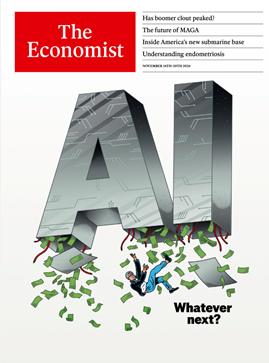
A couple of decades ago, someone published a study of the dates of on-air CNBC appearances by Abby Joseph Cohen (former Goldman Sachs investment policy committee chairman) and Robert Prechter of the Elliott Wave Institute. Prechter was viewed for many years as leaning bearish, whether that's fair or not, and Cohen was seemingly always bullish.
That study revealed that when Prechter was on it was a market bottom, and Cohen tended to be on at market tops. I tried reconstructing that from the dates of their appearances published in CNBC's video archives, which only went back a few years, and I did not find quite the same results. Perhaps the phenomenon had evolved and was not as effective.
The point of the observations has less to do with those individual analysts, and more to do with reflecting the moods of the booking producers at CNBC, who seek to get relevant guests for the conditions of the moment.
If you are under 42, I’m only going to say this ONCE.
Michael Burry concentrated roughly 79% of his last public portfolio into just two positions.
His allocation at the time was as follows:
1) $PLTR - 65.0% of the portfolio
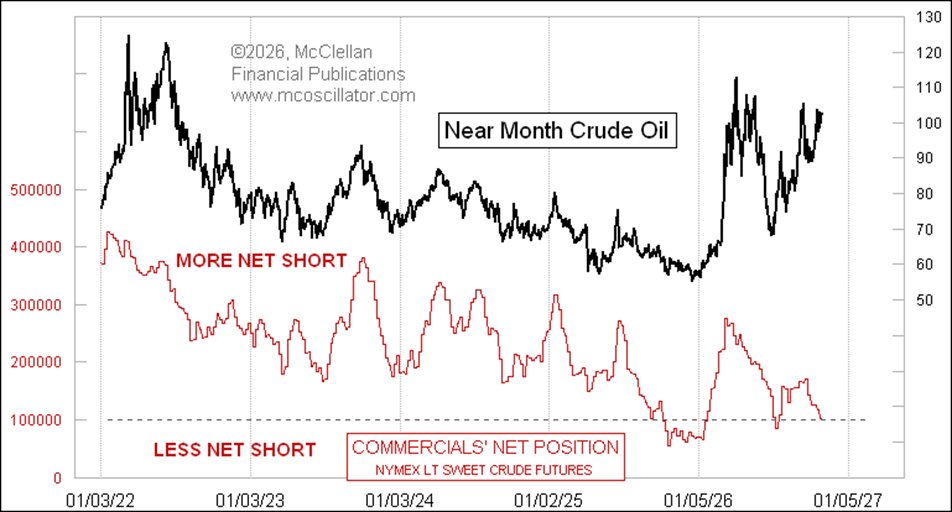
COT Report data show something intriguing for crude oil futures. Prices are still high, but the big money "commercial" traders are paring their shorts. These traders have been continuously net short to varying degrees since 2009. Many of them are producers, using futures markets to lock in pricing on their future production.
When prices go up they short more. When prices go down, they short less, figuring they can get a better price for their production by waiting. It is quite irregular to see prices moving up and their net short position going down.
The implication is that oil prices are headed a lot higher.
“This summer’s inflation readings do not tell me that underlying trends have meaningfully improved,” the chair said.
Market interpreting statement as a surprise.
This represents a radical departure from the post-GFC policies of Bernanke, Yellen and Powell, and embraces the policies of yesteryear embodied by the late Alan Greenspan.
The better point of this comparison is to ask yourself: What happens to stock prices in the months after a very low UMich sentiment reading like this one?
The Trump administration has other tariff authorities it could pivot to …
Sec. 122 of 1974 Trade Act. A maximum tariff of 15% for up to 150 days to address deficits. No investigation required. This authority has never been invoked before.
Sec. 338 of the 1930 Tariff Act. A maximum tariff of 50% to address "unreasonable" trade practices. No investigation required. This authority has never been invoked before.
Sec. 301 of the 1974 Trade Act. No limit on tariffs to address “unfair” trade practices. Investigation required. The Trump administration has used this authority before.
Sec. 232 of the 1962 Trade Expansion Act. No limit on tariffs to address threats to “national security.” Investigation required. The Trump administration has used this authority before.
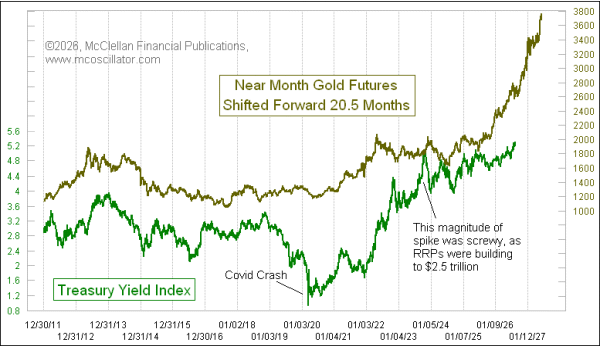
I’ve been thrown off by the persistence of low oil prices in the face of exorbitant precious metal prices. This is one area where President Trump deserves a lot of credit. Historically gold and oil have tended to trade in the same direction, albeit on somewhat of a lag.