In the aftermath of the Iranian strikes on Kuwait Airport, a Kuwaiti military @KuwaitArmyGHQ officer was seen carrying the debris of what is most likely a Mado MD550 engine. The MD550 is a 50-horsepower, four-cylinder, two-stroke gasoline piston engine manufactured in Iran by Mado. It is a reverse-engineered copy of the German Limbach L550E aircraft engine and is widely known as the primary powerplant used in the Iranian-designed Shahed-136 attack drone.
⚠️ Security Alert | #Iran#SITREP | A significant escalation unfolded across the Gulf region during the early hours of Saturday 06 June 2026, involving direct military exchanges between Iran and the United States and prompting air defense responses in both Kuwait and Bahrain. Iranian and American officials have provided sharply different accounts of the events, though both sides acknowledge a series of military actions in and around the Strait of Hormuz.
According to a statement published by @FarsNews_Agency issued by the Islamic Revolutionary Guard Corps (IRGC), the incident began at approximately 1:30 a.m. local time when four vessels described as violating tankers attempted to leave the Strait of Hormuz without authorization and ignored warnings from the IRGC Navy. Iranian officials claimed one vessel was engaged and disabled while the remaining ships turned back after receiving warnings. No independent confirmation of the incident has emerged.
Iranian authorities told @Tasnimnews_Fa that around 2:00 a.m., U.S. drones struck communications infrastructure in both Qeshm Island and Sirik in Hormozgan Province. Shortly afterward, Iranian media outlets reported multiple explosions in the area. Correspondents from state television @iribnews_irib in Sirik stated that several blasts were heard around 2:30 a.m., while local reports suggested military activity along parts of Iran's southern coastline.
The United States presented a different version of events. @CENTCOM announced that American forces intercepted and destroyed four Iranian one-way attack drones that were approaching the Strait of Hormuz. According to CENTCOM, the drones represented an immediate threat to maritime traffic operating in one of the world's most important shipping corridors. Following the interceptions, U.S. forces conducted strikes against Iranian coastal surveillance radar sites in Goruk and on Qeshm Island. American officials described the operation as a defensive measure intended to prevent additional attacks against shipping and coalition assets in the region.
Iran subsequently announced retaliatory action. The IRGC stated that ballistic missiles were launched against Ali Al Salem Air Base in Kuwait and facilities associated with the U.S. Fifth Fleet @US5thFleet in Bahrain. Iranian officials described the strikes as a response to what they characterized as American aggression against Iranian territory. The statement warned that any future attacks would trigger a broader response and suggested that continued escalation could place maritime traffic through the Strait of Hormuz at risk.
As the situation developed, air defense systems across the northern Gulf became active. Kuwait's General Staff @KuwaitArmyGHQ confirmed that Kuwaiti air defenses were responding to incoming missile and drone threats and advised residents that sounds of explosions were likely related to interception operations. Similar reports emerged from Bahrain, where @BDF_Bahrain air defense systems were reportedly engaged against aerial targets. Videos circulating on social media appeared to show interception activity over Arabian gulf territory, although the footage has not been independently verified.
CENTCOM later stated that Iran launched seven ballistic missiles toward Kuwait and Bahrain following the American strikes on Iranian radar facilities. According to preliminary U.S. assessments, six of the missiles were intercepted while a seventh failed to reach its intended target. American officials reported no casualties among U.S. personnel and rejected Iranian claims that facilities connected to the Fifth Fleet headquarters in Bahrain had been damaged.
#Iran#SITREP | Iranian official and semi-official media outlets continued to focus on nuclear diplomacy, regional security issues, regime legitimacy, and ideological messaging tied to Eid al-Ghadir.
On the nuclear file, @FarsNews_Agency rejected recent reporting by Saudi-owned Al Arabiya claiming that Tehran had agreed to transfer part of its enriched uranium stockpile to a third country. Citing a source close to Iran's negotiating team, Fars described the report as inaccurate and stated that nuclear-related issues are not currently under discussion in the present phase of negotiations. According to the source, discussions regarding uranium stockpiles have been deferred to later stages and remain contingent on what Tehran described as concrete and definitive actions by the United States, as well as agreement on several unresolved core issues.
Iranian officials also continued to highlight allegations of regional involvement in recent military operations against Iran. Foreign Minister Abbas @Araghchi, quoted by @Tasnimbrk, stated that Iran possesses evidence indicating that U.S. and Israeli forces utilized UAE airspace and territory during recent operations. He reiterated that Tehran had previously warned regional governments against permitting the use of their bases by the United States. Araghchi emphasized that any Iranian response would be directed at U.S. military facilities rather than the territory of neighboring states, while acknowledging that some regional governments had opposed the use of their territory against Iran.
Separately, @Tasnimnews_Fa announced that it would soon publish information attributed to a Resistance Front security source concerning communications and statements by @AnwarGargash, diplomatic adviser to the UAE president. The announcement appeared intended to maintain public pressure on Abu Dhabi amid continuing tensions following the recent conflict.
Iran's media ecosystem also devoted significant attention to commemorating the late Supreme Leader Ayatollah Ali @khamenei_ir, who is increasingly referred to in official discourse as the "Martyr Leader of the Revolution." State-affiliated outlets promoted the documentary "The Day I Was With You," which portrays popular affection for Khamenei through previously unpublished footage of public meetings and interactions. The documentary was broadcast in connection with the anniversary of the beginning of his leadership in June 1989 and forms part of a broader effort to reinforce revolutionary legitimacy and continuity following his death.
Religious and political messaging surrounding Eid al-Ghadir remained prominent. In Friday prayers in Tehran, acting Friday prayer leader Mohammad Javad Haj Ali Akbari framed Ghadir as the foundation of Islamic political authority and argued that Wilayat al-Faqih represents the continuation of the Ghadir tradition during the occultation of the Twelfth Imam. He praised Ayatollah Khomeini as the figure who revived this model of governance and portrayed both Khomeini and Khamenei as central guardians of the Islamic Republic's ideological mission.
Haj Ali Akbari also combined ideological themes with contemporary political messaging. He described Iran as occupying a favorable strategic position following the recent conflict and argued that the regional balance of power has shifted in Tehran's favor. He claimed that Iran's deterrence capabilities now extend beyond military assets to political signaling, asserting that official Iranian statements alone can influence adversaries' calculations. He further stated that Iran maintains full leverage over the Strait of Hormuz and characterized the Islamic Republic as an emerging global power.
On domestic issues, Haj Ali Akbari warned against framing economic hardship and resistance policy as competing priorities. He called for the establishment of an economic command structure modeled on military headquarters to address inflation, market manipulation, and cost-of-living concerns while preserving public support for the state's broader strategic agenda.
Judicial authorities simultaneously emphasized distinctions between reconciliation and national security enforcement. While Ayatollah Mojtaba Hosseini Khamenei approved pardons, sentence reductions, or commutations for more than 2,000 convicts on the occasion of Eid al-Ghadir, Deputy Head of the Judiciary stated that individuals convicted of espionage, security-related offenses, or activities deemed harmful to national security would not be eligible for amnesty. The announcements projected both clemency and continued firmness toward perceived security threats.
Iranian officials and state-affiliated media also continued to promote messaging focused on civilian casualties, particularly children affected by conflict. Foreign Ministry spokesman @IRIMFA_SPOX marked the International Day of Innocent Children Victims of Aggression by condemning the deaths of children in Gaza, the West Bank, Beirut, and several locations inside Iran. He accused the United States and Israel of responsibility for civilian casualties and argued that no military objective can justify harm to children. The statement was accompanied by commemoration of Seyedeh Mahya Sedighi Saber and other Iranian children killed during the 2025 conflict, reinforcing Tehran's effort to frame recent events through a humanitarian and victimization narrative.
Two U.S. @usairforce@USAFCENT@BoeingAirplanes KC-46A Pegasus tanker aircraft have been orbiting for hours near Siri Island in the Persian Gulf. The island is administered by Iran, although the United Arab Emirates maintains a claim to it.
Moments ago, CENTCOM forces shot down four Iranian one-way attack drones that were launched toward the Strait of Hormuz. The attack drones posed an immediate threat to regional maritime traffic. U.S. forces subsequently struck Iranian coastal surveillance radar sites in Goruk and on Qeshm Island to defend against further attacks.
American forces remain vigilant and postured to respond to unjustified Iranian aggression in self-defense.
Two U.S. @usairforce@USAFCENT@BoeingAirplanes KC-46A Pegasus tanker aircraft have been orbiting for hours near Siri Island in the Persian Gulf. The island is administered by Iran, although the United Arab Emirates maintains a claim to it.
Although the Houthis have officially banned U.S.-made products, an arms dealer in North Yemen, an area under their control, is reportedly offering a batch of newly manufactured American-made weapons for sale. The shipment includes Anderson AM-15 rifles, a widely used AR-15-style semi-automatic platform manufactured in Kentucky, and Springfield Armory SAINT Edge rifles, a premium AR-15 series known for its upgraded features and performance. The batch also reportedly includes a short-barreled M4-style rifle finished in a desert camouflage pattern, along with a Penn Arms P-540 40mm multi-shot launcher.
A Houthi fighter manning a DShK heavy machine gun aboard a patrol boat in the Red Sea recites the movement’s pledge of loyalty: “O God, we pledge our allegiance to You, to Your Messenger, to Imam Ali, and to the one whose loyalty You have commanded us to uphold, our master and leader Abdulmalik Badr al-Din al-Houthi. O God, we disavow Your enemies, the enemies of Your Prophet, the enemies of Imam Ali, and the enemies of the one whose loyalty You have commanded us to uphold, our master and leader Abdulmalik al-Houthi.”
Good luck negotiating with them under the pretext, “We are all equal!”
I can’t confirm whether this @Instagram page actually belongs to the Gaza traders featured in the video, whether it’s a fan account, or whether someone is simply reposting their content. However, I’ve received many requests in my DMs asking for the original source, and this is the only account I’ve been able to find so far. Please tread carefully. Thank you.
https://t.co/PeCEhjlDg2
A group of options traders in Gaza joking about how finance influencers on social media are surrounded by Lamborghinis, waterfront mansions, luxury vacations, and six-figure trading accounts, while they’re trading from a rooftop with slow internet, post-war destruction in the background, and accounts so small they celebrate single digit gain. Funny, self-deprecating, and unexpectedly moving. A reminder that resilience isn’t about perfect conditions. It’s about showing up anyway.
Thank you to @PakTVGlobal and @SanaMaqboool for hosting me alongside @DBDesRoches. The link to the full interview is below. This excerpt highlights my analysis of the economic pressure Iran is facing as a result of U.S. sanctions and the naval blockade. https://t.co/YThL8e3PU8
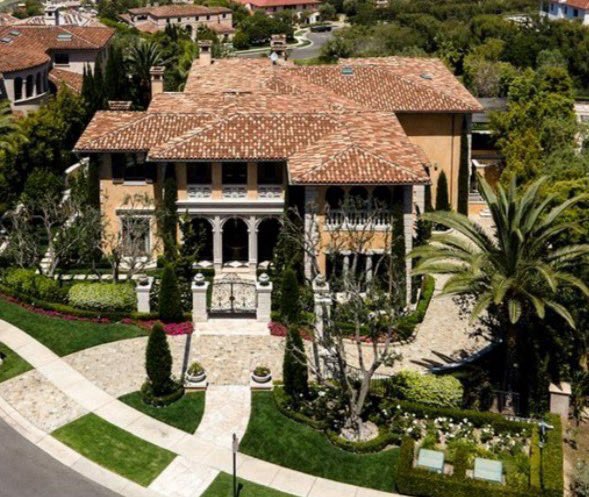
Today, Jamshid Ghomi, a dual U.S.-Iranian citizen who lives in a $35 million mansion in Orange County, California, was arrested on a federal criminal complaint charging him with selling computer technology to Iranian companies and Iran’s government — including technology to help with Iran’s military and nuclear program.
These allegations assert that the defendant violated U.S. sanctions against Iran, aided one of our nation’s enemies, supported Iran’s nuclear program, and got rich doing it. Not only is he being arrested today, but we also are beginning the process of seizing his mansion, which was purchased with his illegal proceeds. Thanks to the work of @USAttyEssayli’s office, @CommerceGov, and @IRS_CI’s Los Angeles Field Office, he will face the full force of justice.
Today, Treasury’s Office of Foreign Assets Control is designating a network of individuals, entities, and vessels responsible for shipping hundreds of millions of dollars’ worth of Iranian-origin liquid petroleum gas⸺intentionally disguised as Omani LPG⸺to end users in South and East Asia.
A group of options traders in Gaza joking about how finance influencers on social media are surrounded by Lamborghinis, waterfront mansions, luxury vacations, and six-figure trading accounts, while they’re trading from a rooftop with slow internet, post-war destruction in the background, and accounts so small they celebrate single digit gain. Funny, self-deprecating, and unexpectedly moving. A reminder that resilience isn’t about perfect conditions. It’s about showing up anyway.
SBO Palladino was pleased to meet with @AmbJamilaRajaa to discuss regional developments and ways the United States and Yemen can work together to counter the Iran-backed Houthi threat, protect freedom of navigation, and advance regional security.
#Iran#SITREP | Iranian official and semi-official media outlets continued to focus on nuclear diplomacy, regional security issues, regime legitimacy, and ideological messaging tied to Eid al-Ghadir.
On the nuclear file, @FarsNews_Agency rejected recent reporting by Saudi-owned Al Arabiya claiming that Tehran had agreed to transfer part of its enriched uranium stockpile to a third country. Citing a source close to Iran's negotiating team, Fars described the report as inaccurate and stated that nuclear-related issues are not currently under discussion in the present phase of negotiations. According to the source, discussions regarding uranium stockpiles have been deferred to later stages and remain contingent on what Tehran described as concrete and definitive actions by the United States, as well as agreement on several unresolved core issues.
Iranian officials also continued to highlight allegations of regional involvement in recent military operations against Iran. Foreign Minister Abbas @Araghchi, quoted by @Tasnimbrk, stated that Iran possesses evidence indicating that U.S. and Israeli forces utilized UAE airspace and territory during recent operations. He reiterated that Tehran had previously warned regional governments against permitting the use of their bases by the United States. Araghchi emphasized that any Iranian response would be directed at U.S. military facilities rather than the territory of neighboring states, while acknowledging that some regional governments had opposed the use of their territory against Iran.
Separately, @Tasnimnews_Fa announced that it would soon publish information attributed to a Resistance Front security source concerning communications and statements by @AnwarGargash, diplomatic adviser to the UAE president. The announcement appeared intended to maintain public pressure on Abu Dhabi amid continuing tensions following the recent conflict.
Iran's media ecosystem also devoted significant attention to commemorating the late Supreme Leader Ayatollah Ali @khamenei_ir, who is increasingly referred to in official discourse as the "Martyr Leader of the Revolution." State-affiliated outlets promoted the documentary "The Day I Was With You," which portrays popular affection for Khamenei through previously unpublished footage of public meetings and interactions. The documentary was broadcast in connection with the anniversary of the beginning of his leadership in June 1989 and forms part of a broader effort to reinforce revolutionary legitimacy and continuity following his death.
Religious and political messaging surrounding Eid al-Ghadir remained prominent. In Friday prayers in Tehran, acting Friday prayer leader Mohammad Javad Haj Ali Akbari framed Ghadir as the foundation of Islamic political authority and argued that Wilayat al-Faqih represents the continuation of the Ghadir tradition during the occultation of the Twelfth Imam. He praised Ayatollah Khomeini as the figure who revived this model of governance and portrayed both Khomeini and Khamenei as central guardians of the Islamic Republic's ideological mission.
Haj Ali Akbari also combined ideological themes with contemporary political messaging. He described Iran as occupying a favorable strategic position following the recent conflict and argued that the regional balance of power has shifted in Tehran's favor. He claimed that Iran's deterrence capabilities now extend beyond military assets to political signaling, asserting that official Iranian statements alone can influence adversaries' calculations. He further stated that Iran maintains full leverage over the Strait of Hormuz and characterized the Islamic Republic as an emerging global power.
On domestic issues, Haj Ali Akbari warned against framing economic hardship and resistance policy as competing priorities. He called for the establishment of an economic command structure modeled on military headquarters to address inflation, market manipulation, and cost-of-living concerns while preserving public support for the state's broader strategic agenda.
Judicial authorities simultaneously emphasized distinctions between reconciliation and national security enforcement. While Ayatollah Mojtaba Hosseini Khamenei approved pardons, sentence reductions, or commutations for more than 2,000 convicts on the occasion of Eid al-Ghadir, Deputy Head of the Judiciary stated that individuals convicted of espionage, security-related offenses, or activities deemed harmful to national security would not be eligible for amnesty. The announcements projected both clemency and continued firmness toward perceived security threats.
Iranian officials and state-affiliated media also continued to promote messaging focused on civilian casualties, particularly children affected by conflict. Foreign Ministry spokesman @IRIMFA_SPOX marked the International Day of Innocent Children Victims of Aggression by condemning the deaths of children in Gaza, the West Bank, Beirut, and several locations inside Iran. He accused the United States and Israel of responsibility for civilian casualties and argued that no military objective can justify harm to children. The statement was accompanied by commemoration of Seyedeh Mahya Sedighi Saber and other Iranian children killed during the 2025 conflict, reinforcing Tehran's effort to frame recent events through a humanitarian and victimization narrative.
#Iran#SITREP | A series of political and military statements were issued in Iran in conjunction with Eid al-Ghadir and the anniversary of the passing of Khomeini.
In a message marking the occasion, Iran's Supreme Leader Mojataba Khameni emphasized the importance of national unity, awareness, and resilience in confronting what he described as enemy plots. He stressed that social cohesion and mutual trust among the people are essential for overcoming pressure and challenges. He also called on officials to take measures that strengthen public confidence and support national stability.
At the same time, First Vice President Mohammad Reza Aref stated that the months following the martyrdom of the Leader of the Islamic Revolution had reinforced national solidarity. He said the Iranian people had succeeded in turning challenges and external pressures into opportunities to strengthen the national economy and domestic capabilities.
Parliament Speaker Mohammad Bagher Ghalibaf stated that Iran would respond firmly and proportionately to any attack. He said the country continues to follow the principles of independence and resistance to foreign pressure established by Khomeini.
Foreign Minister Abbas Araghchi warned that any hostile action against Iran would receive an immediate and decisive response. He argued that military pressure and sanctions had failed to achieve their objectives and that continuing such policies would not produce different results.
President Masoud Pezeshkian called for drawing inspiration from the values of justice, honesty, and public service associated with Eid al-Ghadir and Imam Ali. He said addressing current challenges requires prioritizing human dignity, solving people's problems, and protecting their rights.
On foreign policy and security issues, Ebrahim Azizi, Chairman of the National Security Committee in Parliament, stated that ending military confrontations on all fronts remains a key priority in any political understanding. He also reaffirmed Iran's support for what it describes as the Resistance Axis.
The Houthis continue to target Saudi Arabia through coordinated messaging across their media and social media ecosystems.
The Houthi-controlled Sana’a-based outlet @YemenNewsTv recently aired a segment attacking Saudi television channels and influencers, accusing Saudi media of promoting normalization with Israel, distorting Islam, and demonizing Muslims.
Houthi Politburo member @hezamalasad also criticized Saudi Arabia, stating that the Saudi government remains subordinate to Washington and that the land of the Two Holy Mosques continues to host American military bases used against Islamic countries and movements that support Palestinian causes. He argued that this reality is inconsistent with the religious significance of the holy sites and their expected role in serving Muslim interests.
Even Saudi commentators advocating regional de-escalation have faced Houthi attacks. After Saudi journalist @aloqeliy argued that a prolonged sectarian conflict between Arabs and Iran serves Israeli strategic interests and praised Gulf states for pursuing de-escalation rather than confrontation with Iran, @TvAlmasirah presenter @Bandarhetar dismissed the remarks as detached from reality. He accused Saudi Arabia of attempting to distance itself from responsibility for regional crises while remaining openly aligned with Israel and the United States.
Houthi Politburo member @FAbotalb defended the movement’s doctrine of divine leadership, arguing that critics readily accept democratic, socialist, secular, and hereditary political systems, including the rule of the Al Saud and Al Nahyan families, while rejecting what he described as Islam’s divinely ordained system of governance. He characterized the Houthi concept of leadership as a divine authority connected to God and capable of producing dignity, strength, and victory.
Anti-Saudi rhetoric has also been amplified by senior Houthi media officials. @Nasr__Amer, Vice Chairman of the Houthi Media Authority and head of the movement’s official news agency, accused Saudi Arabia of inflicting suffering on Yemenis living in areas outside Houthi control. He cited fuel and gas shortages, prolonged electricity outages, insecurity, economic collapse, currency depreciation, and repression in Hadramawt, Aden, and other governorates. He described the Saudi presence as an occupation and predicted its eventual downfall.
Senior Houthi media official @ryq1665978 used Eid al-Ghadir celebrations to promote the movement’s ideological and sectarian narrative. Sharing photos and videos showing fireworks, illuminated mountains, and public celebrations in Dhamar, he claimed that all Yemenis were celebrating the Day of Wilaya of Imam Ali except those who had chosen allegiance to the United States, Israel, and their Saudi and Emirati allies. He further argued that loyalty to Imam Ali serves as protection against alignment with Jews, Christians, and foreign powers.
The messaging highlights a continuing pattern of anti-Saudi political, religious, and media rhetoric by senior Houthi officials and affiliated outlets. It also demonstrates the movement’s ongoing promotion of its doctrine of divinely sanctioned leadership and Wilayat Ali, while portraying Saudi Arabia as aligned with American and Israeli interests and framing regional disputes through an ideological and sectarian lens.
Read more: https://t.co/FpbypcT8AM
Abdulmalik al-Houthi Ends Months of Restraint Toward Saudi Arabia: After months of indirect criticism, the Houthi leader is once again blaming Riyadh for Yemen’s economic and political crisis. https://t.co/kbmMPU6b3P
In an exclusive interview with CNN, Lebanese President Joseph Aoun tells CNN's Christiane Amanpour his message to the IRGC and Iran. https://t.co/V3msdvKCG1
Reading @FDD's @NatalieEcanow deep dive on Qatar's investment portfolio in the United States which spans a wide range of strategic sectors. Its largest commitments include approximately $148.5 billion in @Boeing aircraft orders and more than $55.9 billion in approved U.S. @StateDeptPM Foreign Military Sales since 2011. Qatar has also invested over $8 billion in @ENERGY Golden Pass LNG project in Texas and signed a $25 billion memorandum of understanding between the Qatar Investment Authority and @GoldmanSachs. Doha has directed roughly $8.8 billion to American universities @Cornell@CarnegieMellon@TAMU@Georgetown@NorthwesternU since 2001, making it the largest foreign funder of U.S. higher education. Qatar's real estate holdings are valued at around $8.9 billion and include landmark assets such as @CityCenterDC, the Plaza Hotel, the Park Lane Hotel, and a stake in the @EmpireStateBldg . The country has also established a growing presence in the technology sector through investments in firms such as @xai@databricks@Axiom_Space@QuantumScapeCo@SoFi@AppliedInt@Uber.
https://t.co/MFo5AXFBSi