WIN the very first Ken Miles Triple Pack produced... No.1 of 1500 😲
All you have to do to enter is
1) Follow @scalextric
2) Reshare this post
3) Reply ‘done’
Head over to our Facebook and Instagram pages for additional entries and don’t forget to share with your friends and family!
Entries close on 24th May at 11:59 PM. This competition is not affiliated with X. Full T&Cs can be found on the Scalextric website.
In 1963, Delia Derbyshire hand built the Doctor Who theme using only tape loops, oscillators, filters, and razor blades, long before techno existed.
[📽️ BBC Archive]
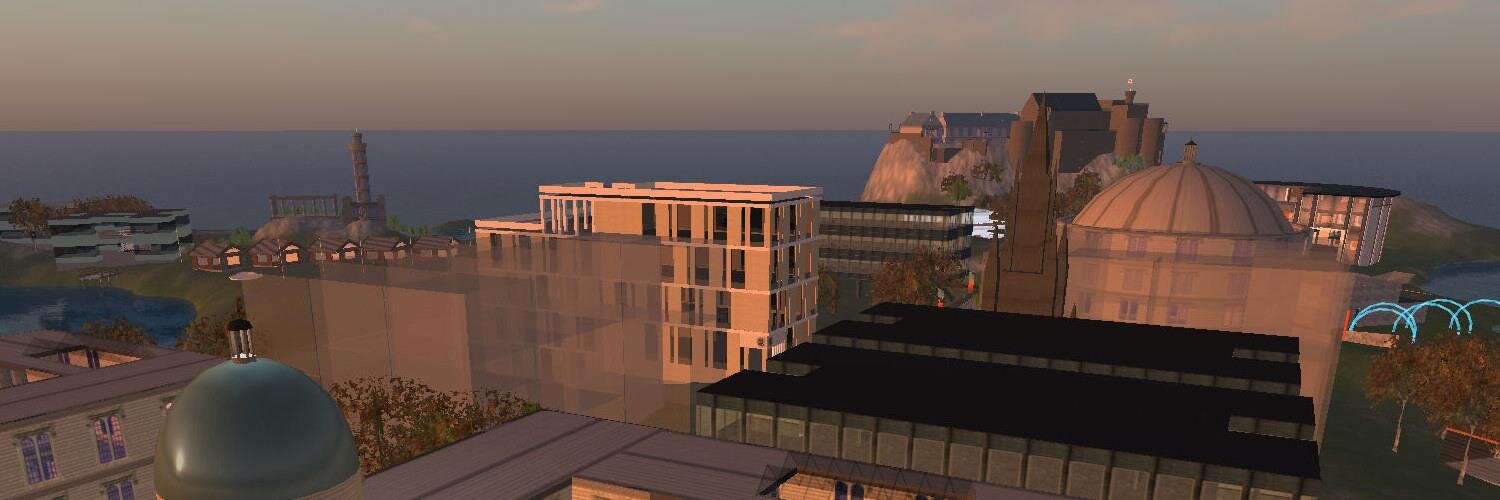
A History of the Early Years of Artificial Intelligence at the University of Edinburgh, Christopher Williams, Vassilis Galanos and Xiao Yang, european Journal of Artificial Intelligence. 9-Apr-2026.
https://t.co/gqG0y1YZyJ
@DavidPBMaddox@EvanHD What about the Foreign Secretaries at the time and since who apparently did not know what their dept. was up to or clearly were not doing their job or were deliberately not asking as there were repeated misleading statements to the country by the PM? - “I see no ships!”
Voyager hit a 90,000°F wall at the solar system’s edge
NASA’s Voyager 1 spacecraft crossed a boundary called the heliopause — the outer edge of the Sun’s influence, where the solar wind meets interstellar space. But what it found there surprised scientists: a region of intensely heated plasma reaching temperatures of 30,000–90,000°F (17,000–50,000°C).
This wasn’t a solid wall. It was a turbulent boundary zone where particles from the Sun slow down and pile up against the pressure of interstellar space. As they compress, their energy increases, heating the plasma to extraordinary temperatures.
But here’s the strange part: despite those extreme temperatures, this region wouldn’t feel hot to a human. The plasma is incredibly sparse — far emptier than any vacuum we can create on Earth — so there are too few particles to transfer heat effectively. In other words, it’s a “hot” region that wouldn’t actually burn you.
Voyager’s instruments detected a sharp drop in solar particles and a rise in cosmic rays, confirming it had crossed into interstellar space. At the same time, it picked up subtle vibrations in the plasma — like ripples traveling through an invisible ocean — allowing scientists to measure its density and temperature for the first time.
This boundary acts as a protective shield. The heliosphere deflects a large fraction of harmful cosmic radiation, helping make life on Earth possible. Beyond it lies the raw environment of the galaxy.
Now more than 15 billion miles (24 billion kilometers) from Earth, Voyager 1 continues to send back data from this frontier. It’s the most distant human-made object ever built — still exploring a region no spacecraft had ever reached.
At the very edge of our solar system, space isn’t empty or calm.
It’s a violent, invisible boundary — and we’ve only just begun to understand it.
Learn more:
“Voyager 1 Observes Low-Energy Galactic Cosmic Rays in a Region Depleted of Heliospheric Ions.” Science, 2013.
📸Credit: NASA/JPL
Scientists have identified a reversal of the long-standing Flynn effect—the roughly 200-year trend of rising average intelligence (measured via IQ and cognitive tests) across generations.
For the first time in modern recorded history, Generation Z (born roughly 1997–2012) shows lower performance than previous generations in key cognitive domains, including attention, memory, literacy, numeracy, executive function, problem-solving, and general IQ—despite spending more years in formal education than ever before.
Neuroscientist and educator Dr. Jared Cooney Horvath, PhD, MEd, testified before the U.S. Senate Committee on Commerce, Science, and Transportation on January 15, 2026, highlighting this shift. In his written testimony, he stated that cognitive development in children across much of the developed world has stalled or reversed over the past two decades, with declines evident in international assessments (e.g., PISA, TIMSS) and other large-scale data starting around the mid-2000s and accelerating post-2010.
Horvath attributes the primary driver not to reduced schooling, but to the widespread integration of digital screens and educational technology (EdTech) in classrooms. He argues that human brains evolved for deep, focused learning through face-to-face interaction and sustained attention, not fragmented skimming or constant task-switching encouraged by devices.
Key points from his testimony include:
- Teens now spend over half their waking hours on screens, with significant portions in school involving computers or tablets—often leading to off-task behavior and shallower processing.
- Evidence from meta-analyses and national/international studies shows a consistent pattern: higher classroom screen exposure correlates with weaker outcomes in reading, math, science, and higher-order reasoning.
- Digital tools may aid narrow, repetitive skill practice in controlled settings, but in core academic contexts, they tend to reduce depth of understanding, retention, and critical thinking.
Horvath describes this as a "structural mismatch" between human cognition and how digital platforms are designed (to capture and fragment attention), warning that unchecked EdTech adoption risks long-term harm to workforce skills, innovation, and societal reasoning.
[Horvath, J. C. (2026). Written testimony before the U.S. Senate Committee on Commerce, Science, and Transportation. U.S. Senate]
This is outlining the transition from "going to space" to building civilization in space.
And this time, it won’t just be governments.
Read the whole thing: https://t.co/8MvvMgzQN8
Ad astra!
The NASA worm brand guidelines — now in @MuseumModernArt — are free to download. Designed by Richard Danne of Danne and Blackburn in 1975.
https://t.co/Rj0ZhLEBp7
If you want to use the worm on your product, apply here:
https://t.co/HyR5GSN0cZ
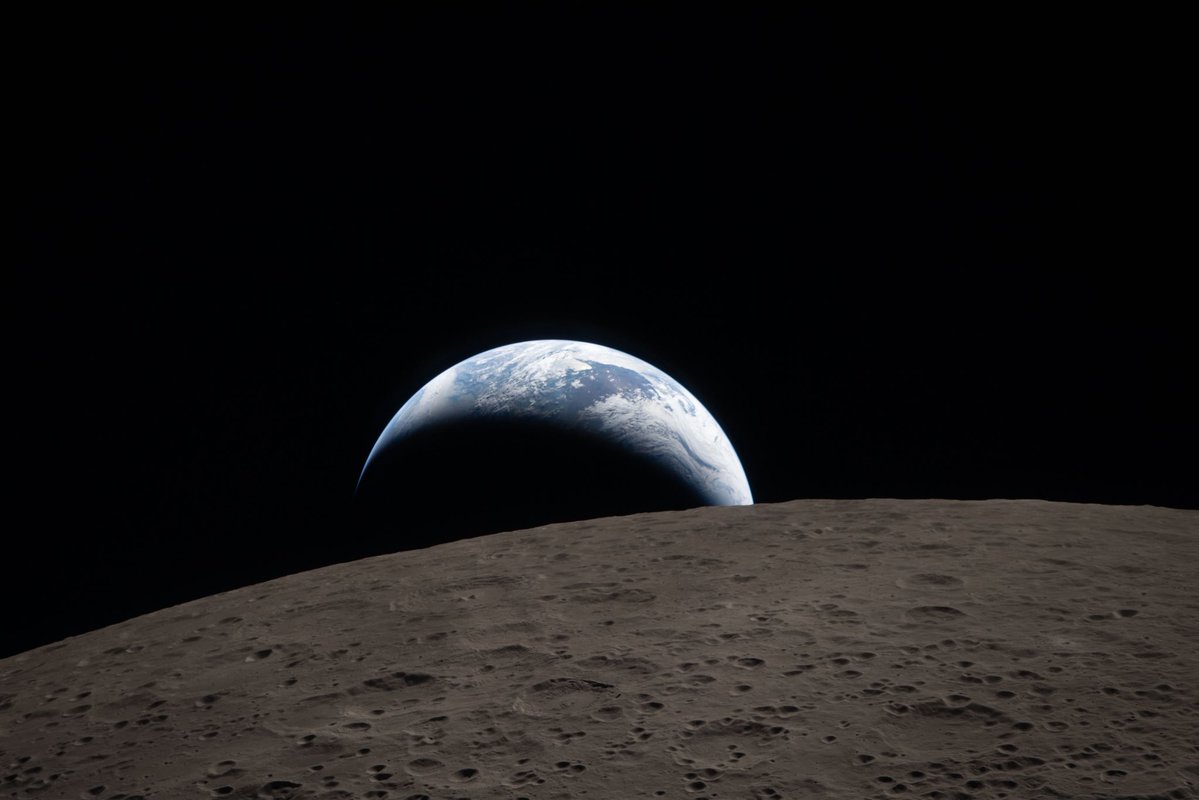
✅ #Artemis II update: 'Earthset', 6 April 2026, and 'totality', 7 April, seen from lunar orbit, the Moon eclipses the Sun, a view few humans have ever witnessed (pics: NASA)
🔗https://t.co/ld0YaC0PgO
@BBMF_Ernie93@spitfiresdotcom@RAFBBMF Thanks for sharing. Great route plan for day 1. Do you have the plan for day 2 already so we can see if we are under the flight path?
@NASA@astro_reid https://t.co/B7rfPFbYkA is the NASA Image Archive link for the brighter image/ Do you have the URL for the image archive for the darker one? Thanks for sharing.










![Rainmaker1973's tweet photo. Scientists have identified a reversal of the long-standing Flynn effect—the roughly 200-year trend of rising average intelligence (measured via IQ and cognitive tests) across generations.
For the first time in modern recorded history, Generation Z (born roughly 1997–2012) shows lower performance than previous generations in key cognitive domains, including attention, memory, literacy, numeracy, executive function, problem-solving, and general IQ—despite spending more years in formal education than ever before.
Neuroscientist and educator Dr. Jared Cooney Horvath, PhD, MEd, testified before the U.S. Senate Committee on Commerce, Science, and Transportation on January 15, 2026, highlighting this shift. In his written testimony, he stated that cognitive development in children across much of the developed world has stalled or reversed over the past two decades, with declines evident in international assessments (e.g., PISA, TIMSS) and other large-scale data starting around the mid-2000s and accelerating post-2010.
Horvath attributes the primary driver not to reduced schooling, but to the widespread integration of digital screens and educational technology (EdTech) in classrooms. He argues that human brains evolved for deep, focused learning through face-to-face interaction and sustained attention, not fragmented skimming or constant task-switching encouraged by devices.
Key points from his testimony include:
- Teens now spend over half their waking hours on screens, with significant portions in school involving computers or tablets—often leading to off-task behavior and shallower processing.
- Evidence from meta-analyses and national/international studies shows a consistent pattern: higher classroom screen exposure correlates with weaker outcomes in reading, math, science, and higher-order reasoning.
- Digital tools may aid narrow, repetitive skill practice in controlled settings, but in core academic contexts, they tend to reduce depth of understanding, retention, and critical thinking.
Horvath describes this as a "structural mismatch" between human cognition and how digital platforms are designed (to capture and fragment attention), warning that unchecked EdTech adoption risks long-term harm to workforce skills, innovation, and societal reasoning.
[Horvath, J. C. (2026). Written testimony before the U.S. Senate Committee on Commerce, Science, and Transportation. U.S. Senate]](https://pbs.twimg.com/media/HGHevYqWIAA8t2I.jpg)