New Insights into Subharmonic Waves in Fluid Dynamics
#FluidDynamics@APSphysics@PhysRevFluids@AIP_Publishing#apsdfd#GFM
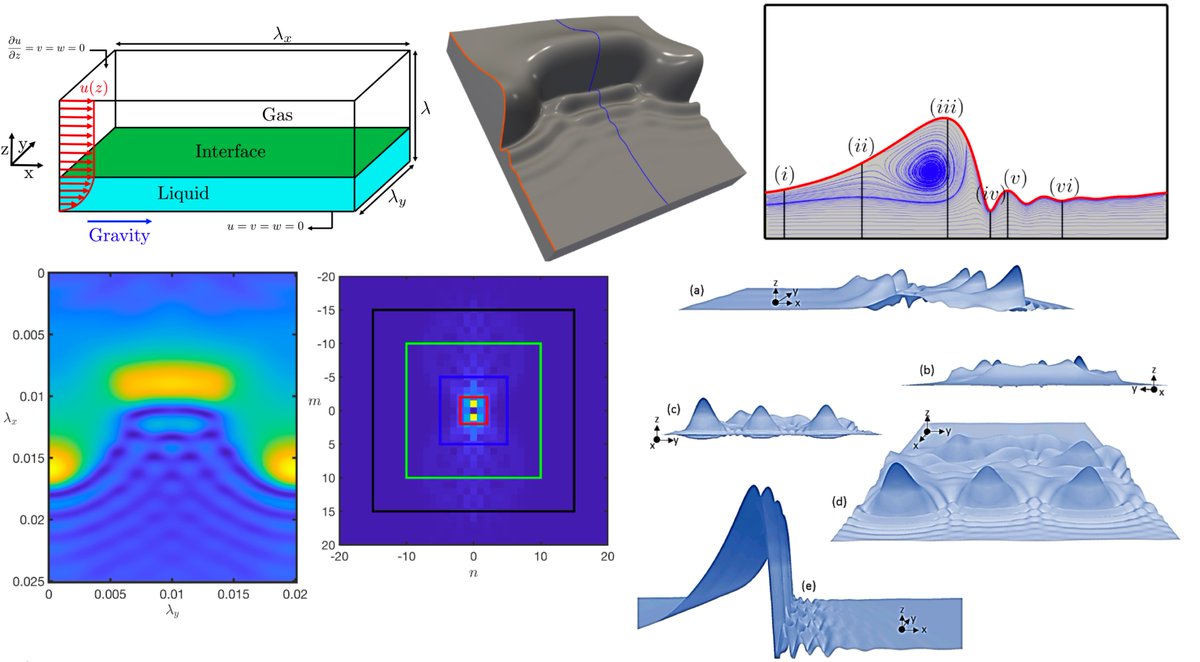
"All subharmonic waves are not Faraday waves".
Imagine small droplets resting on a surface, creating ripples similar to dropping a pebble in the water. A recent discovery by scientists has revealed a fascinating twist: these ripples, known as waves, don't always follow the expected patterns.
Traditionally, it was believed that shaking the surface would cause waves in the droplets to respond in a particular manner. However, this new finding suggests that the waves at the edges of the droplets might actually have a more significant influence on how the ripples take shape.
In the past, researchers thought that a specific type of wave called subharmonic waves indicated the presence of something called Faraday waves. Yet emerging research indicates that this connection might not hold true universally. Rather than the shaking itself, it's proposed that the waves occurring at the droplets' edges play a key role in generating these subharmonic waves.
Credits -
Debashis Panda, Lyes Kahouadji @LKahouadji , Omar Matar @MatarLab , Department of Chemical Engineering, Imperial College London, London, SW7 2AZ, United Kingdom
Seungwon Shin, Department of Mechanical and System Design Engineering, Hongik University, Seoul 04066, Republic of Korea
Jalel Chergui, Damir Juric,
Université Paris Saclay, Centre National de la Recherche Scientifique (@CNRS), Laboratoire Interdi sciplinaire des Sciences du Numérique (#LISN), 91400 Orsay, #France
https://t.co/VbJfPhiamH
Doubling down: #DigitalTwins startup @QuaisrLabs has raised $3.1m to expand its team and drive development of its twinning platform, inspired by research at @ImperialCollege and @TuringInst.
https://t.co/aqkI1n2RpH
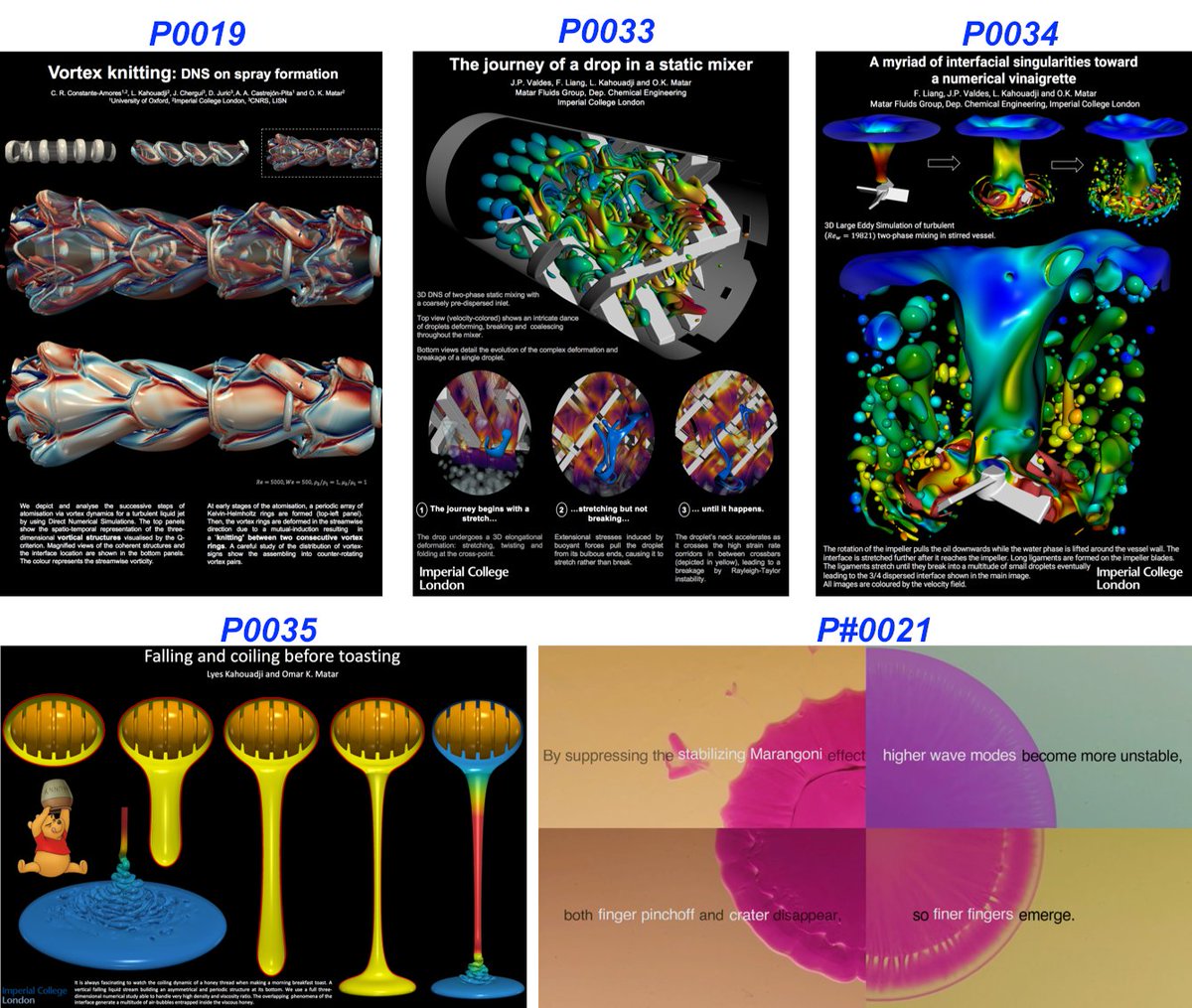
Another contribution in the area of mixing. Look at the details of all these interfacial breakup-coalescence mechanisms in static mixer. Incredible simulation and heavy post processing performed by @JPValdes10, now published at @Chem_Eng_J. Stay tuned with more to come soon.
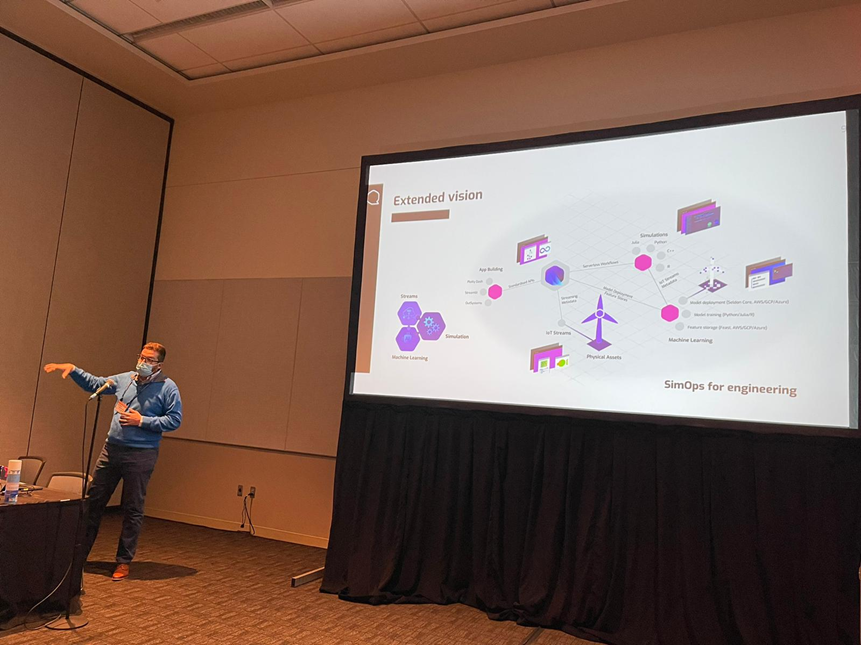
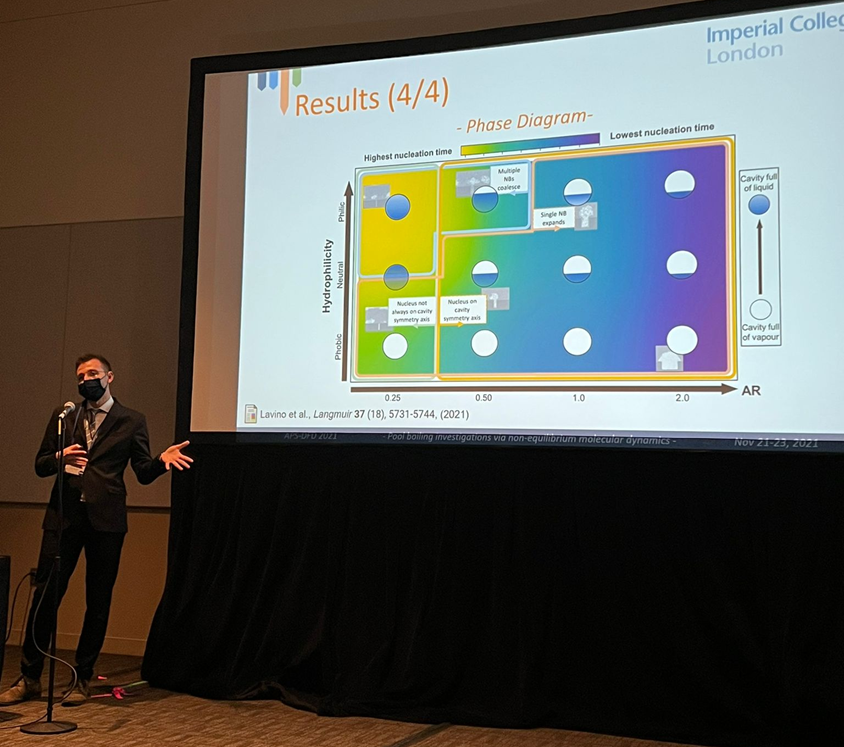
I had fun presenting the @QuaisrLabs vision of integrating simulations and ML to solve real world problems like methane leak detection.
DM me if you are at the APS DFD 2021 and you are interested to see how @QuaisrLabs product can help you accelerate your innovation cycle.
I am heading over to the APS DFD conference in Phoenix to talk about how we can integrate simulations and machine learning to accelerate research.
I will be speaking during the A18 session on Sunday 21st November.
#simulations#machinelearning#innovation
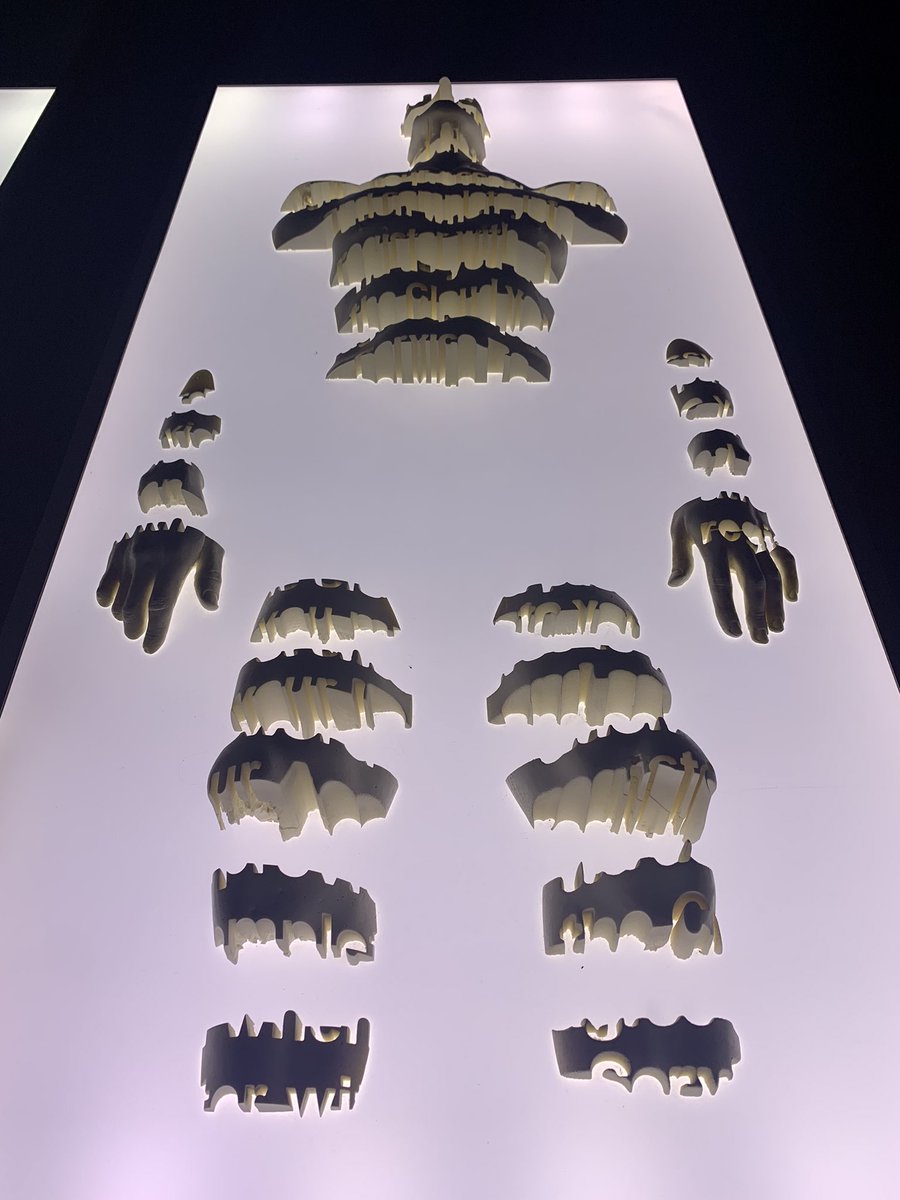
A really cool and engaging exhibition by the https://t.co/vd1xB6s30m.
The group raises some important questions about our interactions with the #digitalworld and the #digitalfootprint we leave behind.
Have you read the terms and conditions?
Kermit the Frog: “It is NOT easy being green”
Boris: “Kernit the Frog was wrong. It is easy being green!”
I am with Boris on that one!
#turningpoint#ClimateCrisis#ClimateAction
We are approaching that critical turning point when we must show that we are capable of finally taking responsibility for the destruction we are inflicting on our planet, and ourselves.
Read my speech at the @UN General Assembly → https://t.co/MbbSpW4ciP
@COP26 | #UNGA
Widely recognised as the first real-world use of #digitaltwins, the Apollo 13 example is certainly an inspiration when thinking about the @QuaisrLabs product.
Watch this space for more on the integration of #simulations, #data and #ml in the context of #digitaltwins.
When was the first digital twin ever used? What are the fundamental questions that digital twins need to answer today?
You can find answers to these questions here ➡️ https://t.co/0wFx5VS5ZZ
#digitaltwins#simulations#data#ai
I am thrilled to announce I will be joining @UQ_EAIT's School of Chemical Engineering as a Senior Lecturer in Biomedical Engineering in July! I will be opening my laboratory in biomimetic systems engineering and am hiring PostDoc and PhD researchers. Please retweet and reach out!