@EricPariyo@BrymoWillMakeIt@TouchlineX Idk bro how is that same? Did Ruiz had Most Assists in UCL this Season like Sneijder had in 2010? WC Silver Ball and Bronze Boot? While being a Midfielder.
It's crazy how everyone now unanimously believes that Messi robbed Sneijder, Lewandowski, and Haaland after Kane's Ballon d'Or win
The mask is finally off.
Bananas are such convenient fruits like no chopping or washing needed, not sticky, no juice dripping around and they come with their own biodegradable packaging. A 10/10 in my books
Learn constantly, but actually apply it in life.
“Knowledge is only potential power. It becomes power only when, and if, it is organized into definite plans of action.”
— Napoleon Hill
Knowledge should drive action.
- Informed and decisive
- Skilled and adaptable
- Knowledgeable and action oriented
Why vanilla ice cream is a superfood:
- Peaty as hell
- Provides essential nutrients (vit. B12, A and D)
- Energy booster
- Enhances production of serotonin
- Maintains strong bones (calcium and phosphorus)
- Healthier than broccoli
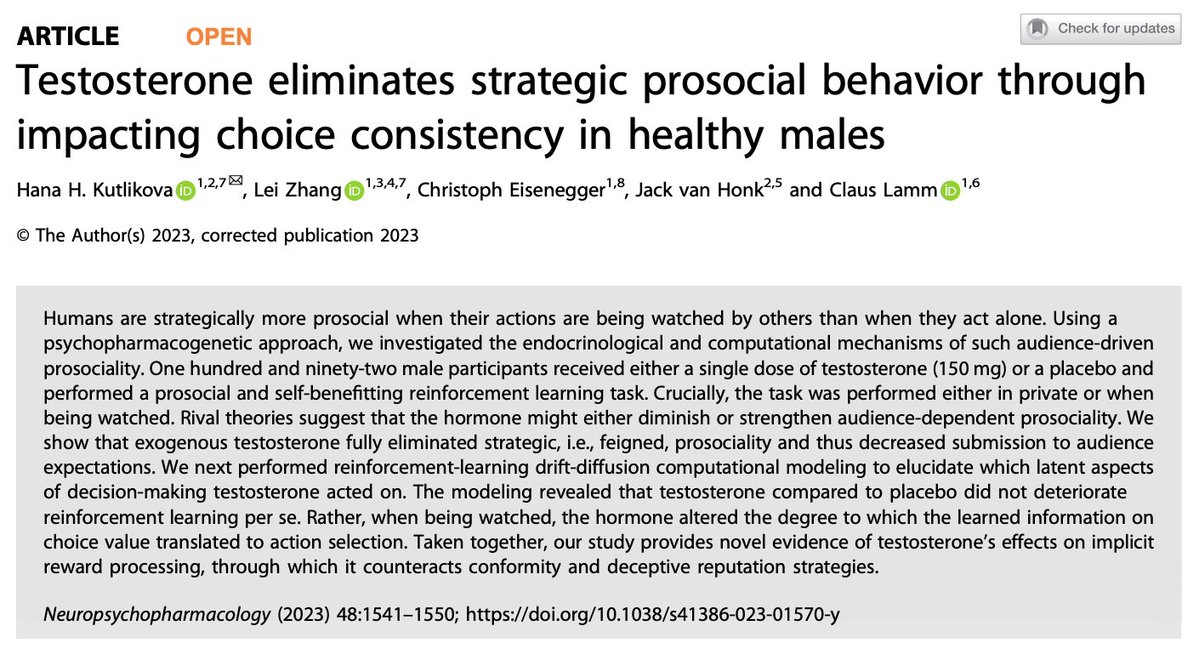
Testosterone supplementation erased the audience effect in male generosity.
Men on placebo became more prosocial when watched; testosterone-treated men did not.
In other words: they didn’t let an audience dictate their behaviour.
Few people know this
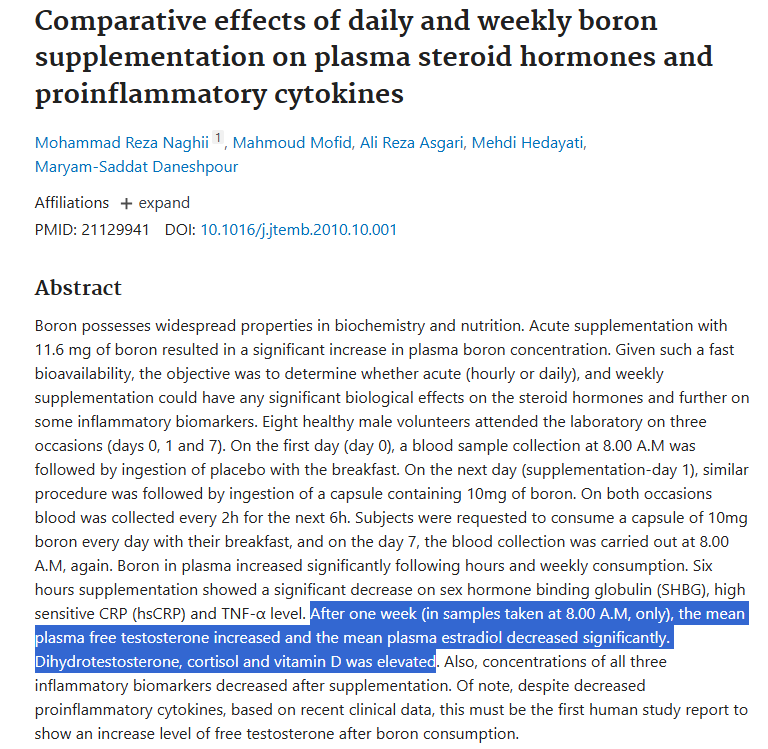
100 grams of raisins contain ~3 mg of boron, which is a not too popular mineral that has increased testosterone levels quite significantly in a few scientific studies
Indeed raisins are a great food to eat daily!
Anyone can die for something.
Very few can live for something and keep going.
“Where life is more terrible than death, it is then the truest valor to dare to live.”
Repetition shapes reality. Our brains care about repetitions. And they can learn almost anything if we practice it daily.
As Nicole Vignola breaks down neuroplasticity into its simplest form in her book Rewire:
repetition + attention + intention = lasting change
The investment: ~5 hours a week. Lifting heavy objects 3x a week, 2 work sets per exercise, 2-3 exercises (at least one compound movement) to failure and hiking or jog for an hour or so 1X a week, sprint intervals one day (usually 4 days after leg day…)
… for 35 years
7 minutes after you finish studying, your brain quietly runs a file-transfer process. Columbia scientists caught it on a brain scan, and repetition is what speeds it up.
In the study, 29 people went into an fMRI machine and saw flashcards pairing words with pictures. Some flashcards appeared once. Others appeared three times. After the flashcards, participants closed their eyes and rested for 7 minutes, still in the scanner, while the researchers watched what their brains did next.
The hippocampus (a seahorse-shaped chunk deep in your brain that handles new memories) replayed the flashcards at the same rate whether people had seen them once or three times. The scan showed no difference between the groups in that region.
Three other brain regions went the other way. All three belong to your brain's long-term storage network, the system that keeps memories around for years. Those regions replayed the repeated flashcards way more than the once-seen ones. One of them also started firing in sync with the hippocampus more often when replaying the repeated cards, like two colleagues confirming a file had been saved.
Textbooks describe memories moving from the hippocampus to long-term storage as a slow process, one that takes weeks, months, or sometimes years. This study caught that process starting within the first 7 minutes after closing your eyes, with repetition speeding it up dramatically.
When a flashcard had been shown three times, the long-term storage regions replayed the most recent viewing. Your brain treats each repetition as an update.
The hippocampus was doing its own kind of work. For the flashcards people saw only once, the more the hippocampus replayed them during that 7-minute rest, the more likely people were to remember them on the test afterward. The hippocampus was picking up the slack for the weaker memories, while the long-term regions took over the stronger ones.
The paper was edited by Robert Bjork at UCLA, the guy who coined "desirable difficulties," the idea that when learning feels harder in the moment, the memory tends to stick longer. This study adds a mechanism. Repetition works by moving a memory, fast, in the minutes right after you stop looking at the thing.