Assistant Professor of Economics at the University of Western Ontario. Studying entrepreneurship, financial frictions, and wealth inequality.
he/him/his
Those trying to understand the tariffs as economic policy are dangerously naive.
No, the tariffs are a tool to collapse our democracy. A means to compel loyalty from every business that will need to petition Trump for relief.
1/ A 🧵 to explain his plan and how we fight back.
Canadian zoologist Anne Innes Dagg died recently. If you ever want a story to show how pervasive raw sexism in Canadian academia was less than 50 years ago read this short autobiography she penned in 2000. https://t.co/BjUXNVzB5k
@dannyegold @ItsMatt_Again I'm pro-row homes, but I can understand arguments against them. As soon as there is a shared wall, you have to have a system to govern that wall, which is not costless. Plus you expose yourself to some bad-neighbour risks e.g. water damage or pests.
📢New paper!
𝐓𝐡𝐞 𝐋𝐢𝐟𝐞-𝐂𝐲𝐜𝐥𝐞 𝐃𝐲𝐧𝐚𝐦𝐢𝐜𝐬 𝐨𝐟 𝐖𝐞𝐚𝐥𝐭𝐡 𝐌𝐨𝐛𝐢𝐥𝐢𝐭𝐲
w/ @RichardAudoly @mcgeeconomics@GonPazPardo
Do rich and poor people remain that way throughout their lives? Do people experience reversals of fortune? When?
Link👇 and 🧵 below
New @TheIFS working paper on wealth mobility out w/ my wonderful coauthors @RichardAudoly, @socampdi, @GonPazPardo
We study who is rich and poor throughout their lives and people who experience reversals of fortune
Answers to this and many more Qs 👇
https://t.co/jgMu7QDfH1
What is the output cost of reducing emissions? In my JMP I show that this cost depends on how firms burn fuels.
I find that the cost of reducing emissions is much lower than we thought! The key is heterogeneity in firm-specific fuel productivity. #Steel#India#EconTwitter 1/5
Checkout @EmmanuelMurrayL impressive work on the output cost of curbing emissions.
Emmanuel is an IO economist using state-of-the-art production function estimation to understand how firms fuel choices shape their response to carbon taxes through a dynamic input choice model.
Do not miss Anastasiia's work on Human Capital!
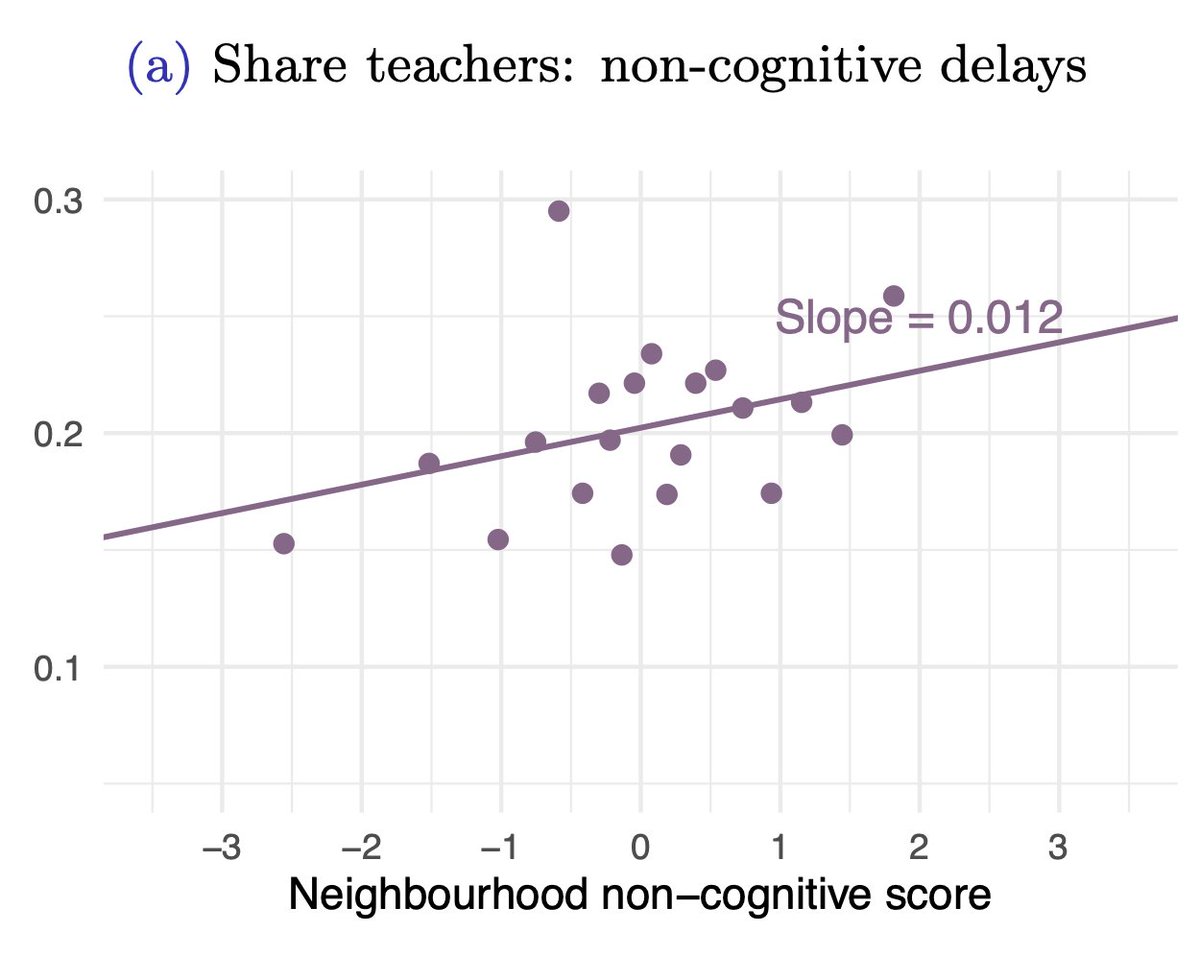
In her JMP she shows that teachers' and mothers' perceptions about children's non-cognitive and cognitive skills are *biased*
Teachers and mothers identify more delays in neighbourhoods with *higher* skill levels!
@jihyun_econ is brilliant! Her JMP studies how firms respond to an increase in government loans.
Key takeaway: Government loans help financially constrained firms invest more, but also help unproductive firms survive when they otherwise would have exited.
Check out @jihyun_econ great JMP!
The Korean government increased direct loans to firms by 1pp of GDP. This increased firm investment but also allowed unproductive firms to survive.
The net effect is a productivity decrease despite gov intentions.
More👉https://t.co/TCHVDxGgYt
Thank you for featuring my paper!
I am a Ph.D. candidate in Economics at @WesternU and on the market this year. I am a macroeconomist working on firm dynamics and financial friction.
Please check my work on my website! 👇
https://t.co/QqSlaZY9u0
Academics to students: Start the essay early to ensure it is of a high standard.
Academics to conference audience: Thank you for listening to my bullet points written on a napkin in the taxi.