@TVMohandasPai@rvaidya2000 Absolute bullshit narrative. But how the hell does this even matter? Its temple land, devotees can ask for any peaceful religious practice in their temple anytime without justifying it to the government or seeking permission.
Exclusive: Hackers have breached the US Air Force's flagship cloud computing platform, three people familiar with the matter told Reuters, in a development that could jeopardize a vast swathe of sensitive tactical, personnel and logistics data https://t.co/hUsMqz1B7n
VYRMA – ENTER VALHALLA | Open the Gates ⚔️ Viking Music (LIVE)
🎵 Track: ENTER VALHALLA
💿 Album: ENTER VALHALLA, out now
Join me in Valhalla. 🐺
Spotify:
https://t.co/jV562N36sc
Apple Music: https://t.co/Azpcrwxsjz
YouTube Music: https://t.co/PWydkb8xg8
This is quite something, and goes to show just how fast the German auto industry is collapsing.
Moritz Schularick, one of German's top economists and the President of the prestigious Kiel Institute (the oldest economic research institute in the country), is saying Germany should "sell [Volkswagen] to the Chinese, as long as we can still get something for it" (https://t.co/Aa8qMTsiZl).
Volkswagen which until 2019 was the world's biggest carmaker by sales volume... And is now losing an eye-watering amount of money: they just reported a net loss of $6.5 billion for Q3 2026 alone, and are speaking of firing an insane 100,000 employees (https://t.co/xk8Kj4SLfh).
So much knowledge lost, buried. To prevent the invaders from burning it.
But they killed the scholars.
And taught their descendents that "Brahmanism" was the problem.
@sankrant@BabonesBhai Hinduism is Henotheist.
One formless (nirgun, nirankar) Divinity who present in all and is also represented in multiple forms (sarkun, sakar). And there is no conflict between these.
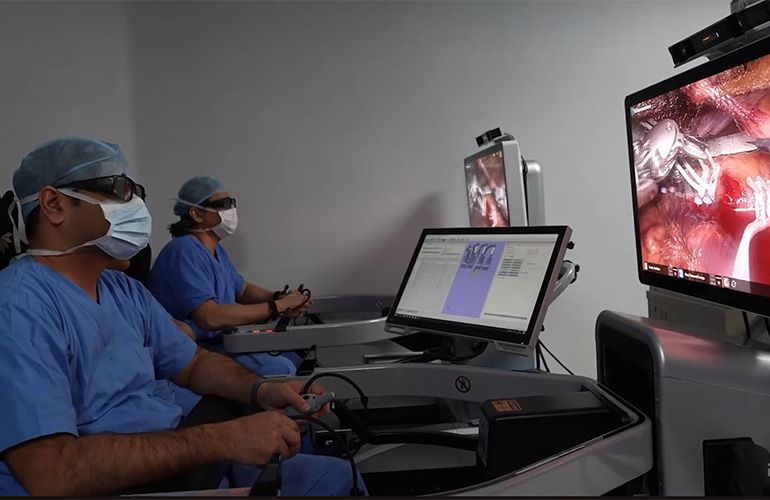
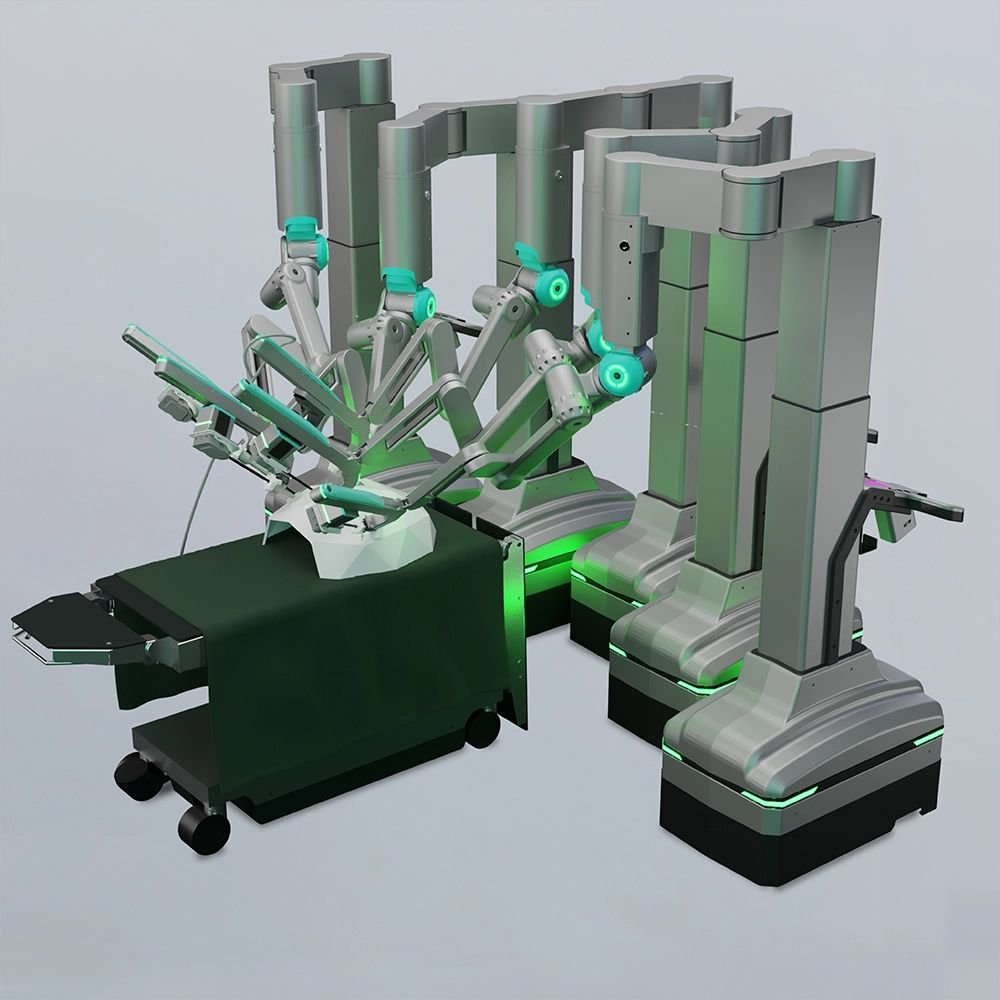
In Gurugram, 2 surgeons did a heart bypass without opening the chest / stopping the heart: 5 robotic arms, 2 consoles, a world 1st. The robot was Indian, SSi Mantra.
Why is this so quiet?
2 surgeons, Dr. Nitin Kumar Rajput of Medanta Hospital, Gurugram and Dr. Lalit Malik of Manipal Hospital, Jaipur, performed a heart bypass on a beating heart.
In such procedures, called TECAB, the bypass is done entirely through small ports with robotic arms. This time, all 5 arms of the robot worked together, driven by the 2 surgeons from 2 separate consoles, in complete sync. A stabiliser held just the target spot steady while the rest of the heart pumped on.
This is the world's 1st dual-console, beating-heart TECAB. The patient's recovery is encouraging.
And the robot was not imported. It was the SSi Mantra, built in India by SS Innovations, a company founded by cardiac surgeon Dr. Sudhir Srivastava, who guided the team.
Robotic surgery is costly mostly because the robots are. SS Innovations says it exists to change exactly that, to make world class robotic surgery affordable and accessible.
The announcement is the company's, dated 19 November. A journal publication is yet to come.
Names to remember: Dr. Rajput, Dr. Malik and Dr. Srivastava. 🙏🙏
Sources: SS Innovations, MassDevice, Mint
Photo 1: Drs. Nitin Kumar Rajput and Lalit Malik performing a beating-heart TECAB procedure with the SSi Mantra. Credit: SS Innovations via MassDevice.
Photo 2: The 5 arm SSi Mantra cart, official render from SS Innovations.
Separative religion is itself an Abrahamic concept, coming from notions of exclusive God. This is not present in Indic traditions.
The entire thrust in Guru Granth Sahib is the dissolution of identity, to connect people to the immanent Divine via the chanting of Naam.
To use that to claim the creation of Abrahamic separative identity is the biggest distortion.
But for the British this became a key aim. They saw in (a set of Sikhs) a "martial race" that they wanted on their side as an army to pit against other Indians. Forging a separative identity was key to this.
Also scholars like Macauliffe, themselves trained in Christianity, had no understanding of the natural syncretism of Indic traditions. So separative identity was both an intellectual limitation as well as as an imperial need.
Macauliffe recounts meeting Sikh youths who told him they were Hindus. This was appalling and unpalatable to him. So he decided the Sikhs were lost and misguided and he, Macauliffe would teach them their "real religion."
The British government started mandating this separative identity and physical requirements on appearance for people to be regarded as "Sikhs" for entry to the army, and for other recruitment. The Macauliffe recruited others like Kahn Singh Nabha as collaborators who wrote the book "Hum Hindu Nahin."
The entire trajectory of Sikh separatism is colonial. The question "Are Sikhs Hindus" was not even a significant question before the British decided the answer must be "no" for their own agendas.
This agenda was then pushed via "Sikh Scholarship" which carried forward from Macauliffe and others. The agenda became paramount, more important than even what Gurus said or were trying to explain. That identities and labels are limitations when accessing Hari, the Divine. Even the occasional use of phrases like Allah-Ram is to break the separative boundaries and say that Divine is beyond limitations of identity.
https://t.co/OY6s0FViKS
🚨BREAKING: NYT can reveal that in an all-hands meeting convened specifically to diagnose why the next-gen Blackwell Ultra GPUs had missed their must-ship deadline, one senior vice president produced a fart noise that hung in the silent air like insolent defiance.
Jensen, who had been mid-sentence explaining that “every millisecond of latency is a moral failure,” stopped in his tracks. He was livid. The room went silent. He turned, slowly, and fixed the man with a death stare, the same one that has previously made entire engineering teams spontaneously re-architect their roadmaps.
The executive, a man whose LinkedIn listed “uncompromising operational excellence” as a core competency, felt his soul leave his body in embarrassment. In a voice that cracked like a overclocked core, he offered the only defense available to him:
“That… that was not what you think. It was just the chair.”
Jensen did not blink. He did not smile. He simply tilted his head by one precise degree and said, “oh?? Prove it!”
What followed was 45 seconds of pure, unfiltered executive purgatory. The man whose face was now the color of a red-hot HBM stack, began the most humiliating performance review of his career. He rocked. He tried to shift his weight as he attempted a series of increasingly desperate micro-adjustments in his chair. First, a gentle creak, then a strained, dry squeak.
He was mortified that he couldn’t produce the original acoustic signature. The other executives stared at their laptops with the intensity of people who had just discovered religion. Someone’s pen rolled off the table and the sound was deafening.
When he finally sat down again, trembling, Jensen nodded once, as if a hypothesis had been successfully validated, and returned to the slide about “owning the outcome.”
Per sources, the executive spent the rest of the meeting humiliated and deflated, calculating how many RSUs it would take to erase the memory of having to prove to Jensen Huang, that he had not, in fact farted.
This was “a struggle session to extract guilt for flatulence-adjacent sounds and yet another humiliation ritual that is par for the course when working for Jensen", the employee said.
A couple of weeks ago, I had to travel to India (Bangalore) for personal reasons. It was a very short trip, just four days.
I landed at around 7:30 pm. Honestly, I felt terribly alone. I wasn’t going to have my parents waiting for me at the airport, and that suddenly made me feel very lonely.
I had to take a cab from the airport to JP Nagar, and those of you who know Bangalore know that it is quite a long drive.
I know it is my motherland, my state, and that Bangalore is generally considered safe. I also know that women cannot afford to be complacent about their safety, no matter which part of the world they are in. Ultimately, our safety is our responsibility.
I decided to hire a prepaid taxi, said a little prayer to Ma Durga and proceeded to the taxi stand.
On my way, I noticed several lecherous looks, the kind that would make any woman uncomfortable.
The driver assigned to me was Ravinder Yadav. He told me he had migrated from Bihar just 21 days earlier. He reassured me, saying, “Aap chinta mat karo didi, main aapko safely ghar pahunchadunga.”
Throughout the journey, he made every effort to put me at ease. He began telling me about his family, what his grandmother had taught him while growing up, his wife and children, and even his premature-born son and the struggles they had gone through.
He told me he was a Hanuman bhakt and a Shiv ji bhakt.
There was an unmistakable sincerity in his voice. I could tell he was trying to make me comfortable and put my mind at ease.
We lost our way a couple of times because the GPS kept taking us through bizarre routes. Eventually, we realised that the address entered was incorrect!
By then, we had already been driving for about two and a half hours. My aunt and uncle were understandably getting worried and kept calling me, fearing the worst.
Meanwhile, it was getting very late. Ravinder hadn’t even had dinner. He was hungry, and his wife called to ask whether he had eaten.
He told her, “Hum didi ko ghar chhod kar kha lunga. Yahan hotel sab khula hai. Tum tension mat lo.”
Finally, we reached home at around 11 pm, both exhausted from the journey.
I asked him to come inside and have dinner with me. He politely refused. He apologised for losing his way, unloaded my bags and even apologised to my aunt and uncle for causing them so much worry.
No, he wasn’t doing any of this for tips. He was simply reflecting his upbringing and relating to me at a very human level.
During our conversation, we had spoken about masala dosa. He told me he loved it but considered it too expensive and refrained from spending money on what he called “luxury foods”.
I gave him some money and literally had to insist that he go and enjoy a masala dosa.
As he was leaving, he touched my feet and thanked me for being kind.
He may not have been highly educated, but this man earned my respect. He understood something that many people, including those who are highly educated, often fail to understand: basic human psychology. Without me having to say a word, he recognised my apprehension and understood that I needed reassurance.
He was too shy to let me take a photograph of him.
But I want you ladies to remember this name: Ravinder Yadav, from Bihar.
If you are travelling alone from Bengaluru’s Kempegowda International Airport and need a taxi to JP Nagar or elsewhere in Bangalore, you can try contacting him at:
+91 74639 79855
Sometimes, it isn’t the grand gestures that restore your faith in humanity. It is the quiet kindness of an ordinary person who makes you feel safe when you need it most.
#DiariesOfAWoman
PS: Picture for representational purposes only.
Sanatan Dharma differs from many other religions because it is framed as an eternal way of life and cosmic order ("dharma") rather than a faith centered on a single founder, a single sacred book, or one rigid set of beliefs.
Sanatan Dharma doesn't have Single Founder or Prophet: Unlike religions traced back to one founding figure or prophet, Sanatan Dharma draws from ancient seers, philosophers, and ongoing spiritual inquiry rather than a single revelation.
Instead of relying on "one book," it encompasses diverse scriptures (such as the Vedas, Upanishads, and Bhagavad Gita) and multiple philosophical schools (such as Advaita, Dvaita, Yoga, and Samkhya).
It accommodates varied ways of approaching the divine whether through personal deities, a formless supreme reality (Brahman), or even non-theistic and philosophical paths. Sanatan Dharma stands out for its inclusivity and acceptance of diverse spiritual paths and viewpoints without requiring strict dogma.
Rather than viewing life as a single test leading to a fixed post-mortem destination, it centers on righteous duty (dharma), karma, rebirth (samsara), and liberation (moksha). ( No promises of brothels after death)
Historically, it has not centered on proselytization or exclusive salvation claims, treating spiritual growth as a personal journey across many paths.
Sanatan Dharma is distinguished by its radical inclusivity, embracing diverse spiritual paths, and even accommodating atheists. (No death penalty for leaving Sanatan Dharma)