Associate Professor at Bursa Technical University, Department of Chemistry/Organic Chemistry
Light harvesting materials and applications, Photochemistry
For decades, the primary medical approach to treating cancer has involved aggressive therapies designed to destroy malignant cells. This battle often takes a severe toll on surrounding healthy tissues.
A remarkable new study published in the journal Advanced Science by researchers at KAIST presents a revolutionary alternative. Rather than attempting to kill the tumor, scientists have discovered a way to reprogram colon cancer cells so they act like healthy tissue again.
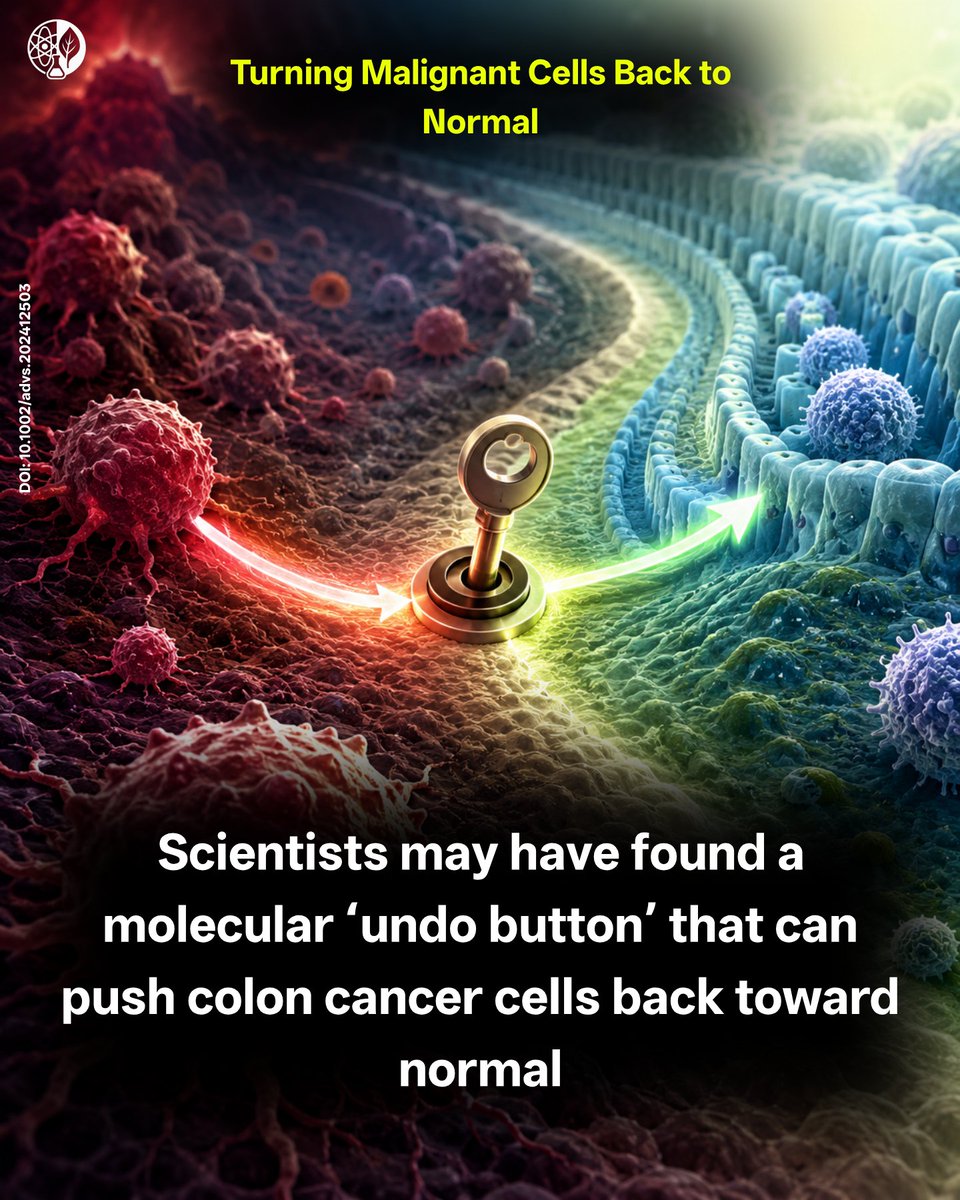
The researchers achieved this by utilizing advanced computer modeling to map the complex, interacting genetic networks inside colon cells. They visualized these microscopic networks as a physical landscape of hills and valleys. Under normal conditions, healthy cells rest comfortably in a specific, stable valley. Cancer occurs when genetic mutations create new, abnormal valleys, essentially trapping the cells in an aggressive, rapidly dividing state.
By analyzing this mathematical terrain, the research team discovered they could toggle just three specific genetic switches to alter the cellular landscape. Flipping these switches nudged the colon cancer cells out of their malignant valley.
Once liberated from this trapped state, the cells stopped their rapid, harmful division and gradually reverted to looking and functioning like normal intestinal tissue. This extraordinary transformation is achieved purely by altering how the cell's genes are expressed, entirely without altering or editing the underlying DNA sequence.
While currently in the laboratory stage, this breakthrough signifies a massive paradigm shift in oncology. It offers a fascinating glimpse into a future where cancer might be treated not as an enemy to be eradicated with toxic chemicals, but as a confused cellular state that can be safely guided back to health.
Citation: D.Shin, J.-R.Gong, S. D.Jeong, Y.Cho, H.-P.Kim, T.-Y.Kim, K.-H.Cho, Attractor Landscape Analysis Reveals a Reversion Switch in the Transition of Colorectal Tumorigenesis. Adv. Sci.2025, 12, 2412503. DOI: 10.1002/advs.202412503
For decades, the primary medical approach to treating cancer has involved aggressive therapies designed to destroy malignant cells. This battle often takes a severe toll on surrounding healthy tissues.
A remarkable new study published in the journal Advanced Science by researchers at KAIST presents a revolutionary alternative. Rather than attempting to kill the tumor, scientists have discovered a way to reprogram colon cancer cells so they act like healthy tissue again.
The researchers achieved this by utilizing advanced computer modeling to map the complex, interacting genetic networks inside colon cells. They visualized these microscopic networks as a physical landscape of hills and valleys. Under normal conditions, healthy cells rest comfortably in a specific, stable valley. Cancer occurs when genetic mutations create new, abnormal valleys, essentially trapping the cells in an aggressive, rapidly dividing state.
By analyzing this mathematical terrain, the research team discovered they could toggle just three specific genetic switches to alter the cellular landscape. Flipping these switches nudged the colon cancer cells out of their malignant valley.
Once liberated from this trapped state, the cells stopped their rapid, harmful division and gradually reverted to looking and functioning like normal intestinal tissue. This extraordinary transformation is achieved purely by altering how the cell's genes are expressed, entirely without altering or editing the underlying DNA sequence.
While currently in the laboratory stage, this breakthrough signifies a massive paradigm shift in oncology. It offers a fascinating glimpse into a future where cancer might be treated not as an enemy to be eradicated with toxic chemicals, but as a confused cellular state that can be safely guided back to health.
Citation: D.Shin, J.-R.Gong, S. D.Jeong, Y.Cho, H.-P.Kim, T.-Y.Kim, K.-H.Cho, Attractor Landscape Analysis Reveals a Reversion Switch in the Transition of Colorectal Tumorigenesis. Adv. Sci.2025, 12, 2412503. DOI: 10.1002/advs.202412503
Katkı sunan tüm öğrencilerimize ve jüri üyelerimize teşekkür ederiz.
1. Berfin Kelahmetoğlu, Gazi üniversitesi, Fen Bilimleri Enstitiüsü, Organik Kimya ABD, Yüksek Lisans Öğrencisi, Kumarin temelli bir organoboyar maddenin saflaştırma aşamasında UV ışık altındaki görüntüsü.
Kimya Bölümü 2025–2026 Bahar Dönemi Açılış Dersi Duyurusu 📣📣📣
Tüm öğrencilerimiz ve akademik personelimiz davetlidir.
#Açılışdersi#BursaTeknikÜniversitesi
@gokturktlg Şans diyelim hocam, teşekkür ederim tebriğin için, sende bu ara baya yayın yolluyorsun umarım bu tarz bir kabulde sen alırsın, güzel bir anı oluyor:)
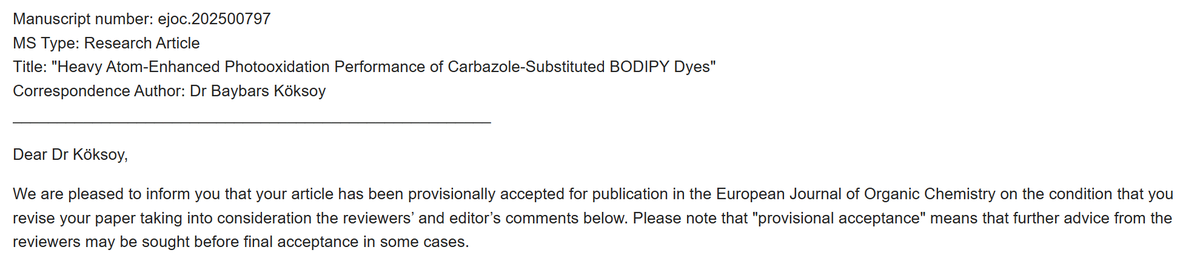
Our latest study has been published in the International Journal of Hydrogen Energy (Q1, IF:8.3). I would like to thank all the team members for their valuable contributions!
TÜBİTAK projelerde daha şeffaf olsun derken resmen cevap niteliğinde bir 1001 proje açıklaması geldi, alın bunlar kabul olanlar isimleri bile yok projelerin.. Ülkede fen-mühendislik alanında bilimi destekleyen tek kuruluş olunca böyle garip garip şeyler oluyor