The Forgotten Victims: How Poland Was Erased from World War II Memory:
Most Germans today still have limited knowledge of the atrocities committed against the Polish people during World War II. In responses to my posts over the years, I have frequently encountered a distorted understanding of Poland’s wartime experience, with some even implying that Poles bore responsibility for their own suffering or that they were primarily collaborators rather than victims.
The Holocaust is rightly one of the best known events in modern history. Throughout the United States, Holocaust museums educate millions of visitors, and many states require Holocaust education in public schools. As a former educator, I ensured that my students also learned about the fate of the Polish people under German occupation because understanding the war requires remembering all of its major victims.
Poland endured one of the most devastating occupations of any nation. It was attacked by both Germany and the Soviet Union, subjected to mass executions, deportations, forced labor, cultural destruction, and the systematic elimination of its political, religious, and intellectual leadership. Yet despite these immense losses, Polish victims remain far less visible in public memory than many other groups persecuted during the war.
This absence appears repeatedly in museums, memorials, educational materials, and public commemorations. I have encountered numerous websites and memorials that scarcely mention Polish victims, even at places such as Dachau, where Poles were among the principal prisoner groups. In a statement marking the anniversary of Auschwitz in 2020, Nancy Pelosi referred to Jewish victims, Roma, LGBTQ individuals, and people with disabilities, yet omitted Polish victims, even though ethnic Poles were the second largest group imprisoned and killed at Auschwitz after Jews.
The historian Gilad Margalit documents how this selective remembrance developed in his book Guilt, Suffering, and Memory: Germany Remembers Its Dead of World War II. He describes how German President Richard von Weizsäcker originally included explicit references to Polish and Soviet victims in a speech for the People’s Day of Mourning. However, when the speech was condensed for a commemorative plaque, those references disappeared.
As Margalit notes, “The explicit reference to Soviet and Polish victims… was eliminated.” He further argues that the suffering of Soviet and other Slavic victims, whose losses exceeded those of all other victim groups combined, never entered German public consciousness in the same way as the suffering of other victim groups. Even the German bombardment of Warsaw in 1939 received comparatively little attention within Germany’s landscape of remembrance.
Understanding this process of selective memory helps explain a troubling development in modern historical discourse. A nation that suffered invasion, occupation, genocide, and immense civilian losses has too often been pushed to the margins of public memory. In some discussions, the victims themselves have even been portrayed as collaborators, despite the overwhelming historical record demonstrating the catastrophic suffering inflicted upon Poland by both Germany and the Soviet Union.
Remembering the Holocaust should never come at the expense of remembering other victims. Honoring Jewish suffering and acknowledging the immense suffering of the Polish people are not competing truths. Together they present a fuller and more accurate understanding of one of history’s darkest chapters.
Source: Guilt, Suffering, and Memory: Germany Remembers Its Dead of World War II (Indiana University Press, 2010).
Photo: This is what occupation looked like. Not liberation. Not peace. A nation stripped of its freedom, its culture, and millions of its people, yet one that refused to surrender.
At @SEALSQcorp https://t.co/UoLXH5yR1n with a $200 million cash allocation , we believe the next generation of global technology leaders will emerge from the convergence of quantum computing, secure semiconductors, photonics, AI, and post-quantum cybersecurity.
Our mission is to identify, invest in, and help scale breakthrough companies that are building the technologies required for the quantum era. From quantum processors and networking to secure chips, quantum-safe cryptography, sensing, and enabling infrastructure, we are creating a portfolio that spans the entire quantum technology stack.
Our growing portfolio includes pioneering companies such as Miraex, Quobly, WIseSat, EeroQ, ColibryTD, WISeId, SEALcoin, ICalps and Wecan Group, each contributing unique capabilities across PQC chips, quantum computing, photonics, ASIC, Space, Blockchain, secure digital infrastructure, and next-generation technologies.
The transition to a quantum-enabled world is accelerating. Governments, enterprises, and critical infrastructure operators are already preparing for the post-quantum security challenge while investing in the computing platforms that will define the next decade.
SEALQuantum is committed to bringing together entrepreneurs, researchers, industrial partners, policymakers and investors to transform pioneering science into globally scalable businesses. By combining strategic capital with deep industry expertise, we aim to accelerate innovation while strengthening technological sovereignty and secure digital infrastructure.
The quantum future is being built today—and we are proud to be investing in the companies that will define it.
🌐 Learn more: https://t.co/nMVZFHR9RC
#SEALQuantum #QuantumComputing #PostQuantumCryptography #QuantumNetworking #Photonics #Semiconductors #DeepTech #Cybersecurity #ArtificialIntelligence #Innovation #VentureCapital #FutureTech @SEALSQcorp
Can trauma and depression be passed down through generations?
Yes, and in Poland, that inheritance seems etched into the national identity.
Poland is not merely a country defined by its borders or cities. It is a nation shaped by memory, suffering, resilience, and renewal. Throughout its history, Poland has been invaded, partitioned, erased from the map, occupied by foreign powers, and ultimately reborn. With each generation, its people inherited not only stories of survival but also the emotional weight left behind by war, persecution, displacement, and loss. History did not simply happen to Poland; it settled into ordinary families and became part of how they understood the world.
Modern science has begun to explain what many families have long sensed. Researchers have found that the effects of severe trauma can extend beyond those who directly experienced it. Family relationships pass on psychological patterns, while research in epigenetics suggests that extreme experiences such as war, famine, persecution, and chronic fear may influence how certain genes are passed down.
In Poland, that inherited sensitivity became more than personal, it became cultural. For 123 years Poland ceased to exist as an independent state, partitioned by neighboring empires determined to erase its language, culture, and identity. Families preserved their heritage in secret while generations grew up under foreign rule. Resistance often meant imprisonment, exile, or execution, making hardship inseparable from Polish identity.
Then came the catastrophes of the twentieth century. Poland endured two world wars, brutal occupations by both Germany and the Soviet Union, the Holocaust, mass executions, deportations, forced labor, political repression, and decades of communist rule. Entire cities were destroyed, villages vanished, intellectuals were murdered, and millions never returned home. These overlapping tragedies touched nearly every family, leaving scars that each generation inherited.
Within many Polish homes, silence often replaced storytelling. A father who fought in the resistance or a mother who survived deportation might rarely speak of what they had endured. Children learned to recognize pain without words - in long pauses, whispered conversations, and the names that were never spoken. History was passed down not only through stories but through habits, anxieties, and the quiet emotional atmosphere of everyday life.
Communist rule added another layer. Emotional suffering was often minimized or stigmatized, and seeking help could be seen as weakness. Many endured depression, anxiety, and grief in silence, passing those burdens to the next generation through family dynamics and deeply rooted mistrust. The legacy of oppression did not end when communism fell.
Yet this is not the whole story. If trauma can be inherited, so can resilience. The same families that passed down grief also passed down courage, faith, humor, creativity, and an extraordinary determination to survive. Poland preserved its language when it was forbidden, educated children in secret, worshipped when faith was suppressed, and remembered those others wanted forgotten. Every generation that carried pain also carried hope.
To be Polish is therefore to inherit more than suffering. It is to know that beauty can exist alongside sorrow, dignity can survive oppression, and memory can become a source of strength rather than despair. Trauma may linger, but healing is possible. Every honest conversation, preserved memory, work of art, and act of compassion becomes a quiet act of resistance against the wounds of history.
Perhaps that is Poland’s greatest lesson. Resilience is not the absence of grief. It is the remarkable ability to carry grief without allowing it to extinguish hope. It is the decision, generation after generation, to remember, rebuild, and live anyway.
Szpital Południowy w Warszawie. Handel zwłokami. Oddawanie moczu na zwłoki.
Jeśli tak wygląda etyka medyczna, to wyobraźcie sobie jak wyglądało namawianie na szczepionki na kowid “sprawdzone i bezpieczne”.
👉 https://t.co/KwdbRhQwc6
🚨 $HBAR IS POWERING AMERICA250 4th OF JULY CELEBRATIONS!
On Saturday, America marks its biggest celebration ever, 250 years of independence.
This has been years in the making with billions in funding for a historic moment for the US.
And America250 partnered with @hedera!
Wrzesień 2022. Grzegorz Braun bije na alarm i ostrzega przed UKRAINIZACJĄ POLSKI❗️
Reakcja Gosiewskiej (PiS) - zaczęła wrzeszczeć na @GrzegorzBraun_ “do Moskwy!”.
Apel do wszystkich - pokazujcie ten film wyborcom PiS - to PiS sprowadził Ukraińców do 🇵🇱!
Dziś spotykamy się w Kłodzku, jutro w Nowej Rudzie, w niedzielę w Krakowie... Kalendarium na https://t.co/p90UviwjKx
Po seansie 3. części SĄSIADÓW porozmawiamy o tym, o czym mówię od dekady: o ukroiańskich ludobójstwach na Polakach, banderyzacji Ukrainy i Polski...
Ostrzegaliśmy przed ukrainizacją, zanim to było modne. PiS wtedy był przeciwko, bo rządził. Teraz nie rządzi, więc zgrywa obrońców polskiej racji stanu.
Great to be meeting with the leaders, founders, and investors driving the next wave of quantum innovation at Quantonation.
It’s inspiring to exchange ideas with the startups and visionaries turning cutting-edge research into real-world impact. Looking forward to the conversations, collaborations, and opportunities ahead. @SEALSQcorp $LAES
#QuantumComputing #DeepTech #Innovation #Startups #VentureCapital #Quantum
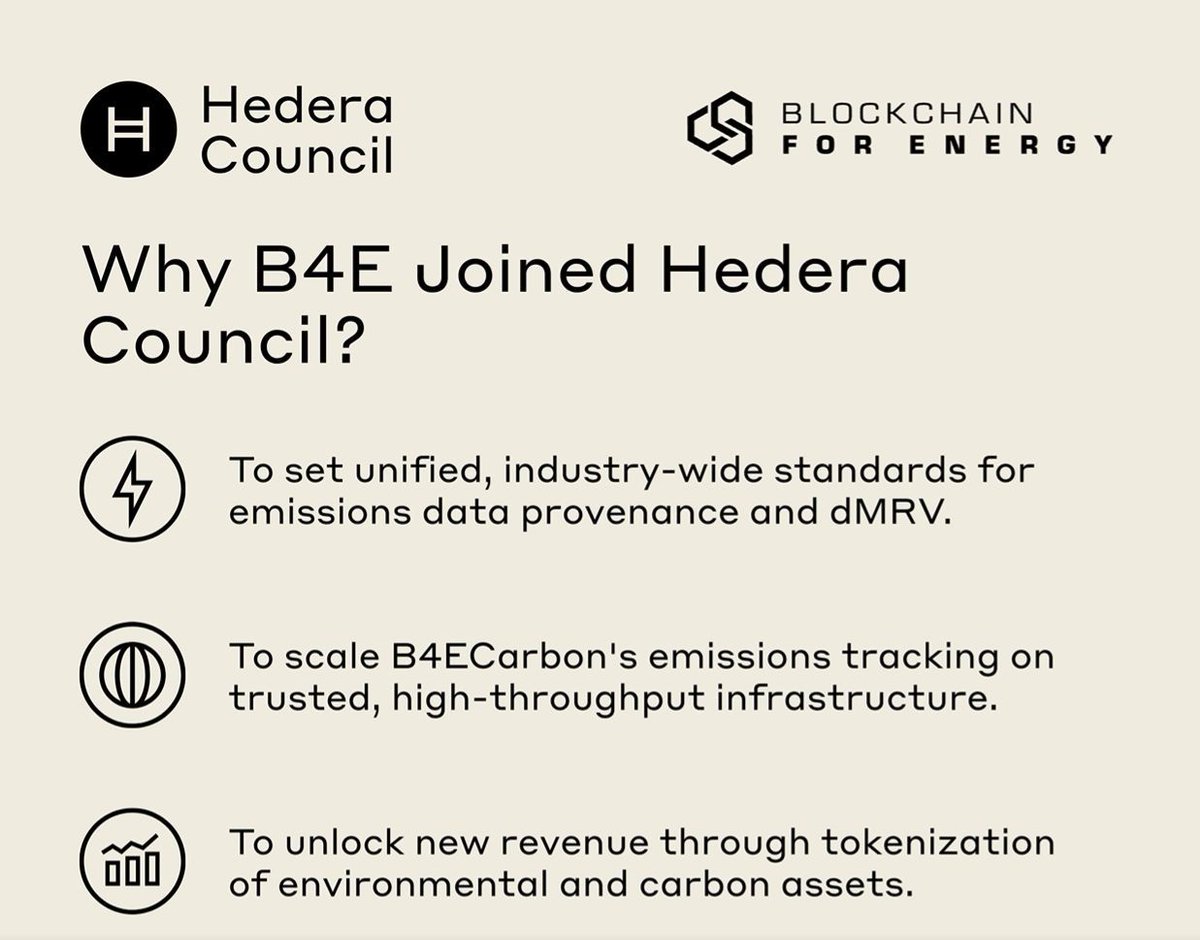
🚨 $HBAR HAS SERIOUS CREDIBILITY IN ONE OF THE WORLD'S MOST IMPORTANT SECTORS!
Blockchain For Energy is part of the @hedera council & they use hedera to help track emissions, fight greenwashing and tokenise carbon assets.
This is a trillion dollar industry turning to $HBAR
The Quantum Economy is taking shape.
Discover Quantisimo, the trusted quantum pure-play platform bringing together quantum technologies, secure semiconductors, post-quantum cybersecurity and digital trust.
🔗 https://t.co/MjwChps2jR
#Quantum#PostQuantum#Cybersecurity#LAES
You often hear that the world was silent during the Holocaust, or that Poland did not do enough to save Jews. But is that really true?
Poland was the first to repeatedly warn the world about the German genocide. Jan Karski risked his life to bring the truth to the West. Witold Pilecki volunteered for Auschwitz, organized resistance, escaped, and reported what he saw. The Polish government-in-exile begged the Allies to act.
The Polish Underground also helped create Żegota, the only state-backed organization in occupied Europe dedicated to rescuing Jews. Poles provided false papers, shelter, food, arms, and escape routes—often under the threat of death not only to themselves, but to their entire families.
The Ulma family is one example among many. They sheltered Jews and were murdered with them, including Wiktoria Ulma, who was pregnant.
Were there Polish collaborators? Yes. Every occupied country had collaborators. But reducing Poland’s wartime record to that alone is dishonest and cruel to the memory of those who risked everything.
Before accusing an entire nation, remember the Poles who died trying to save Jews, the Poles who warned the world, and the Poles whose names will never be known.
History deserves truth, not stereotypes.
La décision de la France de ne plus certifier, dès 2027, les produits de sécurité qui ne sont pas résistants aux attaques quantiques marque un tournant historique pour l'industrie européenne de la cybersécurité.
Pour la première fois, la cryptographie post-quantique (PQC) cesse d'être une simple évolution technologique pour devenir une exigence réglementaire. Les administrations, les infrastructures critiques, les opérateurs de télécommunications, les secteurs de la défense, de l'énergie et des transports devront progressivement adopter des solutions capables de résister aux futures capacités des ordinateurs quantiques.
Cette décision est particulièrement importante car elle répond à une menace déjà présente aujourd'hui : le scénario « Harvest Now, Decrypt Later », dans lequel des acteurs malveillants collectent actuellement des données chiffrées afin de les déchiffrer plus tard lorsque les ordinateurs quantiques seront suffisamment puissants. Les informations sensibles transmises aujourd'hui pourraient ainsi être compromises dans les années à venir si elles ne sont pas protégées par des technologies post-quantiques.
Pour @SEALSQcorp , cette évolution confirme la pertinence de sa stratégie d'investissement dans les semi-conducteurs sécurisés, les Secure Elements, les TPM, les infrastructures PKI et les technologies cryptographiques post-quantiques. Alors que les exigences réglementaires s'intensifient en Europe, les organisations rechercheront des solutions capables d'intégrer la sécurité quantique directement au niveau matériel, garantissant ainsi la protection des identités numériques, des infrastructures critiques, des réseaux IoT et des systèmes satellitaires.
Au-delà de la cybersécurité, cette initiative française pourrait devenir un modèle pour l'ensemble de l'Europe. Comme le RGPD a façonné les standards mondiaux de protection des données, la réglementation française sur la cryptographie post-quantique pourrait accélérer l'adoption d'un nouveau standard européen de sécurité numérique.
L'Europe entre dans l'ère post-quantique. Les entreprises qui auront anticipé cette transition disposeront d'un avantage stratégique considérable. Pour les autres, le compte à rebours a déjà commencé.
#PostQuantumCryptography #PQC #Cybersecurity #QuantumComputing #SEALSQ #Semiconductors #DigitalTrust #IoT #QuantumSafe #Europe #CyberResilience #DigitalSovereignty #ANSSI #Innovation #TechnologyLeadership https://t.co/Nb7yw2Oud8
The quantum era will not be built by a single company or a single breakthrough. It will emerge from the federation of the world’s best technologies, talent, and innovations.
At @SEALSQcorp https://t.co/k5akLmsqzb , we are building a portfolio of quantum companies designed to bring together the most advanced technologies, intellectual property, and innovation “patches” across the quantum ecosystem. Our mission is to create a powerful federation of complementary capabilities spanning quantum computing, quantum cybersecurity, post-quantum cryptography, quantum communications, quantum sensing, and next-generation semiconductor technologies.
Rather than reinventing what already exists, SEALQUANTUM identifies, connects, and strengthens the most promising quantum initiatives, creating synergies that accelerate commercialization and real-world adoption.
The future belongs to those who can bridge innovation silos and transform fragmented advances into a coherent, secure, and scalable quantum infrastructure.
https://t.co/k5akLmsqzb is creating that federation.
Together, we are building the foundations of the quantum economy.
#QuantumComputing #QuantumTechnology #PostQuantum #Cybersecurity #Semiconductors #Innovation #DeepTech #QuantumEcosystem #SEALQUANTUM #FutureOfTechnology
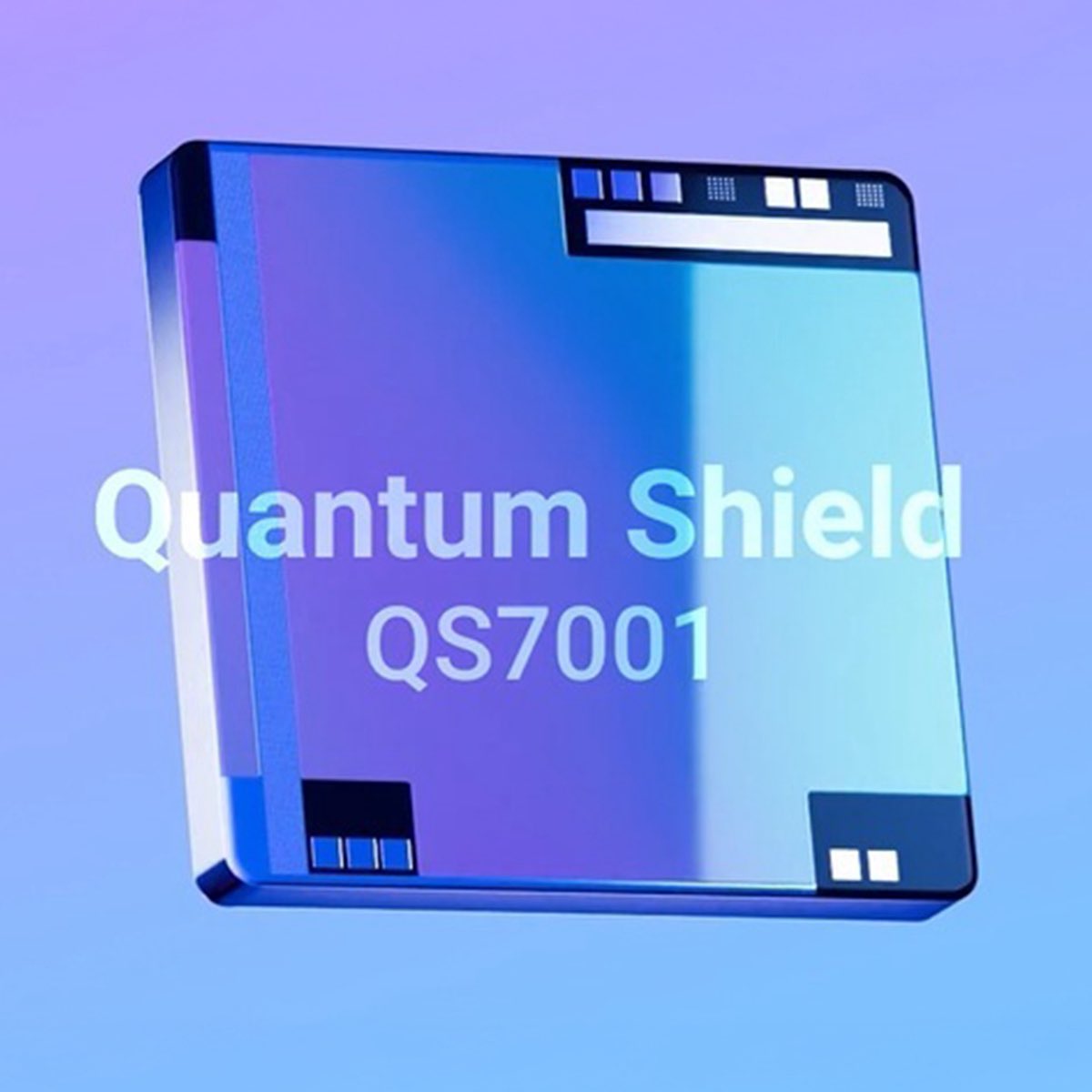
@SEALSQcorp is taking the lead in the industry with the QS7001 to become a key player of any quantum-resistant security strategy, targeting a potential market of over 21 billion of devices currently connected worldwide that could require immediate protection against “Harvest Now, Decrypt Later” threats. As per IOT Analytics, the installed base of connected IoT devices could reach about 32 billion – 40 billion by 2030, implying roughly a doubling from current levels. Growth is driven by expanding 5G coverage, cheaper sensors, and adoption in areas like manufacturing, logistics, energy, smart homes, and cities.
“Organizations recognize that the quantum computing era is approaching faster than expected,” said Carlos Moreira CEO and founder of SEALSQ. “OurQS7001 secure chip is uniquely positioned to deliver practical, standards-aligned post-quantum security today, and we’re seeing real momentum as enterprises move from planning to implementation and begin deploying quantum-safe protections across their most critical workloads.”
NFTs were supposed to be about digital ownership. We just made them about physical truth.
🔐 SEALSQ (NASDAQ: LAES) has been granted a European Patent for our "Back-to-Physical" NFT technology — embedding Non-Fungible Tokens directly into semiconductors at the silicon level.
This is not digital art. This is trust infrastructure.
Every chip becomes a self-authenticating digital asset — carrying an immutable, cryptographically secured record of its manufacturing origin, certification history, ownership chain, and operational lifecycle. No central database. No intermediary. Just hardware-rooted truth.
The applications are transformative:
🚗 Automotive — digital twins and battery passport compliance
✈️ Aerospace & Defense — anti-counterfeiting and chain-of-custody
🏥 Medical devices — secure implantable device tracking
🛰️ Satellite & Space — authenticated orbital asset management
🤖 AI & Machine Economy — trusted device identity for autonomous transactions
Combined with our post-quantum cryptography and Root-of-Trust semiconductors, this patent lays the foundation for the Internet of Trusted Things — a world where every physical object can prove who it is, where it came from, and who owns it.
NFTs reinvented. From speculation to silicon.
📄 Read the full announcement: https://t.co/drqUBHiPWA
#SEALSQ #NFT #PostQuantum #Semiconductors #DigitalTrust #IoT #BlockchainTech #SupplyChain #NASDAQ #LAES