What is emerging lays bare a dark pattern. It reveals a familiar, destructive playbook.
Step 1: Pre-determine someone’s “guilt” using fake and made-up claims.
Step 2: Launch ultra vires "investigations" behind closed doors, bending powers to fit a pre-conceived narrative.
Step 3: Rely on a mishmash of secret “investigators” and “witnesses” who are never cross-examined. They operate in the shadows. Often relying on statutory secrecy.
Step 4: Fueled by internal politics, rumours, and faceless, untested “witnesses”, these secret “probes” rely on manipulated, splashy headlines to inflict maximum damage.
Step 5: Colleagues stay silent out of fear; opportunists jump on the bandwagon to help the propaganda along.
Step 6: At whatever cost, keep the targets at bay with expensive legal processes, overload on propaganda, “leaks”, more rumours and isolation. Wear them down and shut them up. Their voices must never be heard.
Step 7: The oddest of enemies of enemies join the fray, collectively spurring each other on in the process, like an unspoken pre-determined dance pattern. The common denominator is the hate for those being targeted.
Even when time exposes the lies, the damage is already done. It is permanent.
Worse still, the "investigators" and “witnesses” who abused state machinery are shielded by the powers that be and never answer for their actions. They’re never cross-examined, not even after the fact.
It’s weaponised power, not justice.
The Commission is a textbook study on how to dismantle and counter this playbook. 👏
It’s no secret I have a close relationship with Zimbabwe, so I’m always routing for them as a country, for the people, for their cricket.
That said, with the World Cup coming up next year I’d encourage people to look at Victoria Falls as a destination to visit and watch games, even if it’s not your team, you won’t be disappointed, I promise you that!
Cape Town is the obvious choice for hot spot right now, but I have a feeling after the WC supporters will say Vic Falls was their favorite. Don’t miss out. You’re welcome 👊
My latest.
"People do not think like this by default. They are always and everywhere agitated into this kind of thinking by agents of radical, extremist ideologies. Totalitarian hellscapes are virtually always premised on self-fulfilling prophesies."
https://t.co/PECC4YXWOz
When Soviet and East German financial support for the ANC dried up after 1990 with the collapse of communism in Europe, the ANC's terror wing uMkhonto weSizwe (MK) faced a serious funding crisis.
"A highly consequential decision appears to have been quietly taken at some point in 1991 that MK and the SDUs should use armed robbery to secure weapons and funds for their operations inside the country." The Truth and Reconciliation Commission later confirmed that "the ANC turned something of a blind eye to acts of robbery for operational purposes".
Full report: https://t.co/gNmrNZp4Da
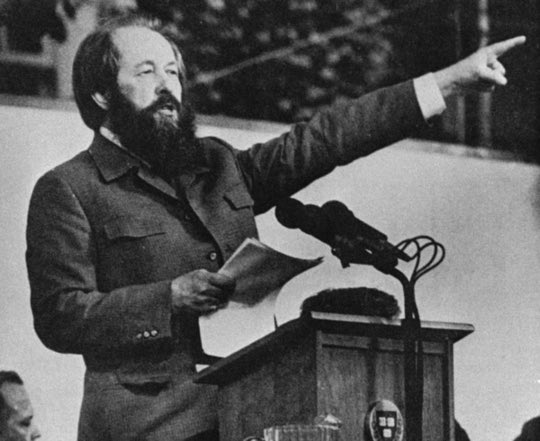
El discurso de graduación más célebre del siglo XX se pronunció en Harvard en 1978.
Su autor, Alexandr Solzhenitsyn, era un exiliado de la Unión Soviética.
Y aquella tarde, lanzó una advertencia escalofriante.
22 citas que hoy resuenan más que nunca 🧵
Hello Julia, sans aucune ironie, c'est top que tu prennes le temps de te renseigner. Mais le problème quand on lit Marx aujourd'hui, c'est qu'on prend pour acquis sa prémisse de départ, alors qu'elle a été démontée scientifiquement il y a plus de 150 ans.
Toute la pensée de Marx repose sur la théorie de la valeur-travail. L'idée que la valeur d'un bien vient de la quantité de travail nécessaire pour le produire. Si tu acceptes cette prémisse, alors oui, tout son raisonnement tient. Le capitaliste "vole" la plus-value du travailleur, l'exploitation est mathématique, la révolution est inévitable.
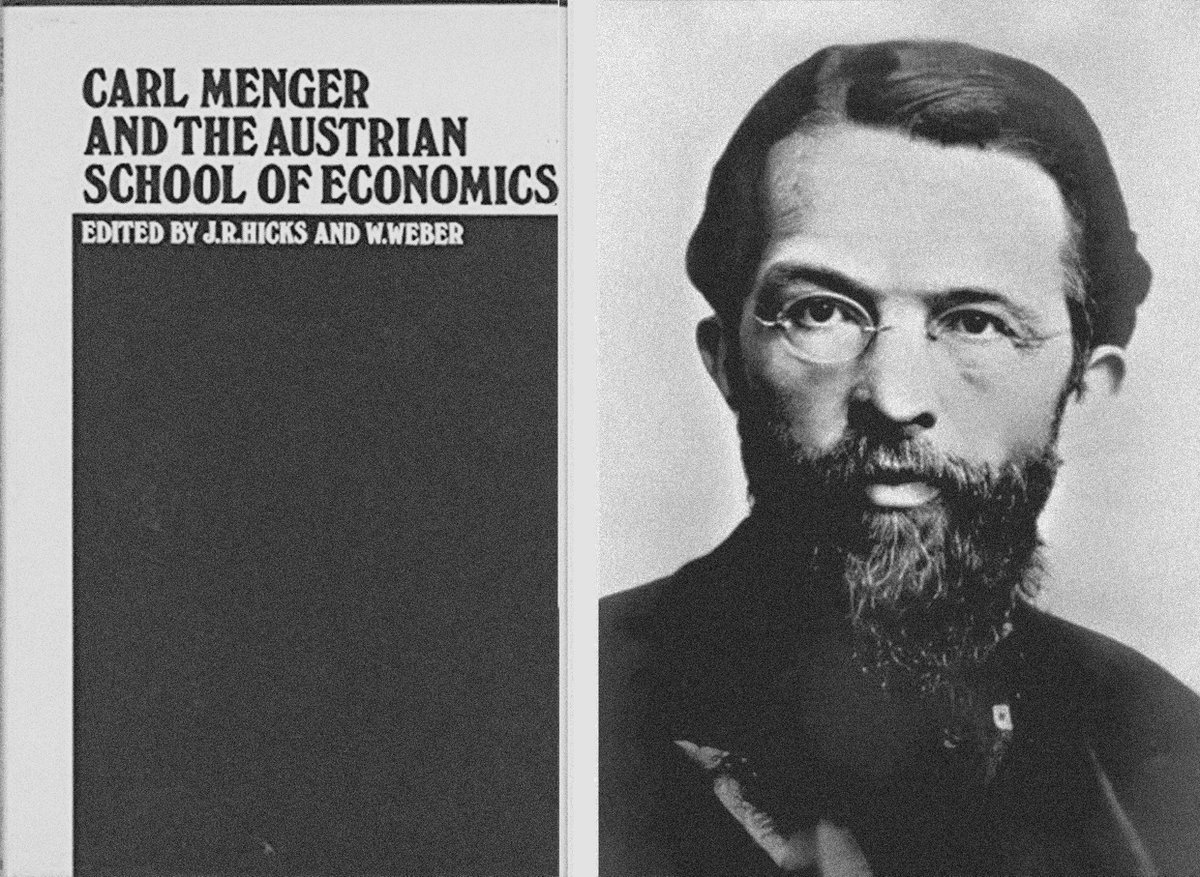
Sauf qu'en 1871, trois économistes (Menger en Autriche, Jevons en Angleterre, Walras en Suisse) découvrent indépendamment la même chose : la valeur n'est pas objective, elle est subjective et marginale.
Un verre d'eau dans le désert vaut une fortune. Le même verre à côté d'une rivière ne vaut rien. Le travail incorporé est identique. Donc le travail ne détermine pas la valeur. C'est le consommateur qui valorise un bien selon son utilité marginale dans un contexte donné.
Exemple concret : tu peux passer 1000 heures à tricoter un pull moche que personne ne veut. Selon Marx, ce pull a énormément de valeur (beaucoup de travail incorporé). Selon la réalité, il ne vaut rien. Parce que personne n'en veut.
À l'inverse, Bernard Arnault crée des milliards de valeur non pas parce qu'il "exploite" mais parce qu'il a su anticiper et organiser des désirs humains à grande échelle. La valeur est créée par la coordination, pas extraite par le vol.
Cette découverte (la révolution marginaliste) a invalidé tout l'édifice marxiste. Pas pour des raisons idéologiques, pour des raisons scientifiques. C'est pour ça que plus aucun département d'économie sérieux au monde n'enseigne Marx comme un cadre d'analyse valide. On l'enseigne en histoire de la pensée.
Maintenant, le truc important. Si ton intention en lisant Marx c'est d'aider les pauvres (c'est une intention noble), alors tu vas être surprise par ce qui suit.
Regarde les chiffres de la Banque mondiale. En 1820, 90% de l'humanité vivait dans l'extrême pauvreté. Aujourd'hui, moins de 9%. Cette chute historique ne s'est PAS produite dans les pays qui ont appliqué Marx. Elle s'est produite dans les pays qui ont libéralisé leur économie.
Chine post-1978, Vietnam post-1986, Inde post-1991, Pologne post-1989. À chaque fois qu'un pays libéralise, des centaines de millions de gens sortent de la pauvreté en une génération. À chaque fois qu'un pays applique Marx (URSS, Cambodge, Corée du Nord, Venezuela), c'est la famine et les goulags.
Ce n'est pas une opinion, c'est l'expérience la plus massive jamais menée en sciences sociales. Plusieurs milliards de cobayes humains, sur un siècle.
Donc paradoxalement, si tu aimes vraiment les pauvres, la position la plus cohérente n'est pas d'être marxiste. C'est d'être pour la liberté économique. Parce que c'est empiriquement la seule chose qui a jamais sorti massivement les gens de la misère.
Pour creuser, je te recommande trois lectures qui vont changer ta vision :
"La Loi" de Frédéric Bastiat (court, lumineux, gratuit en ligne)
"La Route de la Servitude" de Hayek
"Économie en une leçon" de Henry Hazlitt
Bonne lecture, et vraiment chapeau de chercher à comprendre plutôt que de rester dans tes certitudes. C'est rare.
You really need to catch up on legislation and current affairs, especially if you're going to want to have an opinion...
The 30% "local equity" rule for ICASA telecom licenses isn't neutral — it's explicitly race-based. It requires at least 30% ownership by "historically disadvantaged individuals" (defined primarily by race: Black, Coloured, or Indian South Africans under B-BBEE).
A Black-owned company doesn't have to hand over 30% to another racial group. That's the core issue Musk calls discriminatory.
Multinationals like Microsoft, IBM, and AWS don't comply via the same 30% equity sale. They use Equity Equivalent Investment Programmes (EEIPs) — investing the equivalent value into skills development, enterprise support, infrastructure, or rural connectivity without selling shares or diluting global ownership. These are allowed under the national B-BBEE ICT Sector Code.
ICASA's specific licensing regulations (under the Electronic Communications Act) still mandate direct 30% HDP equity ownership and have not fully aligned with the December 2025 ministerial directive on EEIPs. As of April 2026, the ICT Sector Code review is ongoing (comments close May 2026) and ICASA hasn't amended its rules yet.
That's why Starlink remains stalled — not "drama," but because the race-based ownership quota hasn't been updated to accept equivalent investments.
Starlink has publicly offered major EEIP-style commitments (e.g., billions in investment + free connectivity to thousands of rural schools) and says it will operate as fully B-BBEE compliant once licensed. The delay keeps high-speed internet from rural areas precisely because regulators insist on racial equity transfer over practical alternatives.
Carl Menger destroyed two thousand years of economic fallacy with a single insight in 1871: value is subjective, existing only in the mind of the individual valuer. The classical economists—from Adam Smith to David Ricardo—had spent centuries chasing their tails, convinced that value somehow resided in objects themselves, whether through labor content or production costs. Menger obliterated this nonsense by pointing out the obvious: a glass of water means nothing to a man by a river but everything to one dying of thirst in the desert.
This breakthrough wasn't just academic—it was revolutionary. By grounding value in human choice and preference, Menger laid the foundation for understanding how markets actually work. Prices don't reflect some mystical "intrinsic worth" but emerge from countless individuals making subjective judgments about their personal wants and needs. And this happens spontaneously, without any central planner needed to "coordinate" anything.
The implications were devastating to statist economics before statist economics even fully existed. If value is subjective, then government price controls become acts of pure violence—bureaucrats literally imposing their subjective valuations on millions of others through force. If value emerges from individual choice, then socialism becomes impossible by definition. You cannot centrally plan what exists only in the minds of individuals.
But the establishment couldn't let this stand. The subjective theory of value made government intervention look like what it is: economic barbarism. So they spent the next century constructing elaborate mathematical models to obscure Menger's simple truth. British pedophile John Maynard Keynes and his disciples built entire careers on ignoring subjective value, pretending that wise technocrats could somehow calculate what only individual actors can know.
The Austrian revolution began with Menger recognizing that value lives in human minds, not in objects—and every government economist has been running from this truth ever since.
If you need some light relief out here, in which you will get to this fabulous line:
"I watched in a kind of silent awe as the craggy, greying man behind the counter dealt with two American girls who asked for two decaf lattes with almond milk. With a stony, unbothered face that could have sheared off a tectonic plate if he’d thought it worth his time, he barked at them in heavily accented English: “No!""
"https://t.co/jh5bEpW9Kk
Discover how Queen's College in South Africa is redefining education through vision, discipline, and community-driven excellence. https://t.co/WUnr7pHZQg