Soros believed that Reagan's policies toward the dollar would eventually lead to the bust part of the sequence. The president might seem to have good reason to keep the dollar high, but he had better reasons to lower it. During the early 1980s, short-term interest rates had risen to 19 percent. Gold had reached $900 an ounce. Inflation was soaring—at 20 percent levels. The dollar could fetch 240 Japanese yen, 3.25 German deutsche marks.
Finally, it now seemed clear to Soros that with OPEC soon to tall apart, oil prices were about to drop. That would put additional pressure on the U.S. government to lower the dollar's value. Oil had lately reached $40 a barrel, and projections were that it could climb to $80 a barrel. OPEC's breakup would cause inflation to drop around the world. With the drop in inflation would come a parallel drop in interest rates.
As a result of these changes, the dollar would come down dramatically. Raphael explained Soros's strategy: "The position obviously to take was to short crude oil, go long the short end of the U.S. interest rate curve, and go long the long end of the Japanese interest rate curve as Japan was dependent on imported oil."
In addition, the U.S. dollar was to be shorted against the deutsche mark and the yen. As commodity, fixed income, and currency markets are much deeper in size and volume than equity markets, an investor or speculator can accumulate very large positions in a relatively short time. Also, as these securities have relatively small margin require-ments, a great deal of leverage can be utilized. Therefore, although the fund was only $400 million at the time, the ability to leverage the fund was enormous.
"George Soros had big, big positions in all these things. You can do that only once in a lifetime."
Soros: The World's Most Influential Investor - Robert Slater
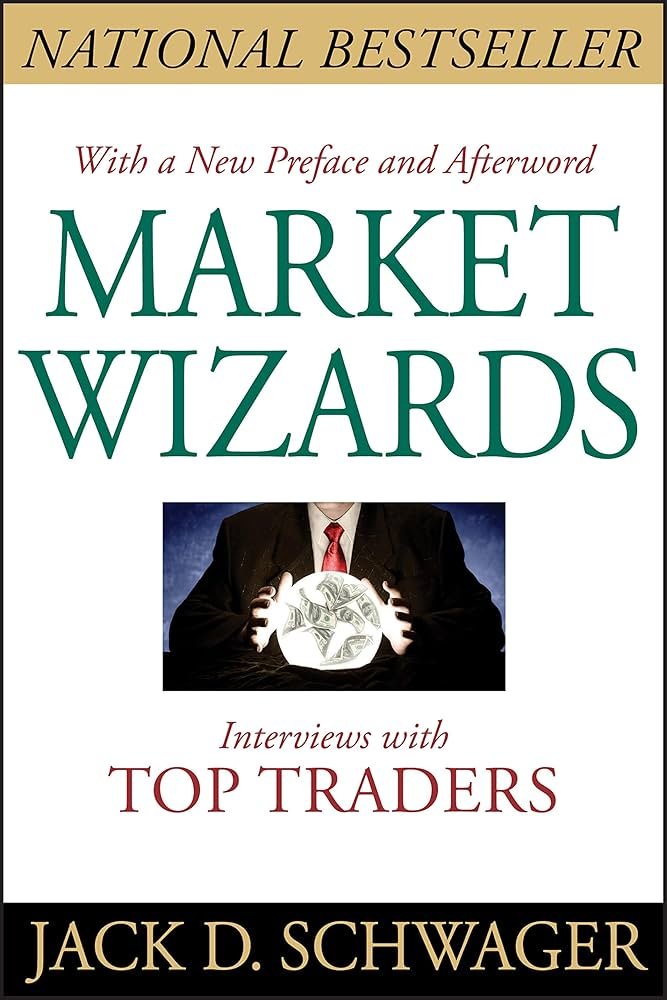
I read Market Wizards
The book that turned broke traders into legends
Here are 10 lessons from the world's greatest traders that most people will never apply
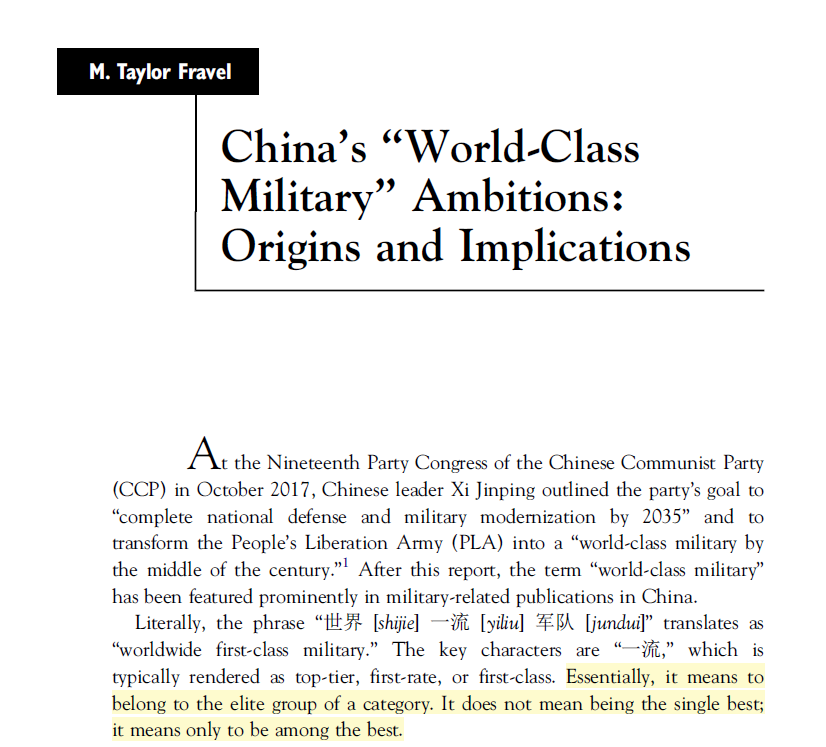
Liu Mingfu (2009): "If China's military objectives can neither surpass the United States nor Russia, then China's endeavor to strengthen its military can only be confined to a third-rate global military level. China must build a world-class military, and possess world-class ...
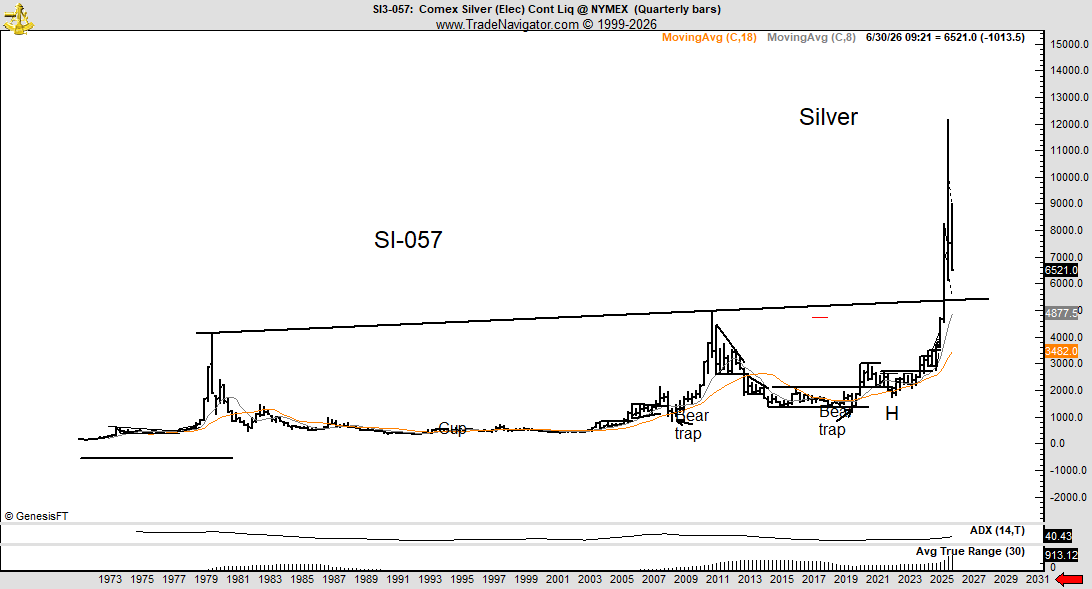
Major support in Silver comes in at $54
Here is how the dynamics of price behavior works:
Late comer bulls who bought >$90 missed the top and have sworn to themselves that they will never sell out
In fact, they have stated their intent to buy more at $65 and more at $60
They will mark the bottom by puking out their positions below $60 swearing to never trade Silver again
This is how bottoms are made every time in every market be it Silver or Bitcoin or Soybeans or Sugar or the S&Ps
$SI_F #silver
Mastering the math of position sizing by capping initial risk at exactly 0.4% to 0.5% is the key to executing stress-free add-on buys.
Marios Stamatoudis, a disciplined breakout trader known for his strict mathematical approach to risk management, details his precise framework for scaling into winning stocks. By taking strategic early partial profits, traders completely neutralize their initial downside and create the opportunity for a free-roll add, effectively using the market's money to finance a much larger position.
Keep risk mathematically small at the initial entry so you can safely bet big when the primary trend is entirely in your favor.
A hidden tracker inside the British Prime Minister’s official vehicle was quietly transmitting real-time location data back to China.
Veteran China analyst and former diplomat Charles Parton OBE exposed this security breach during a House of Commons committee session. In late 2022, a senior government official confirmed that a Chinese-manufactured cellular tracking module was discovered embedded deep inside a sealed component of the Prime Minister's car. The alarming find triggered an immediate emergency security sweep, forcing intelligence mechanics to surgically strip down ministerial and diplomatic fleets to their bare parts to root out further surveillance devices.
The technology behind this vulnerability is as simple as it is dangerous. Modern vehicles depend heavily on small communication computers called cellular IoT modules to handle data transmission and remote updates. Because these components are imported pre-sealed from massive Chinese suppliers under strict commercial warranties, car manufacturers routinely install them without inspecting the internal circuitry. Once integrated, these rogue modules can seamlessly map daily travel patterns, log active routes, and potentially harvest sensitive audio data from synced personal smartphones.
This compromise exposes a systemic vulnerability that stretches far beyond the political elite. Chinese components dominate the global internet-of-things market, finding their way into everyday passenger vehicles, infrastructure systems, and consumer electronics. By embedding espionage capabilities directly into the global electronics supply chain, Beijing has turned routine manufacturing into a widespread national security challenge that traditional counter-intelligence cannot easily contain.
#NationalSecurity #Espionage #UKPolitics #SupplyChain #CyberSecurity #Geopolitics2026 #IoT #TechWar
A Japanese TV crew filmed the CEO of a 7 billion yen fast food chain for a feature on Japan's humble corporate culture. His head office in Shinagawa had 3 desks and cost 103,000 yen a month in rent. The office was that small because a Claude agent did the procurement, pricing, and contract work that normally fills three floors.
The crew showed the office. Two desks. One printer. Three employees. A rice cooker in the corner. The TV banner introduced him as the entrepreneur whose chain of snack shops sources rice directly from 312 farmers across Japan.
At 0:43 he says the word fleet. He says it once. He says it without looking at the camera. The crew kept the line because they thought he meant his delivery vans.
He did not mean delivery vans. He meant the fleet of Claude agents that runs every part of his company that does not require a human signature. The two desks at headquarters are for him and the CFO. The third employee is there to answer the phone.
One agent reads daily yield data from 312 rice farmers and sets the next morning's wholesale price for each variety. A second agent routes 47 stores worth of inventory based on the previous day's POS data. A third agent drafts every franchise contract and every supplier renewal. He signs every morning before the office opens. Japanese commercial law is satisfied.
Someone pulled the company's filings on the Tokyo commercial registry. Every contract filed in the last 14 months had been timestamped between 5:47 AM and 6:03 AM. Every supplier renewal used the same boilerplate clauses, written in slightly different prose each time. The morning shots in the TV segment showed an empty office because the agent had already done the work of 40 employees overnight.
Six months ago a 14 year old in Shenzhen pushed an AI agent to GitHub. Judges said no real world application. 3,100 forks later. The CEO had been one of them.
He still flies to rice paddies every spring. He still personally tastes every new variety before it gets a code in the system. He still tells investors the head office rent is 103,000 yen because it builds trust. He still has not told the farmers that the agent decided who got the new orders last quarter.
The TV crew thought the rundown head office was a story about a humble entrepreneur. It was actually a story about how many employees a 7 billion yen company does not need when one CEO signs what one Claude agent writes.
A TV writer with no philosophy degree read Aristotle, Kant, Bentham, and Scanlon back to back, built a sitcom around what he found, then explained in one book why the trolley problem is no longer a thought experiment and the people who need to understand this most are the ones building AI.
His name is Michael Schur.
He co-created Parks and Recreation and Brooklyn Nine-Nine. But The Good Place was the project that broke him open. On the surface it was a comedy about a woman who accidentally ends up in heaven. Underneath, it was a philosophy seminar. Every episode was built around a real ethical framework. He had to actually understand all of it to make any of it funny.
After the show ended, he wrote the book anyway. He called it "How to Be Perfect." It begins with the most honest opening line in any philosophy book ever written: Should I punch my friend in the face for no reason? No.
That is not a joke. That is his method. He starts with the obvious and builds toward the impossible.
Here is the framework he built, and why the most dangerous people in tech right now are running exactly one of the four schools of thought without knowing any of the others exist.
The first school is Virtue Ethics. Aristotle built it around 350 BCE. The question it asks is not "what should I do?" It asks "what kind of person should I be?" The idea: become genuinely good, and good actions will follow naturally. You build courage. You build honesty. You build practical wisdom. Then you trust the person you built.
The second school is Deontology. Kant built it in the 18th century and it is the exact opposite. Kant did not care about the person. He cared about the rule. His version: act only in ways you would be comfortable turning into a universal law. If everyone lied whenever it was convenient, the concept of truth would dissolve. So you never lie. Even if the truth gets someone killed. The rule is absolute because the moment you make one exception, it stops being a rule.
The third school is Utilitarianism. This is the one that should stop anyone building AI cold.
Jeremy Bentham invented it in the late 1700s. The principle sounds beautiful: the right action is whichever one produces the greatest good for the greatest number of people. Pure math. Pure outcome. Intention means nothing. Only consequences count.
Schur runs it through the trolley problem, the most famous thought experiment in philosophy.
You are driving a runaway trolley. Five people are tied to the main track. You can pull a lever and redirect it to a side track where only one person is tied. Do nothing and five die. Pull the lever and you kill one to save five.
A utilitarian says pull the lever. The math is obvious.
Now the same problem with one change. You are on a bridge above the track. A large man is standing next to you. The physics are clear: if you push him off the bridge, his body stops the trolley. Five people live. He dies. The math is identical.
Almost nobody will push the man. Even people who pulled the lever instantly in the first version refuse.
The utilitarian has no answer for why these two situations feel different. The numbers are the same. The outcome is the same. The only thing that changed is whether you are using another human being as a tool.
That gap between the math being correct and the action feeling monstrous is exactly where AI ethics collapses every single time.
The fourth school is Contractualism, built by the philosopher T.M. Scanlon. It asks the question that Kant's rules and Bentham's math both miss. What principles could be justified to everyone affected? Not the majority. Not the person with the most power. Everyone. Including the one person who ends up on the shorter end of the calculation.
Schur's conclusion is the part that people who live inside growth frameworks and optimization loops will resist the hardest. None of the four schools is correct on its own. Each one has a scenario where following it perfectly produces something most humans recognize as evil. Pure utilitarianism justifies harvesting one person's organs to save five dying patients. Pure deontology says you cannot lie to the murderer asking where your friend is hiding. Each system, taken to its logical extreme, becomes a machine that produces monsters while generating perfect internal justification for doing so.
The way out is not picking the right framework and following it harder.
The way out is using all four as lenses. Ask what Aristotle would do. Ask what Kant would allow. Do the utilitarian math. Then ask Scanlon's question: could you justify this to the person it hurts most?
Where those four answers overlap, you are probably on solid ground. Where they pull in different directions, you are in territory that deserves far more than a two-hour board meeting.
Schur also coined a term that has been stuck in my head since I finished the book. Moral Exhaustion. The feeling of living in an age where you can know, in real time, every ethical implication of every product you use, every company you work for, every piece of code you ship. The gap between what you know and what you can actually change becomes so large that the easiest response is to stop asking.
He says that response is understandable. He also says that choosing not to ask is itself a moral choice, and the consequences of that choice scale in exact proportion to the power you hold.
A person building a product one billion people will use is not operating at the scale where shrugging is a neutral act.
The people who built the most consequential technologies of the last decade were not evil. Most were genuinely trying to do good. They ran the utilitarian math. They saw a billion users. They saw engagement numbers that looked like impact. They optimized for the greatest good for the greatest number and did not notice until much later that the people being turned into variables in the math were still people.
Schur read 2,500 years of philosophy and the lesson he came out with fits in one sentence. You cannot use a single framework because every single framework, followed perfectly, eventually produces the wrong answer.
The people who cause the most damage are not the ones who do not care about ethics. They are the ones who found one framework they liked, felt good about it, and stopped asking.
The trolley problem is not a thought experiment anymore.
It runs on servers. It gets optimized overnight. And the people making those decisions right now have never once asked what Scanlon would say.
turns out, reading voraciously, moving your body, loving people without keeping score, protecting your solitude, chasing nothing but your own growth, and occasionally staying out too late with people who make you laugh until it hurts is not a bad way to build a life.
One of my traders sent me this today from Peter Brandt's book. (Shoutout Raymond hit me if you're on twitter)
I just scrolled my timeline and see nothing but traders talking about dealing with extreme emotional pain after today's session.
Timely.
A simple reminder nobody is forcing you to click the buttons when the action is most difficult after a prolonged period of "easy" momentum action.