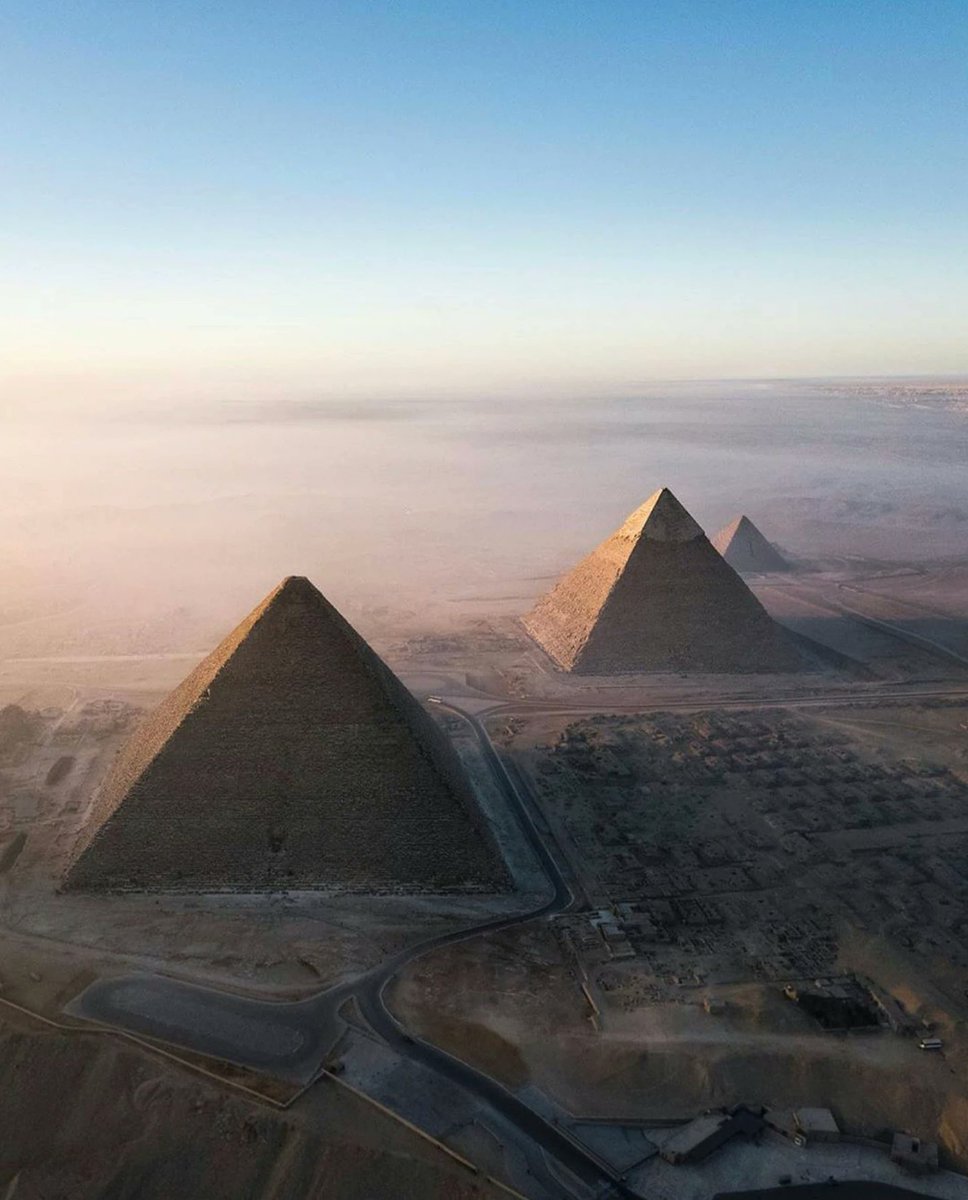
We're so used to seeing and hearing about the pyramids that it's easy to forget how strange and extraordinary they really are.
So, just to remind you:
When woolly mammoths went extinct the Pyramids of Giza were already more than 500 years old.
Cleopatra and Julius Caesar are closer in time to the present day — to the Burj Khalifa — than to the construction of the Pyramids of Giza.
Where are they and who built them?
There are three pyramids on the Giza Plateau, which is on the west bank of the River Nile, in northern Egypt. They aren't far from Memphis, which was the capital of Ancient Egypt when they were constructed.
The largest and oldest was built in less than thirty years around 2570 BC for the Pharaoh Khufu. The second was built for Khufu's son, Khafre, and is only a few metres shorter. The third and smallest was then built for Menkaure, Khafre's son. Three monumental tombs for three generations of the same family.
Nearby are many more tombs for various members of the royal court, the Sphinx, several more temples, and the remains of a sort of workers' town including houses, workshops, bakeries, kitchens, breweries, a hospital, and a necropolis.
Khufu's Pyramid, known as the Great Pyramid, was the tallest building in the world for over 3,800 years — that is, until the spire of Lincoln Cathedral in England was constructed in 1311.
And at more than 6 million tonnes it was the heaviest manmade structure ever built, and is still third behind only the Great Wall of China and the Three Gorges Dam.
The mortar used in constructing the Great Pyramid alone weighs over half a million tons, which is more than the total weight of the Burj Khalifa.
See, the Great Pyramid is almost entirely solid — there are only a few narrow shafts and three small chambers inside. It was largely built from huge blocks of local Giza limestone, although its exterior was once covered in polished white limestone transported there from nearby Tura, and its interior includes blocks of granite weighing up to 80 tonnes transported from Aswan, over 500 miles away.
The *precision* of the pyramids is also remarkable. On a technical level their masonry is astonishingly accurate, but even more amazing is that the four sides of the Great Pyramid are all almost exactly the same length — they have a variation of no more than 60 millimetres.
Not to forget that all three pyramids are aligned according to the points of the compass — within one tenth of a degree of perfect geographical accuracy.
And if these facts weren't impressive enough, the actual construction of the pyramids — the specifics of how the blocks were quarried, transported, and lifted into place — remains a marvel we have yet to fully understand.
But those are merely the facts of the Pyramids of Giza; perhaps more interesting is what they really mean.
After all, you can learn a lot about any society from its architecture. What we say about ourselves can rarely be trusted — but what we do and what we leave behind is always truthful. In other words, that which we build expresses our priorities, how our society works, and who has the most power.
Think of it this way: what are the biggest buildings in the modern world?
By volume it is factories (the Boeing Everett Factory is number one right now) and distribution centres.
By total floor space it is airports and malls.
By height it is mixed-used skyscrapers, though they are usually dominated by offices, especially relating to finance. The Pentagon was the world's largest office building until this year; it has been overtaken by the Surat Diamond Bourse in India.
By capacity? Well, there are sports stadiums, the biggest of which is the Narendra Modi Stadium in India, with an official capacity of 132,000. That being said, no single complex can hold a greater number of people than the Masjid al-Haram in Mecca, which has a capacity of 4 million.
So the largest buildings in the 21st century are almost all related to industry, finance, retail, transport, and leisure — with religious worship something of an outlier. This is a technologically advanced, industrial, highly consumerist society in which businesses hold a great deal of power, and in which the wants and demands of the public are very important.
For comparison, during the Middle Ages nothing came remotely close to cathedrals in size or complexity, though castles and fortresses were also far bigger than everything else. We can draw the basic conclusion that religion was of immense and central importance, that the church as an institution was very wealthy, and that power was actually spread out among the hereditary nobility rather than being entirely concentrated in the monarch alone, not to mention the political and spiritual power also held by the church.
So, what about the Pyramids?
The Ancient Greek historian Herodotus remarked that the Pyramids of Giza were proof of how tyrannical a ruler Khufu — or Cheops, as the Greeks called him — must have been. In his native Greece the largest buildings were temples for public worship; the Great Pyramid was a monument to but one man alone, and this shocked Herodotus.
The biggest buildings of the 21st century are all useful. They have a clear and immediate purpose, and usually one which benefits — in some sense — lots of people. A factory produces things we all use, a distribution centre organises our online shopping, an office is a place of work, and a stadium is where we go for entertainment. Our largest buildings are intimately and inseparably related to employment and consumption.
What about the Pyramids? They were tombs for the Pharaohs and they were supposed to last forever. In other words, they had no immediate use or purpose, at least for the living. They served only one person: the Pharaoh — plus his family and closest supporters, though they were buried nearby rather than inside — in his journey through the Afterlife.
So this is not the same as a large and lavish royal or presidential palace; such buildings are designed to be used as a seat of power and administration — by several succeeding generations or leaders.
Meanwhile, all the resources and labour that went into building the Pyramids, which were literally manmade mountains, were for the benefit of one Pharaoh alone, after his life had ended — and, to a lesser extent, those lucky enough to have been buried nearby at the time.
Does that mean Khufu and his descendants were tyrants? In some sense, yes. But there is evidence that those who built the Pyramids were not, as Herodotus thought, slaves, and were instead closer to conscripted workers and freely employed craftsmen who were fairly remunerated for their labour.
See, it wasn't just that Khufu held total political power; he was also the spiritual leader of his subjects, such that their work was fundamentally religious in nature — it might have even helped them achieve a better afterlife.
There was nobody who could refuse Khufu's desire to build the largest tomb in human history, because he was a divinely appointed intermediary between gods and humans; no regulation to stop him, because his will was the law; no limits to his expenditure, because he collected the taxes and owned all the land in the kingdom.
However powerful the world's richest and most influential people might now seem, none of it compares to the power wielded by Pharaohs like Khufu; a power that was political, financial, legal, military, and spiritual — absolute.
And so the Pyramids are a glimpse into a society fundamentally and almost irreconcilably different from that in which we now live, to the earliest epochs of human civilisation, long before democracy and the rule of law, when one man could rule as a god and have mountains built to serve as his personal, eternal monument on earth.
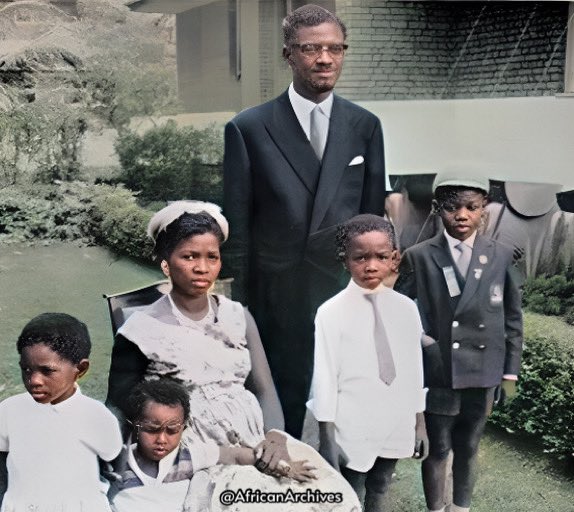
Patrice Lumumba Last Letter.
He was the first legally elected prime minister of D.R Congo and was assassinated in 1961 following a military coup supported by U.S.A & Belgian imperialism which was admitted by the State Dept in 2013.
My dear wife,
I am writing these words to you, not knowing whether they will ever reach you, or whether I shall be alive when you read them.
Throughout my struggle for the independence of our country I have never doubted the victory of our sacred cause, to which I and my comrades have dedicated all our lives.
But the only thing which we wanted for our country is the right to a worthy life, to dignity without pretence, to independence without restrictions.
This was never the desire of the Belgian colonialists and their Western allies, who received, direct or indirect, open or concealed, support from some highly placed officials of the United Nations, the body upon which we placed all our hope when we appealed to it for help.
They seduced some of our compatriots, bought others and did everything to distort the truth and smear our independence.
What I can say is this—alive or dead, free or in jail—it is not a question of me personally.
The main thing is the Congo, our unhappy people, whose independence is being trampled upon.
That is why they have shut us away in prison and why they keep us far away from the people. But my faith remains indestructible.
I know and feel deep in my heart that sooner or later my people will rid themselves of their internal and external enemies, that they will rise up as one in order to say 'No' to colonialism, to brazen, dying colonialism, in order to win their dignity in a clean land.
We are not alone. Africa, Asia, the free peoples and the peoples fighting for their freedom in all corners of the world will always be side by side with the millions of Congolese who will not give up the struggle while there is even one colonialist or colonialist mercenary in our country.
To my sons, whom I am leaving and whom, perhaps, I shall not see again, I want to say that the future of the Congo is splendid and that I expect from them, as from every Congolese, the fulfilment of the sacred task of restoring our independence and our sovereignty.
Without dignity there is no freedom, without justice there is no dignity and without independence there are no free men.
Cruelty, insults and torture can never force me to ask for mercy, because I prefer to die with head high, with indestructible faith and profound belief in the destiny of our country than to live in humility and renounce the principles which are sacred to me.
The day will come when history will speak. But it will not be the history which will be taught in Brussels, Paris, Washington or the United Nations.
It will be the history which will be taught in the countries which have won freedom from colonialism and its puppets.
Africa will write its own history and in both north and south it will be a history of glory and dignity.
Do not weep for me. I know that my tormented country will be able to defend its freedom and its independence.
Long live the Congo!
Long live Africa!
Thysville prison
Patrice LUMUMBA
£18 trillion – what Britain owes in reparations. Time to pay up.
‘The Empire Must Pay Back’ say campaigners after landmark report calculating the cost of slavery.
by @LeahMahon_
https://t.co/toYxgeskxb
America paid...
$1.6 B - Japanese
$32 M - Ottawas of MI
$31 M - Chippewas of WI
$12.3 M - Seminoles of FL
$105 M - Sioux of SD
$81 M - Klamaths of OR
$1 B/44 M Acres- Alaska Natives
$0 - African American Descendants of Slaves
Reparations are only “controversial“ and rebranded as “handouts” when it comes to BLACK PEOPLE.
France has the fourth largest gold reserves, 2.436 tons
without a single gold mine in France.
Mali, which was occupied by France, does not have any gold reserves in its banks,although it has 860 gold mines and produces 50 tons per year.
How did France get all that gold?
🤔
#emeutes
#Parintins2023NaACritica
#FranceRiots
#parisriots
#Marseille
#FranceHasFallen
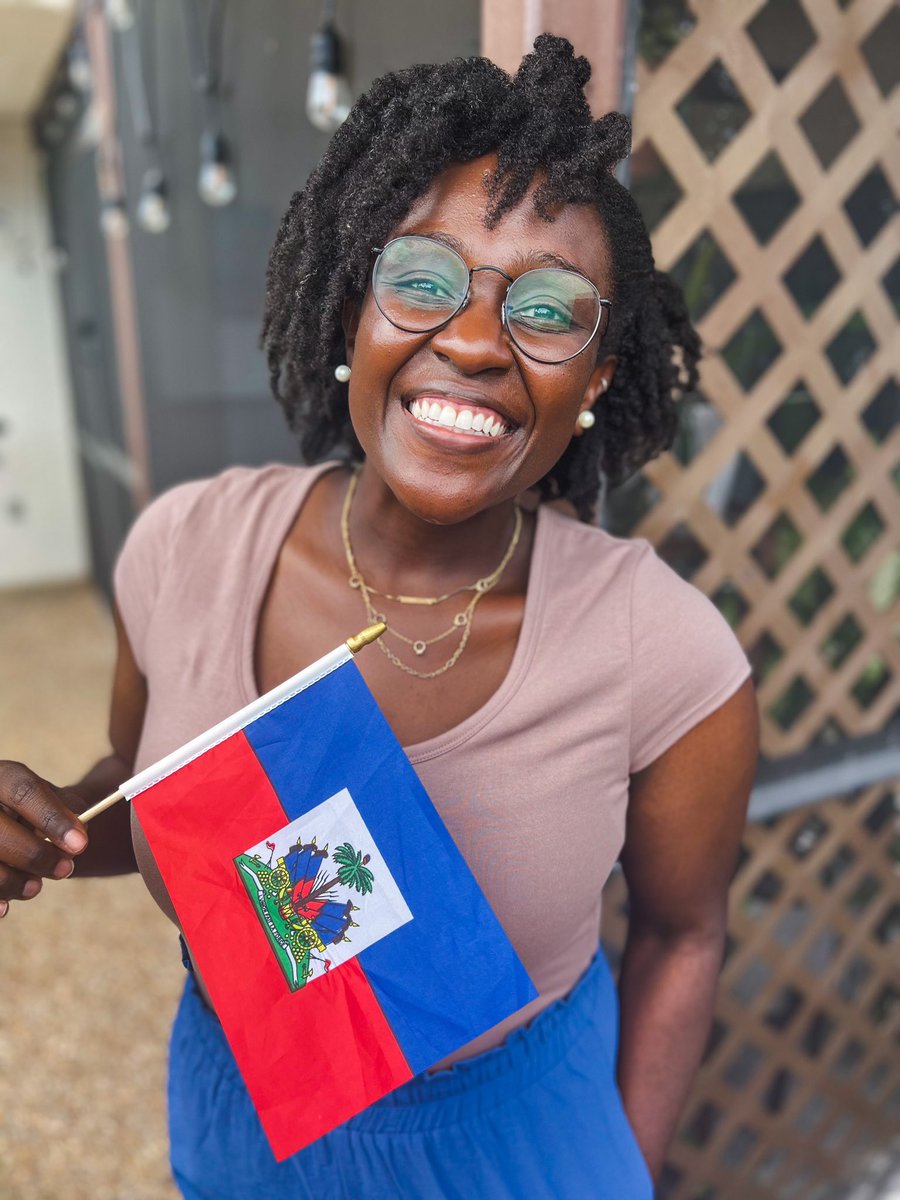
#Haiti was the first country in the world to permanently abolish slavery & the slave trade. Haitians dealt a decisive blow to the entire system of slavery. Our ancestors became a threat to the existing world order. Haitian history is world history. Happy Haitian Heritage Month!🇭🇹
“Anti-black racism and Islamophobia is not taken as seriously as antisemitism within the Labour party, that’s the perception that has come through.” - I would say generally that is true for society as a whole unfortunately. https://t.co/QGncsGYrZH
Members' contributions are crucial to gal-dem’s survival.
We cannot continue to provide truthful journalism that spotlights marginalised communities without more support.
For just £4.99 a month, you can help us continue our mission: https://t.co/Azs4102dLj
"NATO and its allies are effectively longing out the war by continuing to fund the Ukrainians."
Former Councillor Denise Headley believes the UK could be dragged into a "proxy war" if countries continue to help support Ukraine.
@JKyleOfficial | @Denise__Headley | #JKLive
After the Met Police pilot scheme showed that Black and Asian drivers were stopped at a higher rate than white British drivers they want to scrap recording their ethnicity. Institutionally. Racist. To. Their. Core… https://t.co/XoEjEm3Qki
A Black marketing specialist has taken to Linkedin to complain about his experience applying for a job at Monzo Bank and has questioned whether the firm’s job application process is racist.
https://t.co/gFY8gEzoqx