@PS0302@whignewtons Running ads for a movie critical of Clinton on the eve of her primary was clearly an appeal to vote against her. The movie itself is speech, agree. Paying large amounts of money to influence an election is something else. These were anti-corruption laws by McCain signed by Bush.
@PS0302@whignewtons CU’s lawsuit was to run tv ads mentioning a candidate targeted at a state within 30 days of primaries with “no reasonable interpretation other than as an appeal to vote for or against a specific candidate”, above spending limits. Otherwise their ads would already be legal!
@KelseyTuoc@mustard72560757@neerajadeshp@AlisonSomin Your examples were all legal before Citizens United. The CU plaintiffs were objecting to disclosure laws and per-donor spending limits around targeted election ads on tv within 30 days of a primary. BCRA was a very narrow anti-corruption law.
@woke8yearold@DaniloMenshikov Easy A as you’ve phrased it, but the actual equivalent choice faced is more “A. You die childless trying to greatly impact future human civilization, maybe you succeed, you have no idea.”
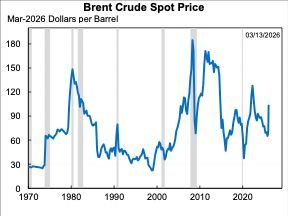
Remember when oil topped $150/barrel in the wake of the 2011 Libya strikes? And stayed above that price for most of the next 2 yrs?
OK, you may not remember because you probably weren't thinking about oil in 2026 prices back then. But if you were that's what you would have seen.
@dilanesper The problem is Citizens United was about the advertising spend, not producing the film. Advertising an anti-candidate movie was absolutely electioneering. People’s instincts get the details wrong but the impact right. Citizens+Buckley overruled Congress and opened floodgates.
News! Former gov-tech luminaries (led by @mikeydickerson) are cooking up a plan to roll back DOGE and radically reform gov services (bring back oversight!). Hitch: it only works if a dem takes WH in 2029. .https://t.co/ZsE5RhKhxT
@CreekHellfire@Cappicara@maiamindel Thanks, interesting read. What was the main state motivation for monetization? Increased understanding and control compared to trying to regulate barter?
@CreekHellfire@Cappicara@maiamindel Aren’t they compatible? The inefficiency of barter explains the appeal of money existing generally, but state-backing is highly valuable for any specific currency because it provides a guaranteed customer and protection against counterfeiters.
Currently having my mind blown by the urbanism, vibrancy, and walkability of downtown Greenville, South Carolina. I have never seen this many people walking around a small American city in my life.
I reckon you'd enjoy DeLong's recent economic history of the 20th century. I'd already recommend Fields, while it's pretty specific (US WW2 mobilisation) it goes into detail on how growth stats are calculated which is good to know as an aspiring economist
@mattyglesias Consumer welfare still involves a ton of discretion. It’s market share tests that are hard and fast, and that’s what Sinclair is seeking a discretionary waiver from.
ICYMI: We just announced some exciting AI features coming to Chrome 🦖 See all the highlights from Behind the Browser: AI Edition now.
Watch here: https://t.co/FX5i4gVi7e
@yimbosf@orthonormalist@tracewoodgrains None of these discrimination claims are true in my experience and I have hired extensively at Google.
I have seen SWEs volunteer to give practice interviews with initiatives aimed at but not restricted to URMs and I’ve seen some managers self-apply a Rooney Rule. Not the same.
@kn_owled_ge@mattyglesias Honestly great to see anyone reconsider a situation when given a new argument, and be public about doing so. The world needs more of that and less double-downing on snark.