@markgoho@lexrus honest curious about it, as I want to up my game with the agents. If not checking, how do you know it did the right changes? or the quality check is also done by another agent, then how could you be sure about it?
#DynamoDB just launched a preview for Attribute-Based Access Control (ABAC).
ABAC lets you define access permissions for your DynamoDB tables and indexes using tags.
Learn more in this blog post. 👉 https://t.co/q2YLtTYrUD
Really enjoyed this — hiring is so high-stakes that you'll always wish you had more information than you have before making a commitment.
Have always worried this level of vetting was unrealistic, so it's encouraging to see it work for @linear.
https://t.co/q9au5BbcMZ
Oauth 2.0 Explained With Simple Terms.
OAuth 2.0 is a powerful and secure framework that allows different applications to securely interact with each other on behalf of users without sharing sensitive credentials.
The entities involved in OAuth are the User, the Server, and the Identity Provider (IDP).
What Can an OAuth Token Do?
When you use OAuth, you get an OAuth token that represents your identity and permissions. This token can do a few important things:
Single Sign-On (SSO): With an OAuth token, you can log into multiple services or apps using just one login, making life easier and safer.
Authorization Across Systems: The OAuth token allows you to share your authorization or access rights across various systems, so you don't have to log in separately everywhere.
Accessing User Profile: Apps with an OAuth token can access certain parts of your user profile that you allow, but they won't see everything.
Remember, OAuth 2.0 is all about keeping you and your data safe while making your online experiences seamless and hassle-free across different applications and services.
Over to you: Imagine you have a magical power to grant one wish to OAuth 2.0. What would that be? Maybe your suggestions actually lead to OAuth 3.
–
Subscribe to our weekly newsletter to get a Free System Design PDF (158 pages): https://t.co/uc5M7CdXXC
It's Christmas break in the year 2000, and you're almost 12 years old.
Mom orders some pizza. You stay up all night playing Red Alert 2 with your brother.
Twenty-three years later, you'll still remember it and wish you could go back.
Tracking time is for bureaucrats. If they make you do it, find another job.
The worst part of my job was always filling out a timesheet.
Nothing made me more miserable than an end-of-day email because I forgot to send my timesheet.
Unfortunately, this is common across the industry. Middle managers want to change the world by pushing numbers on a spreadsheet.
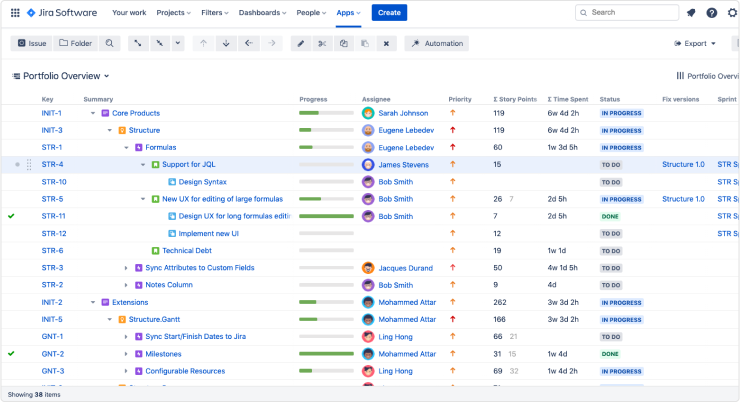
I remember this dude who forced us to report time on every task in JIRA.
Every time we worked on something, we had to do two things:
1. Track how much time we spent working on that issue.
2. Update the estimated time to finish it.
It was a nightmare.
He called out anyone who looked like they had spent too long on something.
What do you think happens?
Everyone started cheating. Nobody cared about delivering anything anymore. The only thing that mattered was that your estimates were as close as possible to the time you reported.
It took an act of God to stop that practice, but I had PTSD until the day I quit.
Does everyone have to do this, or does this only happen in certain companies?
Scrum is a cancer.
I've been writing software for 25 years, and nothing renders a software team useless like Scrum does.
Some anecdotes:
1. They tried to convince me that Poker is a planning tool, not a game.
2. If you want to be more efficient, you must add process, not remove it. They had us attending the "ceremonies," a fancy name for a buttload of meetings: stand-ups, groomings, planning, retrospectives, and Scrum of Scrums. We spent more time talking than doing.
3. We prohibited laptops in meetings. We had to stand. We passed a ball around to keep everyone paying attention.
4. We spent more time estimating story points than writing software. Story points measure complexity, not time, but we had to decide how many story points fit in a sprint.
5. I had to use t-shirt sizes to estimate software.
6. We measured how much it cost to deliver one story point and then wrote contracts where clients paid for a package of "500 story points."
7. Management lost it when they found that 500 story points in one project weren't the same as 500 story points on another project. We had many meetings to fix this.
8. Imagine having a manager, a scrum master, a product owner, and a tech lead. You had to answer to all of them and none simultaneously.
9. We paid people who told us whether we were "burning down points" fast enough. Weren't story points about complexity instead of time? Never mind.
I believe in Agile, but this ain't agile.
We brought professional Scrum trainers. We paid people from our team to get certified. We tried Scrum this way and that other way. We spent years doing it.
The result was always the same: It didn't work.
Scrum is a cancer that will eat your development team. Scrum is not for developers; it's another tool for managers to feel they are in control.
But the best about Scrum are those who look you in the eye and tell you: "If it doesn't work for you, you are doing it wrong. Scrum is anything that works for your team."
Sure it is.
"What if you made the opposite bet? That you don't trust your people. That you have verify everything they do. How much would that cost?" https://t.co/40IFIxfKj1
Last week I started exploring VSCode support for EventBridge visualisations, progress is going well!
🪣 See your event bus archives
🧑💻 Interactive nodes
📘 Understand what is happening in seconds
I'm super excited by this 😍
Demo so far... 👇
wow @wesbos and @stolinski bring @syntaxfm to @getsentry :) It's one of my favorite podcasts, it's fun and informative at the same time!
The design on this giveaway shirt is pretty sick, it deserves to be a merch, then maybe I could get one 🤣