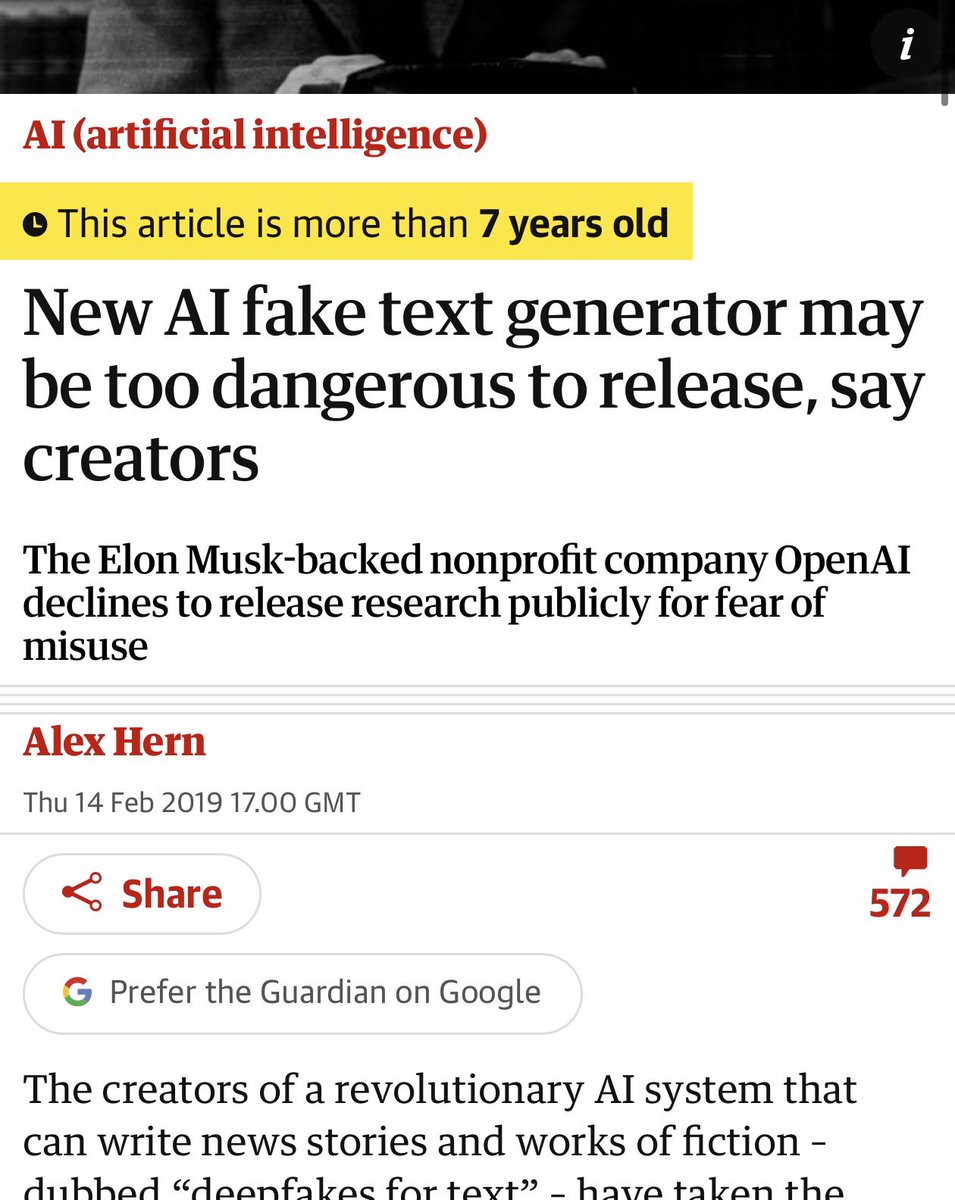
@PessimistsArc Right. Dario was already claiming that GPT2 was too dangerous to open source back in 2019.
I made fun of them then.
Everyone should make fun of them now.
2019: “GPT2 is groundbreaking in two ways. One is its size, says Dario Amodei, OpenAI’s research director. The models “were 12 times bigger, and the dataset was 15 times bigger and much broader” than the previous state-of-the-art AI model” https://t.co/ytFQEdQ2YZ
@TacticzH I pulled the trigger on $MA. Lots of quality names on discount, don't think their PE is coming back to previous values soon, but you don't need to in order to have a decent return as you said.
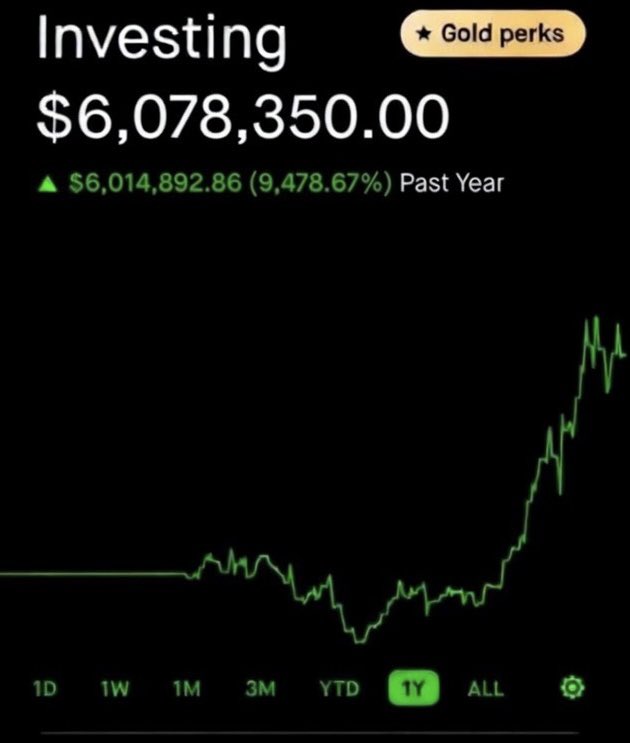
Looks like I don’t have to work anymore.
I’m going to get A LOT hate for this post.
That’s fine.
Let me say something nobody on FinTwit has the courage to say out loud.
A large percentage of the “investors” you’re following on here don’t have the net worth they claim.
I won’t name names. But I’ve done the math on some of these accounts.
The position sizes, the entry points, the claimed returns. The numbers don’t add up.
Let me be clear:
+100% returns are possible. I’ve had them.
But they are NOT normal. They are NOT repeatable every quarter.
And when someone is posting +100%, +200%, +300% consistently with zero drawdowns, zero losses, zero doubt, that’s not investing. That’s a narrative.
Here’s the actual business model most of you are funding:
→ Build hype → grow followers → convert to paid subscribers → invest the subscription revenue → repeat
You are not following a millionaire investor.
You are funding one.
The “gains” are the content.
The portfolio IS the subscriber base.
The lifestyle you’re admiring? You’re paying for it directly.
Real millionaires don’t need X.
They don’t need your $49/month.
They do not care if you follow them or not. I promise you.
What you’re actually looking at in 90% of cases: someone under 26, fluent in AI tools, who figured out that follower growth → subs → income is a more reliable business than actual stock picking.
That’s not an insult. It’s a legitimate model.
But know you know what you’re buying into.
The tell and this is where pattern recognition matters is the psychology.
They don’t need to be right to feel safe.
The ego-driven ones?
Every bad call is “the market’s fault.”
Every criticism is a “hater.”
The position never changes because the position is their identity, not their portfolio.
That FRAGILITY is the signal.
I’m not writing this to tear anyone down.
I’m writing it because some of you are making real financial decisions based on people playing a completely different game.
There are genuinely BRILLIANT people on here.
Follow the ones who show losses as readily as gains. Follow the ones who change their mind when the data changes.
Everyone else look a little closer before you hand over your trust. Or your money.
Stay sharp.
PS. Yes, the picture is fake. I made it. With AI.
Took me 30 seconds. That’s how easy it is.
I’ll be back at work again Monday, for now.
-BP
@idafegonzalez Pienso igual, me sorprenden los comentarios que critican su precio cuando el cliente objetivo de $RACE no busca relación calidad-precio, quiere un coche absurdamente caro y exclusivo. Juzgarlo solo por el exterior es superficial, más importante será la experiencia de conducción.
@themoatfreak@CapitalFaktory@Davddc Cuando $RACE sacó el Purosangue lo llamaron “el SUV más feo de la historia”. Al final se vendió todo, tiene lista de espera hasta 2026 y es de los que más margen genera.
@ismael27_X La densidad real no es cuántos chips caben, es cuántos puedes encender sin que el rack sea un horno. x86 necesita disipadores más grandes y más espacio entre componentes. Meter 1 solo AMD 9555P en 1U con aire es imposible y liquido vas justo, siendo 2U (doble altura) lo estándar.
@ismael27_X La compatibilidad con legacy puede ser una ventaja en algunos nichos, pero el stack de IA (PyTorch/XLA) es agnóstico al legacy.
x86 permite mayor velocidad monohilo, pero ARM permite mucha más densidad de núcleos por vatio y rack.
@ismael27_X Lisa compara eficiencia contra otros x86, pero contra ARM solo menciona throughput. Es la clave: escalando ARM logras ese mismo throughput con mucho mejor TCO (consumo/precio).
Sigo 👇
@ismael27_X Los millones de tokens de contexto viven en la HBM de la GPU, no en la CPU. Estábamos hablando de x86 vs ARM. La mayoría de modelos en la nube usan ARM, no sé de dónde sacas que no funcionan. x86 consume demasiado y mueve los datos más lento que los diseños modernos de ARM.
@ismael27_X AMD tiene gran ancho de banda y es competitiva en entrenamiento, pero en inferencia no quieres fuerza bruta, si no eficiencia y baja latencia. Los hyperscalers fabrican sus propias CPU precisamente porque el x86 no escala igual de bien en TCO para IA.
@AparicioCadiz@Inversor_IBEX Y ya venían de caídas $AJG en valoraciones por debajo del covid. Cada nueva app de IA que sale tira las acciones de un sector entero. ¿Alguno de esos analistas se ha preguntado como afectaría a la economía si la IA se cargara realmente todos esos sectores?
@AparicioCadiz Las gestoras con exposición directa o indirecta a compañías de software en private equity y sobre todo en private credit cayendo fuerte por temor a que las valoraciones de las participadas también sufrirán (write-downs potenciales, menor carried interest futuro, etc.).
@VanguardEconomy Auténtica sangría en buena parte del mercado que se extiende también a publicidad, private equity, agentes de viajes... a este paso me pregunto quien se supone acabará ganando realmente con la IA quitando la infraestructura, y si nadie sale ganando quien la usará?
Se está dando un efecto contagio en el miedo a la disrupción por IA que va más allá de los sectores directamente impactados y se propaga a través de conexiones en la cadena de valor. Software, datos, publicidad, private equity cayendo fuerte hoy.