“Researchers have estimated that the spellings of nearly 50% of English words are predictable based on sound-letter correspondences (ex. cook) and another 34% of words are predictable except for one sound (ex. two). If other information such as word origin and word meanings are considered, only 4% of English words are truly irregular.” @LouisaMoats
It’s time to focus on spelling and this article is a great place to start! Because we can’t teach what we don’t know! Link to article below:
Ask: Did anyone keep a screenshot of that exchange between a dyslexia mom and Fountas and Pinell Moderator? The moderator chided the parent for turning things upside down for 20% of kids.
If so, please share.
This Jake. One of the world’s greatest Speech and Language Pathologists IMO. Jake helps our students with complex articulation difficulties and he helps me by sharing strategies so I can support students between his visits!
Even if you don’t have a “Jake”, I highly recommend you get to know your SLP and CDA today! They are Language experts and essential members of our school’s Literacy Instruction Team❤️❤️@KidsInclusive@DPCDSB_SLP @DrJ_SLP @TheInformedSLP @VICliteracy
If we want parents/caregivers as partners in education, we need to provide them with the necessary information they need to make informed decisions for their children’s future!!
This week, I created a Family Resource Board with QR codes for guidebooks, podcasts &resources to support their child at home.
If you want to create a Family Resource Board for your school’s Family Community, here’s what I suggest:
✅Sold a Story podcast by @ehanford
✅What Every Family Should Know guidebook by @DyslexiaIDA
✅Dyslexia ToolKit by @dyslexiaON
✅Dyslexia Explained by @NessyLearning
✅Right to Read report from @OntHumanRights
✅Our Dyslexic Children by @Parents4RJ
Let’s not just say parents are partners, let’s MAKE them partners by giving them the information they need to support their children’s educational needs!!! #Dyslexia
Every time I listen to Kareem Weaver speak I learn so much. I can’t wait to hear what he has to say on Monday! #ReadingRoadTrip and @thismomloves thanks for including @KJWinEducation. He always makes me think!
Coming Monday! 🎧
You do not want to miss this #ReadingRoadTrip:
@KJWinEducation breaks down misunderstandings around literacy, equity, culturally relevant & responsive pedagogy & more. Everyone should hear this episode - some beliefs are definitely going to be challenged.
Wow! Game changer for sure! I am very leery of the involvement of our government in education, but his answer” what Kate said” makes me think maybe he is listening.
I was thrilled to share remarks & respond to media at today’s press conference announcing an updated, evidence-based literacy curriculum for Ontario kindergarten students…though I was disappointed there was no question from Trent Crimm, The Independent.
https://t.co/pFeeS0IpUk
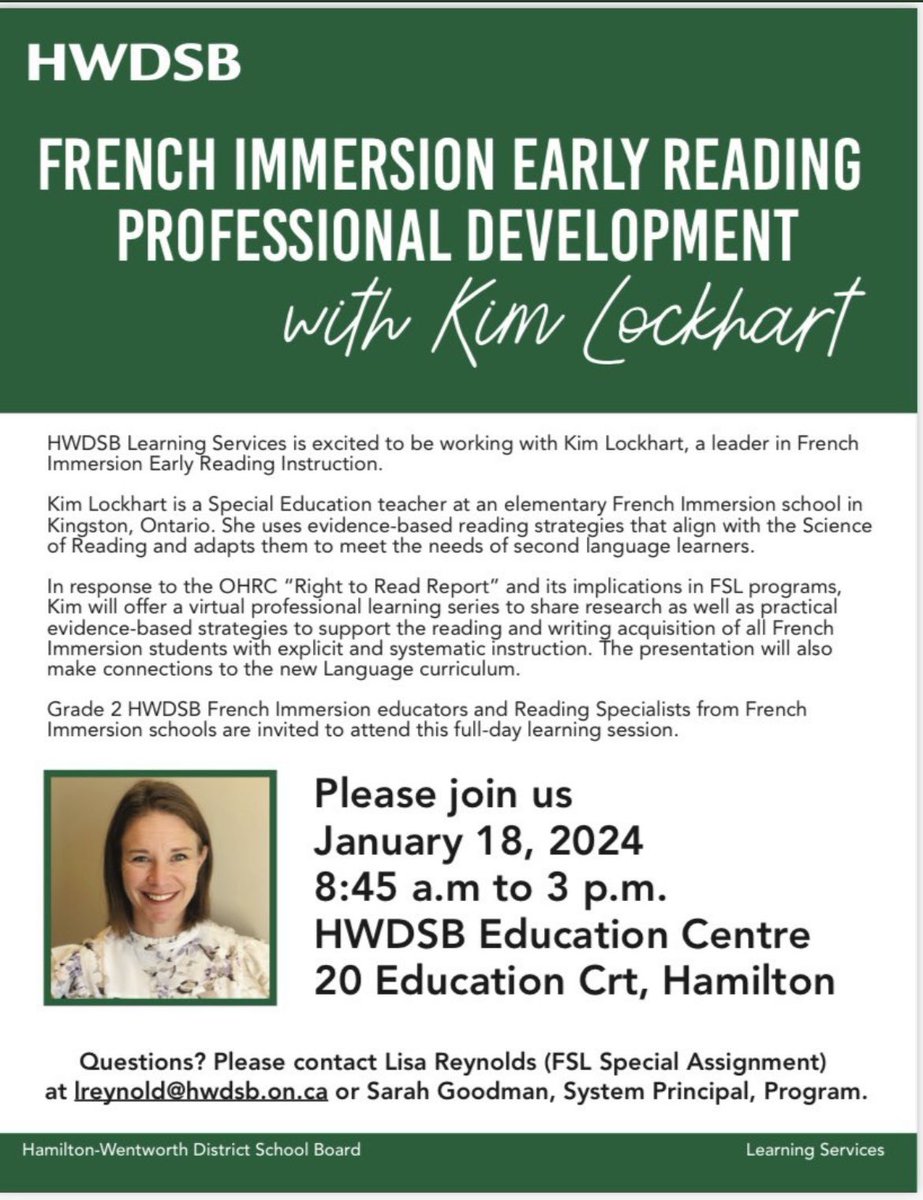
I can’t think of a better way to jump start 2024 than with Teacher Training and Professional Development on the #ScienceOfReading!
This workshop will show teachers how to align the reading & writing research AND new #OntEd Language curriculum expectations to classroom practice, ensuring more equitable learning outcomes for #FSL students in @HWDSB!
Exciting things are happening in @ONeducation! @HWDSBLearning@LisaLreynold@RSHWDSB
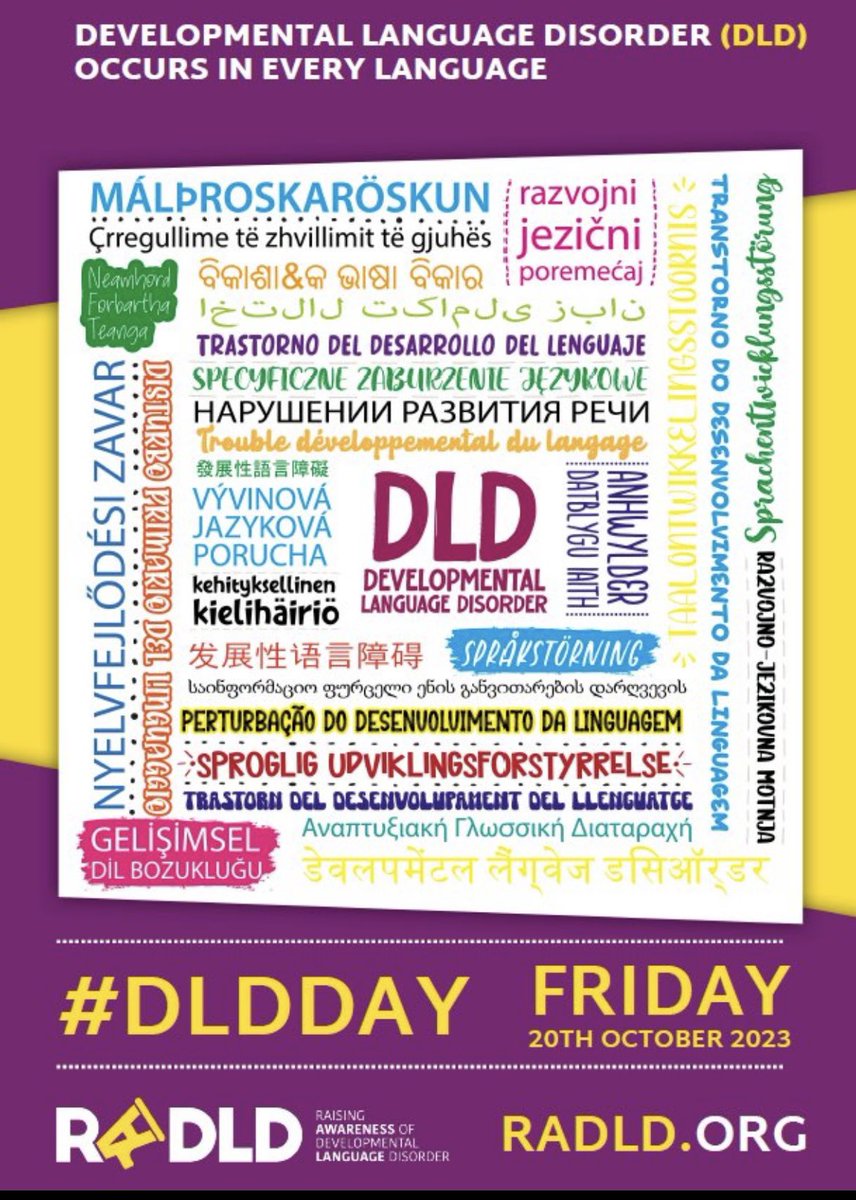
Today, I will be wearing purple in honour of International #DLDDay & all of my students who have this invisible disability💜
I also want to give a shout out to all of our incredible SLP’s and CDA’s, especially Jennifer Cummings and Hannah Dean of @LimestoneDSB, and @StaceyRickman and @larchiba6, who work relentlessly to help our students with a #DLD every day! WE THANK YOU!!💜💜💜
To learn more about #DLD and how you can help your students, check out @TheDLDProject_ and @RADLDcam today!!
Every day, I drive by at least one of 6 prisons situated in my city. Previously the country’s capital city, #ygk Kingston, Ontario remains to be the “penitentiary capital” of Canada.🇨🇦
“Research shows that children who struggle to read in first grade are 88 percent more likely to struggle in grade four, and those who struggle in fourth grade are four times more likely to drop out of school….the vast majority of young people who come into contact with the juvenile justice system (85 percent, according to some sources) are functionally illiterate. Data from the Prison Policy Initiative reinforces the connection between illiteracy and incarceration by indicating that imprisoned people are far more likely to struggle with basic reading, writing, and computation skills.” (Source: https://t.co/jh1ye2xNCV)
Week two of Camp SAIL is in full swing. Last week we gathered the data. This week we use the data to plan for all of the students. #Leadgedsb @Speech_Keener @GEDSB @C_Bannister @LisaMunro11 https://t.co/14K3lKvdkx