La #SSPC y el #Cenapred informan sobre la actividad del #Popocatépetl las últimas 24 horas 🌋:
🔹32 exhalaciones
🔹76 minutos de tremor
🔹24 minutos de exhalaciones
🚦Semáforo:
⚠ #AmarilloFase2
😷 Protege tus vías respiratorias
🚫 No acercarse al volcán https://t.co/5LZhauJXLK
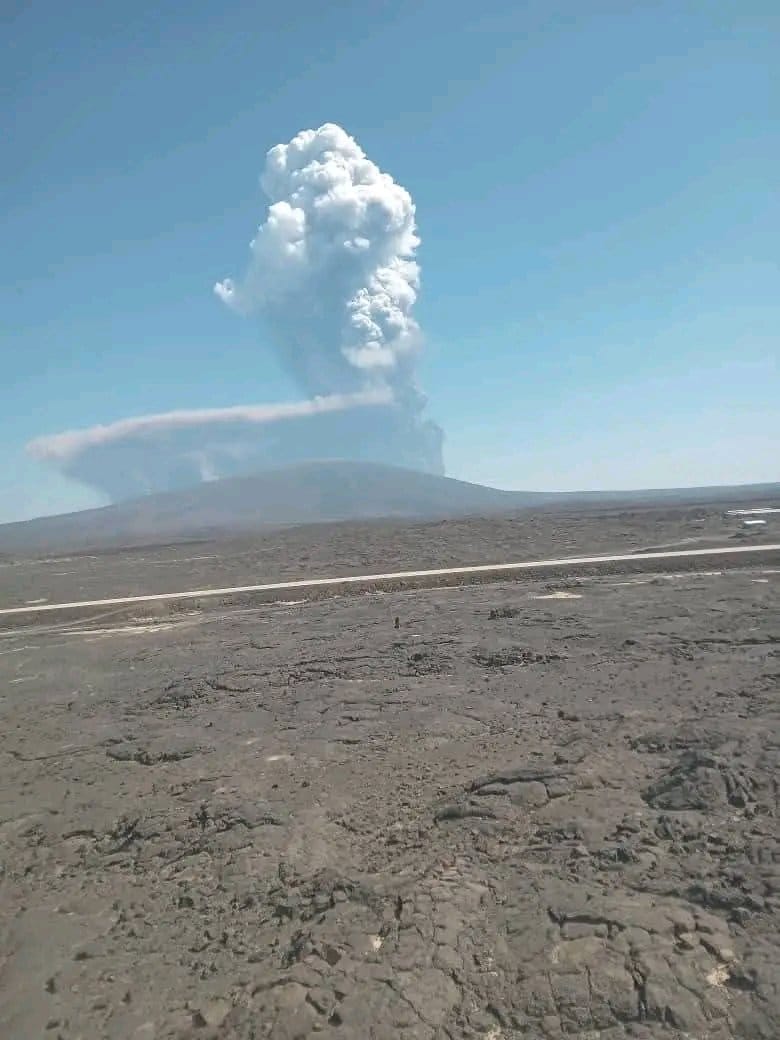
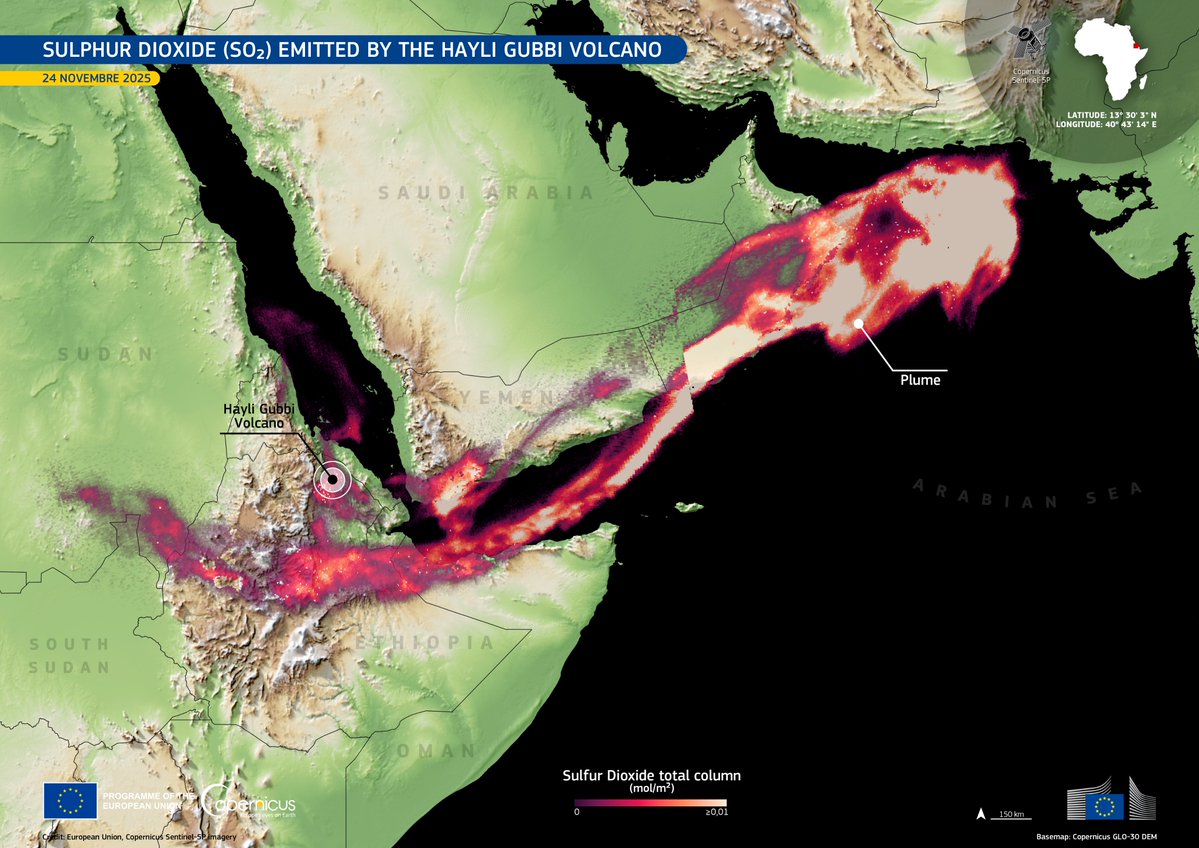
The Hayli Gubbi 🌋 in Ethiopia 🇪🇹, located ~800 kms NE of Addis Ababa, erupted for the 1st time in ~12,000 years on 23 Nov.
🛰️ A large SO₂ plume was emitted into the atmosphere. This #ImageOfTheDay by #CopernicusEU Sentinel-5P shows the emission.
🔗 https://t.co/J4fQ5albC5
No sé si ya conocen al volcán responsable pero, a partir de observaciones satelitales, atribuyo al Hayli Gubbi. La nube de cenizas alcanzó una altitud de 45,000 pies y se desplazó hasta Yemen. Una nube de menor altitud se desplazó en dirección noroeste. El IEV sería de 3.
ETIOPÍA 🇪🇹 Durante esta madrugada, cerca de las 05:30 (hora chilena), se reportó una erupción en la región de Afar.
Preliminarmente, la erupción había ocurrido al suroeste del volcán Erta Ale, el más activo del continente africano, en la montaña de Ale Bagu.
Según la información del Programa Global del Vulcanismo (GVP), no hay registro de erupción durante el Holoceno (en los últimos 12.000 años), por lo cual sería la primera erupción registrada en la historia de este volcán.
Seguiremos actualizando.
🌋 Mount Lewotobi Laki-laki in Indonesia erupted this afternoon at 16:54 WITA, sending an ash column about 2,000m (6,560ft) above the summit (3,584m/11,757 ft above sea level).
📹 Ghele Radja Arios/BADAN GEOLOGI
LOOK: Taal Volcano's Main Crater has been emitting visible degassing plumes since 29 August 2025, as shown here in current footage from the Main Crater (VTMC) Station. The resumption of plume activity was preceded by weak but persisting tremor since 27 August 2025 and followed by a sudden ten-fold increase in sulfur dioxide or SO2 emission to 4,514 tonnes/day on 30 August 2025. Alert Level 1 prevails and DOST-PHIVOLCS reminds the public to avoid Taal Volcano Island due to hazards that can be generated by possible steam-driven or weak phreatomagmatic activity at the Main Crater.
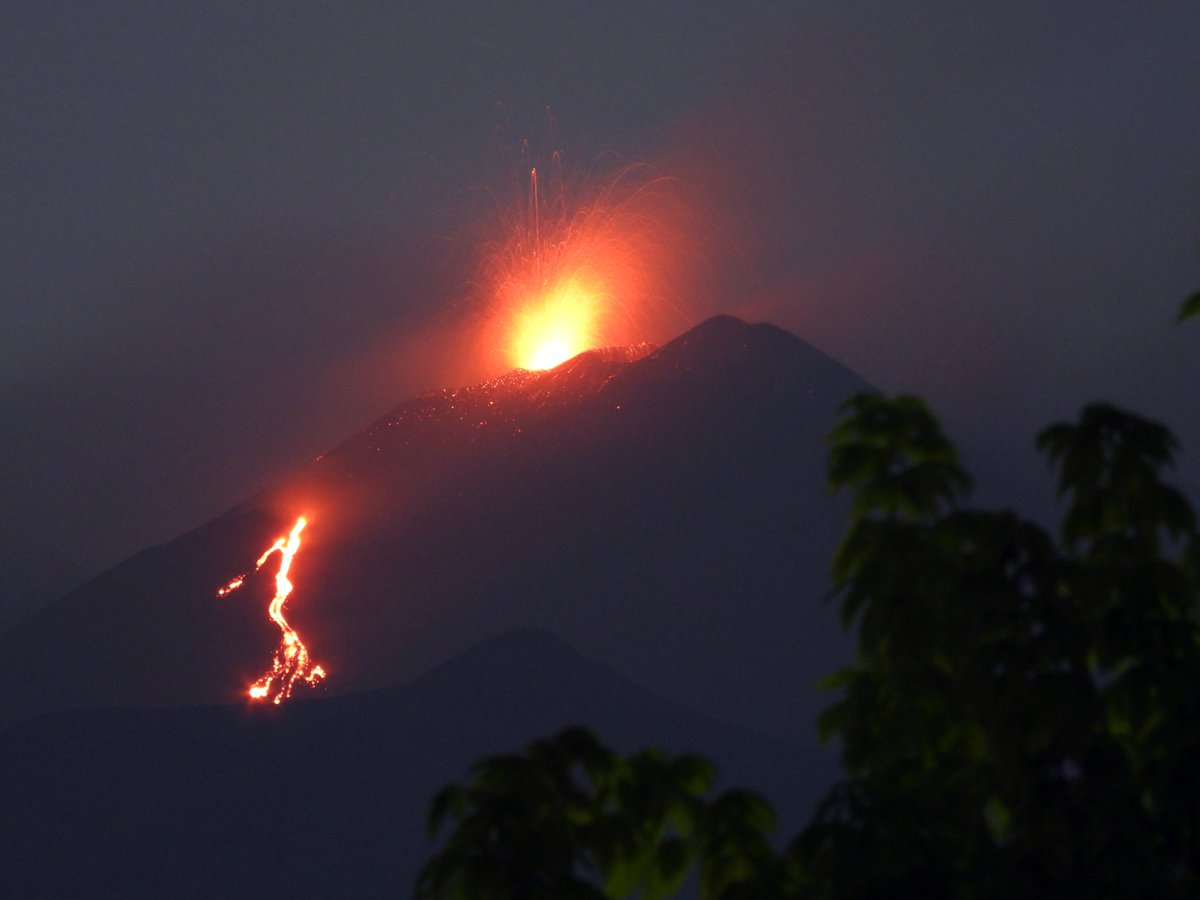
How does lava sound when it comes to the surface of the Earth? Listen to a lava flow oozing out of its effusive vent high on the southwestern side of #Etna, 28 August 2025. That day no visits by tourists were allowed on the site, which permitted this (relatively) clean recording
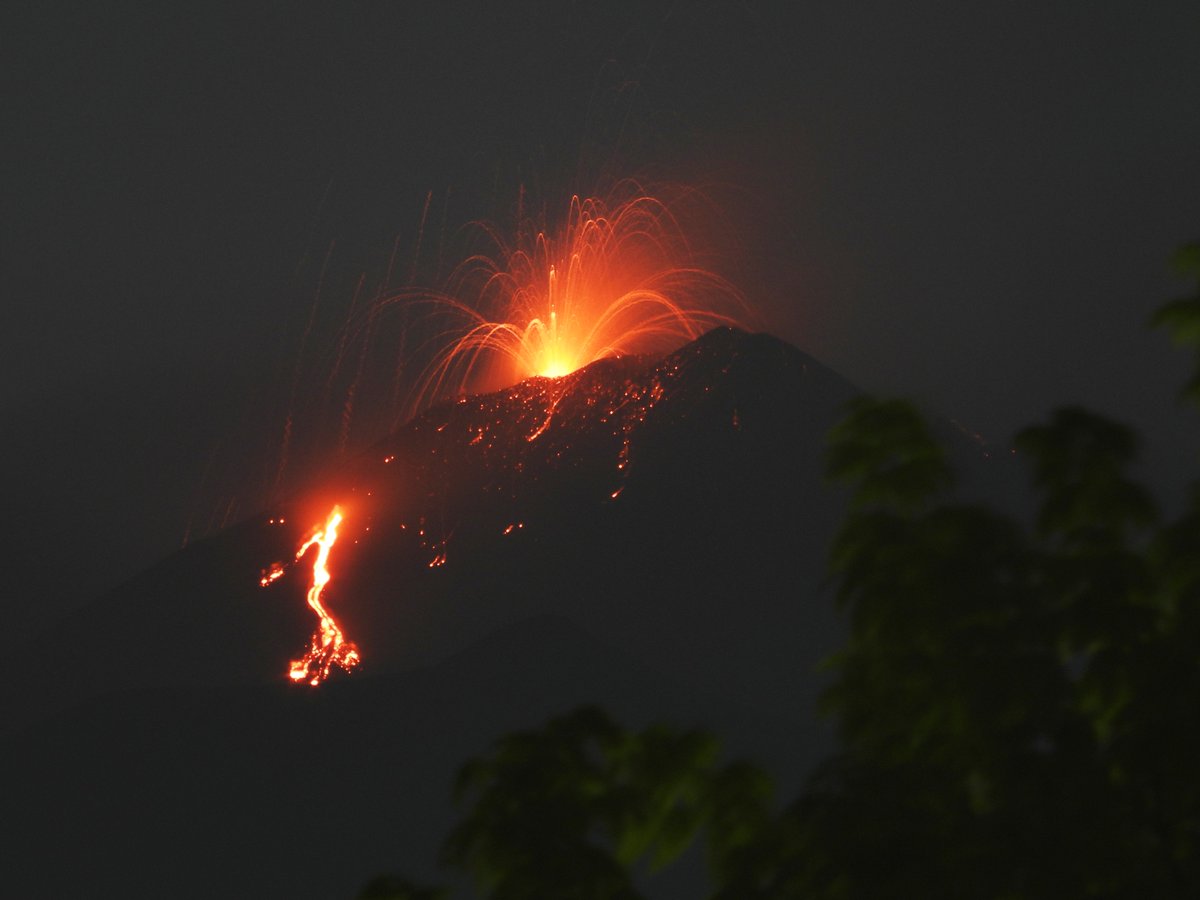
Two scenes of the continuing activity at #Etna's Southeast Crater on the evening of 28 August 2025, seen from the village of Nicolosi on the south flank of the volcano.
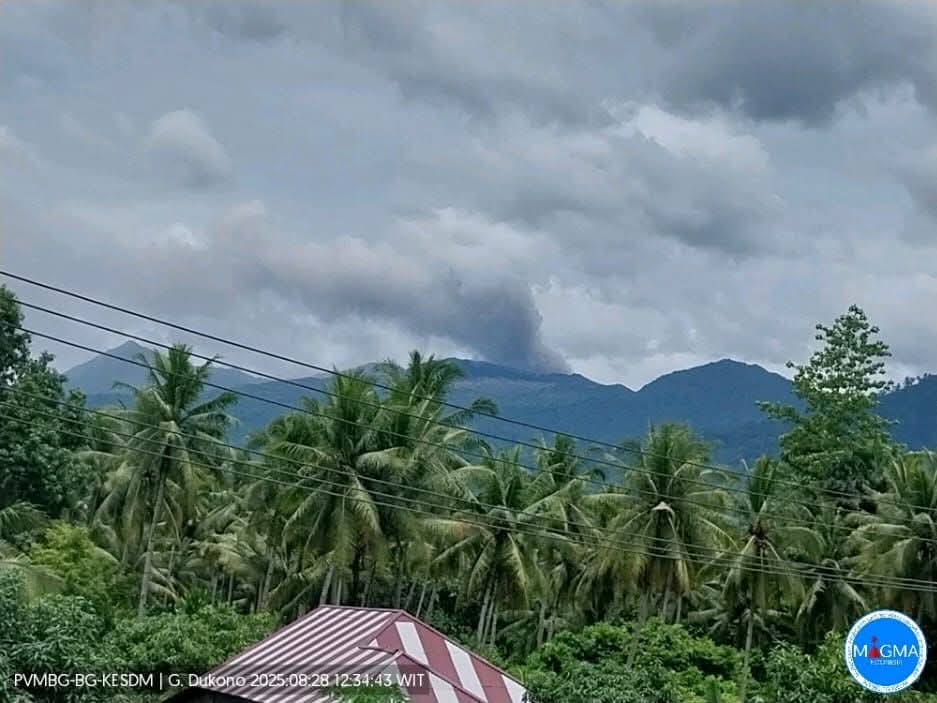
Telah terjadi erupsi G. Dukono, Maluku Utara pada tanggal 28 Agustus 2025 pukul 12:28 WIT dengan tinggi kolom abu teramati ± 500 m di atas puncak (± 1.587 m di atas permukaan laut). Kolom abu teramati berwarna putih hingga kelabu dengan intensitas tebal condong ke arah timur.
The Southeast Crater - youngest and most active of the four summit craters of #Etna - producing Strombolian explosions and a lava flow on the evening of 24 August 2025. The current summit eruption started on 14 August. Photo taken from Nicolosi on Etna's south flank.
Episode 31 of the ongoing Kīlauea summit eruption just started today, August 22, at 2:04 p.m. Hawaii Standard Time.
Spattering within the north vent was visible overnight, along with several sluggish overflows. The summit region switched from inflationary deformation to deflation with the start of the fountaining. So far, eruptive activity has been localized to the north vent only during this episode. During episode 30, both the north and south vents erupted, as well as a new fissure in the south caldera wall.
Watch along as episode 31 unfolds on the three USGS Hawaiian Volcano Observatory’s livestream cameras:
V1cam: https://t.co/bdadOfsCyq
V2cam: https://t.co/emBrTE4xcq
V3cam: https://t.co/pqbPFJizHe
Please see the Hawaiʻi Volcanoes National Park website for visitor information: https://t.co/NTcYoLAnUi.