Shares can go down even when there are no MSW exercises. Shares can go up ten straight days while MSW issuance accounts for 15–20% of daily volume, like we saw in May.
An operating company cannot control its share price—there isn’t a joystick to simply pull. MSTR didn’t ATM a single share for weeks after Q2 earnings, and in BTC terms, MSTR still went down. There are countless variables behind how markets trade day to day.
It might not be the most satisfying answer, but assets with 150% annualized volatility move irrationally at times— in both directions.
We’ve seen three or four 50-60% drawdowns in the past 18 months, each time while fundamentals only strengthened.
Is this time different?
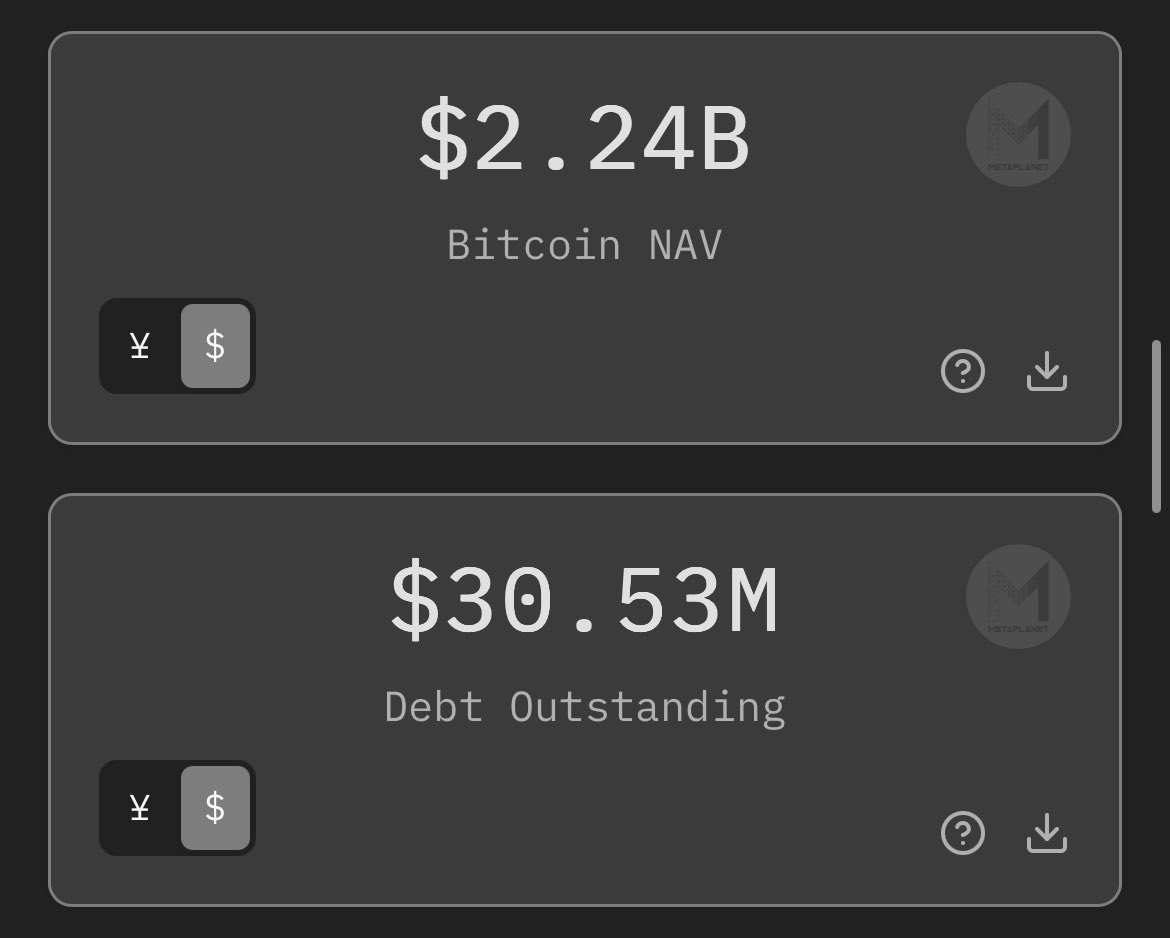
We’ve turned a $14 million hotel into a $4.5 billion business with the stock up 3,000% in 18 months.
We’re not blind to the drawdown, and we’re sympathetic to those sitting on losses. But this isn’t our first rodeo—we’ve got a plan to right the ship. Things take time in the world of regulated public companies, but we’re moving as fast and as transparently as we can to keep shareholders informed.
Lastly, Simon doesn’t limit what I can say. What does are the obligations that come with being a multi-billion-dollar company on a regulated stock exchange.
If you have comments or questions for management, please use the IR portal rather than tagging me amongst a thread that misrepresents or slanders my team while demanding my reply.
Thanks for the questions—among everything else.
-get good at selling
-don't turn your current trade into a do-or-die "big one to make it" after being surprised that it's going your way
-recognize that there are always opportunities and setups to aid being able to sell and move on
and one easy mechanical trick: if you really can't let a coin go because it's "the big one", leave a moon bag. this can throw off your pnl over time, but it's not the worst short term psychological training wheel/safety blanket, especially in contrast to round tripping an entire trade (or worse: ending up underwater). ultimately you'll end up no longer needing to do this.
The types of market participants who will never succeed in equities are easy to spot:
1/ No conviction, no research. They don’t truly understand what they’re investing in — chasing quick answers on social media instead of doing the hard work to grasp the fundamentals.
2/ Emotionally driven. When stocks sell off, they become impulsive and erratic, venting frustrations online instead of maintaining discipline.
3/ Prone to panic. A flood of negative commentary on social media makes them believe it’s the end of the world, and they capitulate at the worst possible time.
4/ Thesis amnesia. If a stock fails to rally for a stretch, they immediately jump ship to chase the next ticker — forgetting the original investment logic, or worse, never having one in the first place.
5/ Leverage masquerading as investing. They load up on excessive leverage, convincing themselves they’re investing when in reality they’re just gambling with borrowed capital.
In the end, markets reward patience, conviction, and discipline — not noise, emotion, or speculation.
Winning today doesn’t mean you’re a skilled trader, and losing today doesn’t mean you’re a poor one.
Those outcomes are random, but if you fail to follow your rules consistently over the long term, then you are not trading skillfully.
What matters more than the result in front of you is developing consistency—profits will follow afterward.
Shoutout to the soldiers still holding and remaining firm... Down more than 63% in the last 3 months is a tough one.
But we know where we're going long term.
Let's keep riding.
https://t.co/GYl5Wqaqok
My first ever Bitcoin purchase was at $300 in 2015.
I have just bought Bitcoin at $111,353 in 2025.
I will be buying again when it's at $1,215,345 in 2035.
Ignore the noise, this is the best savings technology ever created.
The way out of a trading drawdown is not to trade your way out
But to "patience" your way out
Don't make foolish trades
Undersize really good set ups and let the market organically bring your account back to high waterr
“In 1993, he launched Interactive Brokers to give ordinary investors the same technological advantages he had built for himself. That business is now worth over $100 billion, and Peterffy owns 70% of it. It operates with higher profit margins than Visa while offering some of the lowest trading costs in the industry.”
@ZynxBTC Great post. As investors, we hope @Sanderandersenn and the H100 management team learn from the $GME convertible bonds and $MTPLF international offering. Specifically, that similar processes can drive down the stock price. At least in the short term
I don't think this is priced in tbh.
When Smarter Web 🇬🇧 lists on the London Stock Exchange main market, it will qualify for inclusion in the FTSE SmallCap Index.
Inclusion is AUTOMATIC at a certain rank, not vibes based like the S&P 500 for MSTR that I spoke about yesterday.
This will be the start of passive index flows, as funds benchmarked to the FTSE UK series will be required to allocate.
It's the first structural catalyst that places Smarter Web on the index ladder, opening the door to eventual FTSE 250 and FTSE 100 inclusion, with each step bringing progressively larger and more persistent passive inflows.
All it takes is a £530mil market cap to be automatically included in the FTSE 250.
We're looking at Smarter Web being included in the FTSE 250 for Q1 2026, permitted we can get on the LSE before the end of this year... which I'm 99% sure that we will.
Very exciting times ahead.