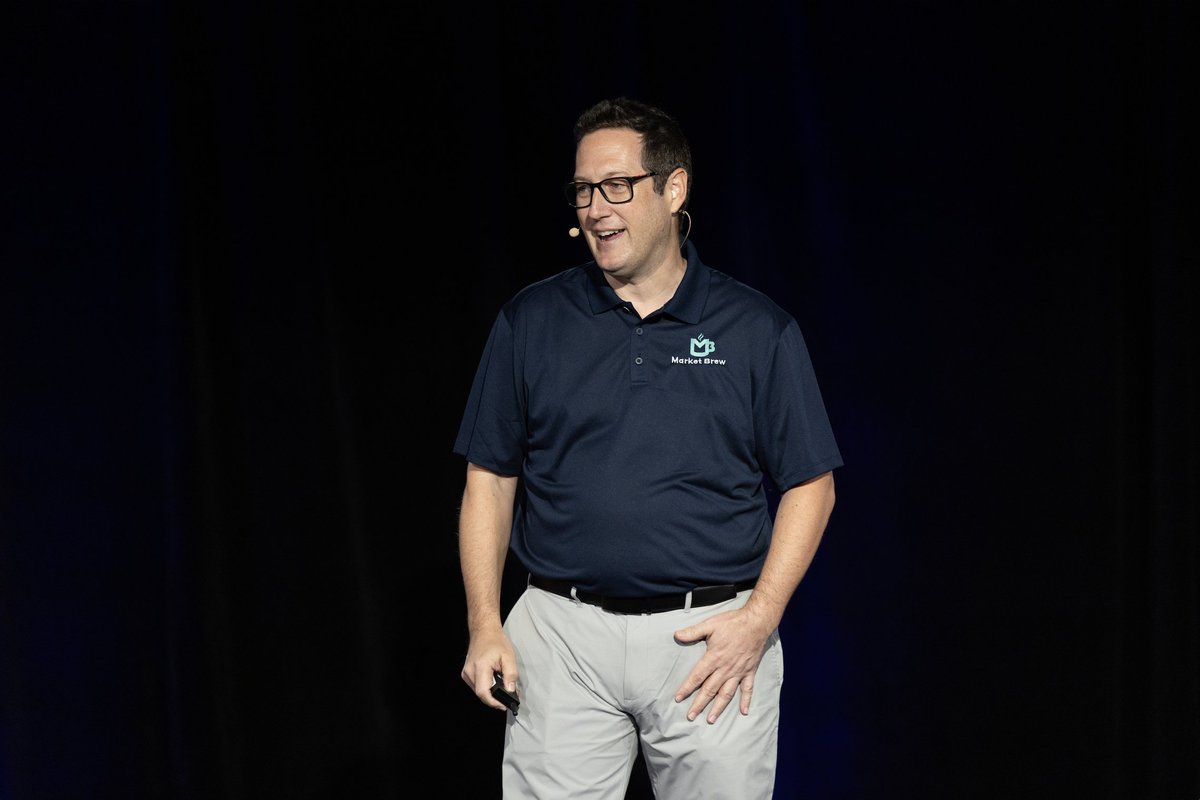
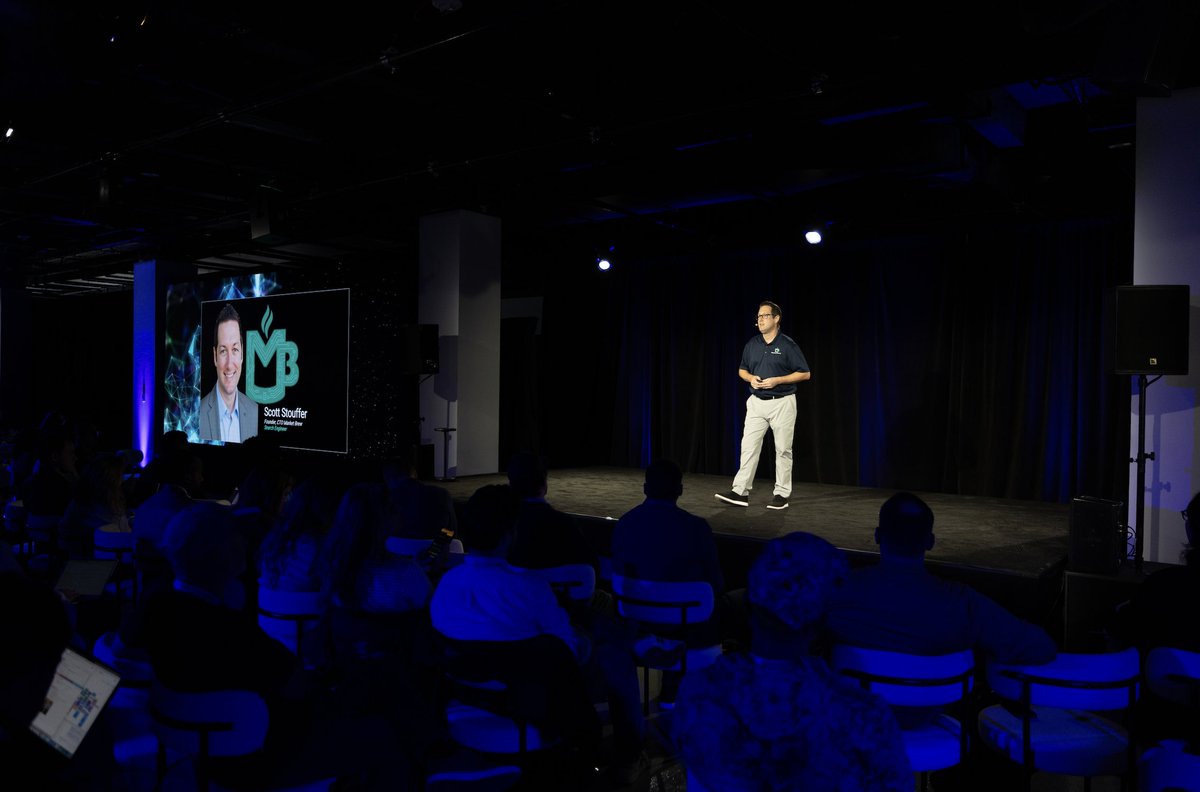
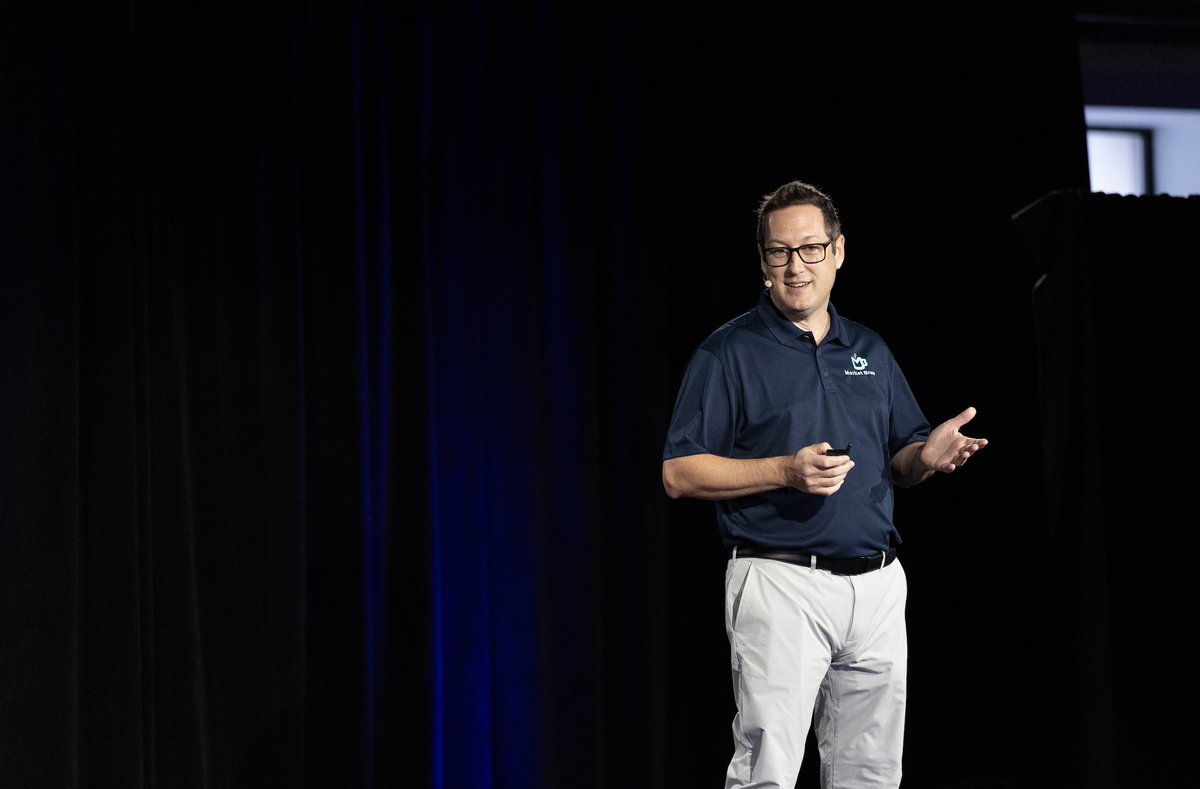
Most speakers talk about what worked last year. Scott talked about what works next year.
If you missed Scott's talk at #SEOWeek, more clips are coming. Stay close. @scott_stouffer☕️
Standing out in AI search ≠ rankings
@scott_stouffer breaks it down:
→ Meaning > pages
→ “Different” ≠ different to AI
→ SEO = full-system alignment
Start thinking in vectors
🎧 https://t.co/eQ1jCg8nyj
🎟️ https://t.co/GUEQi7bIb0
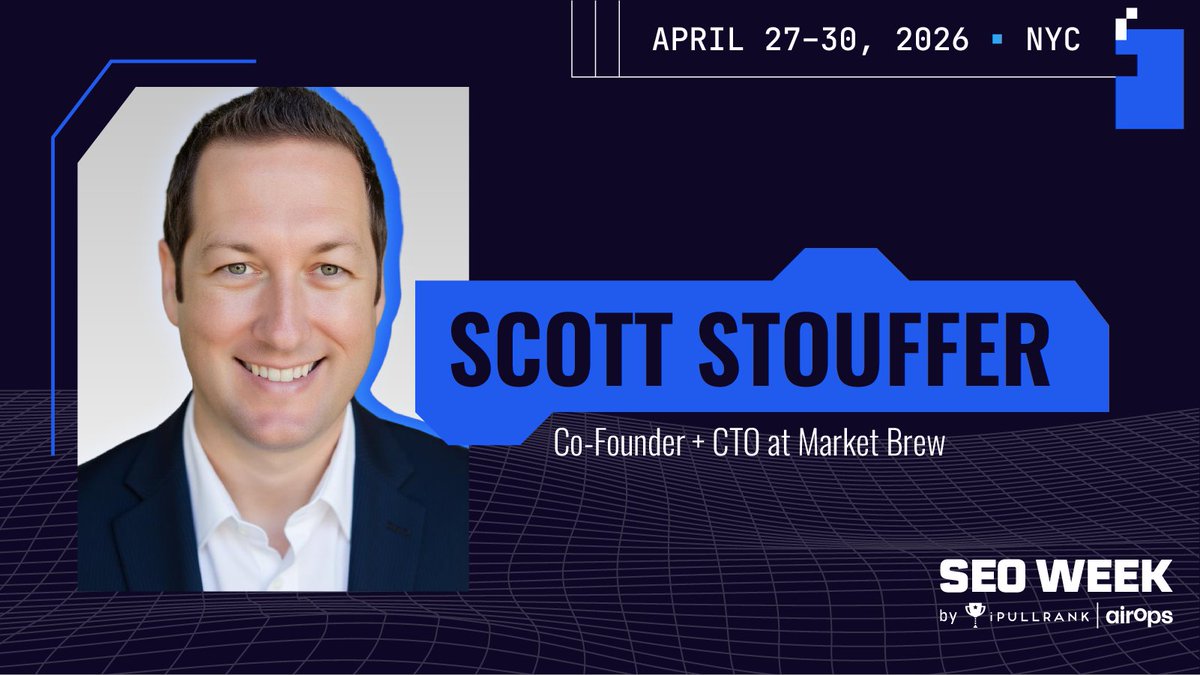
🎤 Speaker announcement
@scott_stouffer is joining SEO Week 2026
Founder of @mktbrew, he builds AI that models search engines and predicts rankings before you publish
Excited to hear his take on predictive SEO
📍 NYC | 📅 Apr 27–30
🎟️ https://t.co/GUEQi7bals
People say SEO is unpredictable.
From the outside, I understand why it feels that way.
Rankings move. Updates roll out. AI reshapes the interface.
It can look like chaos.
But as someone who has spent years building search engine models, I can tell you this:
What feels unpredictable is usually just unmodeled.
If you don’t understand:
– where authority is bleeding out of your graph
– how your pages cluster semantically at the embedding level
– whether your internal link structure reinforces or fragments topical focus
– which intent classes your competitors already dominate
then yes. performance will feel random.
Because you’re making changes without a mental model of the system evaluating you.
Search engines are not mystical.
They are layered systems:
• link-based authority propagation
• document classification and clustering
• passage-level embedding retrieval
• query fan-out and intent filtering
• behavioral reinforcement signals
If you optimize without understanding how those layers interact, you’re guessing.
When you start modeling how a search engine is likely interpreting your site,
how your centroid aligns (or doesn’t) with query space, how authority flows between clusters, how competitors occupy adjacent embedding neighborhoods...
things stop feeling chaotic.
Not easy.
But measurable.
Testable.
Explainable.
The difference between “SEO is unpredictable” and “SEO is complex”
is whether you’re willing to model the system underneath it.
Search isn’t random.
It’s just mathematics most people never see.
In a rare Bill Self move, Coach let the guys run back out on the court after being in the locker room for less than two minutes, so they could thank the remaining fans.
Melvin Council, ever a man of the people, was greeted by barking dawg chants and then took time to take a selfie with all who wanted one.
This is such an easy team to love and this building was fabulous tonight, so Self wanted his guys to show the fans some love as well.
Introducing: MarketBrew’s “Ask” - A ChatGPT Simulator
Search engines used to rank pages. Now AI systems build answers.
Market Brew has spent years modeling how search engines make decisions. We’ve now extended that same approach to LLM modeling.
Ask lets you see how systems like ChatGPT retrieve content, weigh sources, and decide what gets included, with full transparency into the RAG process.
This isn’t just a chatbot. It’s visibility into how AI answers are formed. 👀
Trump should preemptively pardon every American citizen who’s lived here more than 10 years for NOT paying federal taxes in 2026… Force congress to balance THAT BUDGET
#TechSEOConnect 2025 kicks Day 2 off with the one and only Michael King (@iPullRank) as he lets us know: "Everything You MFs Should Know About Query Fan Out". Live stream it now!
https://t.co/jr6NQgv2EL
Your website shouldn’t guess what to write next, it should listen.
Meet Listen, Market Brew’s tool that tracks real-time news and turns trends into ready-to-use content opportunities.
With Listen you get:
✔️ Trending topics your audience cares about
✔️ Questions people are asking right now
✔️ Local + national insights
✔️ Optional auto-generated content that stays on brand
It keeps your site aligned with what the market is talking about automatically, every week.
👂 Listen: Stay ahead of the conversation.
😂 This is exactly why entity-based classifiers started losing their throne.
Schema spoofing works because entity extractors are brittle. They take the structured hint way too literally.
Modern IR has already moved to embedding-based classifiers, where meaning > markup.
At @mktbrew, we actually model all four generations of text classifiers side-by-side:
1️⃣ TF-IDF
2️⃣ Keyword matchers
3️⃣ Entity extractors
4️⃣ Embedding-based classifiers
Each one has blind spots, but the mixture is what real SERPs use.
And we show you exactly how that mixture behaves for any query.
When Google’s AI gets confused, it’s usually because one classifier overpowered the others. Market Brew lets you see the imbalance before it bites you.
"Most of the major legacy SEO tools are giving you insights and data based on old paradigms that don't align with the information retrieval state of the art"
unfortunately true
Doing M&A as GM of Moz, I spoke to many of the medium / large SEO tools companies
legacy companies are solving legacy company problems
they have tech debt and sunk costs just to maintain the service they're currently selling
what % of overall investment is going to TRUE R&D that aligns with the modern IR landscape?
Shockingly small %
The question being asked of C-suites in the SEO tools space is: "how can we make this legacy service more profitable??"
It's NOT: "Wow our core technology no longer aligns with the realities of the search & AI ecosystem. We need to fundamentally rethink things, how can we do that?"
the place I see advancements being made is by smaller, focused experts @dejanseo@cyberandy@mktbrew@ziptiedev
Huge respect for Ethan. He’s one of the few who’s seen under the hood of every major SEO platform.
The truth is simple: the IR landscape has changed faster than the legacy tools can.
We built Market Brew because modern search requires modern math: embeddings, passage scoring, fan-out models, and real testing against calibrated algorithms.
Small teams can rethink what’s possible. That’s our advantage.
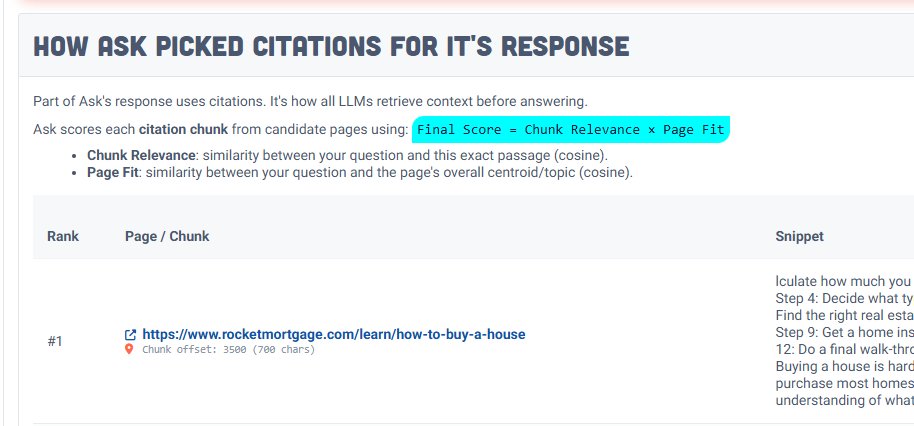
We've built the world's first ChatGPT simulator.
You can see exactly how it picked its citations.
Know exactly why your competitors are getting mentioned and you aren't.
Generative AI made content creation faster. But it also made it flatter.
Search engines aren’t fooled — they see beyond language to the structural meaning of your pages.
Market Brew’s latest study with Search Engine Journal explains how to:
✅ Map your content’s semantic fingerprint
✅ Reinforce brand differentiation
✅Predict ranking impact