Dr. Suman Biswas (@amateursuman) once of Amateur Transplants performs 'Placebo' ('Let it Go') at The BMJ Medics' Revue 2026.
2/2 (see profile feed for first half).
“A bird sitting on a tree is never afraid of the branch breaking, because its trust is not on the branch but on its own wings. Always believe in yourself.”
Tom Brady on the importance of believing in yourself when no one else does
Steve Jobs on how to give feedback to high performers when their work is simply not good enough; giving difficult feedback without causing resentments is a superpower.
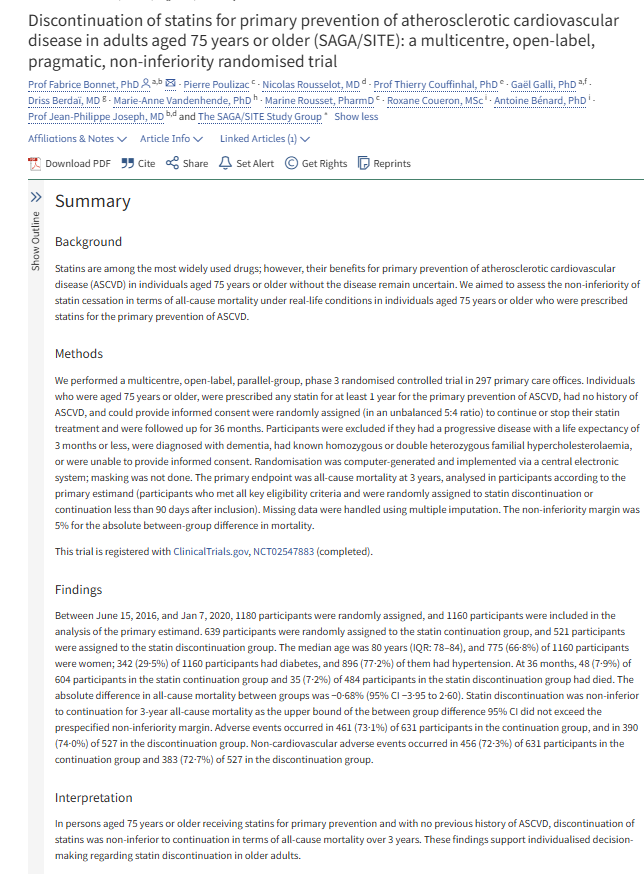
Stopping statins in people over 75 at low risk for heart disease didn’t increase deaths: Results in a healthy French population elevate question of polypharmacy via @cooney_liz
https://t.co/0poIU4ml3o
12 Habits of a Good Leader:
Be Yourself
Commitment to Excellence
Be Positive
Be Prepared
Be Detail-Oriented
Be Organized
Be Accountable
Be Nearsighted and Farsighted
Be Fair
Be Firm
Be Flexible
Believe in Yourself
—Inspired by Coach Bill Walsh, via @jack
How does covid-19 affect smell?
The BMJ asked experts why the virus affects the olfactory system and what can be done to alleviate prolonged symptoms
https://t.co/qUIeKJK0RM
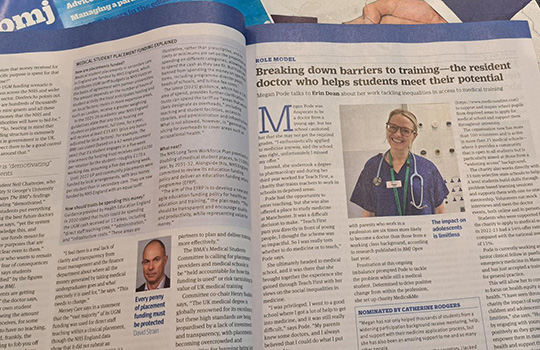
Would you like to celebrate someone who has supported you during your medical career?
You can nominate them to be featured in the BMJ by sending their name, job title, and the reason for your nomination to [email protected]
“Hope” is something we should think about every time we embark on change: Part 2.
The comments on my last post about hope being grounded in operational reality (from a paper by Alyson Meister, Nele Dael & David Bach), from across multiple social channels, were outstanding. Sadly I only have space for some of them.
Rory van der Merwe shared a 2025 Gallup poll that reframes the discussion. Hope isn't a "soft" add-on. Asked what they want most from leaders, followers put hope top at 56%, ahead of trust (33%), care & compassion (7%), & certainty (4%).
Five themes stood out from the comments:
1) Hope requires infrastructure, not just intent. Commenters rejected the idea that hope can be "willed" into existence. Jonathan Sunkersing called "inflated hope" a systemic risk in primary care, where grand narratives substitute for diagnosis & resources. Paula Beattie noted teams with focus, agency & infrastructure can achieve a lot quickly, but multi-team change falters without proper leadership & structure. Rebecca Blackwood added a governance angle: mobilising hope is structurally impossible when a board withholds permission for leaders to be wrong or take risks.
2) Small steps & agency build durable hope. Richard Perry argued anticipation-driven hope depletes like a finite reserve, while small, real, felt results build confidence that's self-renewing. Lisa Evans offered a three-part formula: team, facts, small joint steps. Chris Cooper added that strategy without a credible "how" is empty, pointing to the power of Plan-Do-Check-Adjust.
3) Hope is co-created in relationships, earned incrementally. John-Paul Crofton-Biwer described hope as quick to spark, but earned through repeated, consistent action, and lost the moment that consistency breaks. Christina Jones & Søren Wieck Mellemgaard stressed credibility comes from naming hard truths & visible follow-through, not inspiring language. Kenny Ajayi noted hope starts with honest diagnosis, often overlooked when leaders rush to paint a vision. Amos Y. added it also needs a visible path forward.
4) Hope as constant discipline, not crisis response. Barbara Perry argued hope should be a daily companion, not something pulled out only during disruption. Victoria Hewitt shared a moving account of using stabilising & mobilising hope with a small team in a dysfunctional system. Noel Hatch described how his team's stabilising rituals, like weekly spotlights on less-visible teams, evolved into mobilising hope.
5) Broader & dissenting voices. Tatu Piirainen linked credible hope to how well an organisation's value-creation logic fits its environment. Douglas Anweiler flagged the risk of treating hope as a management tool rather than daily practice. Jack Ricchiuto distinguished "having hope" from "being hope". Kathryn L. Goetzke connected hope science to SDG progress & mental health outcomes.
Together, the comments reinforce the article's core claim: hope is constructed through experience, not declared through rhetoric. We can't "message" our way to hope, we have to demonstrate it.
Do not take your good health for granted. Be selfish about your health.
“Everything is super important. Until you are sick. Then you realize there was only ever one thing that was important - your health.”
If there was one article you want to read as a clinician?
Read this
Via @jenna_taglienti - an absolutely stunning write in @JAMA_current
"Medicine can have extraordinary meaning. But it cannot substitute for being present in your own life. The world may need us as physicians.
But the people who love us need us as ourselves.
And that is the role no one else can fill."
Brilliant - and much love to you
'Time is Finite"
https://t.co/qPJkmtwxUe
It's time to see past our differences and remember what connects us.
When we realise where our strength lies - in each other - that's when change happens.
Join us - https://t.co/N7IGRtbLK6
Assessment and prevention of falls in older people https://t.co/6t43RCO8Dq
@juniorjuri@jamesunited8@BeingMo@AskDrShashank
Helping them to be less sedentary and more active
encouraging them to get out of bed #Deconditioning
get dressed
regularly stand up +walk around 🧑🦯
Join us on Wednesday 25 March to learn more about this 8‑week course and how it can support your wellbeing before it starts on 1 April.
Venue: CATCH Leeds, Harehills, Leeds LS8 3QY
For more information, contact us via email at: [email protected]
"We’re losing the language of care."
IIona Heath explores the gaps in consulting rooms between scientific knowledge—largely expressed in number—and poetic knowledge, always expressed in words
https://t.co/XSJyNVGuJ2
"Ultimately all wars are a choice, and they hasten destruction of people and the planet."
War is undeniably bad for health, writes @jocalynclark in this Editor's Choice
https://t.co/gNKUbHZngI