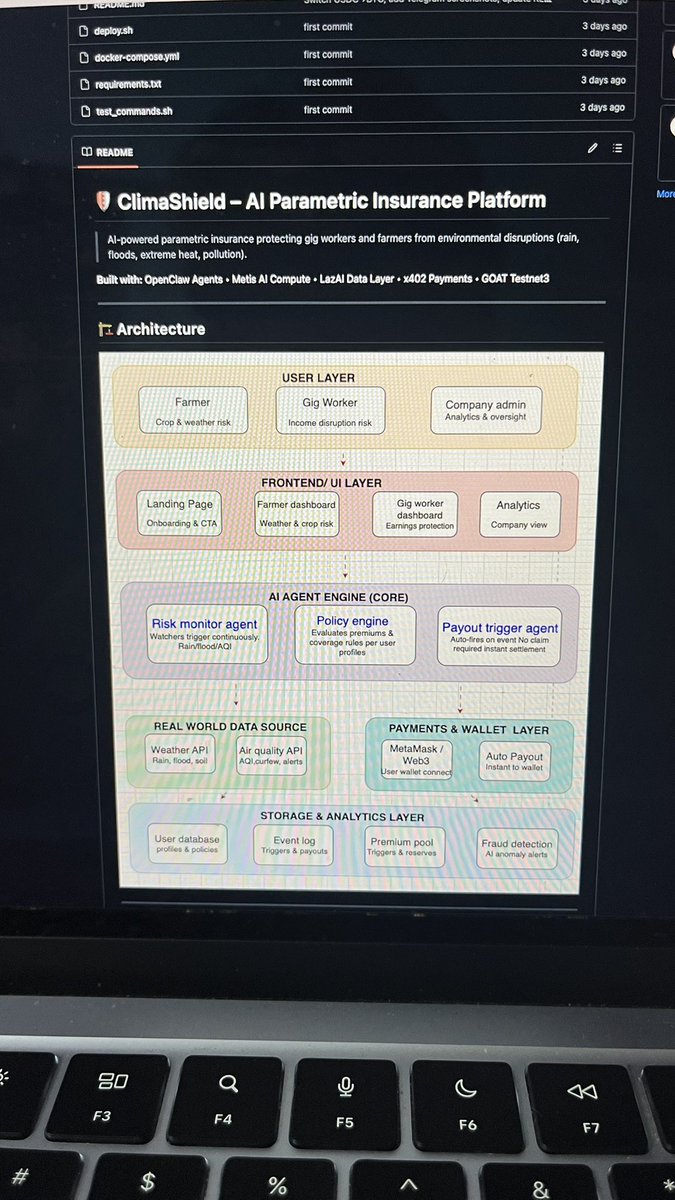
Judges asked if our system is production-ready.
We didn’t just say yes - we showed it.
Implemented Redis caching + queuing, tested concurrency, and designed it to handle 100+ users simultaneously without breaking.
I’m proud to be part of the New Wave of Innovators at AMD Ryzen AI Slingshot! 🚀 I’m building the future of AI to solve real-world challenges. Join the movement and start building your own vision today! 💻✨ @AMD@Hack2skill
Don’t worry about AI, Cloud, or Startups… first memorize algorithms from 1998 and write them on paper
Because obviously companies still hire based on neat handwriting and viva answers, not skills.
— Industry moved on, syllabus still buffering🚶♂️
@100xSchool#edudationsystem
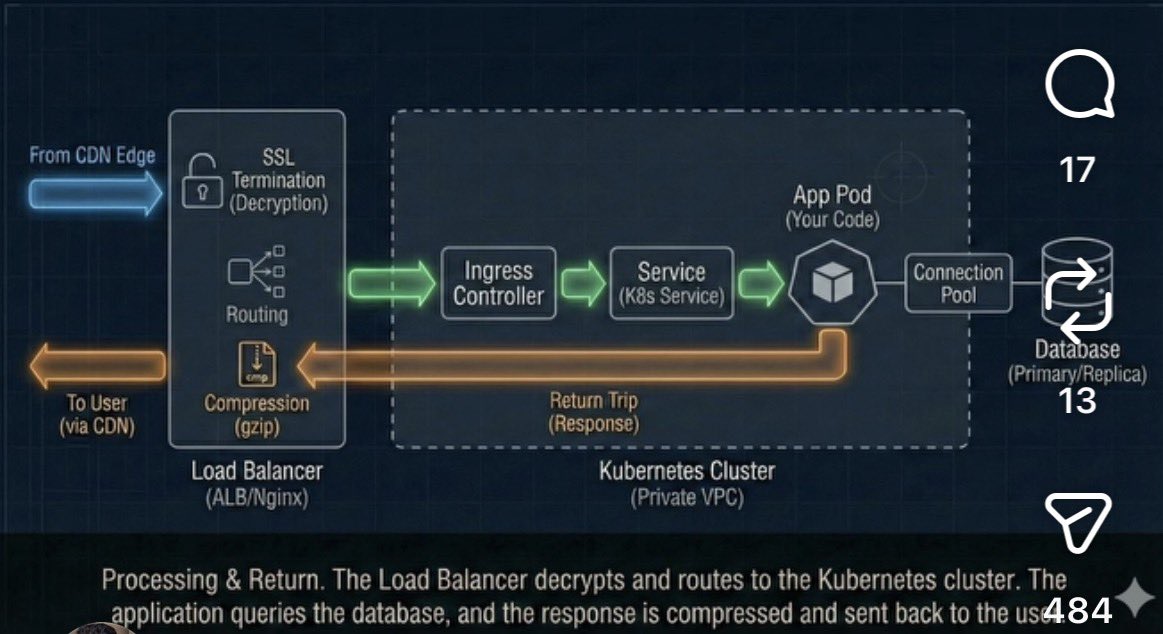
Life of a Web Request 🚀
1️⃣ Edge: WAF filters bots 🛡️ + CDN serves cache ⚡
2️⃣ Entry: Load Balancer decrypts SSL 🔓
3️⃣ Process: K8s Ingress ➡️ App Pod ➡️ DB query 🗄️
4️⃣ Return: Response is compressed (gzip) & sent back 📦
#SystemDesign#DevOps
In real-world engineering, features don’t go straight to production.
Most teams use 3 environments:
Dev → build & experiment
Staging → production-like testing
Prod → real users, real data
This separation is what keeps systems reliable at scale.
WebSocket is like a phone call 📞 between browser and server.
Connection opens once and stays open, so both can send data anytime in real time.
Unlike HTTP (doorbell 🚪), no repeated requests.
Used in chats, live updates, games, and notifications.
#WebSocket#RealTime
Frontend (origin A) calls API (origin B).
Different origin → browser applies CORS rules.
Browser first sends OPTIONS (preflight) asking:
“Can I use this method & headers?”
If required Access-Control-Allow-* headers are missing,
the browser blocks the request.
CORS error.