@ERCOT_ISO's natural gas fleet is an amazing thing. Going to be a decade or so before energy storage can help us ride through an event like today in Texas. Suggest we focus on building more battery storage, reducing methane leakage & CCUS before we start yelling to shut it down.
Obviously gas isn’t going away anytime soon (but its role will absolutely adapt). I guess the lesson here is that the way the public thinks about energy is completely divorced from the reality of the industry. Being pragmatic gets you 100x closer to your ideals than being ideological and polar does!
BREAKING: Hail storm in Damon texas on 3/24/24 destroys 1,000’s of acres of solar farms.
Who pays to fix this green energy? @StateFarm? @FarmBureau? @Allstate?
Or you the taxpayer?
Four simple charts that demonstrate this is a historic macro opportunity to invest in distributed energy companies.
____________
1) It's taking longer and longer to connect new big sources of power to the grid. No end in sight to this trend.
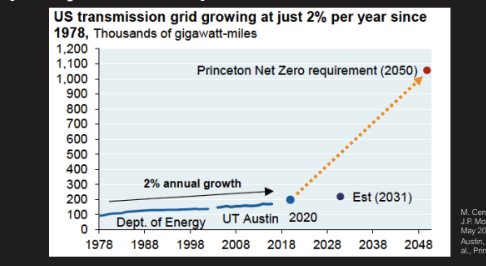
2) We also aren't on track to building anywhere near the amount of transmission implied by capacity expansion studies.
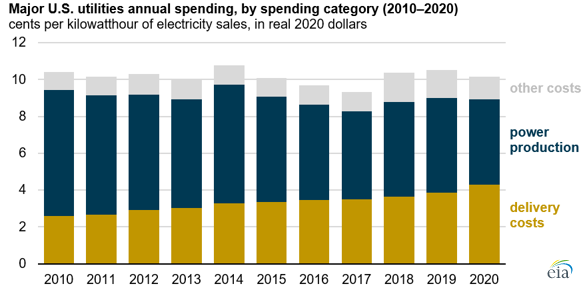
3) And its not just a supply problem. Utility's power delivery spending is quickly becoming the largest source of costs, the result of which is power delivery rates are growing far faster than inflation.
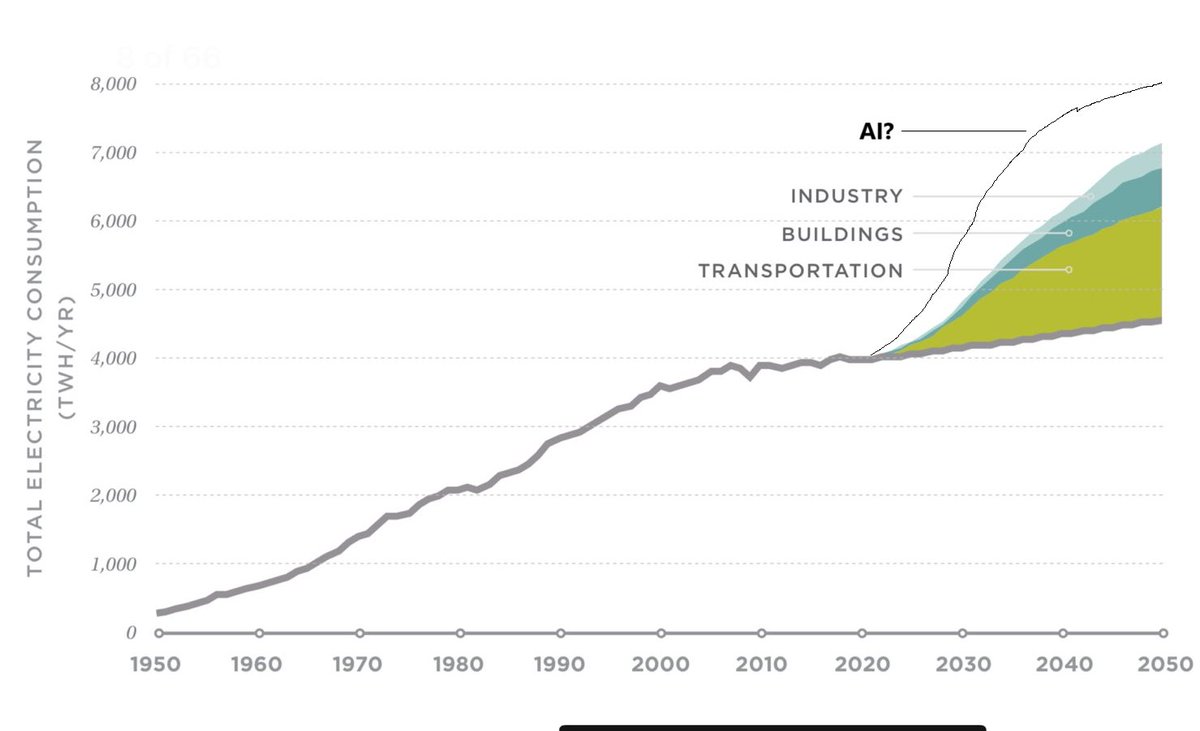
4) With those three points in mind, consider that for the first time in 25 years, US load growth is coming back in a very big way due to reindustrialization, AI / data centers, and electrification. All of the above dynamics will be cranked up to 11 under the pressure of rapidly growing demand.
To review:
1) Big supply is getting harder and harder to connect
2) Big wires very are hard to build
3) Power distribution costs will soon dominate the customer's bill
4) New demand is suddenly here in a big way after 2+ decades of system atrophy
Draw your own conclusions.
Texas doesn't get enough credit for its grid.
Yes there have been some very notable reliability events. Those cannot be ignored.
But we also can't ignore:
It's grown demand at a 1.93% CAGR for 21 years, versus 0.7% for the US broadly.
Meanwhile, rates have only increased at a CAGR of 1.53%, versus 2.55% for the US broadly. This means rates have effectively decreased, since inflation over that period was 2.4%.
And this was all done while cutting coal consumption in half and growing renewables from 0% to 30% of total output.
@timothyhade What are the odds that in 5-10 years most large and medium size industrials have btm nuclear or geothermal? 15 years?
What impact does this have on utilities/power markets?
The grid of which the first electricity market designs were constructed looks much different than the grid we have today, thanks to the growth in renewables.
Some think that a world of zero marginal cost generation requires a new market design. William Hogan disagrees... (1/9)
I agree with most of what Hogan says in theory. But economic theory world is much different than the real world. Until we get the problem of efficient demand response sorted out, I think we will see challenges with the interaction of ZMC in the current markets.