Join us July 20–24 in Berkeley for the #DeepLearning for Science School and learn about foundation models, reasoning, and agentic AI for science. Apply by April 26 (AoE): https://t.co/MXqVMWe3Tr
🚀 Working on foundation models for scientific problems? Submit to the 2nd Workshop on Foundation Models for Science @iclr_conf (details: https://t.co/C8PpTZmqRH).
Huge thanks to our sponsors!
🏆 Best Paper ($1K): @RenPhilanthropy@lucia_asanache (https://t.co/8ci5sxt45c)
📷 Check out our new position paper on how #LLM Agents can benefit frontier Theoretical Physics. We cover 🚀Current progress & key gaps ⚛️Potential for automating the Hypothesis-Verification cycle of scientific discovery
🔧Need for physics-specialized LLMs+tailored tool ecosystems
🤝Call for AI-physics collaboration in symbiosis
We are delighted to have Alex Townsend (Cornell) as our speaker for the e-seminar tomorrow: https://t.co/CgBLe3t4x5 #SciML#MachineLearning#seminar
See below for the details👇
I get a lot of reviews that say my work is not novel and I bet I'm not alone. It's always frustrating because I see novelty where the reviewer doesn't. Rather than rebut every critique, I've written a blog post to help reviewers think about novelty. https://t.co/UXLabOkYcn
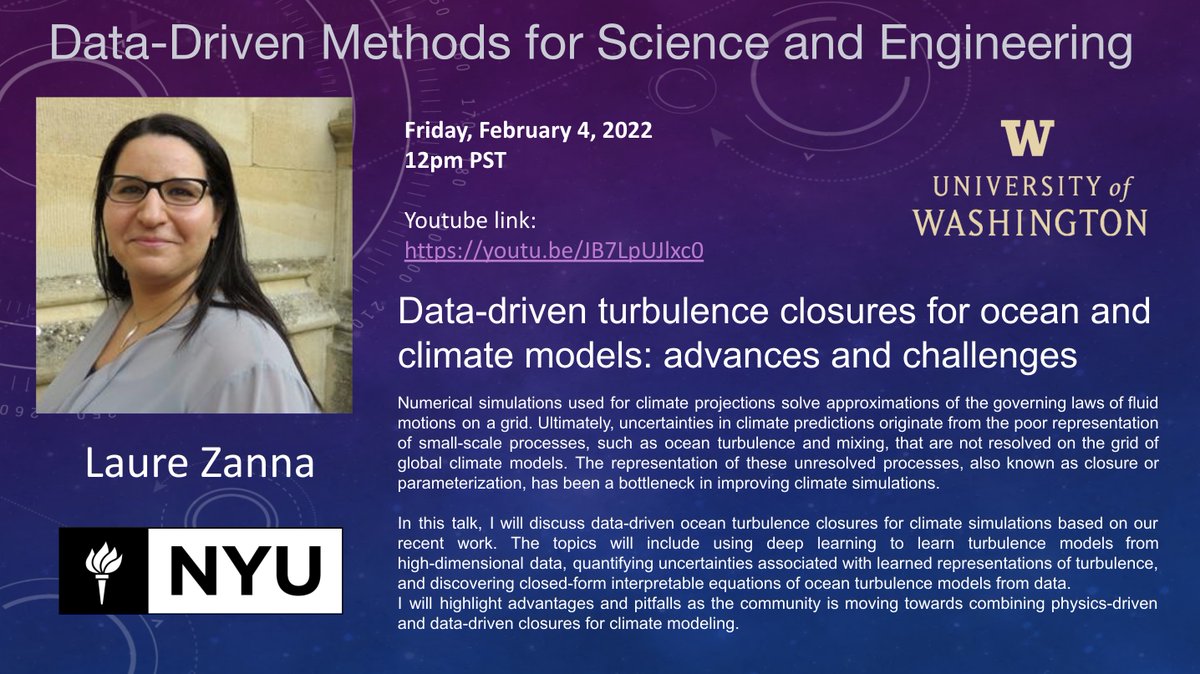
Excited to have @laurezanna kick off our Physics Informed Machine Learning seminar for the winter quarter!!!
New Time: 12pm PST
Friday, February 4, 2022
https://t.co/pT7nwq1n5L
Data-driven turbulence closures for ocean and climate models: advances and challenges
Happy to share that our work on "Long Expressive Memories" has been accepted as a spotlight at #ICLR2022. We formulate gating (e.g. of LSTMs) in a continuous way, leading to a new sequential model based on multi-scale ODEs. Remarkable results + theory
1/2 https://t.co/GnqMTpWAce
Sad news. I was just notified that (Sir) David Cox has died on January 18, at age 97. https://t.co/B3Q57AXHo0
David was kind enough to invite me to a Statistics Conference (Florence, 1993) when I was still making my first steps in Causality, and his last email (March 2020)
1/2
NN-SVG is a tool for creating Neural Network architecture drawings parametrically rather than manually!
It also provides the ability to export those drawings to Scalable Vector Graphics (SVG) files, suitable for inclusion in academic papers or web pages
https://t.co/eQAqTUT9Sc
We are very excited to announce the e-Seminar on Scientific Machine Learning, hosted by @BenErichson, Hessam Babaee, Michael Mahoney and me.
For more details, check out https://t.co/orY6jW9sPW and sign up to stay updated! Feel free to retweet this as well. 1/2
The only question reviewers should be asking themselves:
"Is the community better off with this paper, or without it?"
inappropriate reasons for rejection include: not beating SOTA, bad writing, minor flaws, no theory yet good results, incomplete citations (easily fixed),.....
⏪ Papers with Code: Year in Review
We’re ending the year by taking a look back at the top trending machine learning papers, libraries and new datasets for 2021. Read on below!
https://t.co/2tUWUgrZKp
I am looking for students who want to start a PhD @PittEngineering in Fall 22. Drop me an email if you are excited about research in the intersection of #ML, #AI and #Engineering.
Today, we’re looking at a new data augmentation technique called Noisy Feature Mixup (NFM): https://t.co/3CimePHPQC. The paper shows NFM improves robustness, and is inexpensive, so this is potentially a nice win! (1/9)
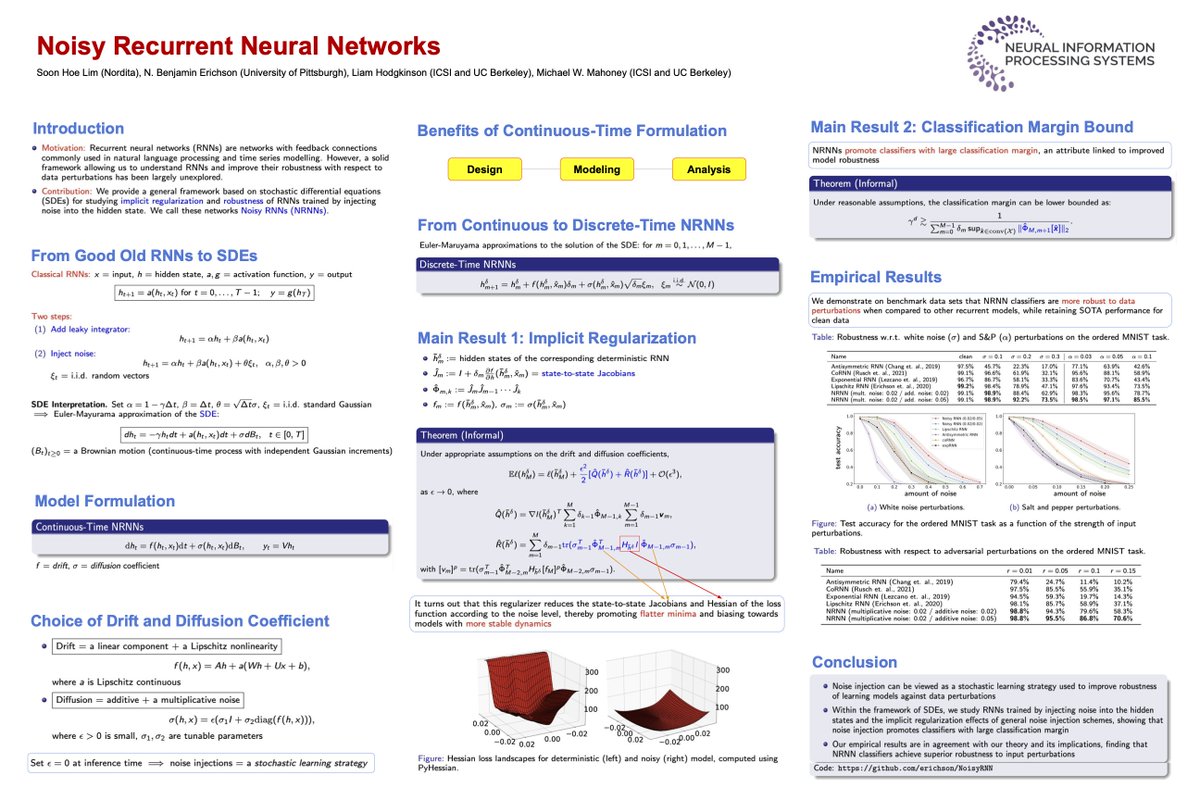
Very excited to present
**Noisy Recurrent Neural Networks**
at #NeurIPS2021 tomorrow.
Check out https://t.co/YOGGiovXpY for the details and see you there!
So why bother studying a noisy version of recurrent neural networks (RNNs) at all?
A thread 👇
1/n
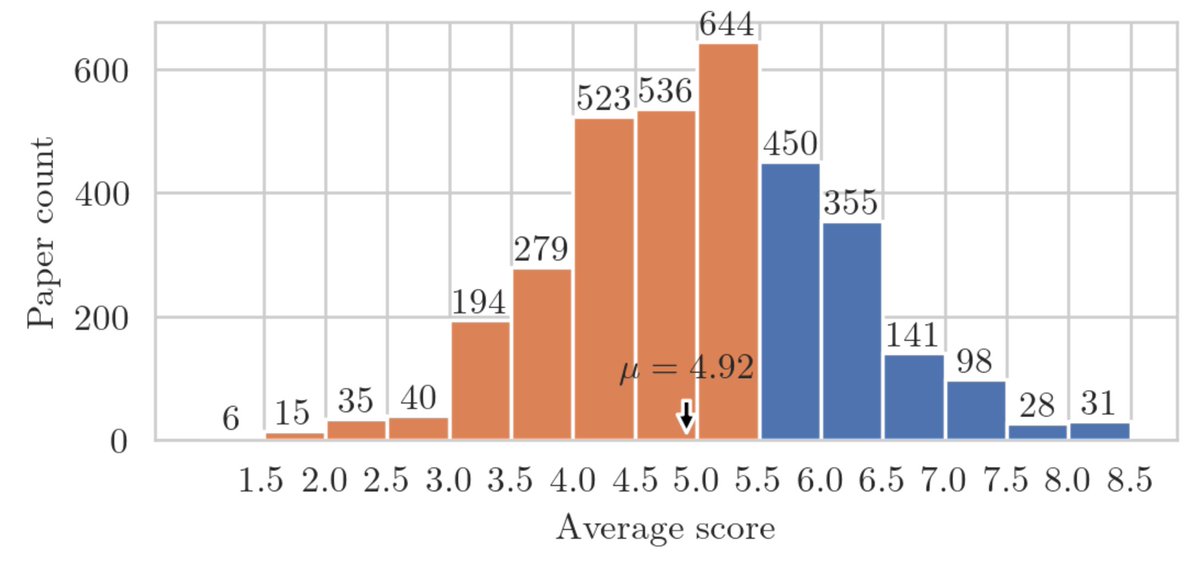
A sneak peak at #ICLR2022 initial reviews 👇🏻
Average score: 4.92
Last year's acceptance rate (28%) corresponds to an average score of ~5.5
31 papers got the highest score of 8 👏