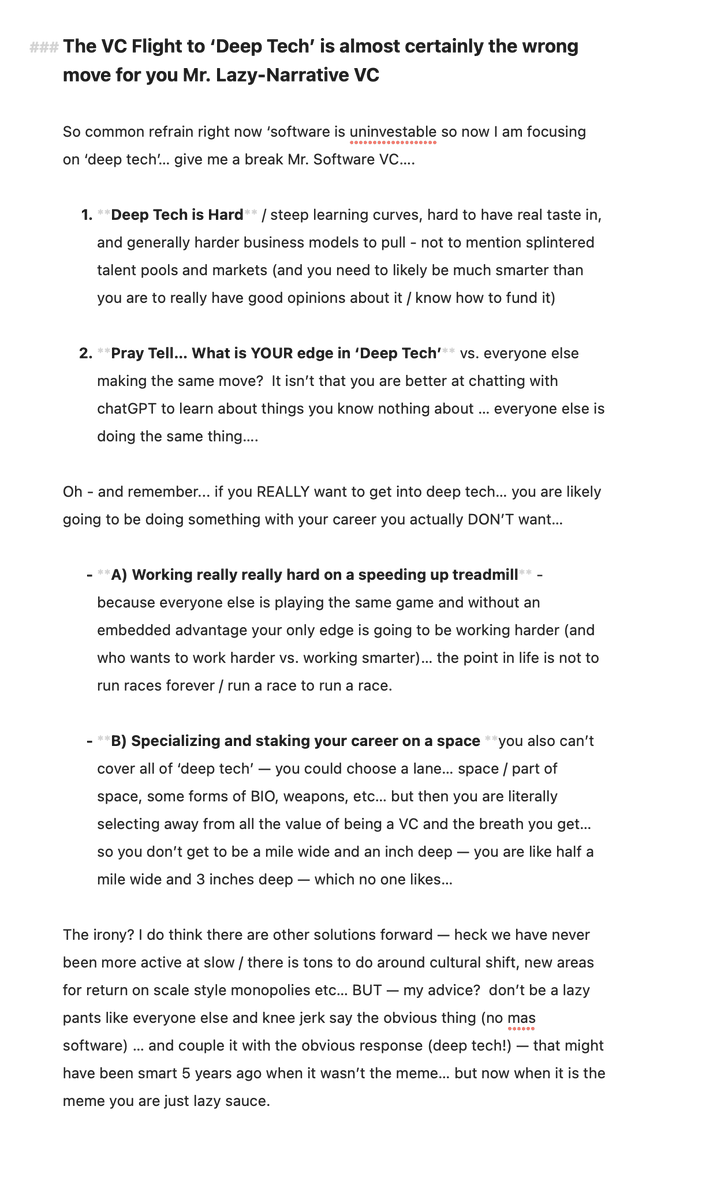
@ShanuMathew93 Disagree!
Startups are the only net job creator and it’s good to reinforce what the innovation and VC system brings.
It would be great if folks still called Apple a venture-backed startup!
Charts are the primary means of materials scientists to communicate their findings, but multimodal AI models read them poorly. To this end, I've created a benchmark of electrochem and battery-related charts: MatSciChartQ, with 17,000 images and 122,000+ questions and answers.
Here’s a case where copilot is both lazy (didn’t actually inspect the full file, do any analysis) and willing to hallucinate/lie.
Terrible combination for the user and broader trust in LLMs!
Saw this myself asking copilot to create a calendar event from an email. It extracted the details. “Ok, event created.” Obviously, no event on the calendar. “That’s on me. I apologize, I can’t actually create events.”
@RicOConnell8 I don’t think it’s right to use Fervo as an example here as it’s pretty well documented how pivotal early support was from philanthropically backed institutions, like Stanford Climate Ventures, TomKat and Activate, to getting Fervo launched.
The big unlock for me was to learn to see work as systems. Once you start breaking messy, bespoke tasks into components, you realize a huge chunk of knowledge work can be programmable. Not in the "build an app" traditional sense. More so in the sense that reading research, extracting a writing style, replicating the logic of a spreadsheet layout... these all have structure or patterns you can translate into code. Most people never saw it as that because code always felt like some esoteric tech thing that only software engineers touched.
That's the big paradigm shift. I.e., you stop thinking about code as a technical skill and start thinking about it as a way of seeing work. Every workflow you now launch at work becomes a question of inputs, logic, data, and outputs. Every repeatable task becomes a candidate for automation. And... once you're in that mode, you can't turn it off. You find leverage everywhere - probably some foolish & unproductive endeavors, but you only learn by doing.
That's also why I think people still underestimate the potential upside on demand. Most companies sit on massive backlogs of work that never got automated. Engineering was too scarce or too expensive or the ROI looked wasn't worth it or the problem touched too much unstructured data or systems to solve cleanly. Pick whatever excuse.
AI changes the calculus on all of those simultaneously. The people who can see work this way will translate it into systems.
As the cost of building and intelligence keeps falling, more of these projects clear the hurdle (aka the ROIC math gets better). This expands cumulative technical demand in the long run vs. compressing it. Now you start to see the blue sky thinking emerge...
It appears we are nearing the end of the climate investing cycle. Money is chasing AI. Governments are pulling back on policy. Major VCs are pulling back and pivoting to the new thing. This is not new. It’s my second or third cycle depending on how you count them. Different names. greentech, cleantech, climatetech. Same games. It’s what capital does.
Meanwhile, through those cycles we’ve completely reinvented electricity generation and storage. Solar and batteries dominate global capacity additions. We break records every day for renewables production. Tesla, venture funded in the last wave, is one of the most valuable companies on earth. Selling EVs and batteries. There are many billion+ dollar publicly traded companies built during these waves.
It’ll be back. With a different name. Same game. But it doesn’t matter. The transition is now inevitable. And incredible businesses will be founded and built during and between waves.
I’m not going anywhere. I fucking love it.
Countless Americans passionately despise the start/stop feature in cars. So many have spoken out against this absurd start-stop-start-stop-start-stop concept.
The Trump Admin has heard your calls and the announcement you have been waiting for is coming THIS WEEK. Stay tuned!
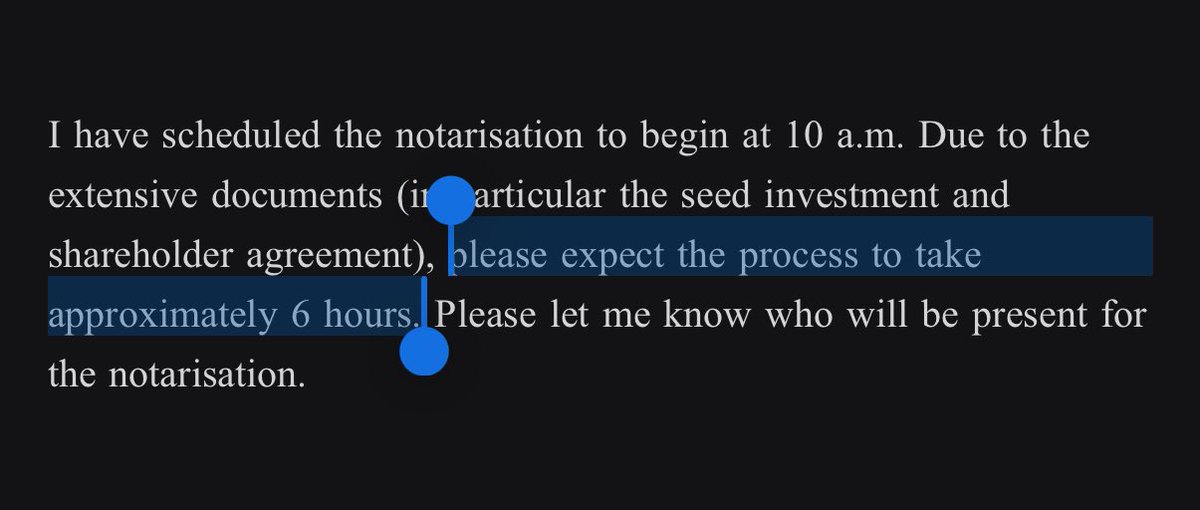
another German investment, another 6 hours of a notary reading every single word of all the documents out loud to each party to the transaction after we’ve all agreed on the docs
another German investment, another 6 hours of a notary reading every single word of all the documents out loud to each party to the transaction after we’ve all agreed on the docs
@jmrphy@catgirl4romney Shortly before my grandfather's dementia started, he was telling me about the games he invented with his 6 kids. The last substantial memory I have of him is saying: "I know everyone loves their kids, but I don't think many people had as much fun with them as I did."
@webdevMason Last night our toddler (3rd kid) just wouldn’t fall asleep. Frustrated after putting him back in bed for the 12th time and giving in to requests for water, more food, etc., I sat in his room reading the Breakneck chapter on the One Child policy - that snapped me out of it!
Someone at least explain why they didn’t rename @nrel Rockies National Lab (RNL)! Rolls off the tongue way better than NLR and matches all the others (Oak Ridge, Berkeley, Sandia, etc)
I have a @nytimes op-ed today on managing power demand growth w/out driving up rates. Central point: load growth is an opportunity to *offset* upward pressure on rates, if we plan the system to make fuller use of infrastructure we’ve already paid for.
Through the development of metal–organic frameworks, 2025 chemistry laureates Susumu Kitagawa, Richard Robson and Omar Yaghi have provided chemists with new opportunities for solving some of the challenges we face.
Following the laureates’ groundbreaking discoveries, researchers have created numerous different and functional metal–organic frameworks (MOF). So far, in most cases, the materials have only been used on a small scale. To harness the benefits of MOF materials for humanity, many companies are now investing in their mass production and commercialisation. Some have succeeded. For example, the electronics industry can now use MOF materials to contain some of the toxic gases required to produce semiconductors. Another MOF can instead break down harmful gases, including some that can be used as chemical weapons. Numerous companies are also testing materials that can capture carbon dioxide from factories and power stations, to reduce greenhouse gas emissions.
Some researchers believe that metal–organic frameworks have such huge potential that they will be the material of the twenty-first century.
#NobelPrize
Since this Climeworks story is now ripping through socials, it's a good time for a little thread on the piece
Early responses have all been dunking on DAC, but this is bigger than one technology
What does the piece get right, what does it get wrong🧵
https://t.co/yXQpknzOU7
Verne, an ARPA-E funded project, recently set a world record for cryo-compressed hydrogen storage, demonstrating a densification pathway that is 50% more efficient than the current top technology at @Livermore_Lab.
Stay tuned for more #ARPAE25 projects.
https://t.co/PVtrDLjIOp
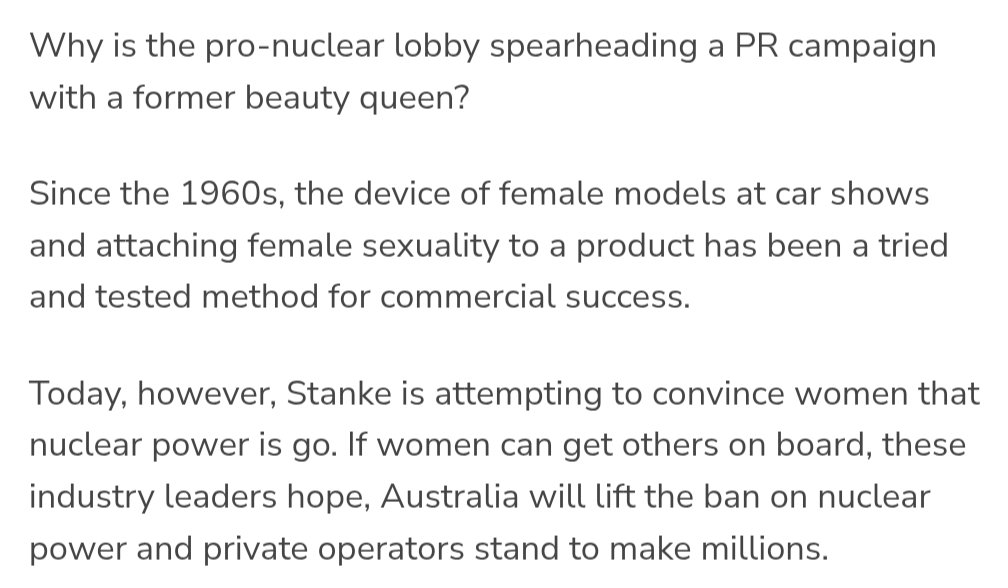
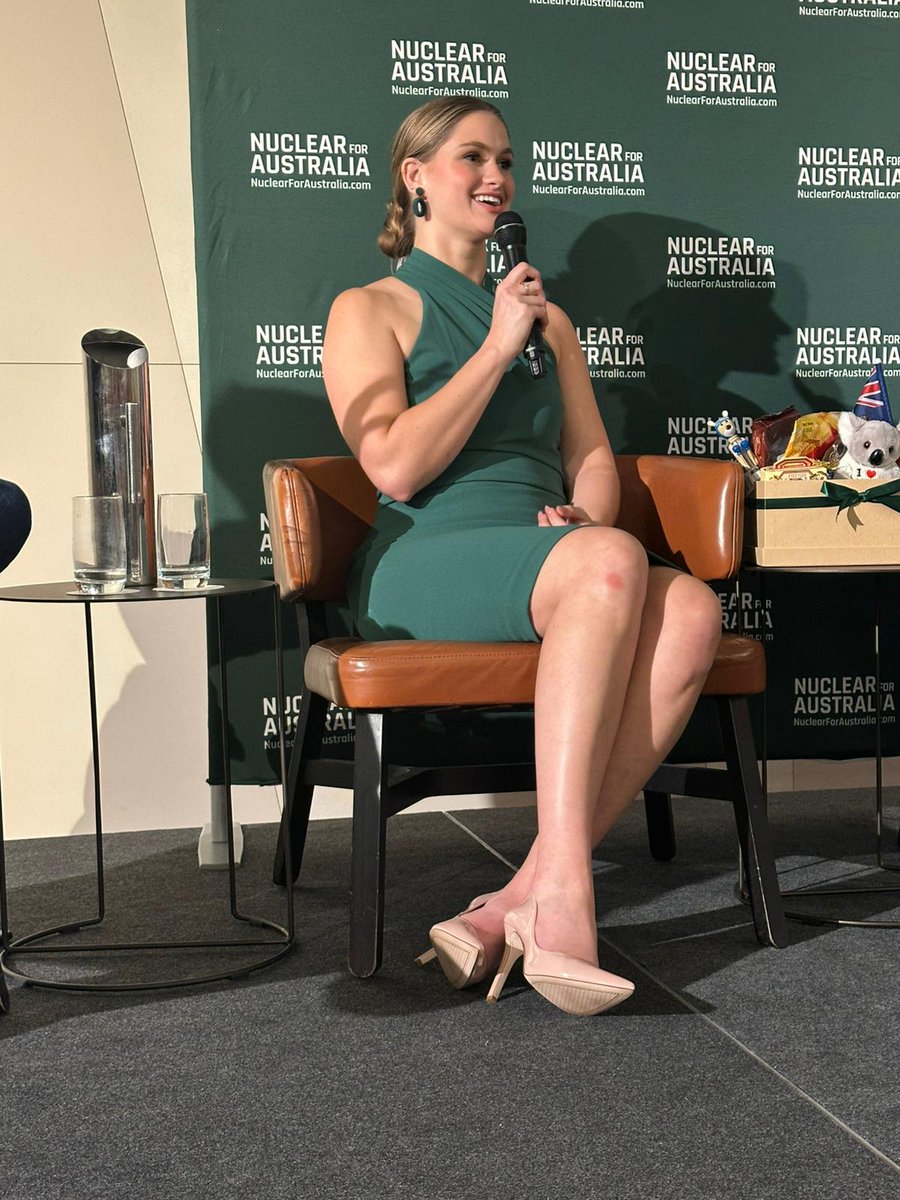
Australian antinuclear Greens are melting down as @Grace_Stanke, a nuclear engineer and 2023 Miss America, arrives in Australia for a nation-spanning tour organized by @ShackelWill and @nuclearforaus
They're calling her a "device" like a pin-up girl but she's literally a professional nuclear fuel manager and they're silly dorks