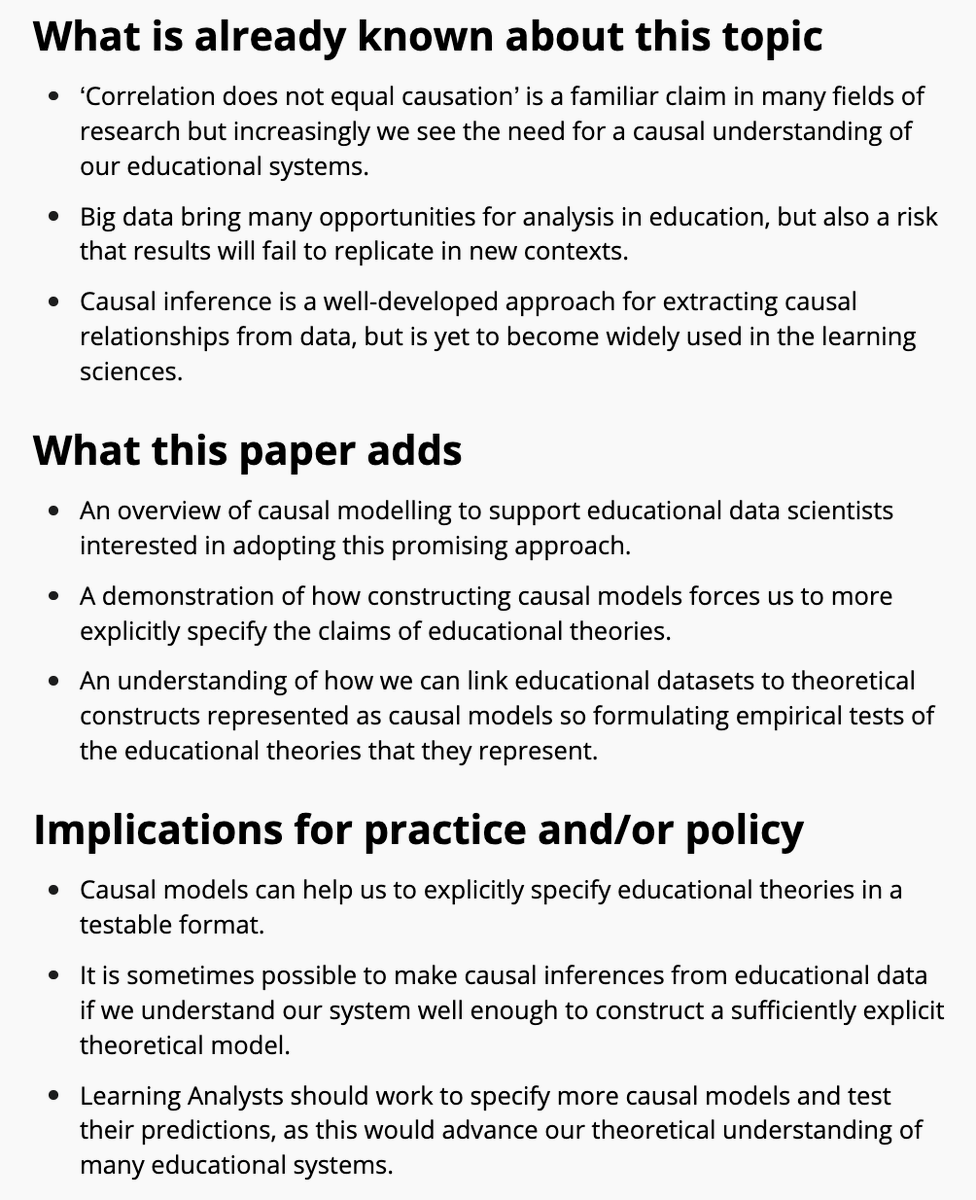
CIC's @benimbenix PhD supervised by @KirstyKitto + @sbuckshum have been developing an argument around the need for causal modelling in learning analytics. Catch up on their work...
BJET: https://t.co/U7a9wXDRXo
ETRD: https://t.co/6pUugjYpuG
LAK: https://t.co/PGxnTgprks
@TeamRetention Nice work retention team! Reminds me this paper came across my desk and made me think of some conversations we've had - https://t.co/J8aSgajavC
New paper on causal inference and causal graphs out in #ETRD as part of the upcoming special issue on methodological innovations in EdTech research.
https://t.co/djMJ6CgCus
with @HDrachsler and @benimbenix@dipf_aktuell@EdutecS
@KirstyKitto @tommarmstrong Yes, that’s the one. Great for going from completely disorganised thoughts to a graph structure of ideas. Which for me was a really nice stepping stone towards forming a more linear narrative.
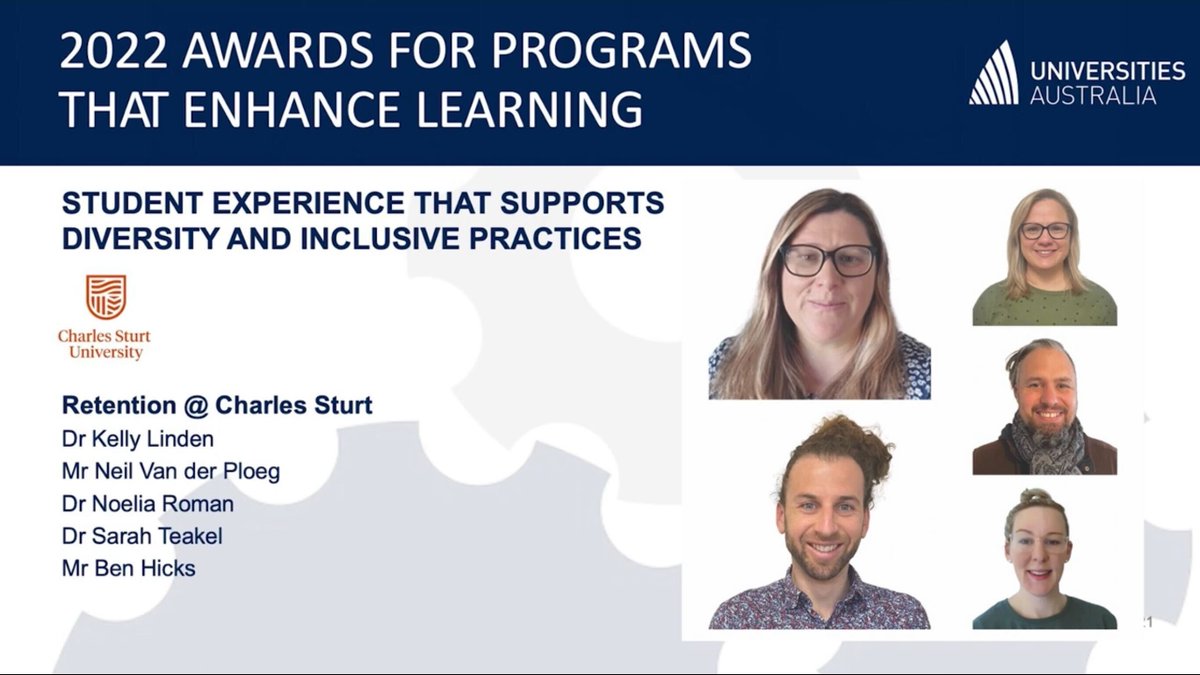
Woohoo! We are honoured to receive a 2022 #AAUT Program award! We are proud of our Team’s hard work and would like to thank everyone who has supported the Team’s efforts over the past years!
@Kellinden@neilvdp@DrNoeliaR@SarahTeakel@benimbenix
Attention #LAK23 crowd, it's coming up to the last chance to sign up to our Causal Modelling workshop - https://t.co/DTuWhudyrQ. Everything you've wanted to know about DAGs and were too afraid to ask!
If you're going to @lakconference, consider registering for our (@benimbenix and yours truly) workshop on causal inference and graphs.
It will be a highly-applied workshop on how to improve causal inferences and avoid bias by constructing causal graphs!
https://t.co/lRIJBtLo3U
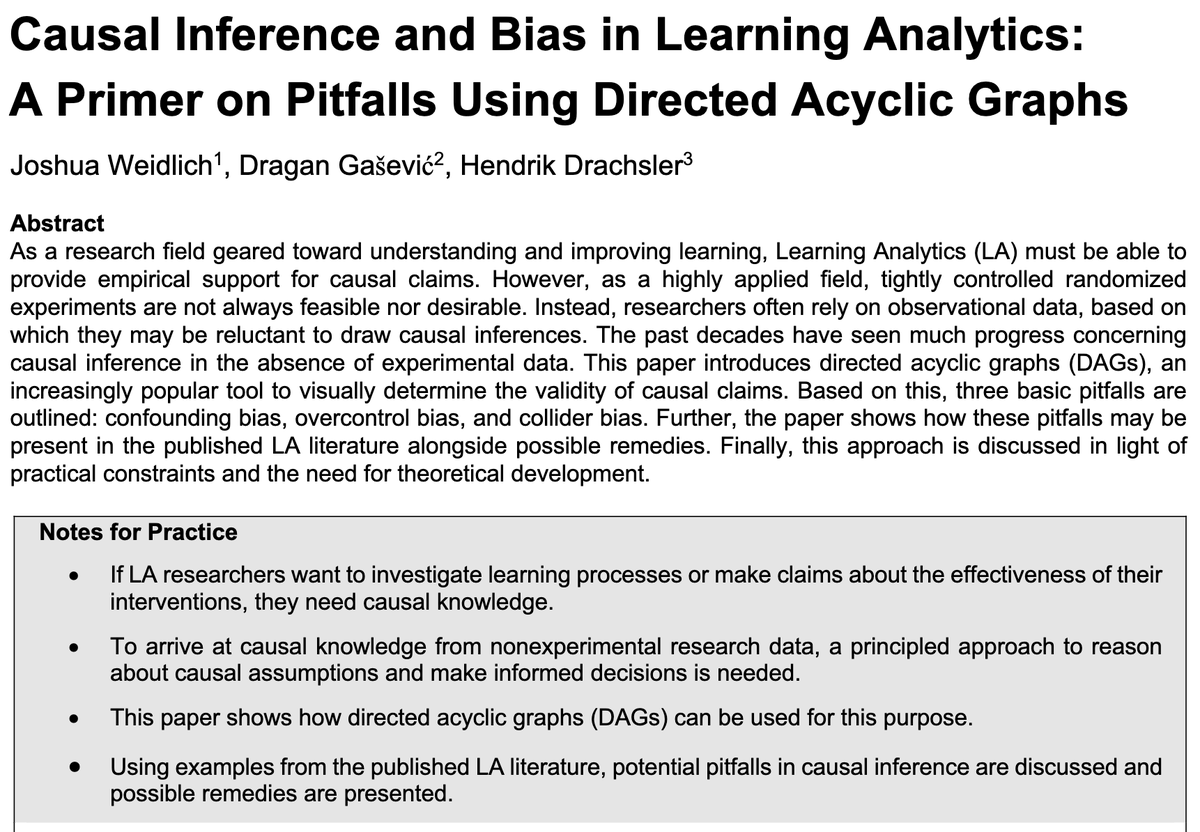
Great new paper on the case for DAGs for Learning Analytics, well done @hassenrueb@dgasevic@HDrachsler . Thoroughly enjoyed reading and especially loved the two sneaky collider bias examples
I am beyond thrilled to finally see our paper „Causal Inference and Bias in Learning Analytics“ published in Journal of Learning Analytics @jla_editorial
https://t.co/zR9fuMlnm5
@dgasevic@HDrachsler@EdutecS
I talk, wave hands, and generally make some sense about how #causalmodels might be used to foster a more inclusive environment for non-technical stakeholders to engage with the abstract process of building (causal / statistical) models
Ben Hicks: Participatory Causal Modelling for Learning Analytics • Join us in person or online next Wed for this PhD Stage 1 #LearningAnalytics seminar from @benimbenix 👉 https://t.co/N9ILeaDgzL
A small but critically timed gesture such as a phone call or personal tutoring session can mean the difference between success and failure and can also aid a student in feeling supported. Learn more! @Kellinden@TeamRetention https://t.co/b3S9prv7N5