Wow, Chinese researchers have developed direct coupling of atmospheric CO2 w/ ammonia to produce urea using solar energy as sole input.
Up until now, they have been synethesizing "green" methanol & urea through waste straws, animal wastes & such. Would be a game changer to directly take carbon from air & produce different kind of chemicals we need.
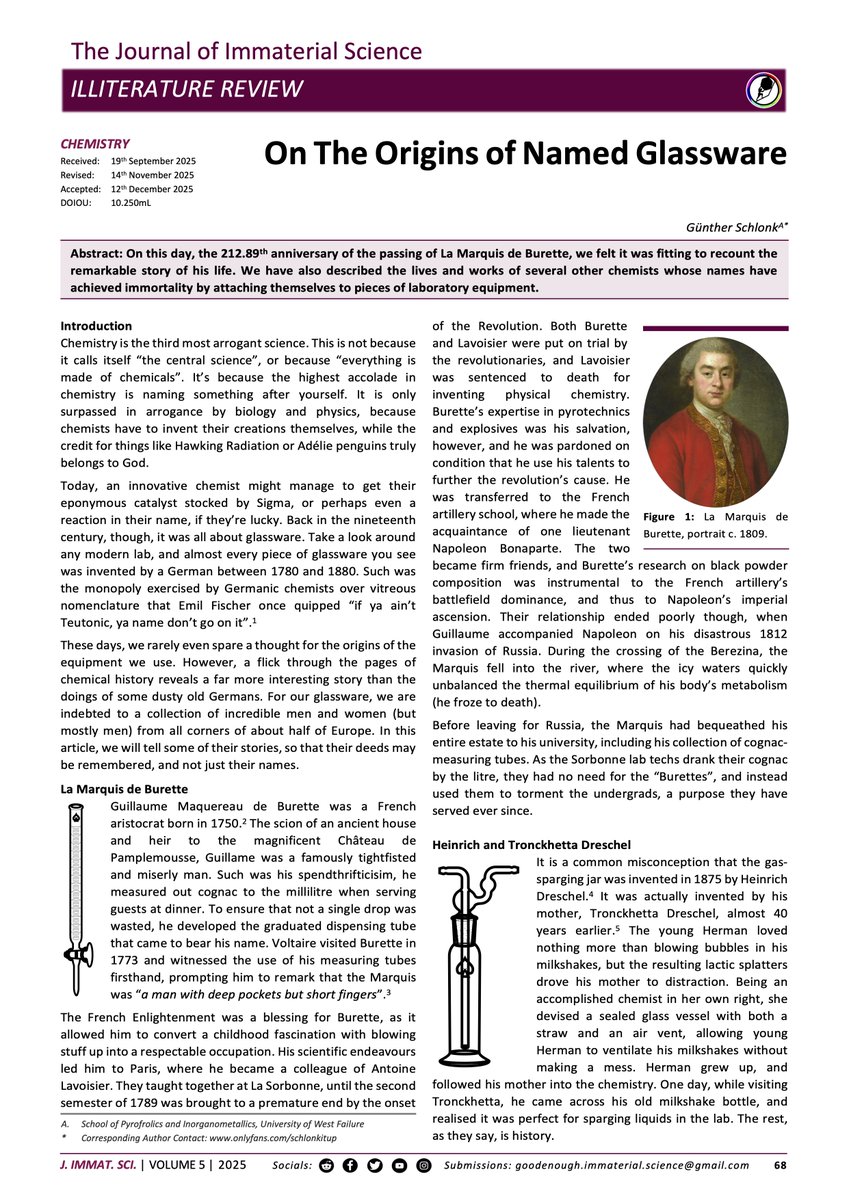
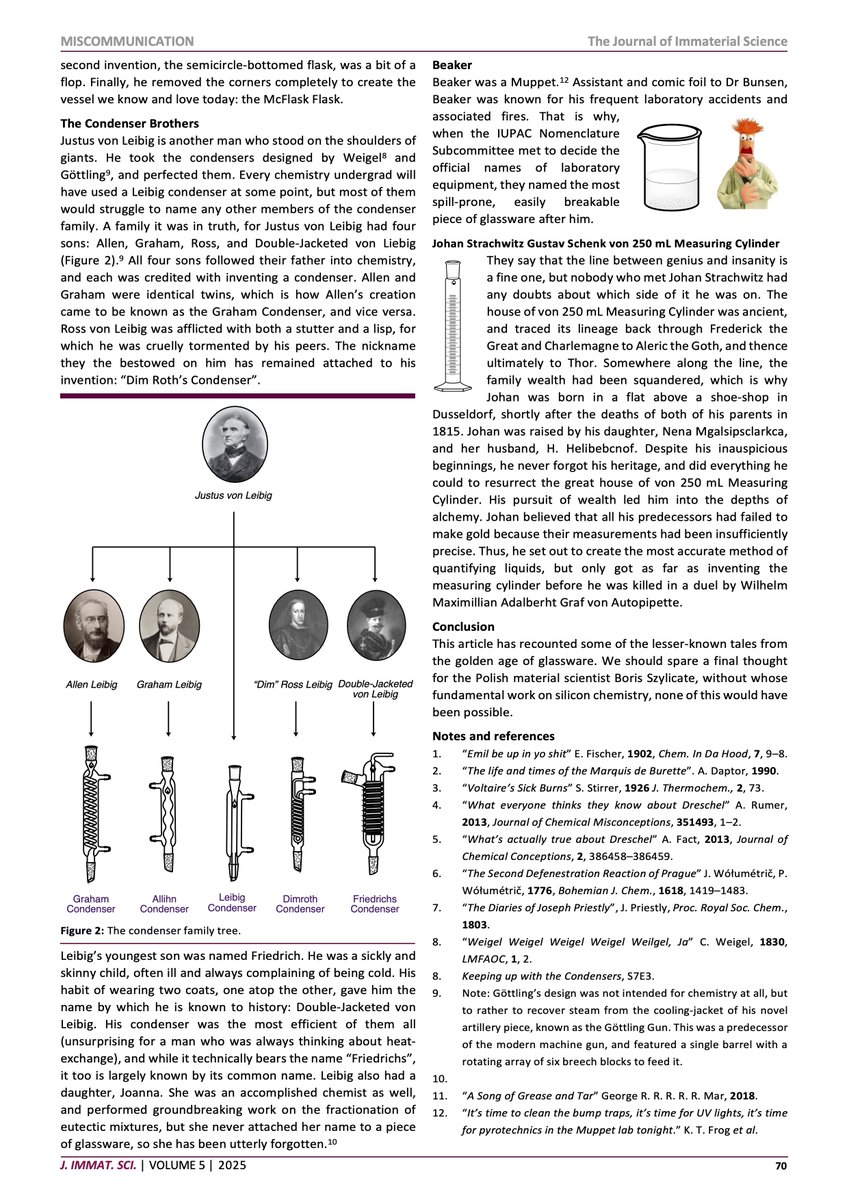
Have you ever wondered how types of scientific glassware got their names? This article tells the stories of men like La Marquis de Burette, Justus von Liebig and Jan Wółumétrič.
PDF: https://t.co/uSvS30hK9B
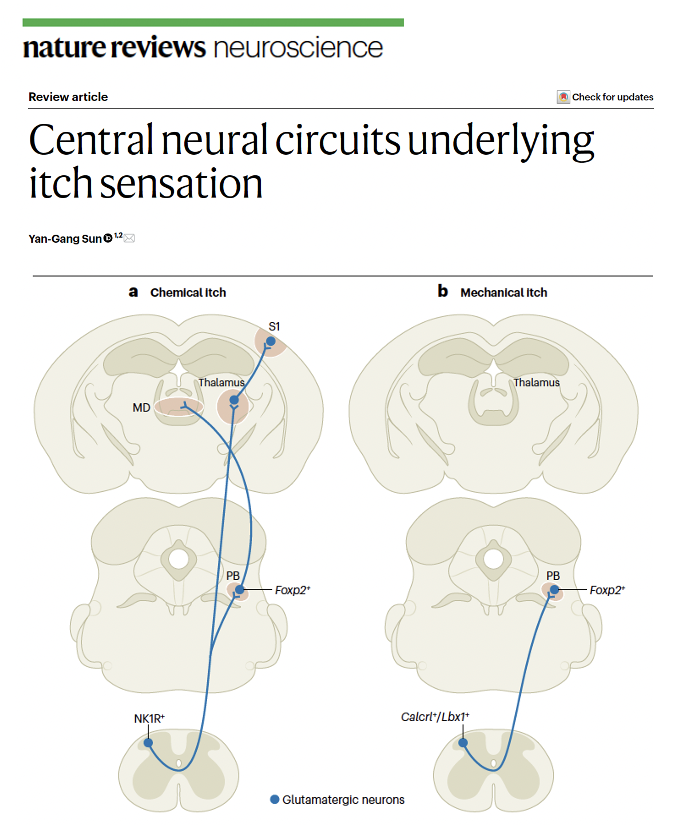
What does your brain have to do w/ itching? Spoiler alert: The brain plays an important role in itch. Itch is a somatosensory signal that your brain interprets and shapes, linking sensation, emotion and action. Sun describes in a new paper in Nature Reviews Neuroscience how the brain and spinal cord coordinate the entire itch experience.
Key points:
- Itch signals begin in the skin, are sculpted in the spinal cord and then relayed to higher brain regions that determine what you feel emotionally and what you decide to do about it, including scratching.
- Spinal circuits process chemical and mechanical itch using distinct excitatory and inhibitory neuron populations and these circuits gate how strongly itch signals rise up toward the brain.
- Ascending pathways to the thalamus and parabrachial nucleus transmit itch information and engage broad brain networks that represent sensation, emotion and motivation.
- Brain circuits linking the prefrontal cortex, insular cortex, amygdala and reward pathways determine both the negative and the positive affective components of itch, influencing whether folks scratch and how strongly they respond.
My take: If you don't think the brain plays a role in itching, then think again. Here are 5 points that resonated w/ me: 1- Itch begins in the skin and is shaped in the spinal cord before you consciously feel it. Ultimately the brain acts as a final interpreter. 2- Chemical and mechanical itch follow different pathways, which helps explain why some itches sting, some tickle and some persist. 3- Brain regions that generate emotion play a major role, so itch frequently triggers discomfort, anxiety or an urge to escape the feeling. 4- Scratching is rewarding because brain reward circuits activate, which reinforces the itch scratch cycle and makes stopping difficult. 5- Chronic itch reflects plastic changes in spinal and brain circuits, meaning effective treatments will need to target both sensation and also address the brain’s emotional and motivational responses.
https://t.co/k1gz8PrnxW @SfNtweets@movedisorder@ParkinsonDotOrg@greenjournal@JAMANeuro@Nature@NatureNeuro
Parietal cortex output neurons form a specialized population code that enhances the propagation of information to a downstream target and potentially improves the accuracy of decision-making
https://t.co/8WqgtdEteS
Research from the Inagaki Lab led by @Zidan_Yang has discovered how the motor cortex and striatum work together like an hourglass to flexibly control movement timing. Learn more https://t.co/AQlRvDY7IN
Read the research paper published in @Nature today: https://t.co/WYnh465Ies
Head-mounted 2-photon miniscope voltage imaging!
Weijian Yang's group at UC Davis sped up 2p scanning by multiplexing to achieve 400-Hz voltage imaging of ~20 neurons, using ASAP4e.
These are the first freely moving single-cell voltage recordings as far as I know.
Comparative whole-brain and single-cell analyses are identifying neurons orchestrating neurological functions.
Learn more in a new #SciencePerspective: https://t.co/GgRoxyKTf9
New paper in Imaging Neuroscience by Vicky He, David F. Abbott, et al:
Common pitfalls during model specification in psychophysiological interaction analysis
https://t.co/iODXYfaxW9
The brain’s wake-to-sleep transition follows bifurcation dynamics with a distinct tipping point preceded by a critical slowing down
@nir_grossman@Junheng19@ISN_Lab@UKDRI
https://t.co/HHskXavq4Y
Hidden Markov Models
Really enjoyed this paper on dynamics underlying resting state and other conditions. The idea of a baseline state from which excursions lead to more integrated states is really interesting.
https://t.co/NMvcNlhYFW
Thrilled to share new work led by @JieYang437 in the lab published today in @Nature. We find that Aspirin prevents metastasis by releasing T cells from immune suppression by platelet TXA2. @Cambridge_Uni@CRUKCamCentre https://t.co/dO2v0GWKAn
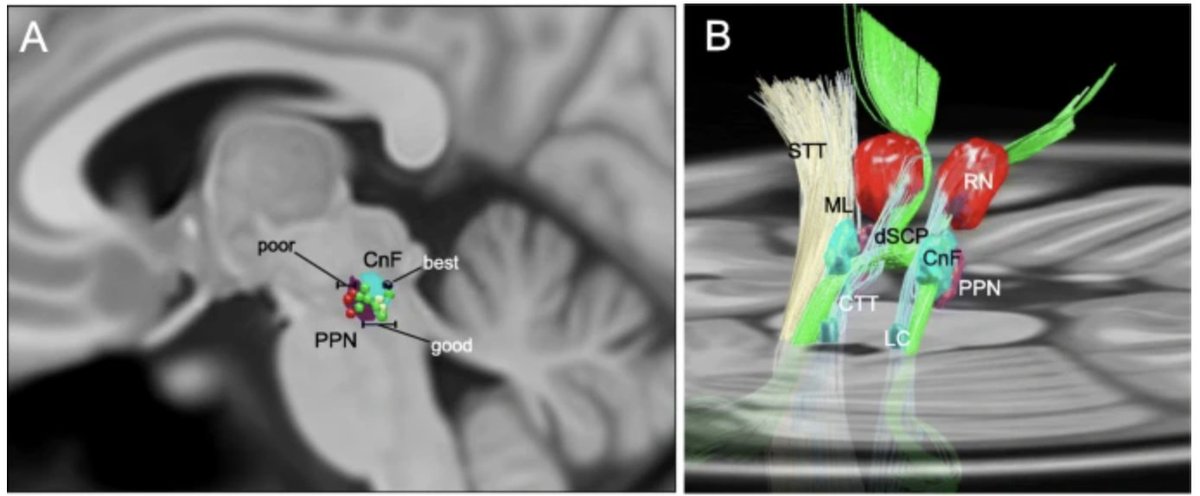
Fascinating @ANA_journals study inadvertently found that deep brain stimulation of the human midbrain (pedunculopontine nucleus) can induce sleep on-demand. High-frequency stimulation (80Hz) produced NREM sleep within minutes.
https://t.co/iWOC9dB5Ns
video ⬇️
NIH has announced a cut in the "indirect rate" to 15% across the board, in a move that appears to be retroactive to even existing grants. This is a bloodbath for research institutions throughout the country.
Brief explainer for those not in this world:
https://t.co/VUP7tWat7O
Our spatial multi-omics technology that co-profiles five modalities is now published in Nature Methods @naturemethods! Huge thanks to @marekbartosovic, @DrMingyaoLi, and my amazing team, including postdoc @pengfeo and PhD student @LiranMao!
https://t.co/QMBgTTiIqQ