Some today seem to have little grasp for the weight of history, including history that wasn't that long ago. My grandfather fought and was seriously wounded in WW2 thanks to clownish idiots entering politics.
"The past is never dead. It's not even past."
— William Faulkner
Seems to have been just another study, we're very good at those in NYS, we have a half-dozen on HSR. In fact however, the Grand Central Shuttle was briefly partially automated between 1962-64 when one trainset ran automated between GCT and Times Square. A derailment and major fire in 1964 brought an end to the revenue trial.
https://t.co/KwmnjGFtqG
From a Reddit thread:
"So far, the consensus on the Spanish media is that LZB was broken on that track, in which case the standard protocol is "proceed with visual confirmation" at max. 40 km/h.
The operator stopped all the trains on the track upon the LZB failure; however, when resuming traffic the operator mistakenly gave the signal for trains to "proceed normally" instead of the restricted signal. The Iryo train, for some unknown reason, could not resume circulation and stayed put, and the train behind it had no warning there was a stopped train in the next canton because, again, LZB was broken.
Many blame the operator; however, the true culprit is a badly-designed system that allows this combination of factors without needing a secondary override (mainly a supervisor), such that a slip of the operator can inadvertently cause a dangerous condition."
https://t.co/XAI8Seo2MC
A good informed thread from Gareth Dennis on the HSR crash in Spain @marcjoffe@Lucid_Stew#hsr#crash#chsra
It seems the automatic cab signaling and train protection system went down - what we call ATC and the successor digital PTC in North America. In some places in the US we have the newer digital PTC layered over a older ATC installation layered onto the lineside signaling of color lights, for example Amtrak's NEC and Metro-North.
They reportedly moved to "Lateral Signaling Block" (BSL in Spanish) when the digital cab signaling and train protection system (LZB in German) went down. BSL shifts control back to physical lineside signals installed alongside the tracks (if there are physical signals as many HSR lines do not have them*) with operators (central dispatchers and train drivers) transitioning to BSL protocols, with stricter manual or procedural oversight to manage train spacing, speed, and safety intervals.
MY THOUGHTS: So this makes "human error" the most likely cause - a well known issue of concern when highly automated systems fail and inexperience humans move to pick up the slack, and an issue with modern airliners and self-driving cars.
Could such disaster occur in North America? Well the double/triple redundancy of our "few higher speed lines" perhaps make it less likely, as if the PTC goes down (which it seems it often does from grumbling on online rail forums) you still got in some cases the ATC and in most cases the trackside signaling system.
Now the PTC could go down on a line with only trackside signaling, and a train driver blows through a red light (called a SPAD, "Signal Passed at Danger") and crash into another train, but it would require the train driver ignoring or missing a color light.
On Amtrak's NEC and Metro-North, the ATC physically installed on the track during a SPAD will automatically trigger the brakes. There is even on a few former Santa Fe lines the 1920's era "Automatic Train Stop" (ATS) system which triggers brakes if a SPAD occurs. The ATC used by Amtrak, Metro-North, and the LIRR which was developed by the Pennsylvania Railroad in the 1920s, and includes cab signaling, protection of permeant "slow orders" - like bridges and curves.
After deadly overspeed of curves by Metro-North and Amtrak last decade, both railroads expanded their ATC systems to protect all curves. "Value Engineering" had left the curves at both the Spuyten Duyvil (2013) and Frankford Junction (2015) unprotected by ATC. In the case of Frankford Junction, ATC did protect southbound trains but not northbound trains, as due to the lower track speed south of the curve compared to the 100 mph territory north of the curve, the risk of a derailment was deemed lower.
However, the Amtrak engineer of Northeast Regional Train 188 suffered spatial disorientation and cognitive dissonance, perhaps from monitoring reports of an object hitting a SEPTA commuter train, and thinking he was passed the 50 mph curve, was accelerting to over 100 mph before realizing where he was, he slammed on the brakes too late. As with Metro-North at Spuyten Duyvil, a week later Amtrak installed ATC at the curve to protect northbound trains. Today, both ATC and PTC would prevent either disasters.
Still, we have seen deadly crashes on the mainlines with both lineside signaling and PTC - Murphy's Law - but they are less likely to occur due to human error or one single point failure in equipment. If a train derails just before another one on an adjacent track passes by it, there will have a collision, as occurred on a HSR line in Spain in January in the Adamuz rail disaster. If a big tree falls, truck gets stuck at grade crossing, if construction equipment is fouling the track, seconds before a passing train, then a collision won't be prevented by PTC.
This is [WARNING] shear speculation on my part, but in a video you see physical color signal lights ahead of one of the crash trains, but if these signals were installed in long blocks, only at stations and interlockings where trains switch between the two mainline tracks, then you could have very long stretches (called blocks) with no lineside signaling - unlike the every three or so miles blocks of busy mainlines in America.
Now modern HSR lines with modern digital signaling systems having "moving blocks" and instead of "fixed blocks", the digital signaling keeping moving trains at proper braking distances from each other, based on the speed of the trains. This increases fluidity and capacity over the older fixed blocks, which are dependent on the lineside infrastructure of signaling towers and ATC devices.
For example on the Hudson Line between NYC and Albany, every three or so miles there are signaling towers and on the tracks ATC transponders. If the PTC fails then you still have lineside signals installed by the New York Central to keep trains properly separated. The distance it takes a train to stop is about a mile or so, if a train is stopped, then the signal behind it by a mile or two will be red, bringing a moving train behind the stop train, to a halt, within a safe distance.
However, if on a HSR Line in Spain (WARING: this is guesswork on my part) with moving blocks and signals placed at much greater distances at only key sections like interlockings and stations, and then if the "LZB" digital cab signaling and train protection system goes down, moving operations to "Lateral Signaling Block", then if a train stops at a red signal at a interlocking, because the physical color light signals still work, its possible that a second train behind the stopped train will have already passed the last signal tower at the last interlocking miles behind, and with no cab signals, and if the dispatchers make a mistake, the train moving at a very high speed (instead of a reduced speed)as reported online) can crash into the stopped train ahead of it. By the time the driver sees the stopped train before the signal towers protecting the interlocking and the block ahead or it, its too late.
*An interlocking is the complex of switches, also called turnouts, at a "control point", often designated by milepost, allow trains to switch tracks. Called an interlocking because back in the days of physical rods and levers, a signal tower operator could not manipulate the levers controlling the switches in a manner that would place two conflicting trains onto the same track, the levers would instead lock in place. It was thus "failsafe" due to the interlocking of the rods and levers.
The distances of track between signaling towers is called blocks, the length of blocks determined by the distance to safely stop a train. There is still a lot of railroad lines - more lightly trafficked - in North America without lineside signaling, this is called "Dark Territory" and it relies on train movements directed by verbal or written instructions from a train dispatcher to train crews. Most busy mainlines in the USA which host passenger trains and dangerous cargo are mandated by federal law to have Positive Train Control (PTC).
#HSR #HighSpeedRail #HSRGetTheFacts #BuildHSR #California #Spain
It seems that HSR lines in Spain do not have "Moving Block" (Madrid-Seville uses older German LZB system, other HSR lines in country use newer system) but remain "Fixed Block". Google Gemini: "LZB is not a true moving block system; it operates using fixed blocks (typically 50 to 100 meters long, grouped into larger supervisory sections), functioning similarly to ETCS Level 2 rather than a moving block architecture."
https://t.co/39uIrLXYVY
Yet my main point remains, if cab signaling is down, without lineside signals, a train driver will not know if the fixed blocks ahead of him are occupied by another trains. Photo here shows signal towers and ATC transponders on Amtrak's Hudson Line, south of Hudson NY, taken on Monday by me.
What is the LZB system and why is its operation being investigated after the collision of two trains in Toledo. The continuous speed and distance control is designed to prevent a train from exceeding the authorized operating limits. Engineer Ricardo Díaz questions how a rear-end collision could have occurred on the Madrid-Sevilla high-speed line, while the causes of the Urda accident remain unknown https://t.co/izJVveVu8j
I may be way out of my depth here @GarethDennis as I'm only an American rail advocate and fan, but if they were operating "Lateral Signaling Block" (BSL) because the digital cab signaling and train protection system (LZB) was down - then is it possible that without continuous lineside signaling but as seen in a crash video some (at interlockings, stations?) that the first train stopped or slowed down, and was rammed by the second one, whose driver would have not have had cab signaling or any lineside signaling before these signal either?
A good informed thread from Gareth Dennis on the HSR crash in Spain @marcjoffe@Lucid_Stew#hsr#crash#chsra
It seems the automatic cab signaling and train protection system went down - what we call ATC and the successor digital PTC in North America. In some places in the US we have the newer digital PTC layered over a older ATC installation layered onto the lineside signaling of color lights, for example Amtrak's NEC and Metro-North.
They reportedly moved to "Lateral Signaling Block" (BSL in Spanish) when the digital cab signaling and train protection system (LZB in German) went down. BSL shifts control back to physical lineside signals installed alongside the tracks (if there are physical signals as many HSR lines do not have them*) with operators (central dispatchers and train drivers) transitioning to BSL protocols, with stricter manual or procedural oversight to manage train spacing, speed, and safety intervals.
MY THOUGHTS: So this makes "human error" the most likely cause - a well known issue of concern when highly automated systems fail and inexperience humans move to pick up the slack, and an issue with modern airliners and self-driving cars.
Could such disaster occur in North America? Well the double/triple redundancy of our "few higher speed lines" perhaps make it less likely, as if the PTC goes down (which it seems it often does from grumbling on online rail forums) you still got in some cases the ATC and in most cases the trackside signaling system.
Now the PTC could go down on a line with only trackside signaling, and a train driver blows through a red light (called a SPAD, "Signal Passed at Danger") and crash into another train, but it would require the train driver ignoring or missing a color light.
On Amtrak's NEC and Metro-North, the ATC physically installed on the track during a SPAD will automatically trigger the brakes. There is even on a few former Santa Fe lines the 1920's era "Automatic Train Stop" (ATS) system which triggers brakes if a SPAD occurs. The ATC used by Amtrak, Metro-North, and the LIRR which was developed by the Pennsylvania Railroad in the 1920s, and includes cab signaling, protection of permeant "slow orders" - like bridges and curves.
After deadly overspeed of curves by Metro-North and Amtrak last decade, both railroads expanded their ATC systems to protect all curves. "Value Engineering" had left the curves at both the Spuyten Duyvil (2013) and Frankford Junction (2015) unprotected by ATC. In the case of Frankford Junction, ATC did protect southbound trains but not northbound trains, as due to the lower track speed south of the curve compared to the 100 mph territory north of the curve, the risk of a derailment was deemed lower.
However, the Amtrak engineer of Northeast Regional Train 188 suffered spatial disorientation and cognitive dissonance, perhaps from monitoring reports of an object hitting a SEPTA commuter train, and thinking he was passed the 50 mph curve, was accelerting to over 100 mph before realizing where he was, he slammed on the brakes too late. As with Metro-North at Spuyten Duyvil, a week later Amtrak installed ATC at the curve to protect northbound trains. Today, both ATC and PTC would prevent either disasters.
Still, we have seen deadly crashes on the mainlines with both lineside signaling and PTC - Murphy's Law - but they are less likely to occur due to human error or one single point failure in equipment. If a train derails just before another one on an adjacent track passes by it, there will have a collision, as occurred on a HSR line in Spain in January in the Adamuz rail disaster. If a big tree falls, truck gets stuck at grade crossing, if construction equipment is fouling the track, seconds before a passing train, then a collision won't be prevented by PTC.
This is [WARNING] shear speculation on my part, but in a video you see physical color signal lights ahead of one of the crash trains, but if these signals were installed in long blocks, only at stations and interlockings where trains switch between the two mainline tracks, then you could have very long stretches (called blocks) with no lineside signaling - unlike the every three or so miles blocks of busy mainlines in America.
Now modern HSR lines with modern digital signaling systems having "moving blocks" and instead of "fixed blocks", the digital signaling keeping moving trains at proper braking distances from each other, based on the speed of the trains. This increases fluidity and capacity over the older fixed blocks, which are dependent on the lineside infrastructure of signaling towers and ATC devices.
For example on the Hudson Line between NYC and Albany, every three or so miles there are signaling towers and on the tracks ATC transponders. If the PTC fails then you still have lineside signals installed by the New York Central to keep trains properly separated. The distance it takes a train to stop is about a mile or so, if a train is stopped, then the signal behind it by a mile or two will be red, bringing a moving train behind the stop train, to a halt, within a safe distance.
However, if on a HSR Line in Spain (WARING: this is guesswork on my part) with moving blocks and signals placed at much greater distances at only key sections like interlockings and stations, and then if the "LZB" digital cab signaling and train protection system goes down, moving operations to "Lateral Signaling Block", then if a train stops at a red signal at a interlocking, because the physical color light signals still work, its possible that a second train behind the stopped train will have already passed the last signal tower at the last interlocking miles behind, and with no cab signals, and if the dispatchers make a mistake, the train moving at a very high speed (instead of a reduced speed)as reported online) can crash into the stopped train ahead of it. By the time the driver sees the stopped train before the signal towers protecting the interlocking and the block ahead or it, its too late.
*An interlocking is the complex of switches, also called turnouts, at a "control point", often designated by milepost, allow trains to switch tracks. Called an interlocking because back in the days of physical rods and levers, a signal tower operator could not manipulate the levers controlling the switches in a manner that would place two conflicting trains onto the same track, the levers would instead lock in place. It was thus "failsafe" due to the interlocking of the rods and levers.
The distances of track between signaling towers is called blocks, the length of blocks determined by the distance to safely stop a train. There is still a lot of railroad lines - more lightly trafficked - in North America without lineside signaling, this is called "Dark Territory" and it relies on train movements directed by verbal or written instructions from a train dispatcher to train crews. Most busy mainlines in the USA which host passenger trains and dangerous cargo are mandated by federal law to have Positive Train Control (PTC).
#HSR #HighSpeedRail #HSRGetTheFacts #BuildHSR #California #Spain
A possible malfunction in the LZB system and human error, possible causes of the collision between the AVE and the Iryo in Toledo. Sources from the Executive indicate that the trains resumed circulation under human control after the automatic safety system failed. The first analyses point to the error possibly having occurred during that phase, although the causes of the accident have still not been officially clarified
https://t.co/LqkvQRtBUv
🔴 #ÚLTIMAHORA I Un pasajero graba momentos después del accidente entre el Iryo y el AVE donde enseña la cabecera de los trenes y la situación del accidente
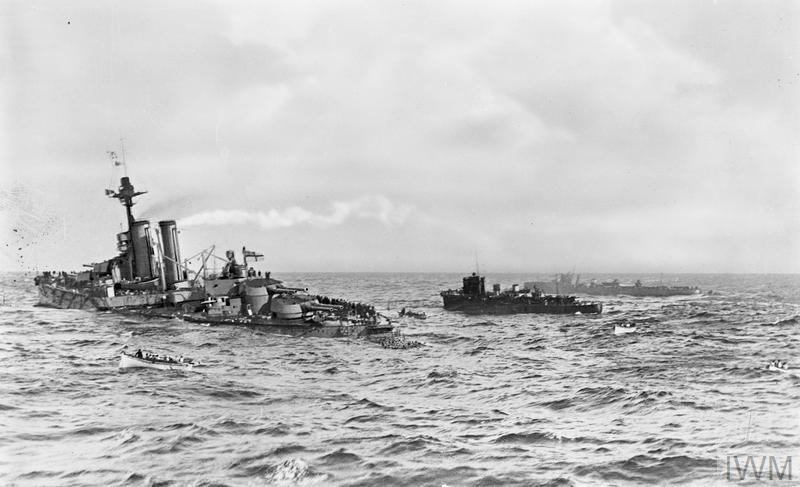
Oct 27, 1914. One of Britain's newest battleships sinks off Ireland. The government spends the next four years pretending it never happened.
HMS Audacious was barely a year old. A modern dreadnought with ten 13.5-inch guns, one of the most powerful warships in the world.
On the morning of Oct 27, 1914, she left Lough Swilly on the north coast of Ireland with the rest of her squadron for gunnery practice. At 8:45 a.m., in the middle of a turn, there was an explosion under her port side.
She had hit a mine. It had been laid just days earlier by Berlin, a German passenger liner converted into a minelayer.
The damage didn't look fatal at first. But the blast had hit a part of the ship with no protective bulkhead, and the water spread slowly from compartment to compartment. She began to settle by the stern.
Admiral Jellicoe, commander of the Grand Fleet, was afraid of U-boats in the area. He wouldn't risk sending other battleships to tow her.
Help came from somewhere unexpected. The liner RMS Olympic, sister ship of the Titanic, was passing by on her way from New York. Her captain offered to tow the battleship.
A line was passed and Olympic started pulling. But Audacious was flooded and impossible to steer, and the line snapped. A cruiser and a coal ship tried too. Every line broke.
By evening, the crew had been taken off. Around 9 p.m., Audacious rolled over and blew up. A piece of armor plate flew hundreds of yards and killed a sailor on a nearby cruiser. He was the only death.
Now came the strange part.
Jellicoe begged the Admiralty to keep the loss secret. Britain's lead over the German fleet in modern battleships was small, and he didn't want Germany to know it had just gotten smaller.
But Olympic was full of passengers, many of them American. They had watched the whole thing. Some took photos. At least one shot film.
So Olympic was held at Lough Swilly and the passengers were kept from contacting anyone. It didn't work. Photos ended up in American newspapers within weeks.
The British government still refused to admit it. Audacious stayed on the official list of ships.
The loss was finally announced on Nov 14, 1918. Three days after the war ended.
Seriously - bringing in an outside expert, from overseas, with a track record of sucess would be a good idea 💡 Its what Mr. Byford was for the NYC Subway, after running transit rail systems in Sydney, Toronto, and London. Now he's at Amtrak leading the Penn Station rebuild. He was beloved by riders who nicknamed him "Train Daddy" for greatly improving subway service - but got canned by Gov. Andrew Cuomo who was a micromanager* who didn't want to share the limelight.
*Gov. Cuomo delayed the opening of the new Rochester Amtrak Station by a month or two when he ordered the tile in the Men's Room replaced, angry, the main contractor quit. He built new Welcome Centers on the NYS Thruway, then closed them 6 months later for renovation! Imagine bring a painter or a welder and having the governor giving you orders. 🙄
To Cuomo's credit, a lot of long delayed projects, and new projects were pushed to completion duting his term. The new train stations and welcome centers are very nice, but it came at the cost of the darkside of his personality. Then the sexaul harassment scandals hit and he was toast as no one liked him, msny feared him, and there was a wiff of pay-to-play corruption. Under Kathy Hochul a lot of the slow progress continues, but people cdn get on with their jobs without the governor visiting the job site every week.
As for the NYC Subway it is over a century old, yet they have looked into automating the Grand Central Shuttle, the shortest and most simple line. People are also key to transit systems, imagine a mall with no employees or security or cleaning staff, full automated with loitering teens, how safe would you feel? 😅
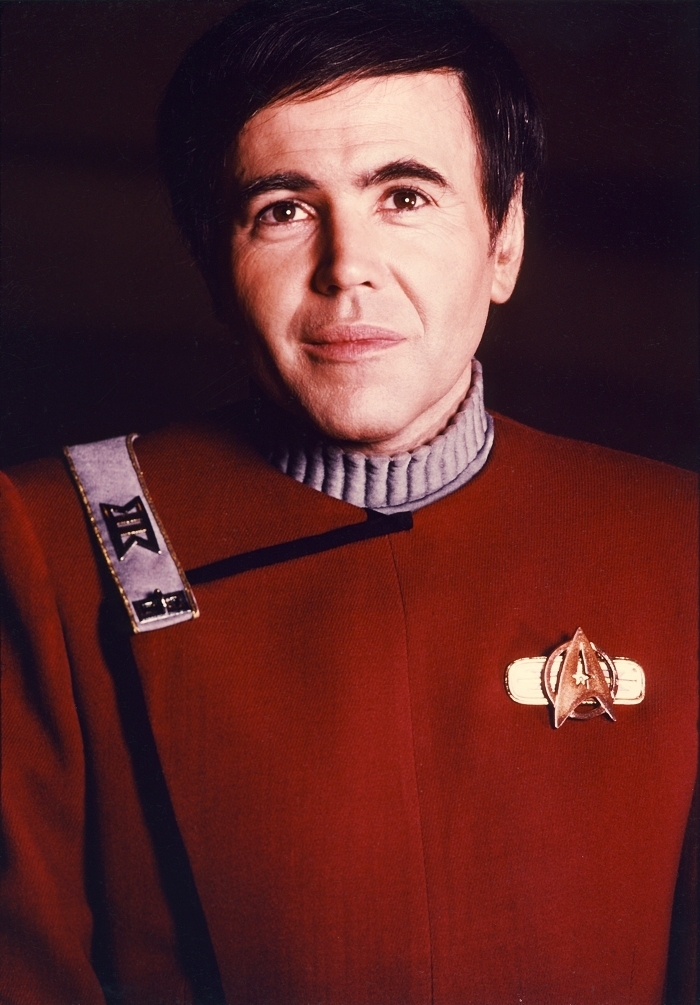
RIP: Walter Koenig - 1936 - 2026. I got to see him in person at the Star Trek Convention in Chicago a few years back and he was great! He felt like someone you could easily be friends with. He knew tragedy, but he also seemed to embrace life, and I think he lived it well. #LLAP🖖🏽
I have kept saying to think of these more like Kongos with evolved sisters to come, rather than Just a Pair... Japan's strategic depth are the seas around it, it would be foolish not to use them to their maximum ... and japan is not foolish in their procurement
Walter Koenig, Chekov From ‘Star Trek,’ Has Died. As the baby-faced Russian navigator of the U.S.S. Enterprise, he was a mainstay of the original television series and seven films. He was 90. #StarTrek#Chekov
https://t.co/UpWvTCBllx
Well its the three mountain ranges in addition to entering urban/suburban centers that would add up the costs of freeway construction today. But today new expressways would like HSR still fall under the same environmental reviews and eminent domain legal procedures. I'm sure "red tape" added considerably to the costs of the I-405 HOV land project.
If it was up to me, I would focus on upgrading existing passenger rail corridors, like the Caltrain Electrification. do a rolling program with a dedicated program team that gets better and better with each project. I would only have "new build" HSR to fill in the gaps in the existing network, primarily Bakersfield to Palmdale, connecting NorCal with SoCal.
I have not really gone through this material linked to below, but they same to be making the argument that the Toronto-Ottawa-Montreal-Quebec "ALTO" project is going off the rails by moving to "true 220 MPH HSR" from the original planned upgrade of existing rail corridors with electrification and speeds of 125 MPH. They point to considerable ridership/market share gains made in Britain by upgrading the existing mainlines.
Is the ALTO Proposal Fundamentally Flawed?
https://t.co/pnkvADQc5B