We also post to a mastodon account.
If you follow the link
https://t.co/sjh6Ujf0lC
You can read our posts without needing to sign up.
Plus a greater character allowance
Dales Bus update.
We’re pleased to advise that the Ribblehead to Hawes road reopened following roadworks today, so DalesBus service 80 will be running through to Hawes as normal again from this weekend.
For further information please see https://t.co/WxwHHdAtyH
Let me categorically Debunk this utter rot. @sainsburys.
I am a poultry Breeder. The hens that lay white eggs (Amberline/White Star) DO NOT have a lower carbon footprint.
Yes they eat a bit less and produce roughly the same amount of eggs as the Brown egg layers (Bovan/Lowman/ISA Brown) but they live shorter lives, are prone to dying suddenly when startled, a flighty and nervous and because they live shorter productive lives (12 -18mnths) vs brown 18/24mnths (both commercial farmed), you have to incubate more which is increased (Electricity/gas costs) and their eggs are not the same quality.
I breed and keep 20+ different breeds, including: ISA Brown hens and White Stars. All my hens are 100% free range, Not a single barn kept bird, I have ISA browns that are 5yrs old and still laying beautiful Brown eggs, I have not seen a White star live beyond 3yrs and certainly none have laid eggs past 18-24mnths.
White stars Lay themselves to death. They are slender birds and because they dont eat a lot, it drains their personal vitality to keep up laying the eggs you want to sell because of the nonsensical lie that they are "More Carbon Neutral"
You want to know about eggs, come talk to someone like me, Don't rely on some hairbrained imagination of a buyer who's trying to squeeze the profit margin for a few extra pennies at our expense and to the poor hens detriment.
So the government’s answer to water shortages is a new Water Regulator. Getting on with building new reservoirs would be a better idea. Why not get the present Regulator to do their job? Why do we keep adding to the population without adding more water resource?
A tenant farmer in the Cairngorms says land that sold for £500 an acre a few years ago now goes for £5,000. He is being moved off ground his family has worked for generations, because he cannot outbid the people buying it. The buyers are corporations, and they have no intention of farming a single acre of it.
Here is how the trick works. A company keeps emitting carbon exactly as before. Same factories, same flights, same supply chain, same product. Then it buys a Scottish hillside, plants some trees, and announces to the world that it is now carbon neutral, or, if it is feeling brave, carbon negative. The emissions never fell. It simply bought a landscape to point at.
Take BrewDog. In 2020 it bought a 9,300-acre Highland estate, propped up with public grant money, and promised a million trees and the crown of the world's first carbon negative beer business, removing twice the carbon it emitted, forever. By 2023 roughly half of the 500,000 trees it had managed to plant were dead, killed by drought, with critics noting the planting was drying out the peat and releasing carbon of its own. The advertising regulator ruled its carbon-negative claims misleading. In 2024 it quietly dropped the badge and dismissed the entire carbon credit market as a flood of cheap schemes whose benefit was "questionable, maybe even non-existent." Then it sold the estate to a firm whose actual business is selling carbon offsets.
That is the whole model in one story. Public money in. Dead trees out. A green halo worn for four years and then dropped. The farmer who used to be on that land, gone. The hillside passed to a company that exists purely to sell other people the right to keep polluting.
This is no fringe case. In one recent year, half of every estate sold in Scotland went to investment funds, corporations and charitable trusts rather than anyone who would farm it. A third of the deals for plantable land are now done off-market, in secret, precisely so the local community never gets the chance to bid.
So this is what net zero looks like on the ground. A man who produced food is priced out of his own glen. A corporation that produced emissions buys the glen, calls itself a force for good, and sells the carbon. The land stops feeding anyone. Nobody's emissions actually went down by a gram.
The food was real. The farmer was real. The carbon saving is a line in a slide deck.
And we have somehow decided the villain in all this is the man with the sheep.
Net zero advocates say we are running short of water because of changing weather. The main reason is of course the failure to put in new reservoirs to cater for the large increase in population through migration this century. We had plenty of rain last winter.
Feargal Sharkey, "Water companies... The fines don't work, it's time we actually started upholding the law, and sending some of these executives and directors to jail"
Krishnan Guru-Murthy, "You think we should put them in jail?"
Feargal Sharkey, "If we put one water company boss in jail for six weeks the whole industry would transform itself"
After the ITV programme, we were pointed to the Angus Fire micro site that gives more details on the tests and results.
Have a read,
https://t.co/dYQBqQQHIL
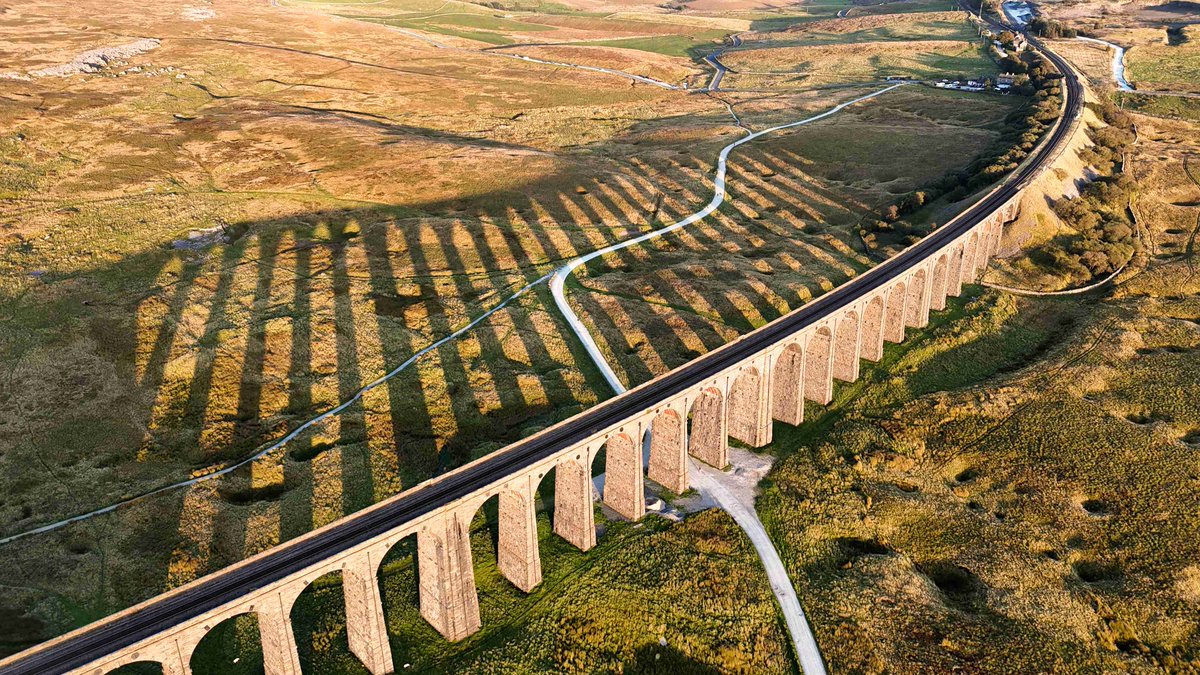
🚂 This year we’re joining communities across the Dales and beyond in celebrating 150 years since the first passenger trains travelled the iconic Settle–Carlisle line. We’re proud to celebrate its past, present and future — and we invite you to ride the line for yourself 🚂💚
Well it is on ITV tonight,
Some say it is worrying, Others say it is hysterical and unbalanced.
The vendetta of a computer shop owner and Town Councillor ?
Decide for yourself.
https://t.co/mkh1Go0Jp9
England is now the only country in Europe that doesn't financially support its farmers to produce food.
Surely Trump's conflict in the Middle East and Putin's invasion of Ukraine show how utterly vital our food security is?
The Government needs to wake up and back our farmers.
One storm. One fallen tree. One field in the Lake District. ✏️
The entire global pencil industry.
There is a field in the Lake District. Nothing remarkable about it. Fell sheep, grey sky, Cumbrian rain.
Until one day a storm came through. It uprooted a tree and underneath the roots was something nobody had ever seen before.
A black substance. Soft, dark, left a mark on everything it touched.
The shepherds didn't know what it was, but they used it to mark their sheep.
That was 1565.
It was the purest deposit of graphite ever found on earth. The only one like it. Ever. 🌍
Word spread fast.
The Crown seized the mine, put armed guards on the fell and flooded it between diggings to keep the price high.
Stealing graphite became a criminal offence.
Punishable by transportation to Australia.
Because this wasn't just for marking sheep.
It was perfect for lining cannonball moulds. It made England's cannonballs rounder. Faster. More deadly. ⚔️
England had a pencil monopoly for nearly a century. Every artist, every cartographer, every engineer in Europe. All of them wanted what was in that one Cumbrian field.
Slowly, workshops appeared in nearby Keswick. Cottage industries. Families cutting graphite into sticks.
Wrapping them in string. Then sheepskin. Then wood.
The pencil was born. ✏️
In a Cumbrian field. Because a storm uprooted a tree.
There is still a pencil factory in Keswick today. On the same site it has always been.
Did you know that?
These islands have thousands of stories the world has forgotten.
We find them. We tell them.
We put them in front of millions.
You help us make that possible.
Be Part Of Us.
Be Proud Of Us. 🏴🇬🇧
https://t.co/wN9S2gRmFj