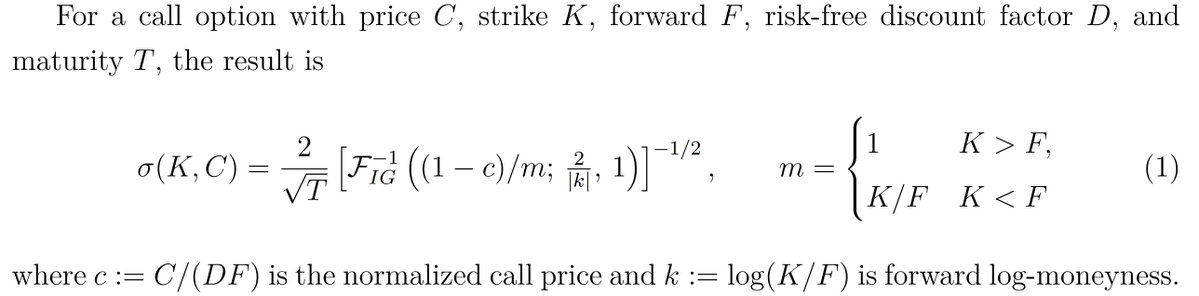
Wolfgang Schadner, a Swiss quant, found the closed formula for the direct inversion of Black & Scholes option implied volatility !
Everyone has been using root search for ~50 years and his formula is fast.
More elegant result, as no boundaries or starting value are required. You still need somewhat of a root search in the inverse Gaussian quantile, or use a smart approximation ;)
Then it is down to single digit microseconds.
https://t.co/gZV1aJ7OLa
Markets are delusional
we’ve already lost:
- ~30% of fertilizers
- ~20% of LNG
- ~14% of oil
- ~30% of helium
Any one of these on its own would be enough to trigger a crisis. Together, they form a systemic shock that risks pulling the global economy into a serious recession.
Because these aren’t isolated commodities.... they sit at the core of entire production chains:
Petrochemicals -> fertilizer -> food production
Petrochemicals -> mining (copper, uranium, nickel)
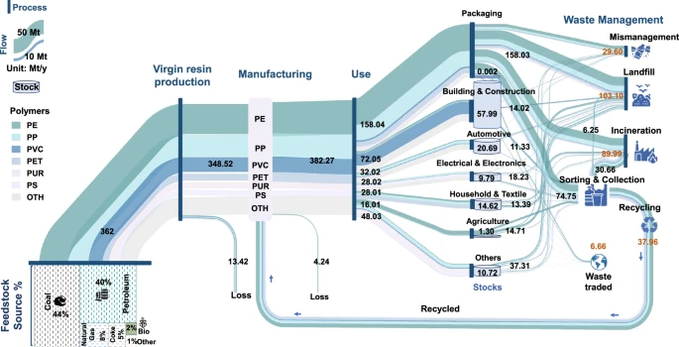
Petrochemicals -> plastics -> cars, electronics
Petrochemicals -> drugs, rubber, textiles
Helium -> semiconductors / AI chips
Gas -> power generation
Diesel -> transportation
So this isn’t just an energy problem... it’s a full-spectrum supply shock hitting food, industry, tech, transportation and power at the same time. Without flows from Hormuz, the system doesn’t just slow down, it starts to break.
And there is no policy tool that can replace missing physical supply.
Lotta people love to play with Hormuz offset balance math—and boy, oh boy, the numbers I've seen bouncing around...
But let's keep it dead simple and focus on pure output:
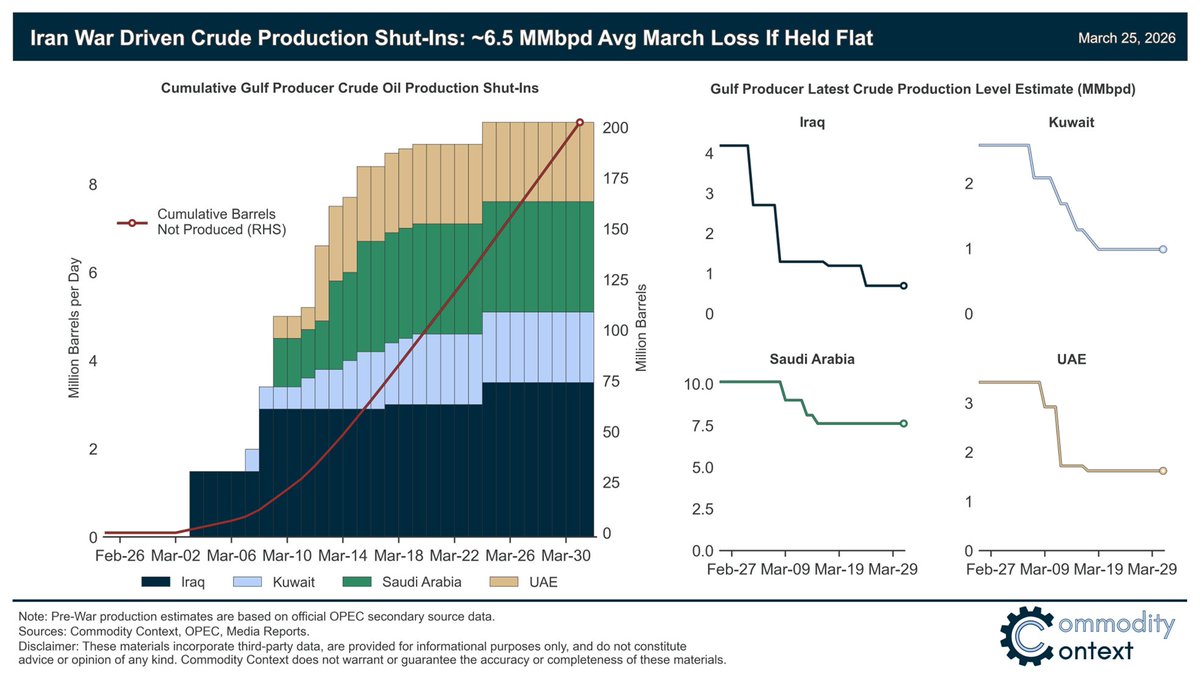
There's now ~10 MMbpd of crude oil production shut-ins confirmed across the Gulf. NGLs/condensate on top of that. 200 million barrels not produced in March already that should have been produced.
That alone is already the largest supply shock in history. And it continues to get worse the longer Hormuz remains shut.
OK people, now we enter the export control phase :
1/ Control of food exports (Indian sugar for example) ==> Be long midcurve white sugar. Two of the largest sugar refineries in the world are unreachable (Al Khaleej in Dubai and Etihad in Iraq)
2/ Control of fuel exports (US, Indian, Chinese, Russia diesel and gasoline) ==> Be long midcurve diesel as the rollup is insane vs spot.
3/ Control of fertilizer exports (Russia, Belarus, India) ==> Long corn and raw sugar which are very fertilizer intensive crops and also are the principal feedstocks for ethanol production
4/ Control of capital exports (mainly Arab money for now) ==> Be short stocks
🚨 THE NEXT 24 HOURS WILL BE THE WORST TIME OF 2026!!
What's happening now has NEVER happened before.
Everyone thinks the U.S.-Iran crisis is about oil.
It’s not.
It’s about what oil becomes.
And nobody is talking about the chain reaction that comes next.
Let me explain:
About 20 million barrels of oil per day normally move through the Strait of Hormuz.
20% of global petroleum supply.
Most people see that and think:
“Gas prices.”
But the real dependency is much deeper.
Roughly 92% of the world’s sulfur comes from oil and gas refining.
And sulfur is the feedstock for sulfuric acid - the most produced chemical on Earth.
Without sulfuric acid, modern industry stops.
Because sulfuric acid is how we extract:
→ Copper
→ Cobalt
→ Nickel
No sulfuric acid means:
→ No transformers
→ No EV batteries
→ No electronics substrates used in data centers
One chemical.
One feedstock.
And a huge portion of it ultimately depends on oil refining flows that rely on Hormuz.
But the cascade doesn’t stop there.
Qatar ships a major share of its liquefied natural gas through the Strait.
That gas powers countries across Asia, including Taiwan.
Taiwan currently has very limited LNG storage capacity, meaning disruptions quickly become power shortages.
And one company sits at the center of that risk:
TSMC.
TSMC produces around 90% of the world’s most advanced semiconductors.
And it consumes nearly 9% of Taiwan’s electricity.
No LNG → no power.
No power → no chips.
No chips → no AI hardware, no advanced electronics, no modern military systems.
Still think this is just an oil story?
Let’s talk about food.
Roughly one-third of the world’s nitrogen fertilizer feedstock moves through the Strait of Hormuz.
Synthetic nitrogen fertilizers are the reason the planet can feed billions of people.
Without them, global agricultural output collapses.
So the real system looks like this:
Energy → Sulfur → Sulfuric acid → Metals → Batteries & electronics
Gas → Electricity → Taiwan → Advanced semiconductors
Feedstock → Nitrogen fertilizer → Global food supply
Three civilization-critical supply chains.
All exposed to one narrow maritime chokepoint only 21 nautical miles wide.
And the world has very few scalable domestic alternatives if that chokepoint fails.
This isn’t just about oil prices.
It’s about how fragile the entire industrial system really is.
And EVERY market will feel the impact.
When supply chains like that start to strain, the shock doesn’t stop at factories or shipping lanes.
It spreads into every major market - energy, equities, currencies, commodities, crypto.
Because when the physical economy tightens, financial markets feel it next.
I’ve been studying markets for a decade and called every major market top and bottom.
Follow and turn on notifications if you want to survive in this market.
I’ll post the real warning before it hits the headlines.
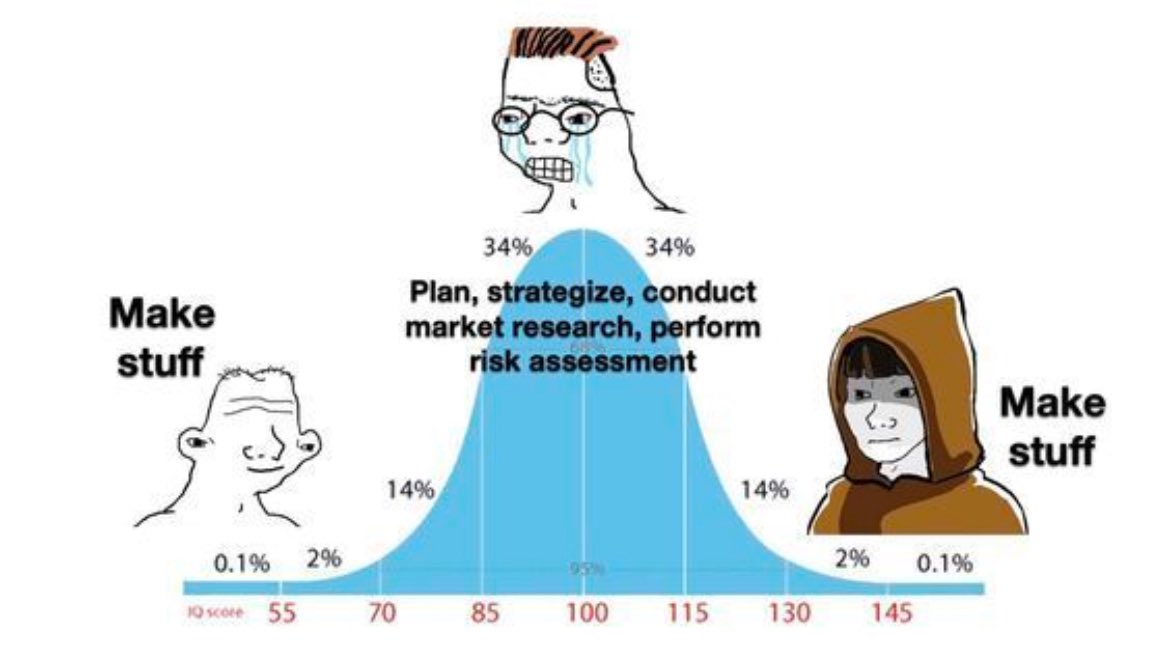
I work in finance. I do maths everyday. I know the numbers. I know all the arguments for investing aggressively when young. but I still can’t do it. my allocation is like 80% cash 20% stocks. I know that’s bad. but still. this is like the finance version of a doctor who smokes.
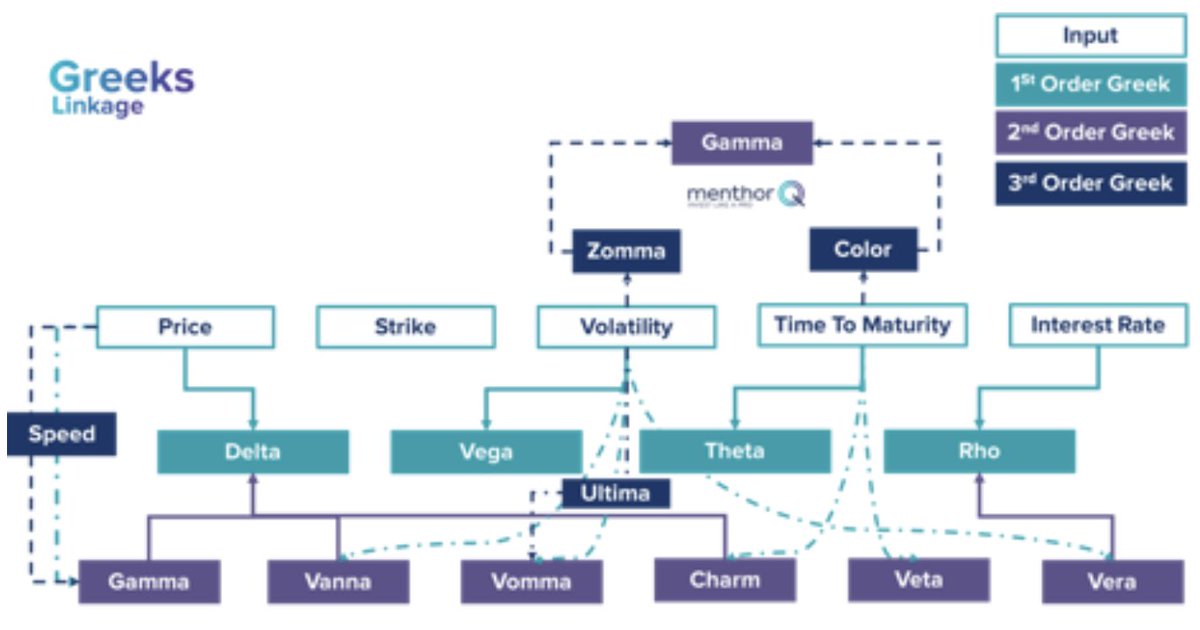
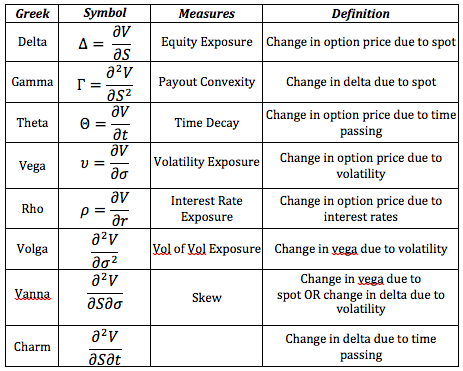
Some light sat night reading. This is a good table that helps think/remind what each option greek represents. If you use options you need to nail these down. Save this table somewhere