I watched a river for an hour and understood that it's never the same water yet always the same river, and then I understood I am exactly that. Every cell, every belief, every mood has been replaced since childhood, and still something continuous calls itself me. I am not a thing. I am a pattern that water passes through. That dissolved my fear of change entirely, because change was never the threat to my identity. Change is the only thing my identity has ever been made of. I am the shape, not the water.
Buying books, even if you don't read them, supports the writer and signals to the publisher what books matter to you.
You are a patron of the arts by paying for something someone else made no matter how much you use it or not.
Think not of the books you’ve bought as a “to be read” pile. Instead, think of your bookcase as a wine cellar. You collect books to be read at the right time, the right place, and the right mood.
— Luc van Donkersgoed
Thanks to everyone who bought the book and posted about it yesterday. Off to a great start - #5 in happiness and #3 in short self-help help reads.
https://t.co/5LyRUNGmT5 #howtolive
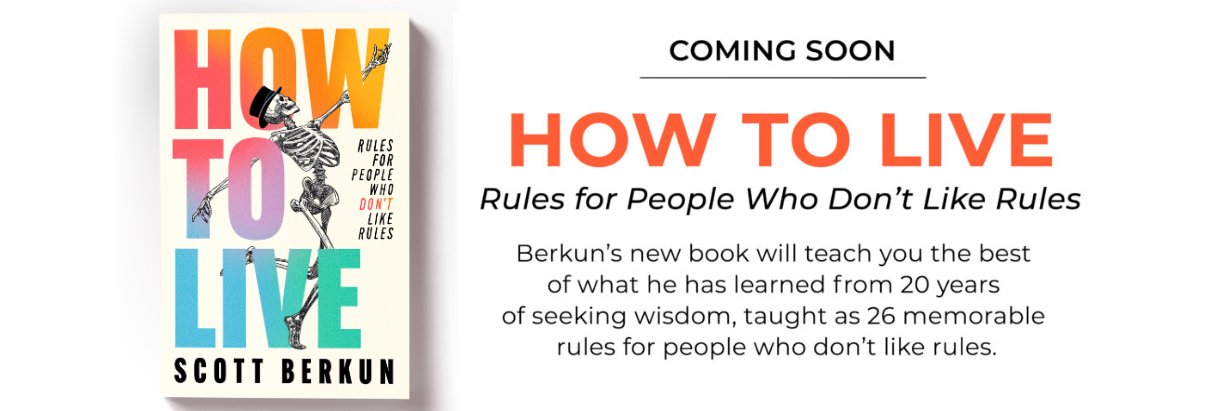
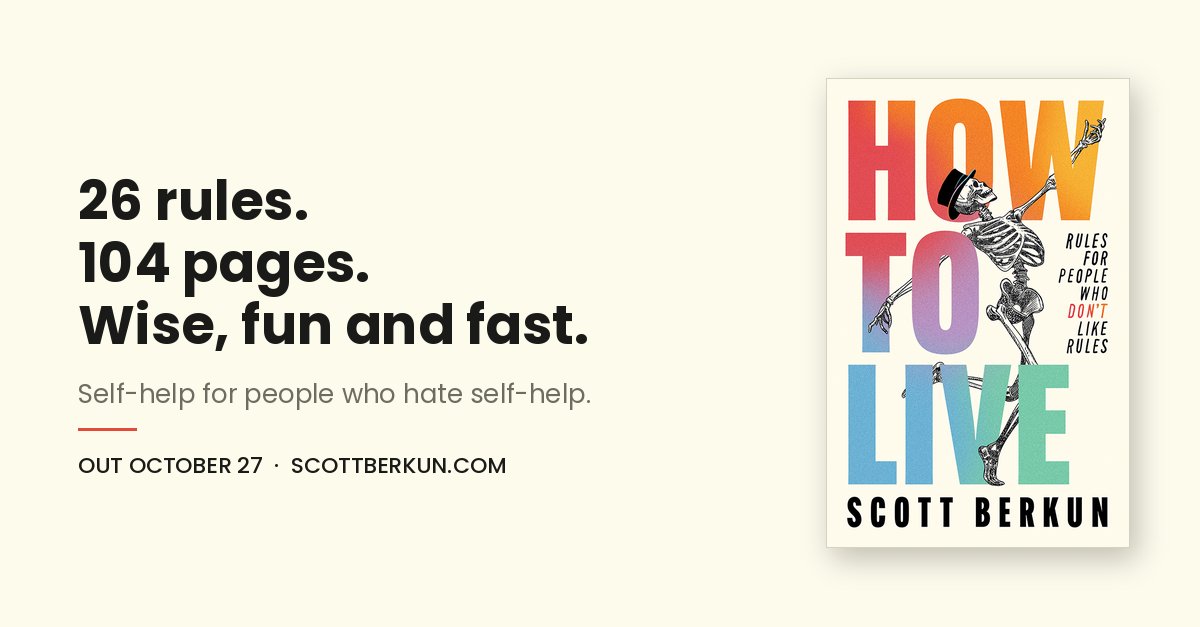
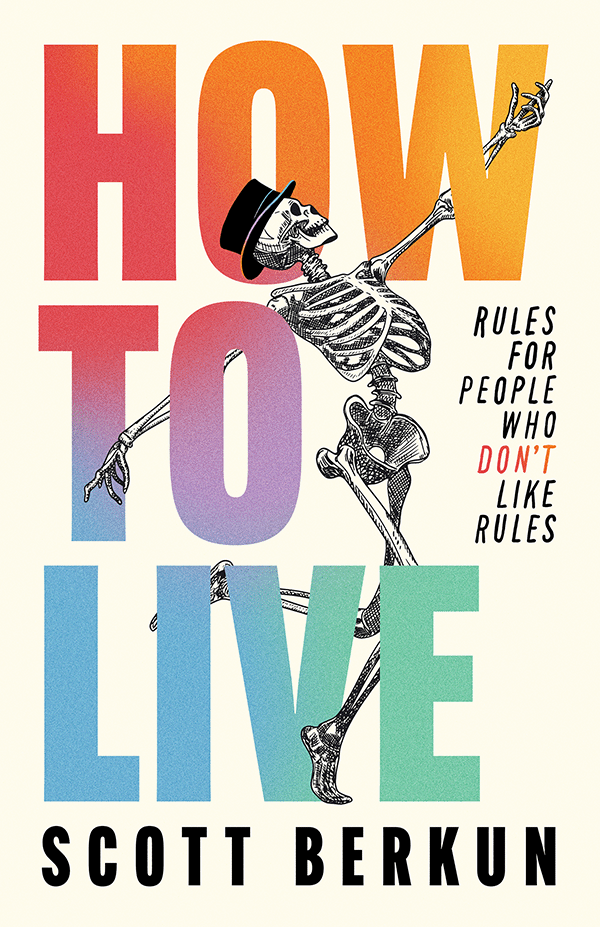
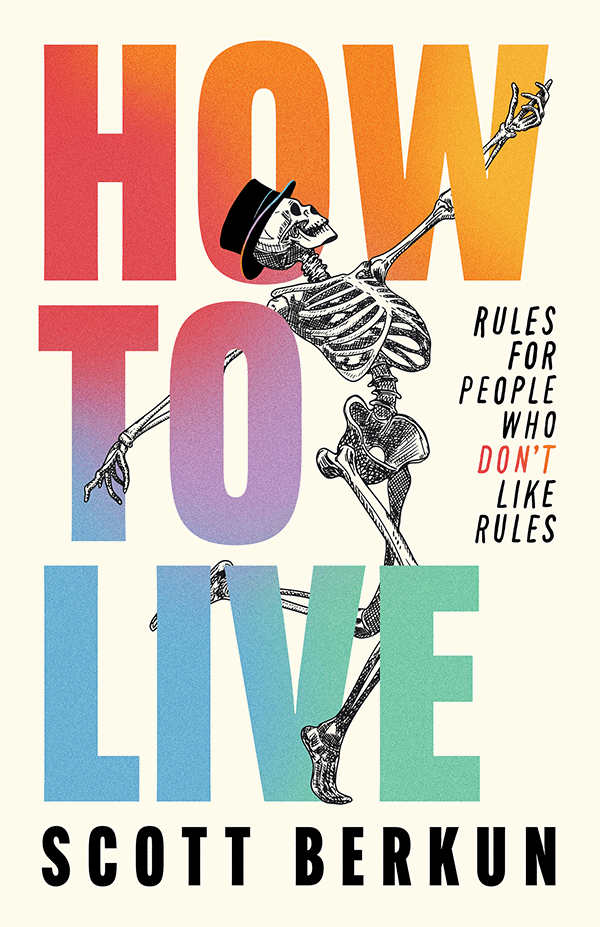
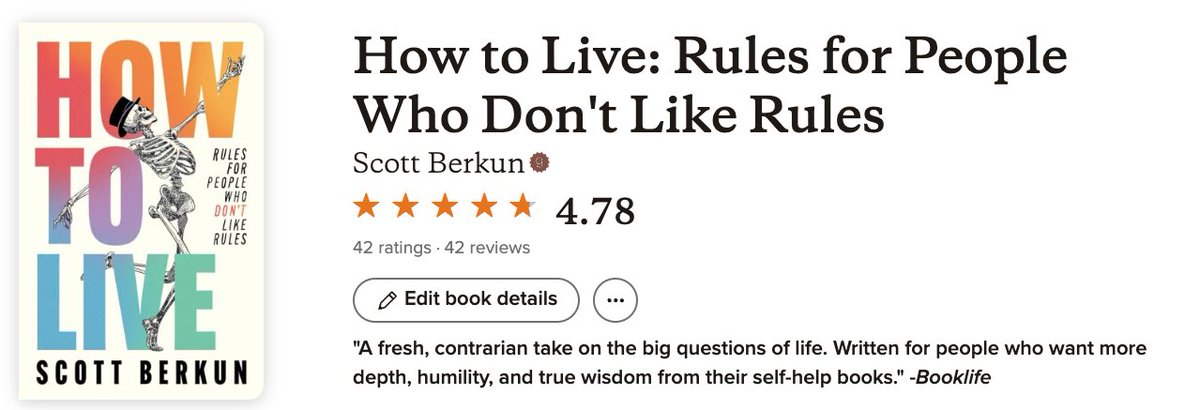
Tomorrow is launch day for my tenth book: How To Live: Rules For People Who Don't Like Rules.
It's the best wisdom I've learned and experienced in 54 years on this planet in just 100 pages. I hope you'll check it out.
https://t.co/VfnWlY97tb
How To Live launches TODAY - it's now on sale everywhere (digital/print/audio). If you've followed my work I hope you'll check it out.
It's the wisest lessons I've learned about living well and philosophy in just 100 pages. It's my 10th and best book by far. #howtolive
https://t.co/KRsjLRhIar
@jsnajdr But those traditions can be hard to access. The main difference i see between self-help and philosophy books is how approachable they are. Philosophers tend to be terrible writers :)
I still think about this quote from Carl Jung.
"The world is full of people suffering from the effects of their own unlived life. They become bitter, critical, or rigid, not because the world is cruel to them, but because they have betrayed their own inner possibilities. The artist who never makes art becomes cynical about those who do. The lover who never risks loving mocks romance. The thinker who never commits to a philosophy sneers at belief itself. And yet, all of them suffer, because deep down they know: the life they mock is the life they were meant to live."
One of the best rules for life (#6 in the book) is that we can choose our own expectations.
If we're constantly frustrated, we can change our expectations of other people or even ourselves.
This might sound crazy.
But one of the skills you NEED to learn is how to deal with a more and more illiterate society full of emotionally dysregulated people.
If you keep getting frustrated every day over how "ďumb" everything/everyone seems, the stress of it is going to wreck your mind.