@The_Steve_Says @RosaryQuotes123 Brother, that one is for the hypocrite pharisees. It doesn’t matter if you pray in public or in private, what matters is you are praying from your heart and not for worldly recognition .
“Why does everyone talk about 1984 or Brave New World and NOT That Hideous Strength? It’s so much weirder but accurate for right now!”
One of my students today.
Everyone else nodded in agreement.
The Philippines now stands between those two roads: punish corruption and risk short-term pain, or pretend to fix it and let the rot spread quietly.
https://t.co/omLgNLRb4b
ICYMI....
PSE stocks: for success or for suckers?
Investing in the Philippine Stock Exchange is often portrayed as patriotic, sold as ‘Asia’s next big thing,’ or wrapped in ‘emerging market potential.’
All of that has truth. Yet it all masks serious risks. Before you commit capital, ask: are you prepared for thin liquidity, weak governance, currency swings, and long stretches of underwhelming returns? Because these are not hypothetical. They are real.
Consider liquidity first. The Philippine Stock Exchange (PSE) suffers from low trading volume with average daily turnover of ₱6.1 billion for 2024 according to data from the exchange itself—a mere fraction of what peers like Thailand (₱74 billion equivalent) or Indonesia (₱48 billion equivalent) routinely handle. Low liquidity means large orders move prices disproportionately and your ‘emergency exit’ can come at a steep discount.
In a market where the top ten stocks account for over 60 percent of total daily trading value, the widely guru-hyped ‘diversification’ offers little safety.
Ownership concentration compounds the problem. Many publicly listed firms are dominated by families or small groups of shareholders whose combined stakes (often the three largest shareholders) exceed 50 percent of equity. This creates a pattern that weakens shareholder protections against hidden related-party transactions, nepotistic appointments, and strategic decisions that prioritize family interests over shareholder returns.
Currency exposure adds another layer which severely limits foreign-funded participation. For dollar-based investors, peso depreciation directly erodes returns. The peso lost over 19 percent against the US dollar over the past five years with a 3 percent loss so far in 2025. Even domestically focused firms feel the pinch when input costs rise or borrowing becomes more expensive, risks amplified by PHL’s reliance on imported energy and capital goods.
Governance enforcement remains uneven. While the Securities and Exchange Commission has made strides, disclosures can be delayed, board independence is often nominal, and shareholder activism is rare. This is not to say all firms are problematic—far from it—but systemic safeguards are still evolving very slowly. It took five years to discover the Abra Mining crooks’ multi-year, multibillion peso fraud selling shares that did not exist.
Returns, meanwhile, have been dismal relative to the local hype and when compared to global benchmarks. Over the past decade, the PSEi has delivered annualized returns of roughly 4.5 percent in peso terms, according to Bloomberg data—well below global emerging market averages (approximately 5.5/6.0 percent) and far behind the S&P 500’s near 12 percent.
Too often, the PSE’s past gains came not from earnings growth but from P/E expansion or peso strength. When those tailwinds reverse, the correction can be sharp and painful.
Global shocks hit harder here. Capital flight during Fed rate hikes, supply chain disruptions, or risk-off sentiment disproportionately affect shallow, less-resilient stock markets like the Philippines. And you cannot ignore opportunity cost: the same capital could earn steadier returns in markets with deeper liquidity, stronger rule of law, or more predictable regulation.
From a local perspective, many Filipino investors understand these trade-offs. There is genuine momentum toward reform. Yet progress is incremental if at all. Take short selling: still non-viable on the PSE, even though it is a basic tool in virtually all stock exchanges that helps stabilize markets by setting a hypothetical floor on falling prices just as profit-taking puts a ceiling on rising ones.
The way forward is not mysterious. Deepen liquidity by providing big incentives for broader public and corporate participation. For Personal Equity and Retirement Accounts (PERA), increase the maximum annual contribution of Php 100,000 (Php 200,000 if living and working overseas) for investments in securities listed in the PSE including Mutual funds.
Also, as in Singapore, investors could hold up to a capped amount of listed shares with gains/dividends tax-free if held long term. Offer corporate income tax discounts for companies that go public and maintain minimum free float levels and trading volumes. Get government involved in real-world ‘money in game’ ways of encouraging stock investment.
Most of all, build trust: investors will tolerate volatility, but not secrecy. Strengthen corporate governance with real enforcement and credible regulation. Heavier fines – not a slap on the wrist - for late or incomplete disclosures and reporting. Publicly release PSE/SEC investigation results and sanctions so investors see accountability in action. Ponzi-like scams are not just for provincial ‘suckers’.
If these fundamentals are addressed, the PSE can finally evolve from a speculative playground into a genuine engine of long-term wealth creation.
Investing in the PSE can resemble dating someone brimming with potential but persistently unreliable, requiring constant vigilance and paying a high-maintenance bill for managing risks. The upside exists but it can be a relationship that costs more than it is worth.
Lent marks Christ's 40 days in the Judaean Desert, where he's confronted by Satan.
Their clash is an epic philosophical showdown, and a masterclass in beating temptation.
Here's how it unfolds — and how to crush temptation yourself... (thread) 🧵
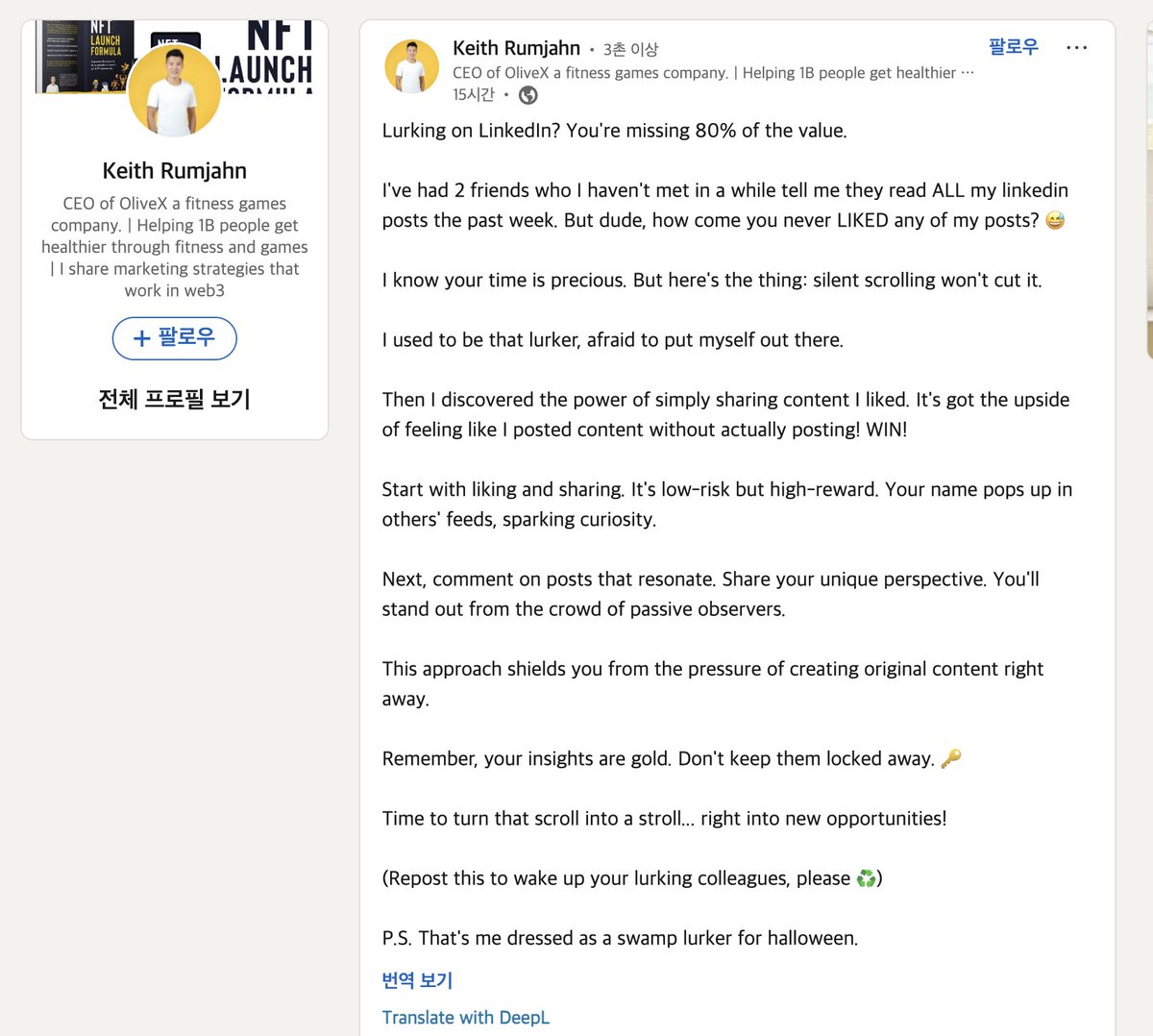
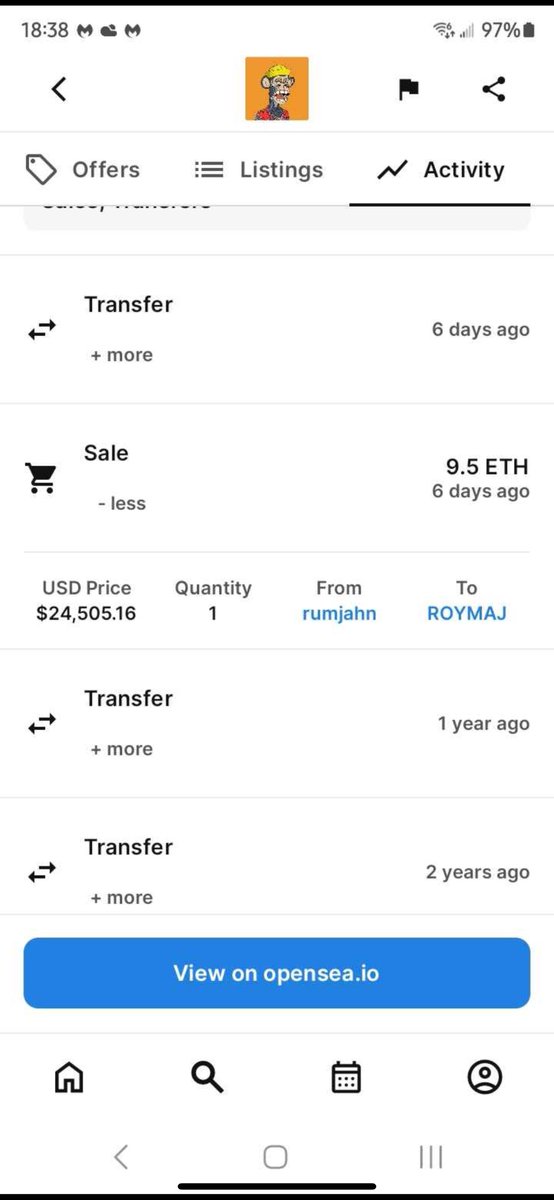
.@rumjahn , the CEO of Olivex, has been notably silent on platforms like Discord and Twitter, where his project’s community has been most active. This extended silence has fueled growing distrust among his followers, many of whom are now questioning his leadership and intentions. The lack of communication has only deepened concerns, especially given the apparent struggles to secure the necessary funding for the project.
However, just 15 hours ago, Rumjahn broke his silence—not on the platforms where his community resides, but on LinkedIn. This sudden activity on LinkedIn, a platform known for professional networking and business development, has led to widespread speculation about his motives.
To many, this appears to be a calculated move by Rumjahn to rebrand himself and possibly prepare for another attempt to secure funding, this time from a different audience. The choice to use LinkedIn, rather than directly addressing his existing community, suggests that he may be trying to distance himself from the growing skepticism in those circles. By crafting a new professional image on LinkedIn, he could be positioning himself to attract new investors who might not be aware of the issues surrounding Olivex.
This shift in strategy raises concerns that Rumjahn may be attempting to create a more polished and trustworthy persona to lure in fresh capital, potentially from those who are less familiar with the red flags that have emerged. The fear among his critics is that this is not a genuine effort to right the ship, but rather a calculated attempt to rebrand himself in order to continue raising funds under a different guise.
What do you guys think?
@the_dustland I feel bad for everyone still waiting for a dustland runner update. All we get are automated posts and 0 updates from the team.
@rumjahn how come you wrote a book about NFT communities but is MIA on the communities you started?
3. Maximize free gems and free coins. Just like in real life, time is the most expensive resource. Maximize resources that you can earn instead of wasting precious tickets that are time-bound.
@GuildOfGuardian Awesome work guys, I just have one question. I noticed that you can sacrifice NFT heroes, does this mean that the goal eventually is to not have the original heroes we bought during the last 4 NFT sales?
Setting yourself up for a strong back-half with the "50 at 50 goals"...
* VO2max >50 ml/kg/min
* Resting heart rate: <50 bpm
* Heart Rate Variability (rMSSD): >50 ms
At age 50.
Who's with me?