The fix is the one every other kind of radiotherapy already uses: measure the dose that actually reaches each patient's tumor, and prescribe to that. The FDA's Aug 2025 draft guidance agrees these old limits have "lessened applicability" to RPT.
New in @JCO_ASCO (https://t.co/vvqmgQcXA3): we traced where the three numbers that shape almost every radiopharmaceutical therapy trial actually came from. 23 Gy to the kidney, 2 Gy to the marrow, 200 mCi per cycle. None came from the drugs they now limit. A thread.
These borrowed limits can push trials to underdose. In one prospective cohort, patients taken up to the kidney limit lived 29 months longer (54 vs 25). Trials can look negative just because they tested too low a dose.
New paper: liver radioembolization is scored by one number, the average dose. But microspheres lodge in vessels too small for CT to see, so the real dose pattern can vary 5-fold even when that average looks identical. https://t.co/DGduQr8EVW
PAPER: https://t.co/8wbZF4eqkV
What do radiation therapy and gazpacho have in common? 🍲 🔬
Besides both requiring careful preparation, they are also important parts of the story of Carlos Huesa-Berral, PhD, from @bertoletlab the latest researcher featured in our Researchers Unplugged series!
Learn more here: https://t.co/ExpDI9zl45
Congrats to Dr. @chuesaberral, awarded an NIH/NCI K99/R00 Pathway to Independence Award! 🎉 His project predicts the radiation dose liver tumors receive in Y-90 radioembolization, before treatment, to make the therapy more precise and more curative. #Theranostics#Y90
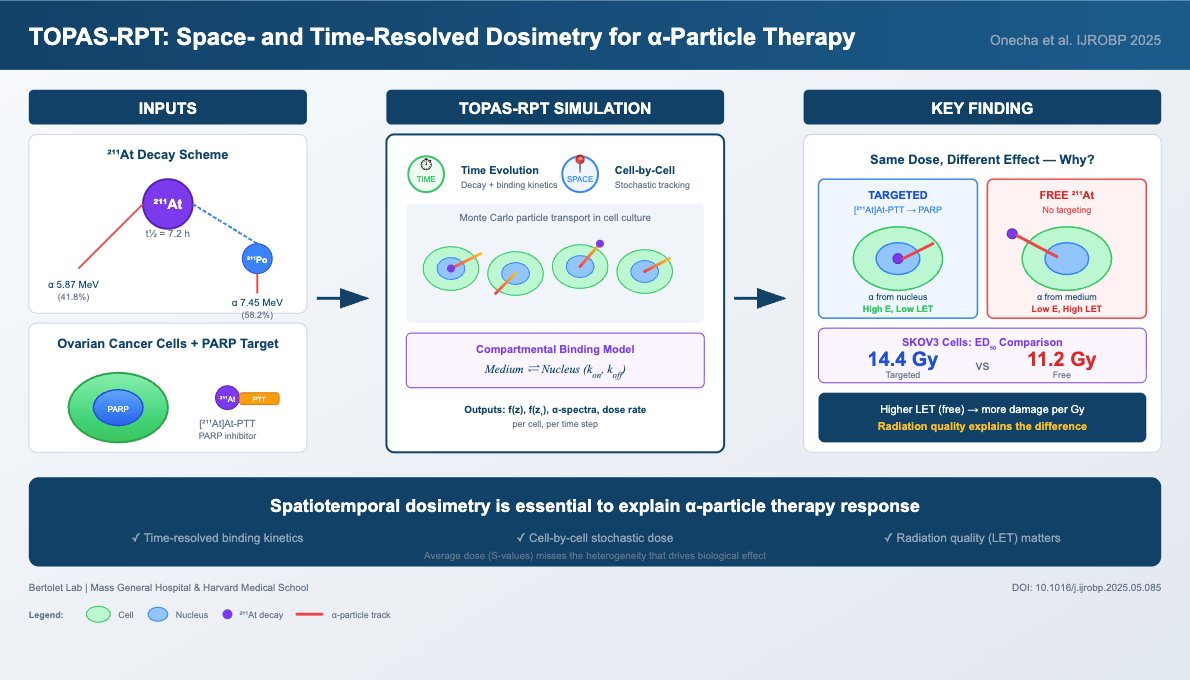
“Same absorbed dose” can mean very different biology in α-therapy. In our TOPAS-RPT work with ²¹¹At-PARPi, space + time-resolved, cell-by-cell transport shows how targeting shifts LET and damage per Gy. Paper here: https://t.co/ZRSAuZWU4S