Yesterday, NTV ran a story that can only be described as a movie and I think "investigative journalism" is also DEAD. Ati, "Ex EPRA Boss torture chambers", then they end up interviewing a a faceless dude and a fake name "Robert", who turns out to be a guy by the name Chebii, who is an economic goon... 😆. The Standard on the other hand, instead of saying the Lesbian OCS who almost killed someone is from Kasarani Police Station, they said KICC, and published it... Circus... Khabusie!
Titus Njari Ndei, 41, led Kitengela landlords to build their own private sewer line after years of sanitation problems in the fast-growing town.
With the population ballooning, property owners had relied on expensive septic tanks that often overflowed and posed health risks.
Frustrated by the Kajiado County Government’s failure to provide a lasting solution, the landlords decided to take action.
The push started in 2013 when the county sued 22 plot owners for discharging raw sewage, contrary to the Public Health Act. They were released on bonds of KSh 180,000–200,000.
Two months later, the accused landlords mobilized under Engineer Ndei and registered the Kitengela EPZ Neighbouring Community Sewer Project. They secured approvals from EPZA, NEMA, and other authorities, then funded a KSh 85 million, 45-kilometre, 2-foot-wide sewer line running to the Athi River EPZ trunk sewer.
The project was funded by hundreds of landlords contributing KSh 250,000 each plus a KSh 1,000 registration fee, and paying EPZA tariff fees ranging from KSh 7,500 to KSh 74,000.
The completed sewer now serves 818 landlords and has eased the burden of paying KSh 200,000 every 2-3 weeks to the county for waste disposal. Ndei says the community initiative gives residents a chance to manage sanitation sustainably.
@Kimuzi_ The highs make great stories, the lows make great comedy, and either way, the track keeps spinning. Just hold onto the steering wheel and enjoy the chaos.
Life is basically a chaotic game of Mario Kart.
@Dr_AustinOmondi Investing in matatu business is like taking 5m shillings, changing it into 1shs coins, spreading it on a 5 acre farm, mix it up with soil using a tractor then spend the next 5yrs collecting. If you have to do it, maybe think about the long distance saccos which are very organized
We fault Rift Valley leaders for attending Church Harambees but the biggest blame goes to the people. Often times I also get invites of Church Harambee but at no day have I ever seen someone invite me or even leaders to harambee in support of a project in their cooperative society or even any community project to uplift them.
South Rift!! Kipsigis!!!
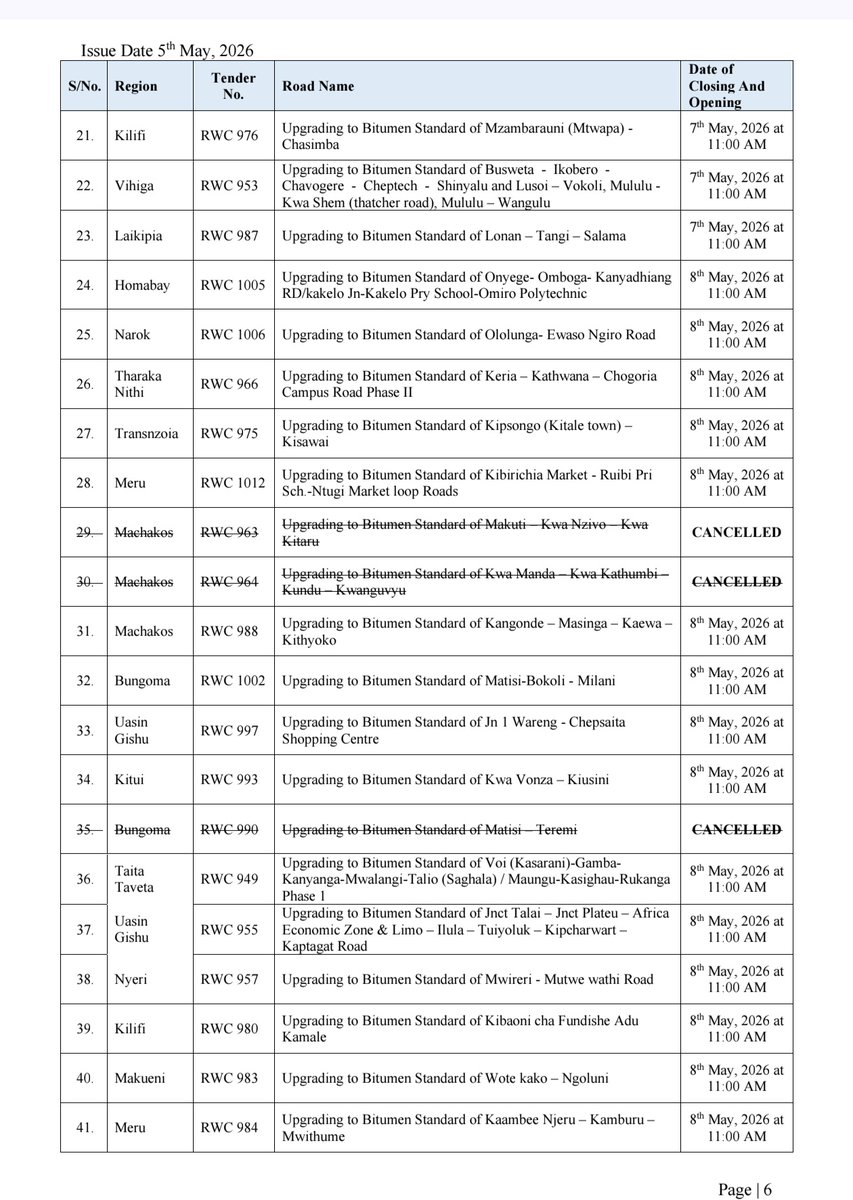
I have checked the Kenya Rural Roads tenders advertised for RURAL roads upgrading. I have not seen Kericho or Bomet in the list.
Mt Kenya counties all over the list!
WANTAM!
familia, shida iko wapi. As she wiped her tears, akatuambia amid sobs ati she is very emotional, yeye ni mtu wa kwanza kwa clan yao mzima kupanda ndege.
🔚
This is the sorry state of Kimalel Health Centre, Baringo South, Baringo County.
MCA: Nixon Lemlem, UDA
MP: Charles Kamuren, UDA
Woman Rep: Florence Jematia, UDA
Senator: Vincent Chemitei, UDA
Governor: Benjamin Cheboi, UDA
Shame on you all!
If you're the guy driving the white car that was just hit at the junction of Thigiri Ridge Road & Redhill Road by a BLACK XTRAIL that took off, another car and I tried to chase it, we lost it near Rosslyn Riviera but here's its number plate:
KCB 576M!
I hope this helps! Pls RT
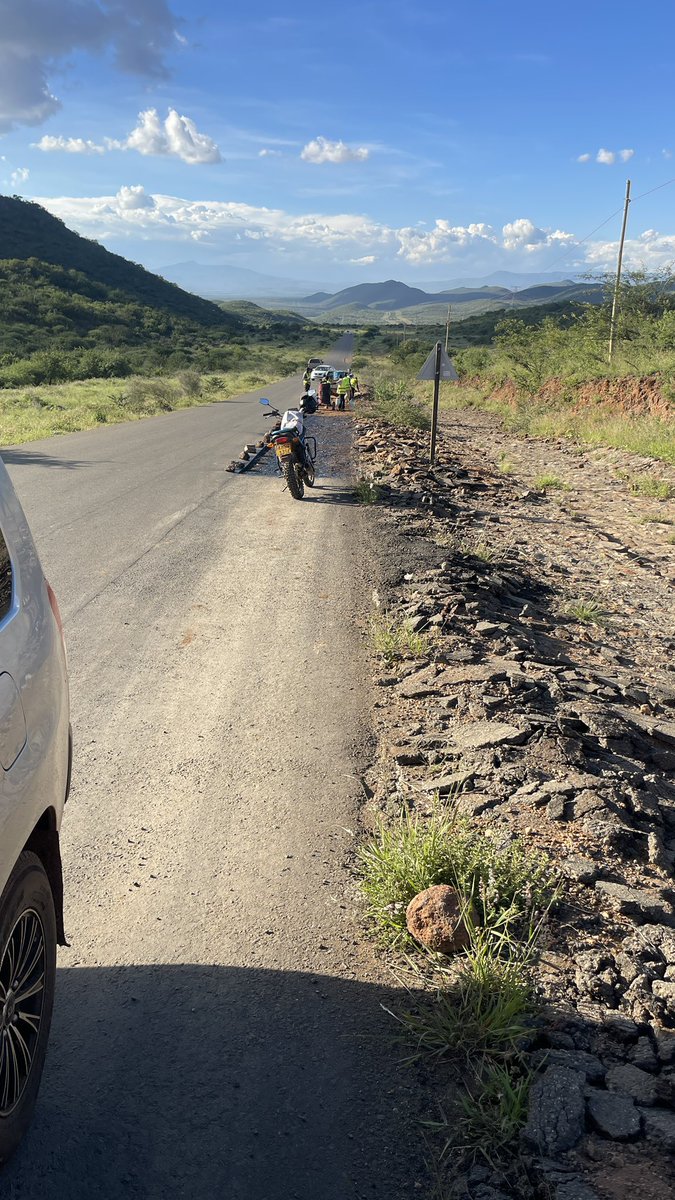
Corruption is KILLING KENYA. We pay global standard rate for infrastructure. But get shit, because goverment officials take 40% of the contract price as bribe. The contractor makes 30% as profit and puts only 30% into the project. Look at the SHIT that is Ngong-Suswa Road.
Kipchomber Arap Koilegen and the Lumbwa Treaty (Kipsigis-British “Dog Oath”)
After a period of resistance against British encroachment, the colonial authorities sought peace with the Kipsigis people in the early 1900s.
They invited the prominent Kipsigis Orkoiyot (spiritual and political leader) Kipchomber Arap Koilegen (also known as Koilegen) to attend a peace ceremony at Kipkelion (then referred to as Lumbwa), near the developing Kenya-Uganda Railway line.
Deeply distrustful of the British, Koilegen refused to attend in person. Instead, he sent trusted representatives. At the ceremony, the two sides sealed the agreement through a ritual known as mummiat or mumek — a solemn oath involving the cutting of a live dog in half.
Each party took one half of the dog, which they then buried, while pledging mutual peace and non-aggression. This specific practice of using a dog was not part of traditional Kalenjin customs, and Kipsigis elders have long expressed uncertainty about why a dog was chosen for the ritual.
Before the event, Koilegen had secretly instructed his representatives on how to arrange the ceremony: when the dog was split, the white man (British representative) should hold the head, while the black man (Kipsigis representative) held the tail. In this way, the dog’s agonized screams and dying curses would be directed toward the British, invoking spiritual harm against them and their rule.
Koilegen’s caution proved well-founded. In the same period (around 1902 onward), the colonial government declared approximately 90,000 acres of prime Kipsigis land as British Crown property.
Colonial forces then violently evicted Kipsigis communities from these fertile areas in what is now Kericho County, clearing the land for European settlement — particularly for tea plantations.
This land alienation formed part of broader colonial policies that dispossessed many indigenous groups in the Rift Valley.
This episode, often called the Lumbwa Treaty, remains a powerful symbol in Kipsigis historical memory of colonial betrayal, resistance, and the enduring spiritual strategies employed by leaders like Koilegen. Koilegen himself was later deported by the British in 1914.
NB: Image is just for relevance and illustration purposes.
Bomet and Kericho Counties leadership have never been invited to Statehouse for development matters. Sisi Kipsigis we are the Marginalized community in Rift Valley