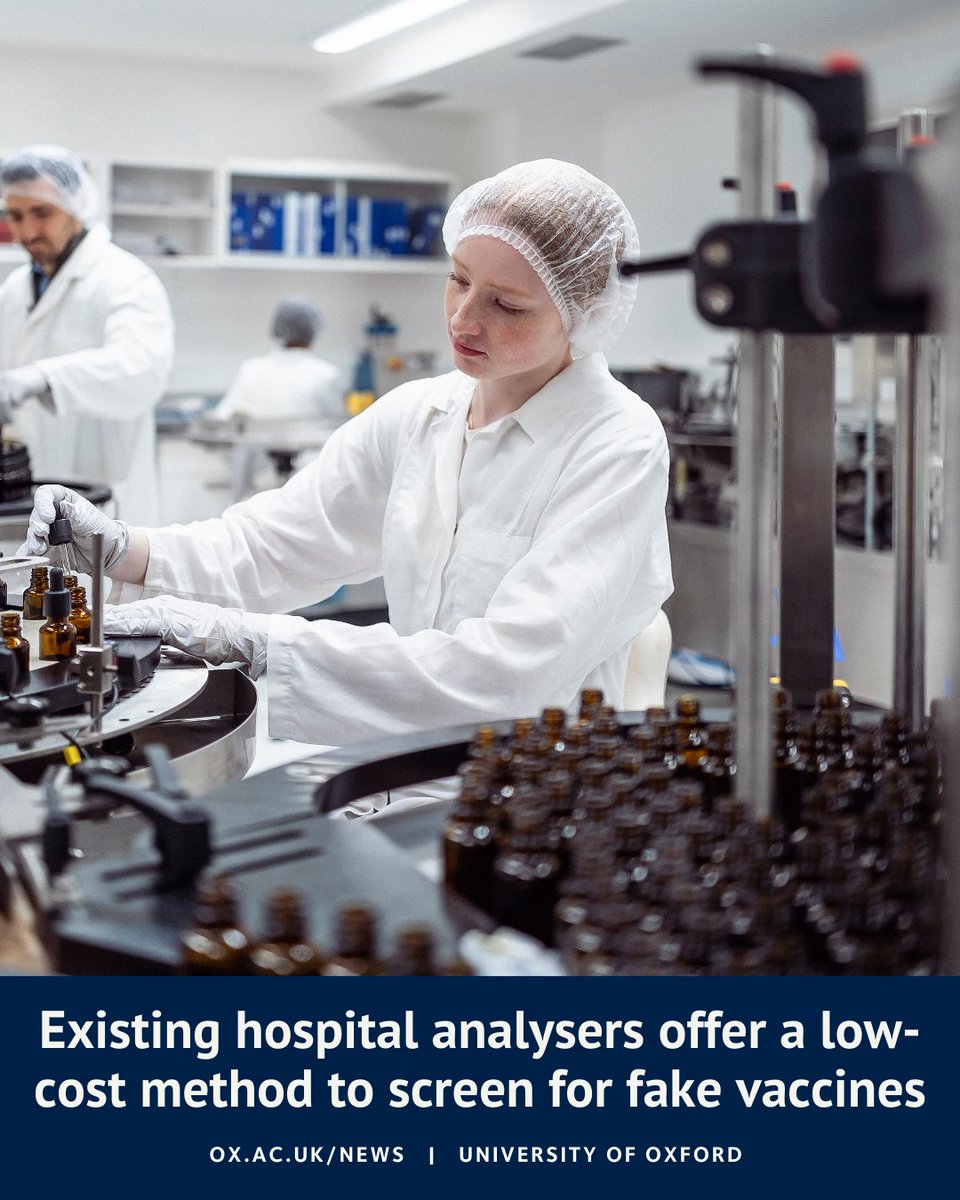
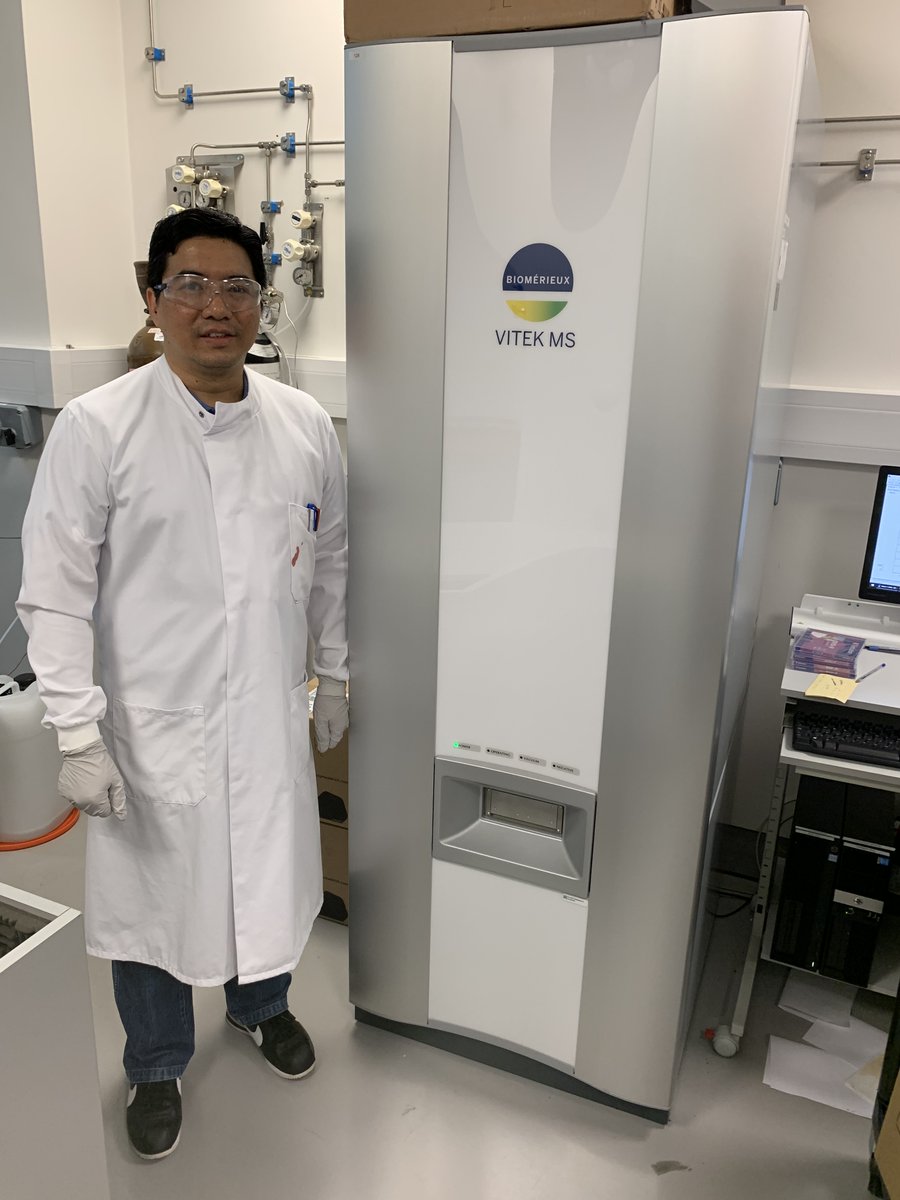
Pleased to have been given an award for the most outstanding presentation at the BRC symposium at St Anne's College. My talk was on "Identification of substandard and falsified vaccines using a panel of low-cost tests". @BiochemOxford@KavliOxford
https://t.co/7dvnVxKFGi
NEW: An international team of researchers led by Oxford University and Oxford University Hospitals NHS Foundation Trust have demonstrated that hospital analysers can be used to identify fake liquid medical products.
Find out more ⬇️
In case you missed it... our very own Dr Bevin Gangadharan speaks about why it's so important not only that detection of contaminants in eg medicinal syrups is available but is also low-cost and rapid.👏👏👏
Thank you @TTVOxfordshire. We have repurposed simple, rapid and low-cost tests (saliva/breastmilk alcohol strips and disposable breathalysers) to help prevent child deaths from contaminated medicinal syrups.
Note: The strips are less than £1 (I accidentally said under £10).
"Many of these cases which have happened have been in low and middle income countries and so we wanted rapid cheap affordable tests to be used."
Dr Bevin Gangadharan told That’s TV how his team’s approach is much quicker and easy for professionals to use.
"The reasons why these toxic ingredients happen to be found in syrups are various. They are intentional and nonintentional cases."
That's TV spoke to Celine Caillet about how she hopes the test will prevent tainted medicine from reaching young children.
Congratulations to Prof Nicole Zitzmann, Dr Bevin Gangadharan and Dr Yohan Arman on developing a low-cost rapid test to identify heat-damaged vaccines. Their work could protect vaccine effectiveness, particularly in low-resource settings. 🏅Read more: ⬇️https://t.co/MlPJCehquk
Rapid test to identify heat-damaged vaccines
Researchers from Medicine Quality Research Group and collaborators developed and evaluated a method to identify heat-exposed vaccines without sophisticated lab equipment
@IDDOnews@MORUBKK
Read more 👉 https://t.co/VCJAJFsi8V
Pleased that our paper has been published where we repurpose rapid, low-cost tests to help prevent child deaths from contaminated medicinal syrups.
Thanks to @benedict_yohan, @zitzmann_nicole and rest of the DEG-EG team in Oxford.
NEW: Researchers have shown that simple, rapid, and low-cost tests can detect deadly contaminants in medicinal syrups – the same contaminants linked to the deaths of hundreds of children worldwide.
They repurposed existing rapid tests, each costing under £1.
Find out more ⬇️
Low-cost, rapid tests like alcohol test strips & breathalysers can detect toxic contaminants in medicinal syrups
@IDDOnews
With over 300 child deaths worldwide linked to syrup contamination, these simple tools could save lives.
Read more 👉 https://t.co/CXN23v4q6J
Simple, rapid, inexpensive tests can detect deadly contaminants in medicinal syrups – contaminants that have tragically led to the deaths of hundreds of children worldwide. The discovery was made by researchers here @UniofOxford and collaborators. ➡️Read https://t.co/F1LIeMxkJs
#ScienceReadForSunday: Identifying falsified COVID-19 vaccines by analysing vaccine vial label and excipient profiles using MALDI-ToF mass spectrometry
https://t.co/eB1S97i3a7
🛡️ Fighting Fake Vaccines! The Zitzmann Group & collaborators developed a non-invasive method to detect falsified COVID-19 vaccines by analysing vial labels & liquids using MALDI-ToF mass spectrometry. A breakthrough for global health!
🔗 https://t.co/ps5TV0UvIW
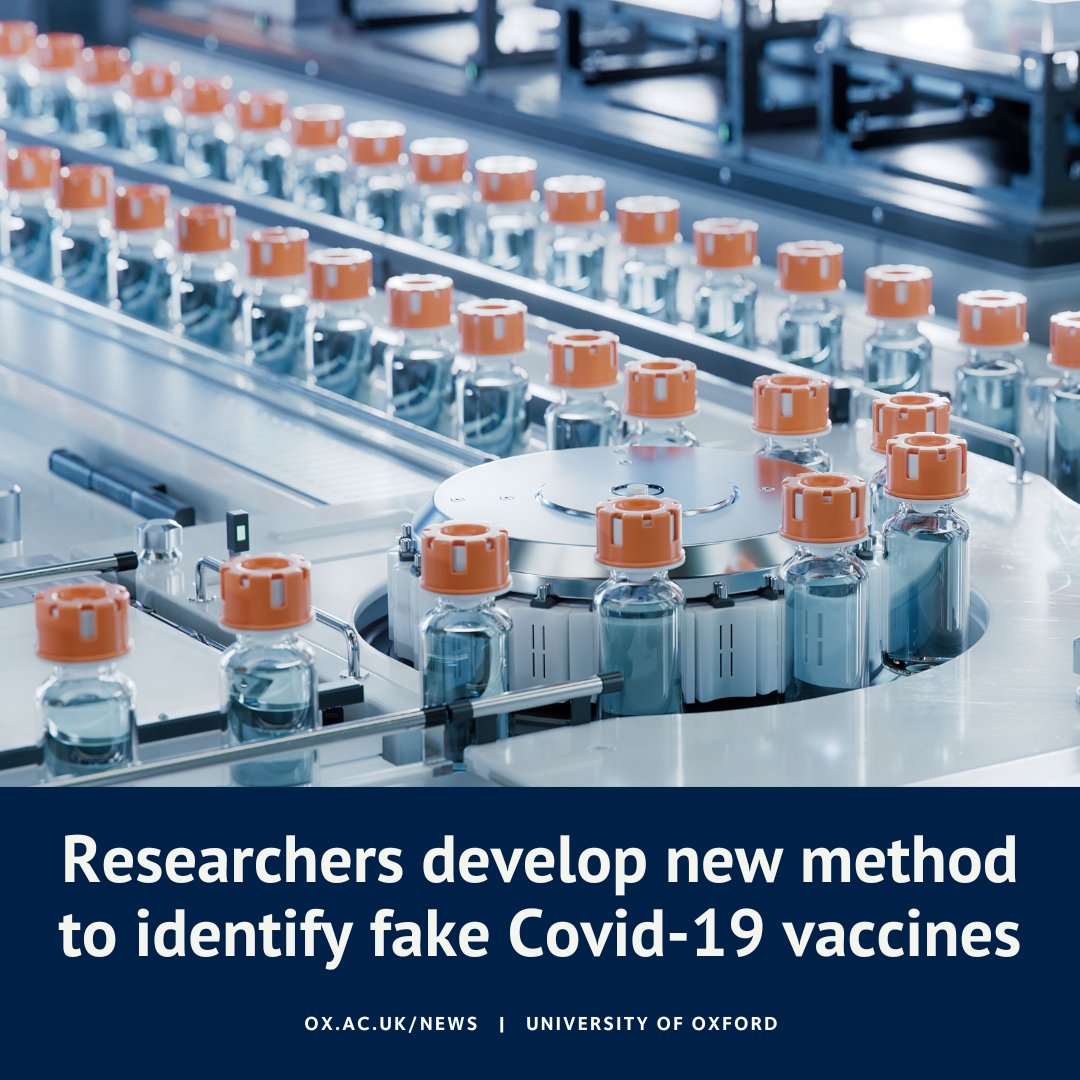
Researchers at Oxford University and their collaborators, including @SerumInstIndia, have developed an innovative method to identify falsified vaccines without opening the vaccine vial.
More info ⬇️
Fake vaccines threaten global health and are hard to detect. But now, UEL and a consortium led by University of Oxford have published a new way to identify fake vaccines. 💉
Read more 👉 https://t.co/wA6wXCTM2I @UniofOxford#UELYearofHealth
In a collaborative new study, researchers at @TropMedOxford have published a way to detect fake #COVID19 vaccines without opening the vial 💉 This method should help to maintain #GlobalHealth and reduce the usage of fake vaccines globally 🌏
Read more 👉 https://t.co/gQG00FAPUA
Researchers from the Medicine Quality Research Group @MORUBKK@IDDOnews have published an innovative method to identify #FalsifiedVaccines without opening the vaccine vial!
Fakes were identified by analysing vial labels and vaccine liquids
Read more 👉 https://t.co/tDUvAA42rT
Researchers at the University of Oxford and their collaborators, including the Serum Institute of India, have published an innovative method to identify falsified vaccines without opening the vaccine vial https://t.co/fI3rDjYfwc