Wuhuu🎉🎉
I am very happy that I received Sage Emerging Scholar Award 🐥
It is so encouraging and valuable for me, this award does not only support my research but also helps me to regain my confidence 🌿🌿
Worst car rental experience ever! We rented a car, just 20 min later it warned that the oil service was overdue. We contacted the company - the next day(the day we had planned our trip) - they told not to use the car. Thennothing! No response at all! No respond our calls! @Avis
@Avis Agreement number: 233900450, name of the renter: beyza tepe comoglu, i am the renter, and my email: [email protected] I appreciate it if you solve this issue.
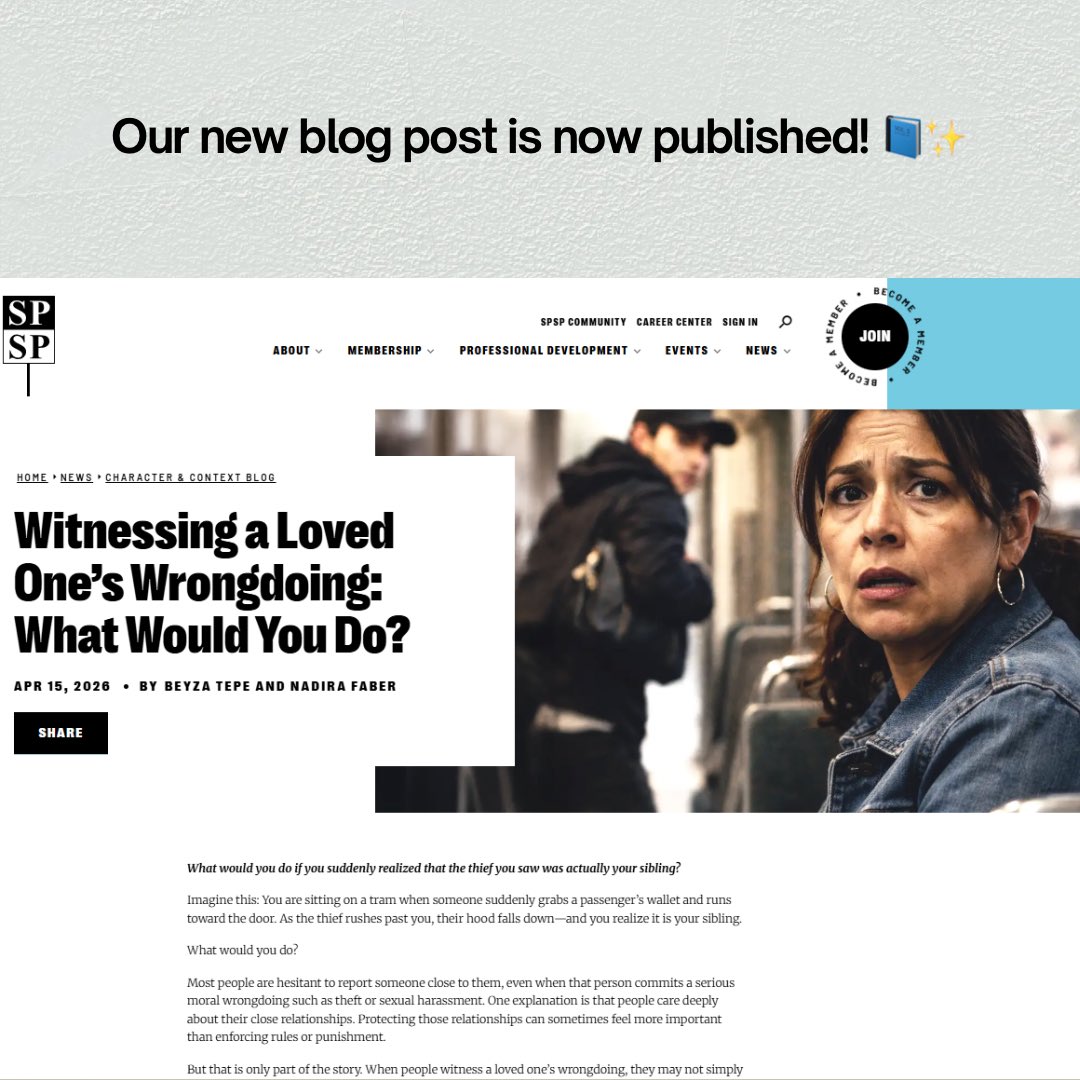
✨ Our blog post titled “Witnessing a Loved One’s Wrongdoing: What Would You Do?” has been published on The Society for Personality and Social Psychology blog! You can visit our website for more details. 📝
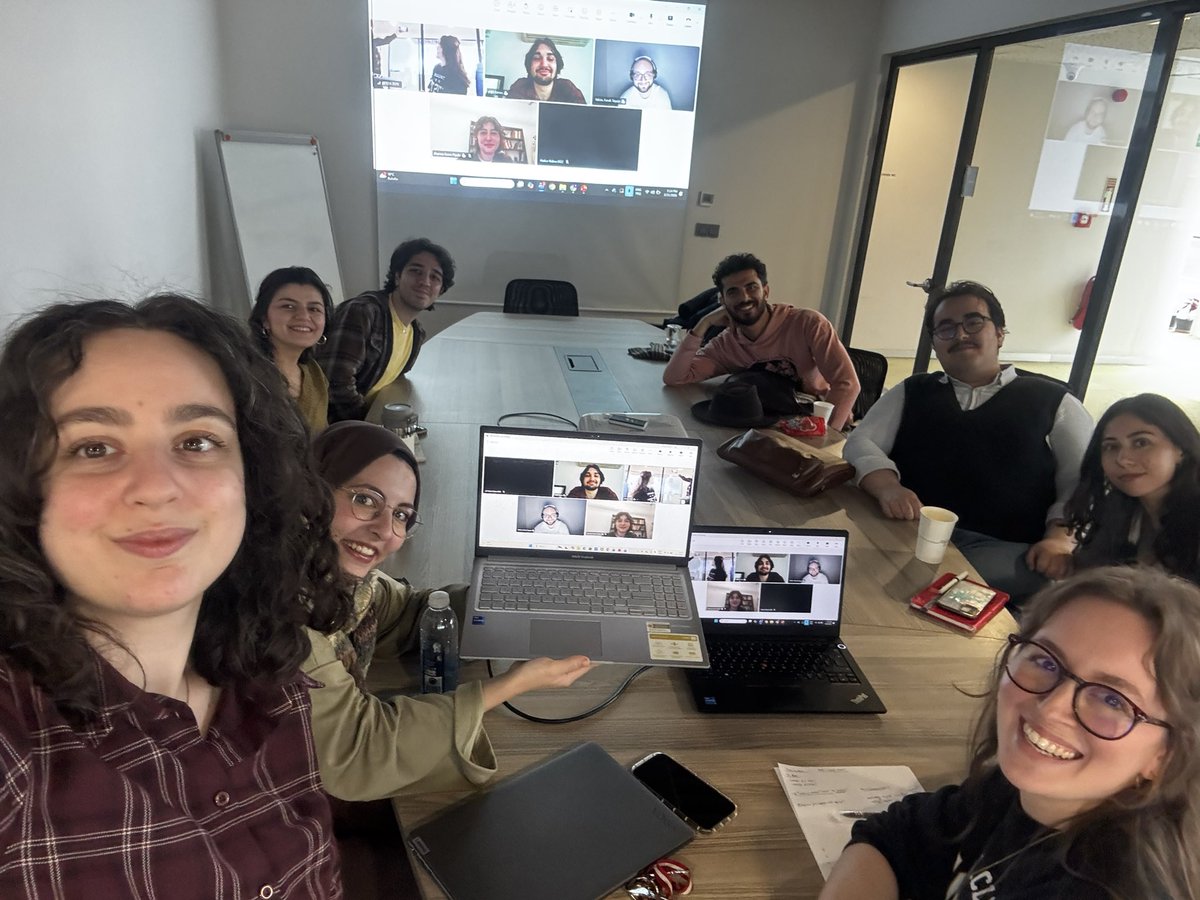
Yesterday, we had the pleasure of meeting Faruk Yalçın, a third-year PhD student from Penn State University. He shared insights from the work conducted at the Empathy and Moral Psychology Lab. It was a very productive and enjoyable meeting.
++ Also, witnessing close others’ transgressions is psychologically complex—people feel both like a victim and a transgressor, experiencing self-blame and other-blame emotions at the same time.
Do people favor close others even when they commit serious moral transgressions?
We question what “favor” really means? Our paper shows that people navigate relational punishment for close others and institutional punishment for distant others. ++
++ Also, witnessing close others’ transgressions is psychologically complex—people feel both like a victim and a transgressor, experiencing self-blame and other-blame emotions at the same time.
Do people favor close others even when they commit serious moral transgressions?
We question what “favor” really means? Our paper shows that people navigate relational punishment for close others and institutional punishment for distant others. ++
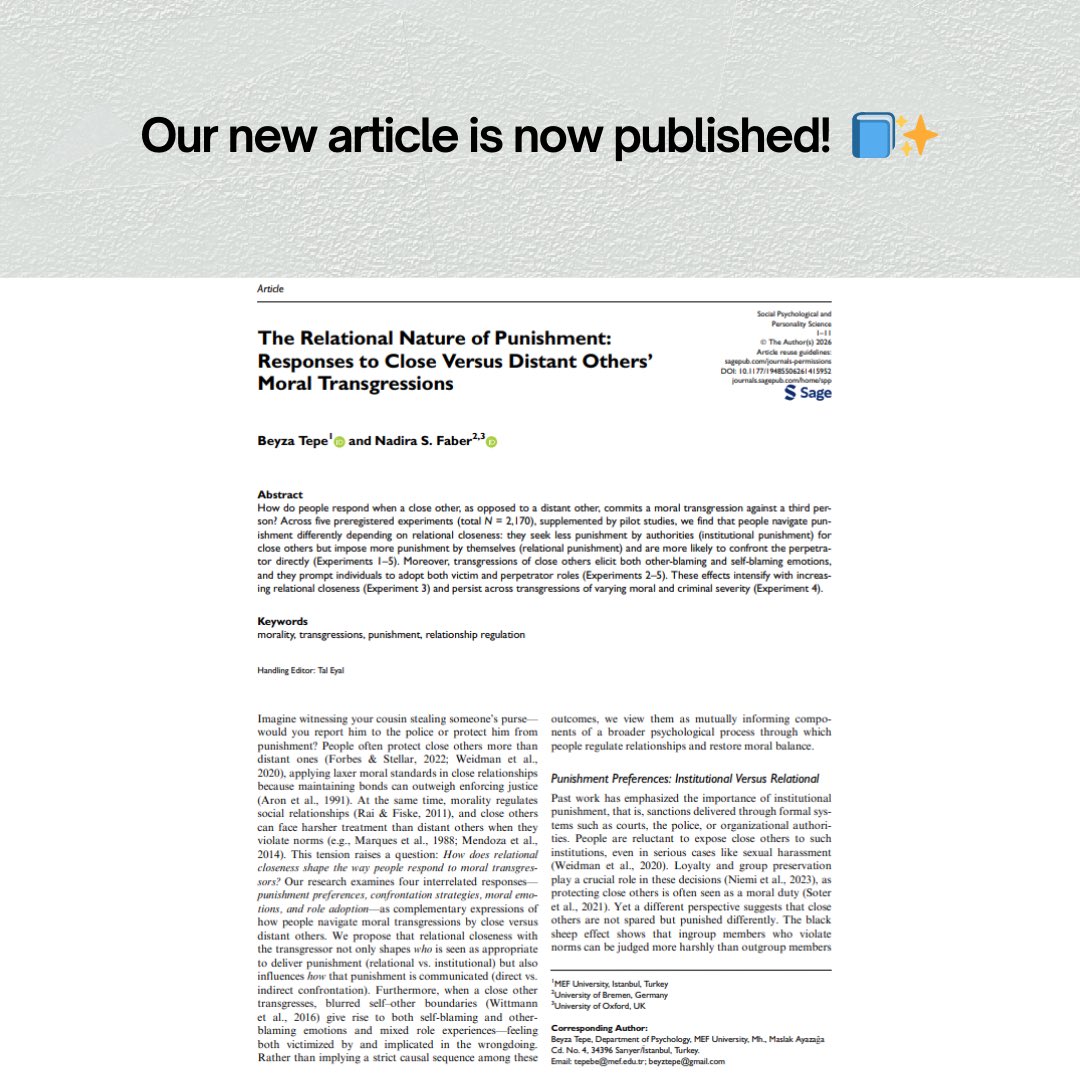
✨Our article titled “The Relational Nature of Punishment: Responses to Close Versus Distant Others’ Moral Transgressions” has been published! You can visit our website for more details. 📝
We thank Dr. Meltem Yücel for sharing her insightful research titled “Flexibility and Diversity of Children’s Moral Reasoning” with us. 💐 @DrMeltemYucel@MoralMindsLab
We bid farewell to 2025 with a joyful celebration as a team. We are already very excited for the researches awaiting us in the new year. Happy New Year to everyone! 🚀✨
🎤 We’re excited to host Dr. Meltem Yücel in our lab to hear about her research on the flexibility and diversity of children’s moral reasoning!
🌱
📅 December 22 (Monday) ⏰ 13.00 / 1 PM 📍 MEF University, A312 💬 The talk will be held in English.
If democracy is a conversation, then what happened when the conversation moved onto social media platforms designed to maximize "engagement"?
Increased polarization, which is a major threat to liberal democracies.
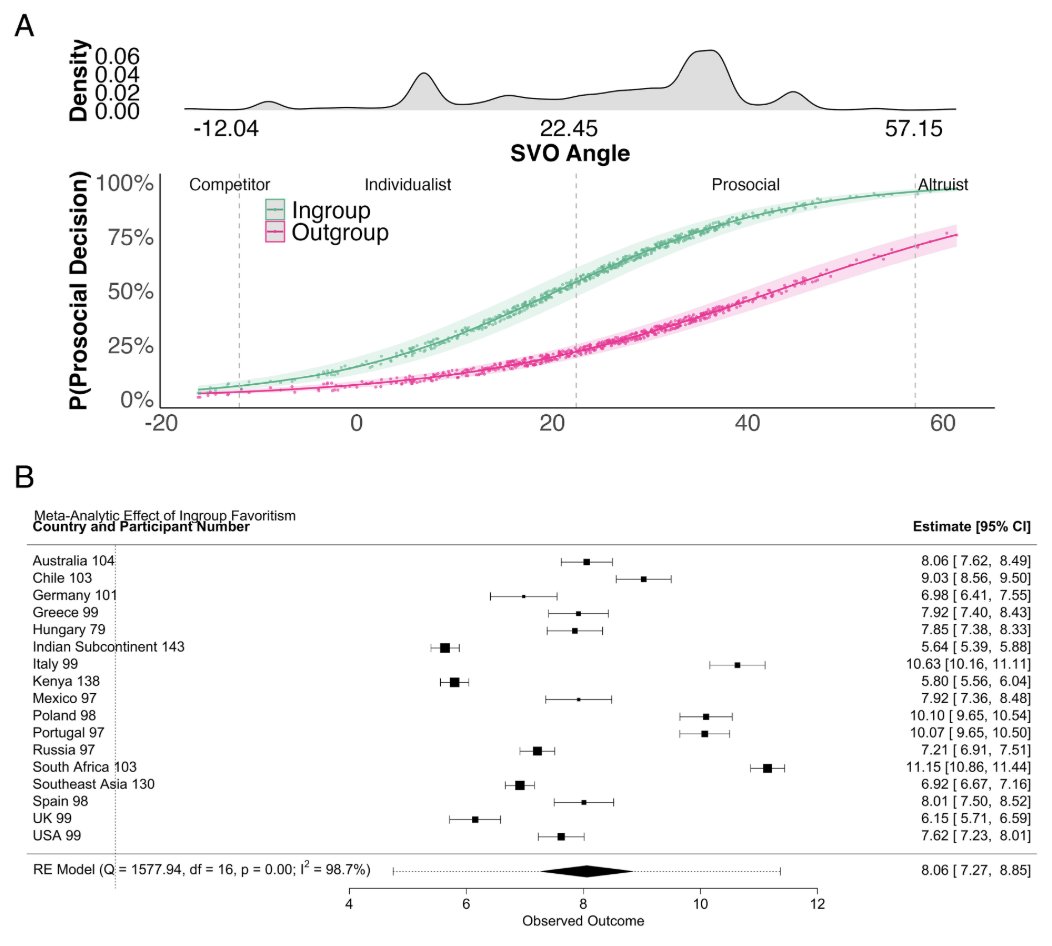
A global study of minimal groups finds discrimination in favor of the in-group in all 20 countries, yielding a large overall effect (OR = 4.58).
The degree of intergroup discrimination was related to higher societal uncertainty https://t.co/kQpvEB3gWQ
A new PNAS paper finds that polarization increased immediately after the invention of smartphones and the advent of social media, which both appeared around the same year, 2008.
Both profoundly changed the way humans communicate and this rise of connectivity may have fueled polarization. Adding a small number of individuals with extreme opinions (influencers) also drives continuous increases in polarization.
Once polarization occurs as a consequence of increasing connectivity, it can not simply be undone by reversing to previous connectivity levels. This may be why social media removal studies have very modest effects on polarization. https://t.co/bHNR8xtTks
✨ Our article titled “Moral framing effects on environmental attitudes: A conceptual replication and extension of Feinberg and Willer (2013)” has been published! You can visit our website for more details 💁🏽♀️
✨ Our article titled “How Does Type of Moral Responsibility Affect the Extent of the Moral Circle? The Influence of Relational Models” has been published! You can visit our website for more details 📝
✨“Ahlak psikolojisi bugün ne durumda?” isimli kitap bölümümüz yayınlandı. Detaylara ulaşmak için websitesimizi ziyaret edebilirsiniz 💁🏽♀️
***
✨ Our book chapter titled “Where Does Moral Psychology Stand Today?” has been published!
You can visit our website for more details 💁🏽♀️