🏴☠️X marks the spot!
@NASAWebb captured this infrared image of a feature in part of the Carina Nebula called the “Treasure Chest.” It is an object known as a cometary globule, or an isolated cloud of gas and dust with a dense, dark head and a sweeping tail.
Just back from Bonarie, where I continued technical diving training. Made a personal deepest dive to 45 meters with three sidemount tanks, helium mix (Trimix), and with mandatory decompression stops. (I just -had- to wear my 6000-meter rated Omega Ultra Deep for the dive . . .)
Like we're made of starlight, starlight ✨
This sparkling @NASAHubble image features a globular cluster: a collection of tens of thousands to millions of stars, all tightly bound together under the influence of gravity. Each "light" you see is an individual star 27,000 light-years away.
Read more about this image here: https://t.co/DYEFDWQlbH
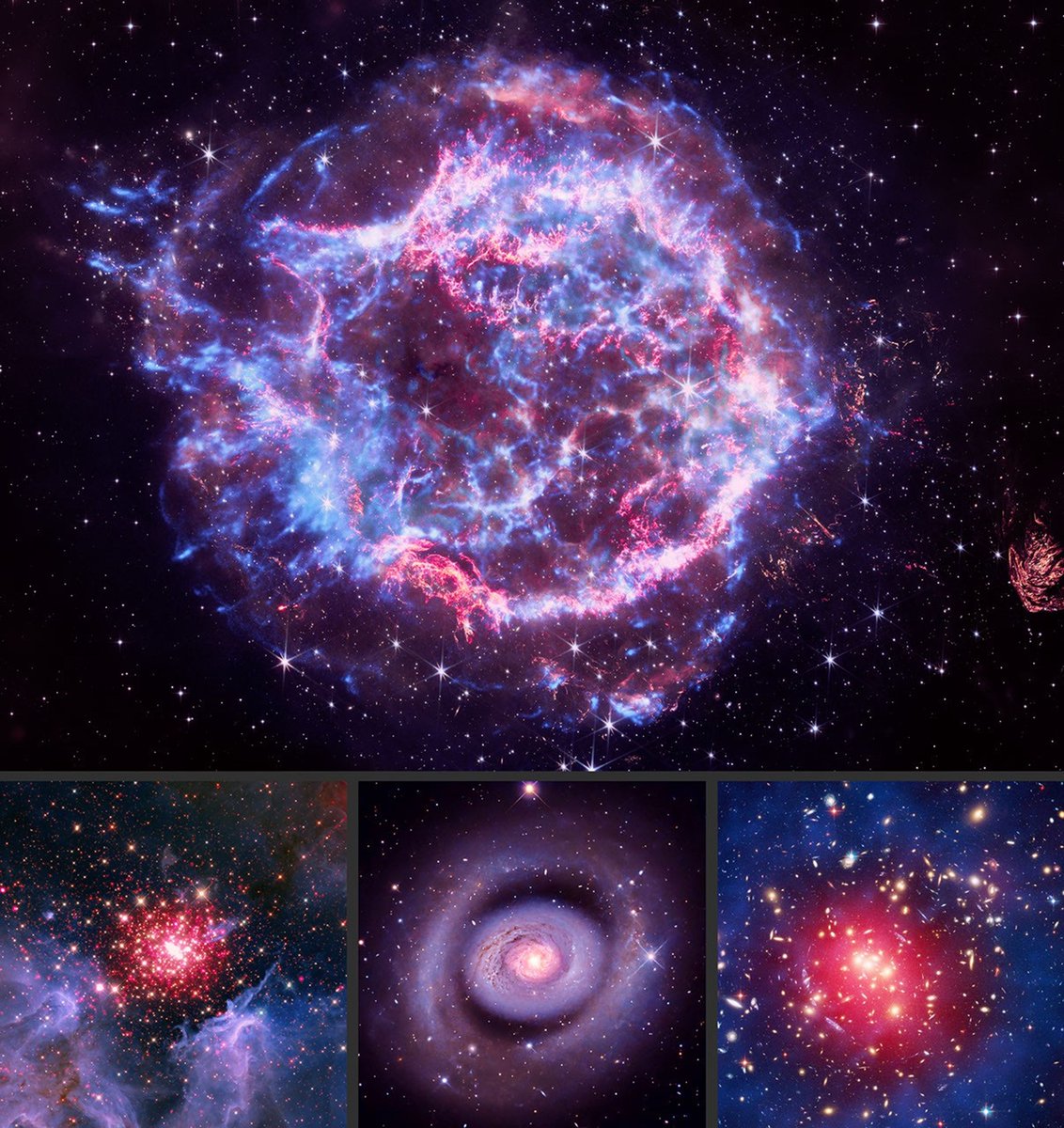
The stars and stripes of our universe 🌟
For America’s 250th birthday, @chandraxray released four new views of the cosmos in red, white, and blue—with data from three of them translated into sound. Check them out: https://t.co/qOPIq0aVQh
“God bless you, darling Mama; you remain forever in our hearts and prayers.”
A special tribute from His Majesty The King on what would have been Queen Elizabeth II’s 100th birthday.
🔗 Watch in full on The Royal Family YouTube channel: https://t.co/u8jeiFocT5
Ukrainian President Zelenskyy was being awarded the prestigious International Four Freedoms Award at a ceremony Thursday for his and his nation's courage and resilience in resisting the full-scale invasion launched more than four years ago by Russia. https://t.co/GusgKz9ees
These images are literally night and day!
The Artemis II crew took the left photo on their way to the Moon. It shows Earth at night, lit only by moonlight, using long exposure camera settings. The photo from Apollo 17 shows Earth’s surface during the day, lit by sunlight.
"Houston, this is the most spectacular view… you can possibly imagine." –Apollo 16 astronaut Charlie Duke
As the Apollo 16 crew began their flight to the Moon on April 16, 1972, they captured this view of North America from their spacecraft. Beginning NASA's fifth lunar landing mission were astronauts John Young, commander; Ken Mattingly, command module pilot; and Charlie Duke, lunar module pilot.