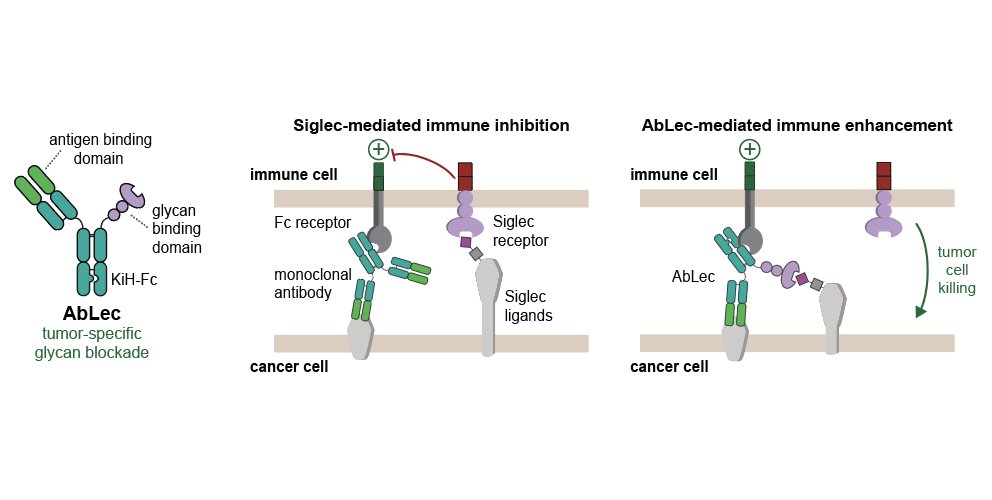
Excited to share our new @biorxivpreprint! We developed antibody-lectin (AbLec) chimeras as a modular molecular architecture to target sugars, or glycans, for cancer immunotherapy. 1/n https://t.co/bTaxkjQJHh #glycotime @CarolynBertozzi @Stanford_ChEMH@StanfordUChem @HHMINEWS
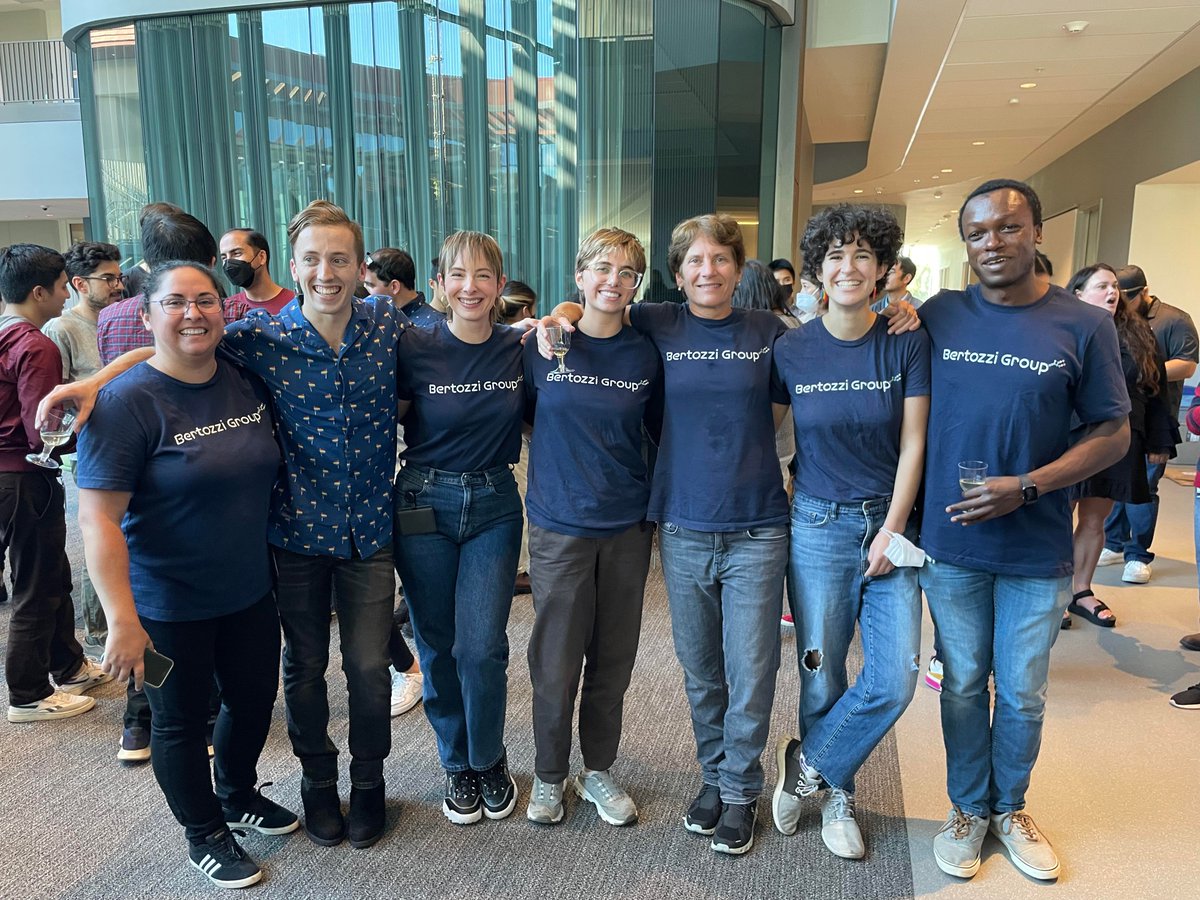
Congrats to my PhD advisor @CarolynBertozzi for winning the @NobelPrize!
In addition to your brilliant science, you are a role model and inspiration to many young queer scientists, including some of the current ones in your lab (pictured)! #NobelPride
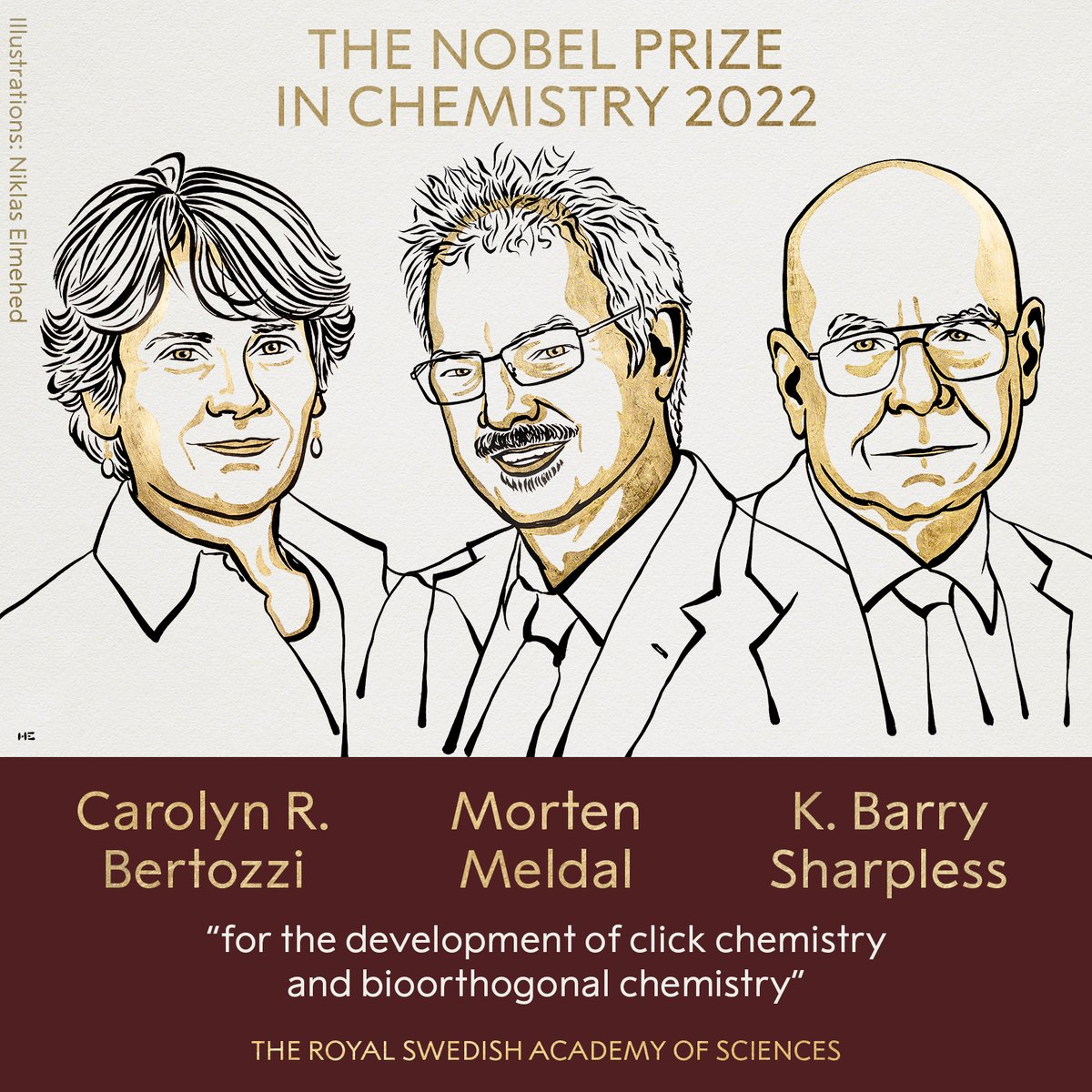
BREAKING NEWS:
The Royal Swedish Academy of Sciences has decided to award the 2022 #NobelPrize in Chemistry to Carolyn R. Bertozzi, Morten Meldal and K. Barry Sharpless “for the development of click chemistry and bioorthogonal chemistry.”
Wanna be a postdoc with me and @edward_marcotte? We’re combining imaging and proteomics to explore vertebrate development.
The position is very generously funded 👇🏻. Email either of us if you’re interested! Please RT! https://t.co/4SitVCDNxY
Congrats to @ColleenMulvihi2! Our latest manuscript on the humanization of yeast & GPCRs! Wonderful collaboration with @edward_marcotte & @VincentjjMartin @ut_mbs!
https://t.co/MKruTI2PDM
What's 𝘢𝘤𝘵𝘢𝘶𝘭𝘭𝘺 hiding in your go-to cloning plasmid?
The plasmids we use typically have long histories of cutting & splicing and forgotten junk often litters plasmids.
Excited to announce the release of pLannotate: https://t.co/jyyOgz5j9H
We are very excited to present our newest preprint on BioRxiv: hu.MAP2.0: Integration of over 15,000 proteomic experiments builds a global compendium of human multiprotein assemblies. https://t.co/IzBiXSgljV
Happy to share that our work on humanizing the yeast cytoskeleton is out in this month's issue of Genetics. 1/ @jonmlaurent@Aashiq_Kachroo@edward_marcotte
https://t.co/4z2QY6yAbD
A timely protocol from the Ellington lab @CSSBatUT
for RT-qPCR COVID19 assays in low resource settings, using RTX polymerase (easily purified from available constructs) as an alternative to the combination of RT/Taq polymerases: https://t.co/60y61rpo7U
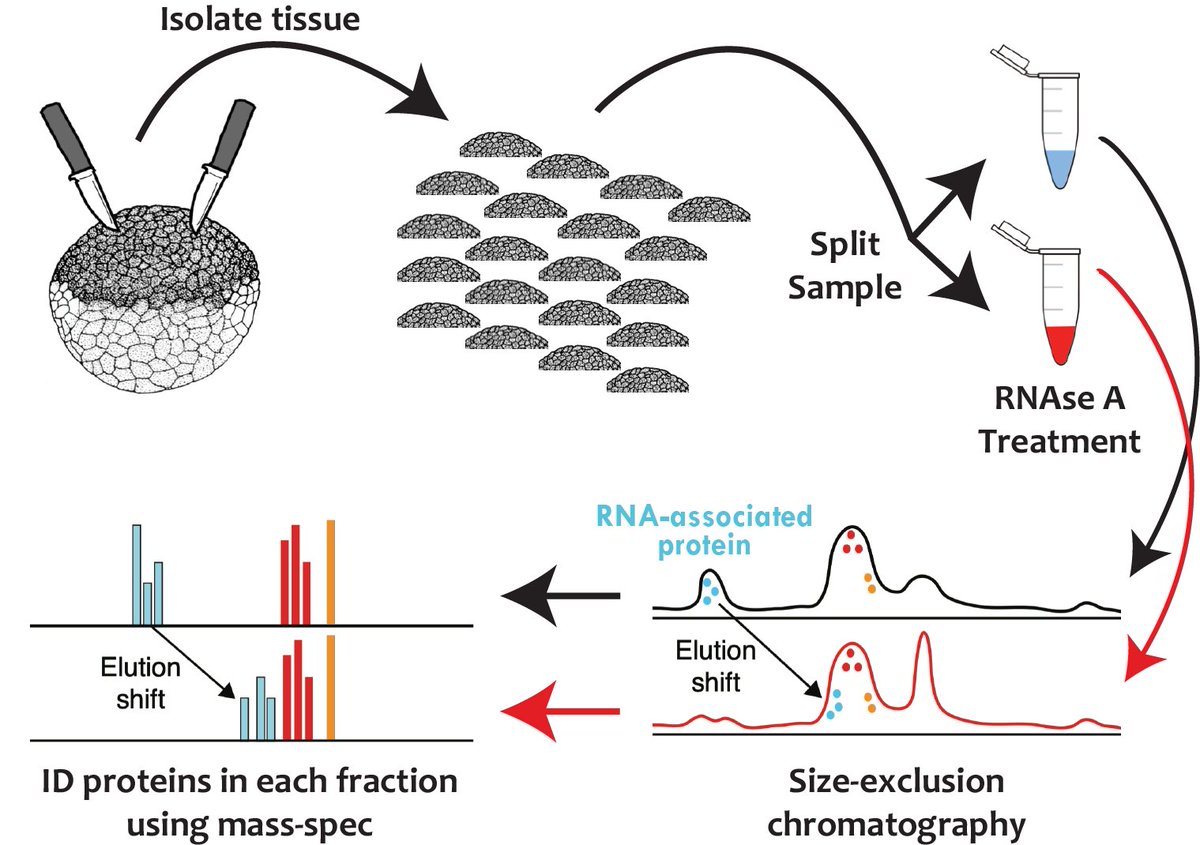
Very excited to put our newest preprint on BioRxiv. In it, we explore the RNA-associated proteome of a vertebrate embryonic tissue and identify new components of a membraneless organelle linked to human ciliopathies. https://t.co/BCoQHseyxl
Ecstatic to share our work: https://t.co/Hptm34EWgb
We engineered symbionts of honey bees to fight pathogens. Lots of people helped, including @zgkotti @DaviesLab et al. Thanks to @Myrmecos for the breathtaking photo. Thanks so much to @NancyMoran15 and @barricklab for guidance.
New preprint from @Peptide_Chem, @bfloyd1, and coworkers on a versatile approach for capturing and releasing peptides. It's become our go-to prep for single molecule protein sequencing experiments, simplifying the handling of low abundance peptides.
https://t.co/2RJ8OtBtLf
Seeing without looking: our DNA microscopy review is out in @TrendsinBiotech https://t.co/xWnjWPWMiJ, covering five strategies to spatially locate >millions of molecules via DNA sequencing only, no optical microscopes required! 1/
Motile ciliogenesis uses phase separated organelles! Wallingford lab's @rlhuizar and Chanjae Lee led our project to explore them and their disruptions as potential mechanisms behind ciliopathies. Paper out now! https://t.co/JkdplQByE9 @eLife