I’m happy to share that I just joined the University of South Florida as an Assistant Professor in the School of Geosciences today. I will miss many great colleagues and students at Brown and the University of Virginia. I look forward to new connections at USF and beyond.
Congratulations to post-doc Dr. Fangfang Yao @bg2012reg for being awarded the Early Career Award from the Remote Sensing Specialty Group of the American Associate of Geographers @theAAG! 👏
Out in WRR today, we developed an improved method for reconstructing multi-decadal lake levels globally based on long-term satellite images, with the potential to enhance capacities of high-resolution altimeter missions like #ICESat2 and #SWOT for decades. https://t.co/J3HZZmIFEO
Great opportunity to work with @MusselmanKeith! I have been working with Keith for the past three years and it has been a great experience. Highly recommended 👍
So much to think about in this comparison of Bear River Bay in 22 and 23. The increase in water is obvious, but how different is our current situation regarding prospects of recovery.
I'm deeply grateful for all those working to protect and restore Great Salt Lake.
@EcoFlight1
It was great to visit Dr. George Allen’s Global River Group at VT in the second week of the new semester. Thanks @hydroAllen for arranging all meetings with students and colleagues.
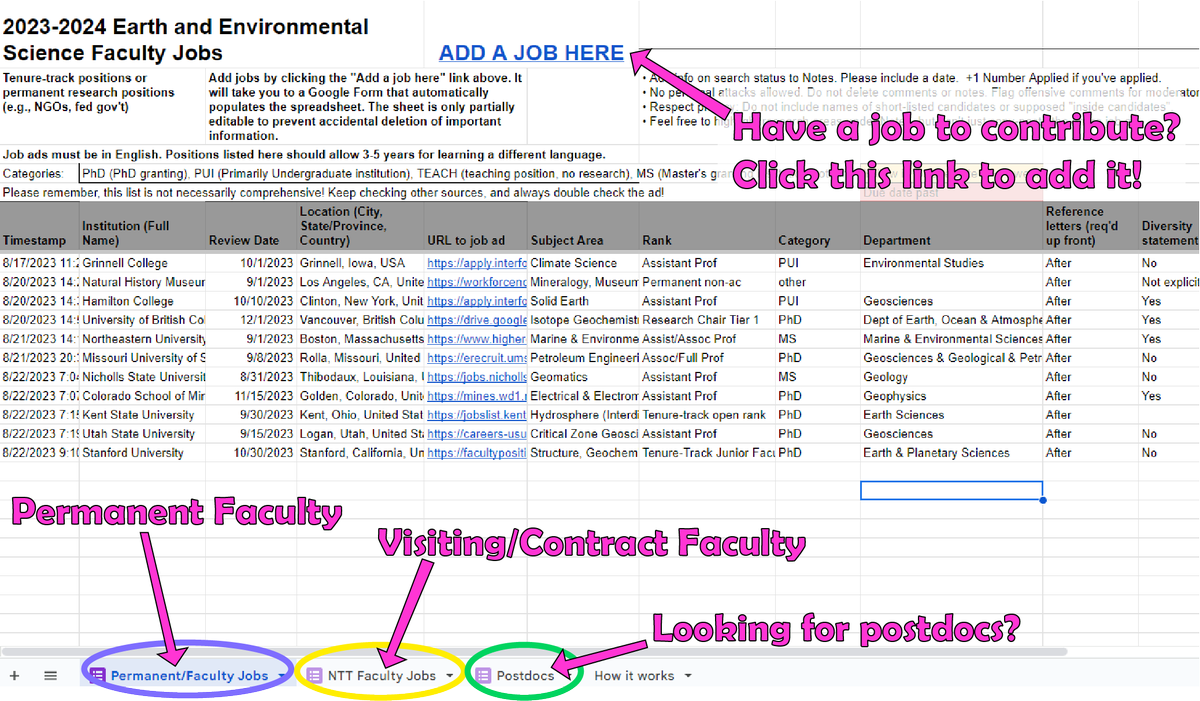
It's gearing up to be academic jobs season, so get your CVs ready!
On that note, I'm very pleased to announce that the 2023-2024 EES Jobs List is LIVE!
Access the list here: https://t.co/j9zFLsRqFD
Between 1992 and 2020, more than 1,000 of the world's largest lakes and reservoirs lost an average of 21.5 gigatons (600 cubic kilometers) of water per year.
New research from @bg2012reg @ResilienceUVA; input from @XiaoYan20198978@SMUDedman.
https://t.co/B05PZ7U8AN
Out in Geophysical Research Letters today, we developed a new tool for assessing reservoir sedimentation and capacity losses using high-resolution satellite imagery and water level data. Thanks @CIRESnews@cublibraries @ResilienceUVA for the support. https://t.co/ICvOkgOevW
Thanks @mhc205@ScienceMagazine for putting our research together in this nice video! Being in front of the camera for the first time, I managed to overcome nervousness with enthusiasm. Thanks @CIRESnews for the tips and support! 🙌🔬 #NASA#research https://t.co/7Vg8cg4Ykt
The Environmental Institute's Climate Fellow, @bg2012reg , is on the front cover of Science with research conducted while at @CIRESnews. Satellites show a widespread decline in global lakes. What does this mean? And is there hope?
Congrats to @bg2012reg + @JidaWang83 (and others) on this fantastic new study on the cover of Science!! Really striking findings about the prevalence of water loss in large lakes.
I was honored to write a Perspective piece for Science about this work: https://t.co/nyYwxrvFUm
Out in Science today, our study revealed that 53% of the world's large lakes have declined using three decades of satellite observations. Two billion population resides in a basin with a drying lake, underscoring the importance of management solutions.
https://t.co/4CzHOHnKPR